
Recent Posts
Precision Worm Gears: The Definitive Resource for High-Accuracy Power Transmission and Motion Control
Introduction
In the realm of mechanical power transmission and motion control, precision is not merely a specification—it is a fundamental operational mandate. While worm gears represent one of the oldest gearing technologies, modern innovations in CNC machining, materials science, and tooth form design have elevated them to indispensable components in mission-critical applications. From aerospace manufacturing and medical device production to solar energy tracking systems and high-end machine tools, precision worm gears deliver the unique combination of high reduction ratios, compact form factors, and exceptional positional accuracy that alternative gearing solutions struggle to match.
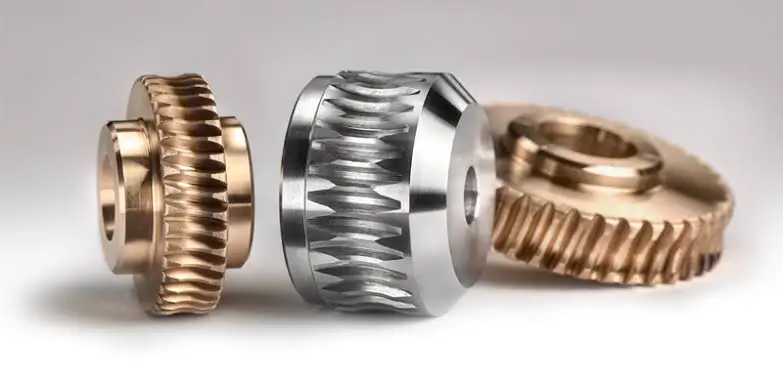
Table of Contents
1. Understanding Precision Worm Gears: Functional Fundamentals
Precision worm gears consist of a hardened steel worm (screw-shaped driver) and a bronze or specialized alloy worm wheel. Unlike conventional gear sets where teeth roll against each other, worm gears operate primarily through sliding action across perpendicular, non-intersecting shafts. This fundamental geometry enables substantial speed reduction within a single gear stage—ratios from 5:1 to over 100:1 are readily achievable—while maintaining a compact footprint.
The precision classification distinguishes these components from standard commercial grades. Precision worm gears are manufactured to exacting tolerances, typically meeting or exceeding DIN 3962 Grade 2 or AGMA Level 12 standards. At these quality levels, transmission errors are minimized to arc-minute or even arc-second ranges, with backlash adjustable to near-zero levels. The worm shaft typically features ground flanks and case-hardened surfaces, while the worm wheel is machined from high-grade bronze to optimize the sliding contact characteristics and thermal management
2. The Dual Lead (Duplex) Worm Gear: The Backlash Solution
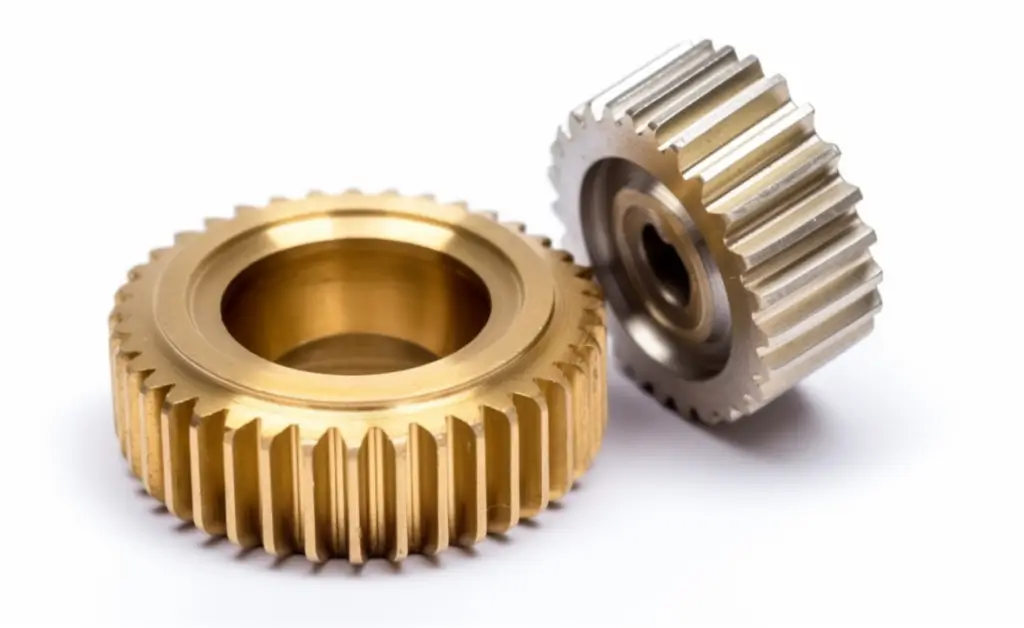
Among the most significant advancements in precision worm gear technology is the dual lead—also known as duplex—configuration. This design addresses the persistent challenge of maintaining precision over time as components experience wear.
The dual lead principle involves manufacturing the worm thread with two distinct leads: one lead on one flank of the thread and a different lead on the opposite flank. This results in a worm thread that progressively increases in thickness from one end to the other. When the worm is moved axially relative to the worm wheel, the mesh backlash can be infinitely adjusted—from an acceptable maximum down to virtually zero.
The practical advantages of dual lead worm gears are substantial. Unlike alternative split-worm designs, the dual lead configuration provides kinematically correct gearing that operates smoothly in either rotational direction. Adjustment mechanisms such as the Ren-Adjust system permit backlash modification without requiring additional machining operations like grinding spacers. By simply releasing a shrink disc, rotating a precision adjustment screw, and re-tightening the disc, operators can restore factory precision during routine maintenance intervals. This adjustability significantly extends service life and reduces total cost of ownership for precision machinery.
3. High-Precision Applications in Machine Tools and Rotary Tables
Precision worm gears find their most demanding applications in machine tool positioning systems, particularly in rotary tables, indexing heads, and fourth-axis configurations for CNC machining centers. In these environments, positional accuracy directly translates to part quality.
The operational requirements are exacting: rotary tables must position workpieces with angular precision measured in arc-seconds, maintain that position under cutting loads, and repeat the positioning thousands of times without degradation. Dual lead worm gears excel here because the adjustable backlash feature allows the system to remain virtually backlash-free throughout the table’s service life. When backlash is minimized, cutter positioning becomes deterministic, enabling the production of complex contours and precision bores that would be impossible with conventional gear drives.
Beyond CNC machine tools, precision worm gears are integral to coordinate measuring machines, where extremely low friction and consistent positioning are prerequisites for accurate dimensional inspection. The smooth, vibration-free operation characteristic of precision-ground worm sets ensures that measurement probes travel accurately and repeatably.
4. Solar Energy Tracking and Aerospace Applications
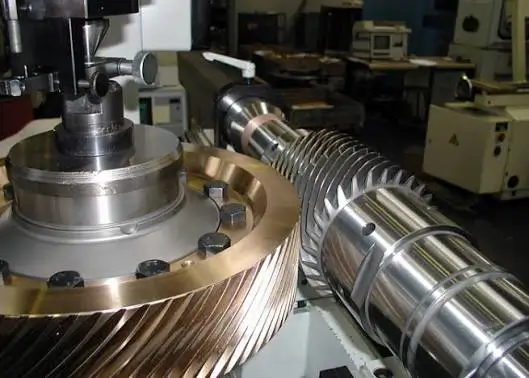
The renewable energy sector has adopted precision worm gears for heliostat and photovoltaic tracking systems. In concentrated solar power (CSP) plants, thousands of mirrors (heliostats) must track the sun’s movement with extreme accuracy to reflect sunlight onto a central receiver. Dual lead worm gears provide the necessary positional precision and the ability to move at extremely slow, controlled rates—enabling mirrors to maintain focus as the sun traverses the sky.
Notably, manufacturers supplying the solar thermal industry produce dual lead worm gear sets specifically designed for this purpose, with some achieving national standard Grade 2 accuracy in mass production. The self-locking characteristic of worm gears with shallow helix angles is particularly valuable here; it ensures that mirror arrays maintain their set positions without requiring continuous power input to hold the load.
In aerospace and defense applications, precision worm gears are found in actuation systems for flight control surfaces, missile guidance systems, and ground support equipment. The stringent quality requirements—often demanding certification to AS9100D and ITAR compliance—reflect the critical nature of these components. Manufacturers specializing in this sector maintain tight-tolerance capabilities down to 0.0001 inches on critical contact surfaces and provide comprehensive inspection documentation.
5. Specialized Configurations: Dual Worm Gear Sets for Heavy Loads
For applications requiring both high precision and substantial power transmission, dual worm gear configurations offer a compelling solution. These arrangements incorporate two worms meshing with a single worm wheel (or two separate wheels on a common output shaft), with one worm serving as the primary drive and the other as a backlash-control or load-sharing element.
The functional distinction is significant: the primary worm gear can be designed with a relatively large helix angle for high efficiency, while the secondary (adjustment) worm gear can employ a shallow helix angle—potentially below the friction angle—to achieve self-locking characteristics that hold position securely under load. This decoupling of efficiency and positioning capability is impossible with single-worm designs.
The dual worm approach also permits independent optimization of contact ratios, module sizes, and gear ratios, giving designers exceptional flexibility when packaging the drive system. The gear train connecting the input shaft to both worms can be arranged with the worms either on the same side of the output shaft or on opposite sides, accommodating diverse mechanical layouts
6. Materials and Manufacturing Excellence
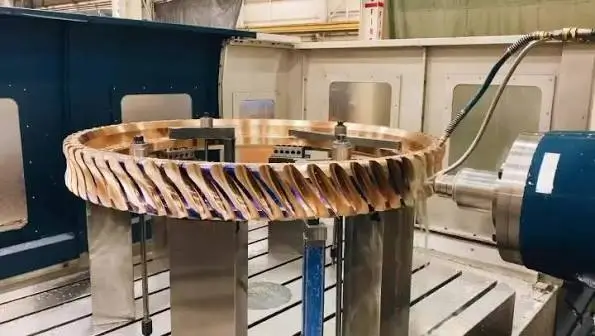
The performance of precision worm gears is fundamentally dependent on material selection and manufacturing processes. The worm is typically manufactured from case-hardened steel with ground flanks, ensuring a hard, wear-resistant surface while maintaining a tough core for impact resistance. The worm wheel is most commonly bronze, selected for its favorable sliding friction characteristics and thermal conductivity.
Modern manufacturing employs state-of-the-art CNC hobbing and thread-grinding machines, often coupled with Klingelnberg gear inspection equipment for in-process verification. This enables real-time correction of deviations during production, significantly reducing non-conformance and ensuring that finished gear sets meet the highest quality grades. Some manufacturers maintain in-house tool-making facilities, allowing them to produce specialized tooth forms—including the Renold-Holroyd tooth form and the Niemann (Cavex) profile—without relying on external suppliers.
The ability to inspect gear sets over the full 360 degrees of rotation and provide graphical reports of pitch, profile, and transmission variations gives customers the documentation needed for validation in regulated industries. This transparency and traceability are particularly valued in aerospace, medical device, and defense supply chains.
7. Self-Locking Characteristics and Static Hold Capability
A defining feature of worm gear technology is the potential for self-locking operation. When the helix angle of the worm is sufficiently shallow, the friction between the worm and wheel prevents the wheel from driving the worm—the mechanism locks in position without requiring a brake or external holding device.
The conditions for self-locking depend on multiple factors: the helix angle, surface roughness of the flanks, sliding speed, lubricant type, and operating temperature. As a general guideline, helix angles below 3° with grease lubrication or below 2.5° with synthetic oils provide reliable dynamic self-locking. Static self-locking can be achieved with helix angles up to approximately 5° depending on the lubricant used. Above 4.5° to 5°, self-locking is generally not present, and additional holding provisions may be necessary. Designers must also account for operational factors that can compromise self-locking, including shock loads and vibration, which may overcome static friction.
This self-locking property is invaluable in applications requiring position-holding without power consumption, such as hoisting equipment, valve actuators, and solar tracking systems. It also provides inherent safety in elevator drive systems and other vertical applications where unintended descent would be hazardous.
8. Industries and Application Spectrum
The versatility of precision worm gears makes them essential across a broad industrial spectrum. In energy generation, they are used in coal pulverizers, steam turbines, and hydraulic power transmission systems. The automotive sector employs them in engine timing mechanisms, fuel injection pumps, and electric power steering systems. Elevator and escalator manufacturers rely on robust worm gear drives for the combination of high reduction ratios, low noise, and reliable operation under variable and sometimes extreme load conditions.
In the medical and instrumentation fields, precision worm gears enable the smooth, controlled motion required in imaging equipment, surgical manipulators, and automated laboratory analysis systems. Semiconductor manufacturing equipment benefits from the vibration-free operation and high positioning repeatability that precision worm sets provide.
General industrial applications include conveyor drives, packaging machinery, material handling equipment, and mixers. The ability to mount worm gear drives in almost any orientation, combined with their compact coaxial or right-angle configurations, provides mechanical designers with exceptional packaging flexibility.
9. Selection Criteria and Quality Considerations
Specifying precision worm gears requires careful evaluation of several interdependent factors. The required backlash level is often the starting point—applications demanding bidirectional positional accuracy will typically necessitate dual lead gears or other adjustable-backlash designs. The torque requirements determine the center distance, face width, and gear ratio. The speed conditions influence the choice of lubricant and the surface finish requirements.
Quality grade selection is paramount: DIN 3962 Grade 2 or AGMA Level 12 represents the highest commercially available precision, suitable for machine tools and aerospace actuation. Commercial grades (DIN 3695-4, for example) may be adequate for general industrial drives where precision requirements are less exacting. Buyers should verify that the supplier provides comprehensive inspection documentation, including pitch and profile deviation measurements over full rotation.
Customization capabilities matter significantly. Precision worm gear manufacturers differentiate themselves through their ability to accommodate customer specifications—including special tooth forms, non-standard pressure angles, and custom materials. The availability of both inch and metric designs, and the capability to offer Just-In-Time delivery, are additional differentiators for suppliers serving demanding production environments.
Frequently Asked Questions
Q1: What distinguishes precision worm gears from commercial-grade worm gears?
Precision worm gears are manufactured to significantly tighter tolerances, typically meeting DIN 3962 Grade 2 or AGMA Level 12 quality standards. They feature ground worm flanks, precise tooth profiles, and backlash adjustable to near-zero levels. Commercial grades, in contrast, have looser tolerances and are suitable for general power transmission where fine positioning accuracy is not required.
Q2: What is a dual lead worm gear and why would I specify one?
A dual lead worm gear has two different leads on the worm thread, resulting in progressive tooth thickness variation. Moving the worm axially adjusts backlash continuously—from maximum to near-zero. This design is essential for rotary tables, machine tool positioners, and any application requiring maintained precision over the gear’s service life.
Q3: Under what conditions does a worm gear self-lock?
Self-locking occurs when the worm helix angle is sufficiently shallow that friction prevents the worm wheel from back-driving the worm. Typically, helix angles below 3° with grease lubrication, or below 2.5° with synthetic oils, provide dynamic self-locking. Static self-locking can occur up to approximately 4.5°. Factors such as shock loads, vibration, and high operating temperatures can compromise self-locking.
Q4: What is the typical efficiency of a precision worm gear drive?
Efficiency varies considerably based on the lead angle, surface finish, lubricant, and speed. Single-start worms with shallow helix angles may achieve efficiencies of 50-70%, while multi-start worms with optimized lubrication can exceed 85%. For highest efficiency applications, gear ratio and helix angle must be balanced against the requirement for self-locking.
Q5: What materials are standard for precision worm gears?
The worm is typically case-hardened steel with ground flanks for wear resistance. The worm wheel is manufactured from bronze to optimize sliding friction characteristics and thermal management. For low-speed, light-load applications, specialized plastics such as Delrin or nylon may be specified, though thermal conductivity limitations restrict their use to sliding speeds below 1.5 m/s.
Q6: How is backlash measured in precision worm gear sets?
Backlash is typically measured as angular deviation at the output shaft—the amount of rotation that occurs before the load is engaged. For precision applications, this is commonly specified in arc-minutes. High-quality dual lead gears can achieve backlash below 1 arc-minute (0.016°), and some manufacturers offer adjustments to virtual zero.
Q7: What industries most commonly use precision worm gears?
Key industries include aerospace, defense, medical devices, semiconductor manufacturing, CNC machine tools, solar energy tracking, automotive, elevator and escalator systems, and general industrial automation. The common thread is the requirement for high positional accuracy, high reduction ratios, and reliable operation in compact packages.
Q8: What inspection documentation should I expect when purchasing precision worm gears?
Quality manufacturers provide graphical reports showing pitch deviations, profile variations, and transmission errors over the full 360-degree rotation of the gear set. These should reference the applicable quality grade standard—typically DIN 3962 or AGMA—and demonstrate conformance to the specified tolerances.
100000+ Types of Bushings – Contact Us for Details