
Recent Posts
From Slag to Functional Material: Reassessing the Engineering Value of Metallurgical Slag under High-Temperature Abrasive Conditions
Introduction
Within the closed-loop ecosystem of the metallurgical industry, slag has long been regarded as a troublesome by-product. However, as tribology, high-temperature materials science, and surface engineering converge, the physicochemical characteristics of metallurgical slag—encompassing blast furnace slag, converter slag, electric arc furnace slag, and ladle refining slag—are being systematically deconstructed and functionally reconfigured. For metallurgical equipment directly exposed to molten slag scouring, thermal shock cycling, and abrasive wear, slag serves both as the processed medium and as a “touchstone” for assessing equipment reliability. This article provides a layered, engineering-oriented analysis of how slag properties affect the selection of bushings, liners, and friction components, offering actionable references for plant engineers and procurement decision-makers.
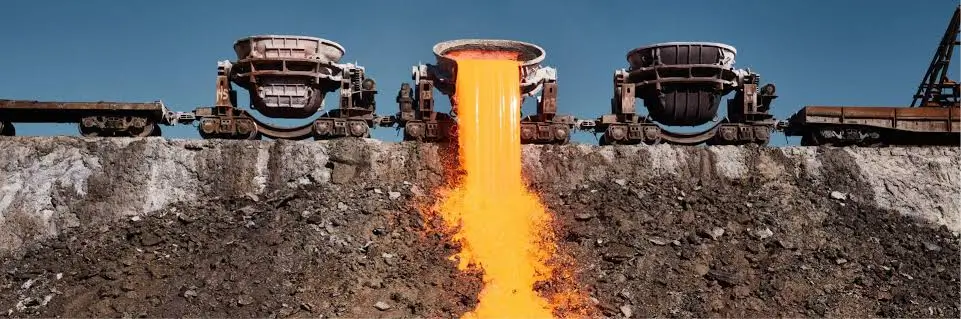
Table of Contents
1. Phase Composition of Metallurgical Slag and Its Underlying Influence on Contact Mechanics
Metallurgical slag is by no means a compositionally uniform inert body but rather consists of non-equilibrium phases formed during rapid cooling. Typical converter slag contains high-hardness dicalcium silicate, calcium ferrite, and free magnesia, with microhardness generally falling within HV 800–1200—approaching that of commercial corundum abrasives. When such particles act as “third bodies” between the bushing and the processed material, their angular morphology and size distribution directly alter the stress field at the contact interface. Under high-pressure, low-speed conditions (e.g., cone crushers processing metallurgical slag), sharp particles tend to indent into softer substrates, resulting in abrasive cutting. Conversely, at high-speed sliding interfaces (e.g., conveyor chute liners), particles are more inclined to undergo combined rolling-sliding motion, generating a failure morphology characterized by both grooving and micro-cutting on the bushing surface. Understanding this phase–mechanical behavior mapping is a prerequisite for rationally designing bushing material grades and surface hardness.
| Compound | Mineral Name | Melting Point (°C) |
| CaO·SiO₂ | Calcium Silicate | 1550 |
| MnO·SiO₂ | Manganese Silicate | 1285 |
| MgO·SiO₂ | Magnesium Silicate | 1557 |
| 2CaO·SiO₂ | Dicalcium Silicate | 2130 |
| 2FeO·SiO₂ | Fayalite | 1205 |
| 2MnO·SiO₂ | Tephroite | 1345 |
| 2MgO·SiO₂ | Forsterite | 1890 |
| CaO·MgO·SiO₂ | Monticellite | 1390 |
| CaO·FeO·SiO₂ | Kirschsteinite | 1205 |
| 2CaO·MgO·SiO₂ | Akermanite | 1450 |
| 3CaO·MgO·2SiO₂ | Merwinite | 1550 |
| 2CaO·P₂O₅ | Dicalcium Phosphate | 1320 |
| CaO·Fe₂O₃ | Calcium Ferrite | 1230 |
| 2CaO·Fe₂O₃ | Dicalcium Ferrite | 1420 |
2. Differential Tribological Behavior of EAF Slag vs. BOF Slag in Friction Pairs
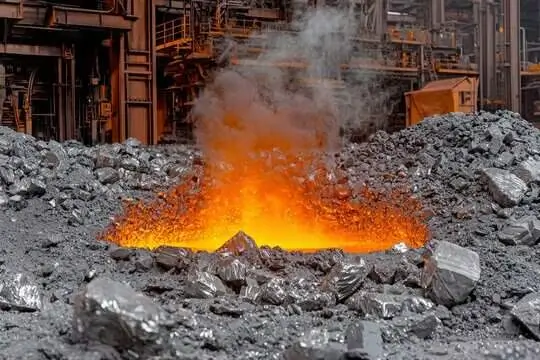
Electric arc furnace slag, owing to its higher residual metallic iron content and low-melting-point glassy phases, exhibits a tendency toward “self-lubrication and self-repair” when interacting with counter-surfaces. Specifically, frictional heat can locally soften the glassy components, allowing them to spread and fill microscopic surface depressions, thereby reducing fluctuations in the coefficient of friction. In contrast, BOF slag is rich in magnetic iron oxides; its abrasive particles tend to agglomerate and cold-weld during sliding, forming large wear debris clusters. These clusters, when rolled over the bushing surface, actually produce a “polishing” effect that mitigates adhesive wear tendencies. However, the free lime in BOF slag undergoes hydration expansion under humid conditions, posing a potential stress corrosion threat to the internal cooling channels of water-cooled bushings. Therefore, when a single production line switches between different slag feedstocks, bushing material selection must balance wear resistance and corrosion resistance, rather than pursuing hardness as the sole criterion.
3. Multiple Failure Mechanisms of Bushings in Hot Slag Processing Equipment
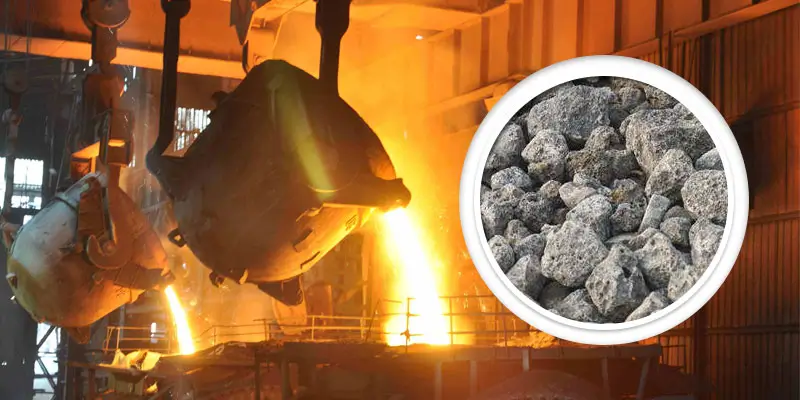
In steel slag hot-stuffy treatment processes, the support bushings within rotary drums are simultaneously subjected to three distinctly different damage loads: first, instantaneous point impacts from loader bucket teeth, which generate indentations and micro-crack initiation on the bushing surface; second, cyclic thermal loads from radiation and conduction of high-temperature slag blocks (800–1000°C), resulting in a temperature difference exceeding 300°C between the inner and outer walls, thereby driving thermal fatigue crack propagation; and third, the severe quenching effect during cooling-water system start/stop cycles, which accelerates temper embrittlement of martensitic microstructures. Field maintenance records indicate that most bushing failures are not purely wear-related but rather occur as brittle fractures after subcritical crack growth reaches a critical size under thermo-mechanical coupling. Consequently, increasing hardness alone is insufficient; an alloy design philosophy that incorporates adequate high-temperature toughness and thermal-shock cracking resistance is essential.
4. Wear Evolution Patterns of Mill Liners in Slag Grinding Applications
When grinding metallurgical slag in wet- or dry-type ball mills, liner wear exhibits significant non-uniform distribution along the mill’s axial direction. At the feed end, due to direct impact from large slag lumps, the wear mechanism is dominated by high-stress gouging abrasion, with impact craters and plastic deformation ridges commonly observed on the liner surface. At the discharge end, repeated rolling and rolling by grinding media (steel balls) and fine slag powder shifts the mechanism to low-stress scratch abrasion and fatigue spalling. This differential wear pattern demands that liner designs avoid a “one-size-fits-all” approach. In practice, employing bainitic steel liners with higher impact toughness at the feed end, while using high-chromium cast iron or ceramic composite liners at the discharge end, can extend the overall liner replacement cycle from 6 months to over 14 months. Additionally, the geometric profile of liner lifters—crests and valleys—must be adjusted based on the bulk density and flowability of the specific slag to maintain optimal grinding efficiency.
5. Critical Role of Bushing Cooling-Structure Design for High-Temperature Slag Service
The thermal management capability of water-cooled bushings directly determines their service life on high-temperature slag processing lines. Engineering practice shows that conventional single-spiral water channels have cooling dead zones, and the wall temperature on the heat-source side consistently exceeds that on the opposite side, leading to non-uniform thermal expansion of the bushing body. This, in turn, causes elliptical deformation at the bearing mounting positions and loss of fit clearance. Novel parallel multi-channel water cooling structures, combined with flow-direction switching valves, can limit the radial temperature difference across the bushing to within 50°C, significantly reducing peak thermal stresses. Furthermore, cooling-water quality must be controlled—sulfides released from slag can condense with steam to form a weak acidic environment. Without a protective inner coating on the water-channel walls, pitting perforation can occur within 3–5 months. Therefore, applying a corrosion-resistant nickel-based alloy coating or nitriding treatment to the cooling-side inner wall has become an important process measure for extending bushing service life in high-temperature zones.
6. Liner Selection Logic for SAG Mills Processing Copper Smelting Slag
Copper smelting slag is characterized by high density, brittle copper-bearing phases, and a SiO₂ content of approximately 30–40%, imposing both significant impact and cutting stresses on liners. In operational records from a major domestic copper smelter, the originally used manganese steel liners exhibited a wave-crest thickness wear rate reaching 65% of the initial thickness by the fourth month of operation, with multiple through-thickness cracks appearing. After switching to magnetic liners, a “self-generating protective layer” formed on the liner surface by adsorbing broken steel balls and magnetic slag particles, substantially reducing subsequent abrasive cutting of the liner body. This protective layer achieved a dynamic equilibrium between wear and regeneration, extending the effective liner service life to 22 months. Notably, magnetic liners are sensitive to fluctuations in magnetite content within the slag feed; when the magnetic fraction falls below a certain threshold, the protective layer formation becomes insufficient, necessitating supplemental artificial magnetization using external magnetic field retainers. This “functional adaptability” approach to liner selection offers more practical guidance than merely comparing liner material hardness.
7. Lubrication and Sealing Challenges for Sliding Bushings in Slag Dust Environments
In slag crushing and screening workshops, suspended microfine dust (particle size <5 μm) that intrudes into the clearance between the bushing and shaft mixes with lubricating oil to form abrasive sludge. This sludge not only aggravates journal abrasive wear but also blocks oil supply passages, causing boundary lubrication failure that progresses to dry friction. More critically, slag dust often contains high-hardness components such as SiO₂ and Al₂O₃; their “wedging effect” within the clearance accelerates elliptical bore enlargement of the bushing, eventually leading to bushing seizure or journal scoring—major equipment accidents. To address this, modern slag processing equipment increasingly adopts combined protection schemes featuring multiple lip seals paired with air-knife purging systems. Simultaneously, the bushing bore is subjected to carburizing or chromium plating treatments to enhance its resistance to abrasive particle embedding. The replacement interval of seals and the bore wear increment have become key monitoring indicators in preventive maintenance schedules.
8. Regeneration and Repair of Bushings and Liners: A Cost-Control Strategy
Cost pressures in metallurgical enterprises have elevated the importance of “life-cycle economy” for bushings and liners. Not all worn components require complete replacement. For bushings with wear depths within permissible limits, applying hardfacing overlays or laser-cladded iron-based alloy powders can restore surface hardness to HRC 55–62, with bond strength sufficient to withstand moderate impact loads. For liners, wear equalization can be achieved by flipping or swapping high-wear and low-wear zones. Moreover, using worn liners as substrates for hardfacing further reduces new material procurement costs. When formulating repair strategies, a trade-off must be evaluated among repair expenses, post-repair expected life, and production losses from downtime. A well-executed repair program often outperforms direct new-part procurement in optimizing annual spare-part budgets.
9. New Demands on Wear Components Driven by Slag Reutilization Trends
As the resource utilization rate of slag in building materials, ceramics, and friction materials continues to rise, the particle-size requirements and impurity-control standards for slag processing are becoming increasingly stringent. This means grinding and classification equipment must handle finer feed materials while simultaneously preventing bushing wear debris from contaminating the slag powder. For high-purity slag powder intended as friction-material filler, any iron or alloy chips originating from bushings can adversely affect the friction stability of the final product. Accordingly, new bushing materials are evolving toward “low-wear and low-contamination” characteristics. For example, alumina-based ceramic bushings or silicon-carbide composite bushings exhibit wear rates only one-fifth to one-third those of metallic bushings, and their wear products are inert ceramic powders that do not interfere with the chemical purity or subsequent performance of the slag.
Choose MYWAY to Build a Durable and Reliable Wear Barrier for Your Metallurgical Slag Processing Line
Faced with the high-temperature, high-impact, and high-abrasion conditions of metallurgical slag processing, every unscheduled replacement of bushings and liners translates into both production losses and maintenance cost burdens. MYWAY has long been dedicated to wear-resistant solutions for the metallurgical sector. Our product portfolio—including composite bushings, water-cooled support bushings, and classification liners—is engineered and material-optimized based on actual wear data from different slag types. We never simply offer off-the-shelf products; instead, we provide customized selection recommendations and maintenance-cycle planning tailored to your specific slag composition, equipment model, and failure history. If you aim to reduce your consumable cost per ton of slag processed, or if you are struggling with recurring issues such as shaft seizure or liner fracturing, we welcome you to engage with the MYWAY technical team to discuss your site-specific operating conditions. What we deliver is not merely a product quotation but a continuously optimized wear-management strategy.
100000+ Types of Bushings – Contact Us for Details