
Recent Posts
Square Flanged Self-Lubricating Bearings: Why Your Machinery Needs This Upgrade
In the world of industrial motion, the little things make the biggest difference. If you’ve ever dealt with machinery downtime because of a seized bearing, or if you’re tired of the endless cycle of greasing and maintaining traditional bushings, you’re in the right place. Today, we’re diving deep into a component that is quietly revolutionizing linear motion technology: the square flanged self-lubricating bearing.
Whether you call them square flange oilless bushings, graphite plugged bronze bearings, or flanged linear sleeve bearings, these engineering marvels are changing how OEMs and maintenance teams approach equipment design. Let’s break down everything you need to know—from material composition to real-world applications—and show you why MYWAY should be your go-to source for these critical components.
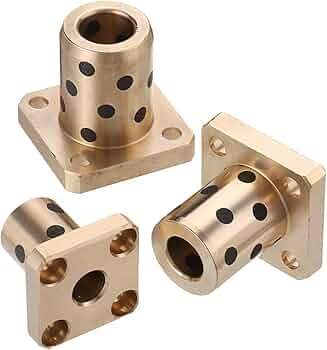
Table of Contents
1. What Exactly is a Square Flanged Self-Lubricating Bearing?
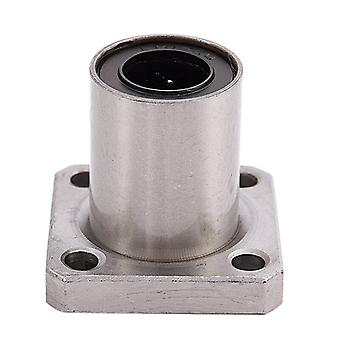
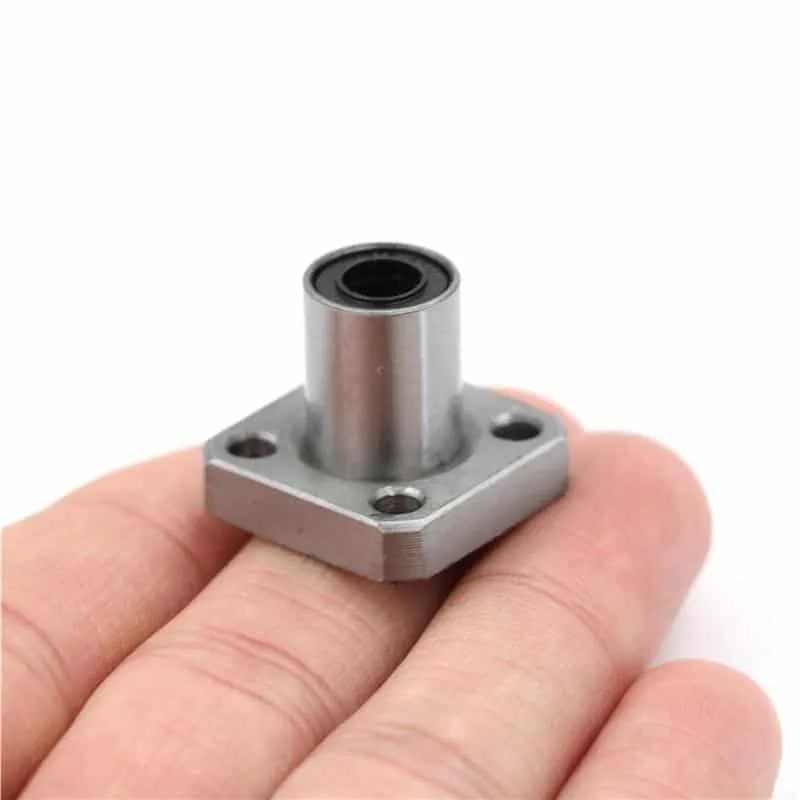
To understand the magic, let’s look at the name itself. A bearing is a machine element that constrains relative motion and reduces friction. “Self-lubricating” means the component provides its own internal lubrication, eliminating the need for external oils or greases. The “square flange” refers to the mounting plate at the end, which features four mounting holes for a rock-solid, vibration-resistant installation .
Specifically, a Square Flange Type Oilless Linear Bearing is designed for linear motion (sliding) rather than just rotational movement. Unlike traditional linear ball bearings that use recirculating balls, these are plain bearings with a low-friction liner or embedded lubricant .
The “Aha!” Moment: Square vs. Round Flange
Why choose a square flange? The answer is stability. While round flanges can rotate or misalign under torque, the square flange design offers:
Anti-Rotation Security: The squared edges lock into mating components, preventing spinning.
Easier Alignment: The flat edges provide reference surfaces, making installation faster and more accurate .
Higher Load Surface: The larger surface area of the flange helps distribute axial loads more effectively.
2. The Secret Sauce: How Do They Work Without Oil?
The term “oilless” often confuses buyers. How can metal rub against metal without welding itself together? The answer lies in the material science.
Most high-quality square flanged self-lubricating bearings utilize a two-part structure:
The Metal Backing (Strength): This is usually a high-strength copper alloy or aluminum. It provides the structural integrity to handle heavy loads .
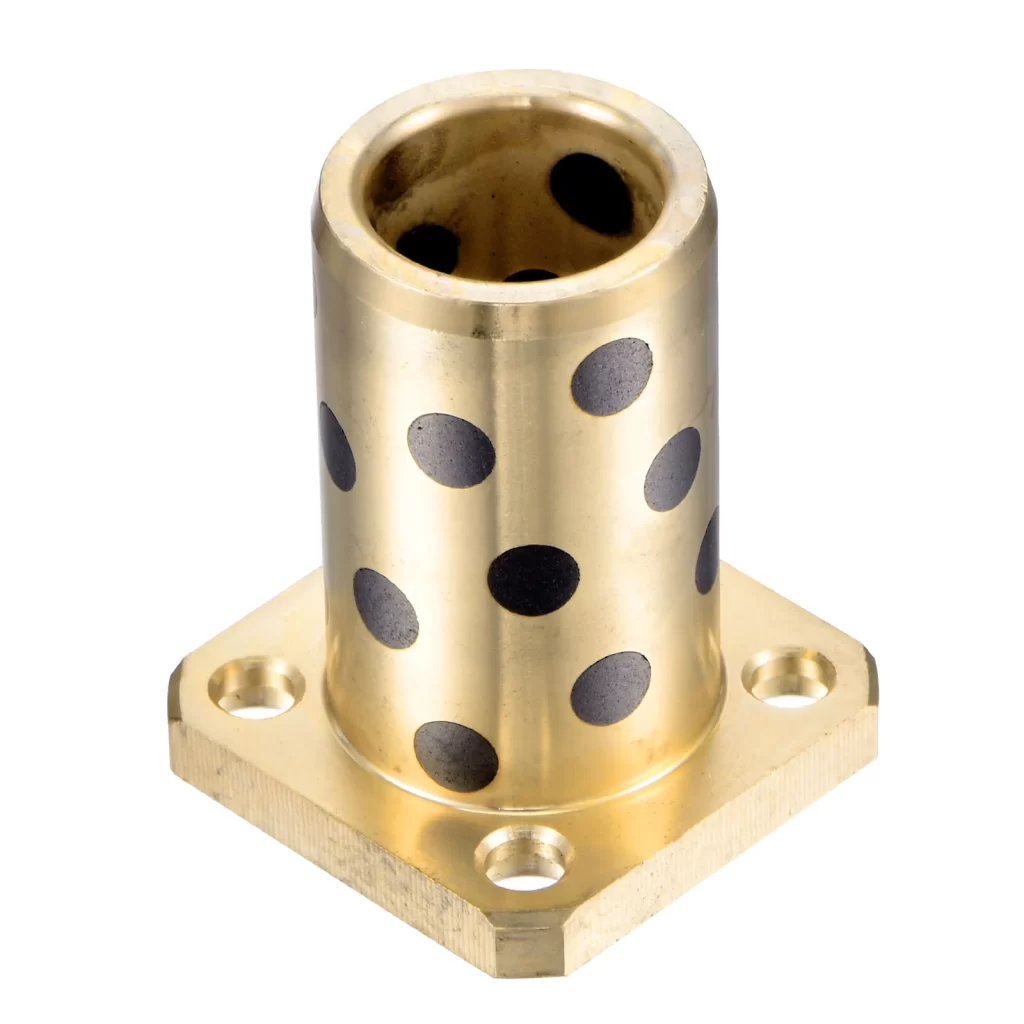
The Lubricant (Sacrificial Layer): This is where the magic happens. Solid lubricants like graphite, PTFE, or specialized compounds like FrelonGOLD® are embedded into the metal .
When the shaft moves, a microscopic film of this solid lubricant transfers to the shaft surface. Metal never touches metal. This is why they are called maintenance-free bushings .
Spotlight on Materials: Graphite vs. PTFE
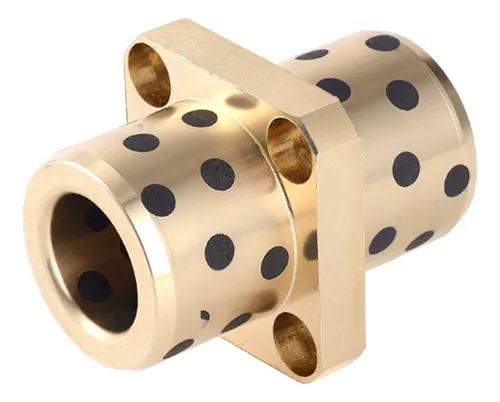
Graphite Plugged Bronze: This is the workhorse of the industry. Holes are drilled into a bronze matrix (like high-strength C83600 or CuSn5Pb5Zn5) and filled with graphite plugs. As the bearing runs, the graphite wears slightly, smearing a lubricating film across the bearing surface. It’s perfect for high temperatures and dirty environments .
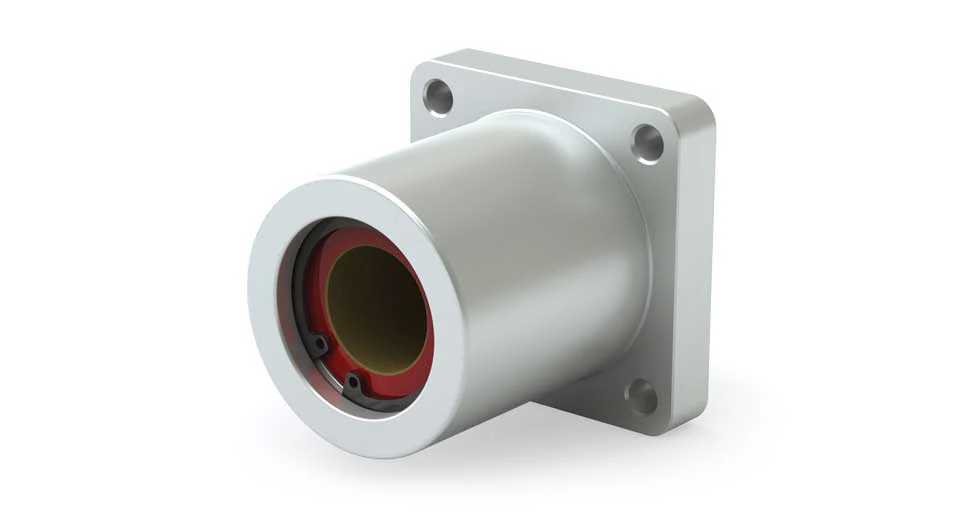
PTFE-Lined (FrelonGOLD®): Found in high-performance linear bearings (like those from PBC Linear), this is a composite liner bonded to an aluminum shell. It offers ultra-low friction and is incredibly quiet .
3. Top 5 Reasons to Switch to Square Flanged Oilless Bearings
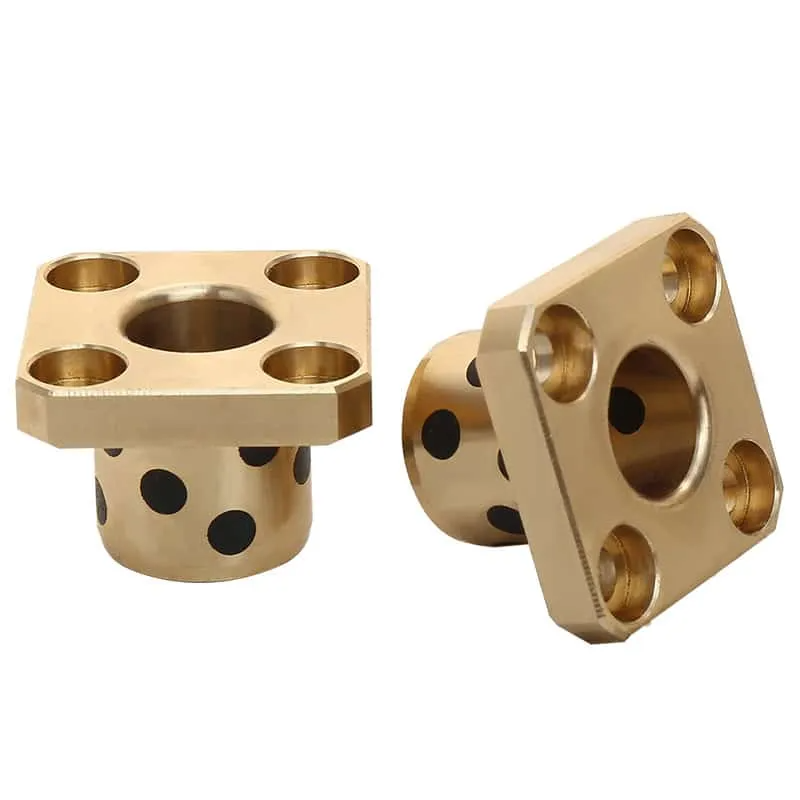
If you are currently using ball bearings or traditional bronze bushing that require grease fittings, here is why making the switch to a self-lubricating square flange bushing is a no-brainer.
1. Maintenance-Free Operation (The “Fit and Forget” Factor)
In traditional bearings, 90% of failures are due to improper lubrication—either too much, too little, or contaminated grease. Oilless bushings eliminate this variable. Because the lubricant is embedded in the material, you don’t need maintenance crews crawling under machinery with grease guns. This drastically reduces downtime and labor costs .
2. Built for Harsh Environments
Dirt, dust, sand, and water are the enemies of recirculating ball bearings (they get clogged and jam). A square flanged self-lubricating bearing thrives here. Since there are no rolling elements to jam, and the solid lubricant isn’t washed away by water or chemicals, these bearings are the go-to choice for marine applications, construction equipment, and food processing wash-down areas .
3. High Load Capacity in a Compact Package
Because the load is distributed over a large surface area (rather than point contacts on balls), these bearings can handle significantly higher static and dynamic loads. For instance, PBC Linear’s square flanged units support static loads up to an incredible 284,000 N .
4. Damping and Quiet Operation
Ball bearings can be noisy, especially at high speeds or under vibration. Plain bearings have natural vibration damping properties. The sliding action absorbs shock and chatter, leading to quieter, smoother machinery .
5. Temperature and Chemical Resistance
Standard grease turns to sludge at high temps or drips away. Graphite, however, actually gets more lubricious as temperatures rise. These bearings can operate continuously in ranges from -240°C up to +400°C depending on the material .
4. Deep Dive: The MYWAY MPTSZ Series
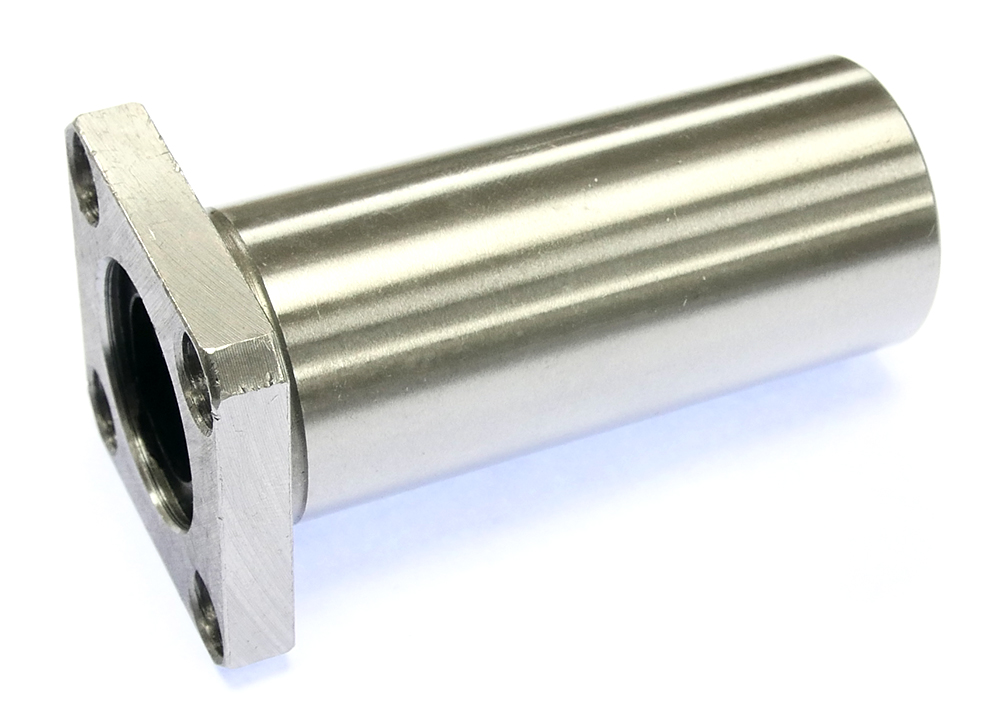
At MYWAY, we have perfected the graphite-copper alloy integration. Our MPTSZ series (available in sizes 25, 30, 35, 40, and 50) represents the pinnacle of square flanged self-lubricating bearing technology .
Construction
We start with a high-tensile brass or aluminum alloy shell. This base material is chosen for its strength and thermal conductivity. Unlike cheaper alternatives, our shell resists deformation under shock loads.
The Lubrication Mechanism
We precisely drill and embed high-purity graphite plugs into the alloy. This isn’t just “pressed in”; it’s engineered to ensure a consistent lubricating film over the life of the bearing. As the bearing runs, the graphite is released at a controlled rate, ensuring low friction without compromising the structural integrity of the metal .
Performance Characteristics
Self-Lubricating: Runs completely dry or with initial grease for even lower friction.
Wear Resistance: The copper matrix is hard enough to support heavy loads but soft enough to embed any stray contaminants, protecting your shaft.
Corrosion Resistance: Ideal for humid or chemically exposed environments.
Dual Motion: Handles both linear sliding and rotational oscillation simultaneously .
5. Applications: Where You'll Find Them
You might be surprised where these bearings are already working. If you look at the heavy equipment around you, chances are high you’ll spot a square flange bushing.
Industrial Automation & Robotics
In pick-and-place machines and Cartesian robots, precision and cleanliness are key. A square flanged linear bearing provides smooth, precise motion without the grease splatter associated with lubricated systems, making them ideal for cleanrooms .
Construction & Material Handling
Think about the outriggers on a concrete pump truck or the pivot points on a telescopic handler. These areas face massive loads and constant dirt. A graphite plugged bronze bushing handles the slow, high-load oscillation perfectly. We serve industry giants like XCMG and SANY in this sector .
Automotive Manufacturing
In welding jigs and assembly lines, consistency is king. Self-lubricating bearings ensure that robots place welds in the exact same spot every time, year after year, without variance caused by changing grease viscosity .
Agriculture
Harvesters and tractors work in dusty hellscapes. Grease fittings attract dust, forming a grinding paste. Oilless bearings laugh off the dust, as the solid lubricant doesn’t act like a magnet for abrasives.
Medical Technology
In MRI machines or diagnostic equipment, ferrous metals and lubricants are a no-go. Non-magnetic bronze alloys paired with graphite or PTFE provide the silent, maintenance-free operation required for sensitive medical environments .
6. How to Choose the Right Square Flanged Bushing
Selecting the correct bushing isn’t just about the inner diameter (ID). To get the best performance, consider these factors:
1. Load (PV Factor)
Engineers use the PV Factor (Pressure x Velocity). High load, slow speed? Go with a high-strength bronze like CuZn25Al6Fe3Mn3. High speed, low load? An aluminum body with a PTFE liner might be better .
2. Running Clearance
Unlike ball bearings, plain bearings need a specific clearance to allow for thermal expansion and the lubrication film. Most manufacturers offer standard and compensated clearances. Compensated clearances (e.g., 0.0015″ per side) are used when you have misalignment or multiple bearings on the same rail .
3. Shaft Material
Self-lubricating bearings work best with harder shafts. A soft shaft won’t allow the lubricant transfer film to form. Hard chrome plated or induction hardened shafts (HRC 60+) are recommended for maximum life .
4. Environmental Factors
High Temp: Go for graphite plugged.
Submerged (Water): Bronze alloys are naturally corrosion-resistant; graphite works fine underwater.
Cleanroom/Medical: Opt for FDA-compliant liners like Frelon® W .
7. Why Global OEMs Choose MYWAY
Since 2005, MYWAY has been more than just a parts supplier; we are an engineering partner. With over 400 employees and a 35,000㎡ manufacturing campus, we offer capabilities that set us apart .
Vertical Integration: The MYWAY Difference
We don’t just buy stock and machine it. We control the entire process:
Casting: We operate horizontal continuous casting lines and centrifugal casting machines capable of producing 35,000 tons annually. This means we control the grain structure and quality of the raw metal .
Sintering: Our advanced sintering lines ensure perfect bonding of composite layers .
Machining: With over 100 finishing machines and 2,000 precision molds, we achieve tolerances that meet the tightest specs .
Inspection: Our lab is equipped with spectrometers, tensile testers, and 3-coordinate measuring machines to validate every batch .
Rapid Response Logistics
Time is money. We maintain a 5,000㎡ automated warehouse stocked with standard sizes (including the popular MPTSZ series). This allows us to ship urgent orders immediately, keeping your production lines running .
Frequently Asked Questions (FAQ)
Q: Do square flanged self-lubricating bearings ever need oil?
A: By design, no. They are engineered to run dry. However, applying a small amount of initial grease during installation can further reduce the break-in friction and extend life, but it is not required for operation .
Q: What is the difference between a self-lubricating bearing and a “maintenance-free” bearing?
A: They are essentially the same. “Self-lubricating” refers to the mechanism (internal lube). “Maintenance-free” refers to the outcome (you don’t need to maintain it). Both mean no external greasing is needed .
Q: Can these bearings handle high temperatures?
A: Absolutely. Depending on the material, they excel where grease fails. Graphite-based bushings can handle up to 300°C+, while PTFE-based liners are typically rated around 200°C .
Q: What does MPTSZ stand for?
A: In the industry, MPTSZ generally refers to a Square Flange Graphite Bushing made from a high-strength copper alloy. It is a standard designation for oilless, plugged bushings .
Q: How do I install a square flanged bearing?
A: The square flange makes installation simple. You simply insert the bearing into a machined housing pocket (or onto the shaft) and bolt the flange down through its mounting holes. The flange ensures precise axial location and prevents rotation .
Q: Can you customize the size or material?
A: Yes. As a vertically integrated manufacturer, MYWAY excels at custom work. Whether you need a non-standard length, a special alloy for corrosion resistance (like CuSn12 or C86300), or a different graphite area percentage, we can deliver based on your drawings .
Conclusion: Engineer for the Future with MYWAY
The shift away from traditional, maintenance-heavy bearings is accelerating. Engineers are now designing for sustainability, efficiency, and reliability. By specifying square flanged self-lubricating bearings, you are choosing a path that reduces waste (no oil disposal), cuts downtime, and increases the lifespan of your machinery.
At MYWAY, we don’t just make bushings; we engineer confidence. Whether you need a standard MPTSZ bushing for a robotic arm or a custom-cast giant for a mining excavator, we have the capability, the stock, and the expertise to support you.
Don’t let outdated bearing technology slow you down.
Contact Our Engineering Team Today for a quote or to discuss your specific application requirements. Let’s build something that lasts—maintenance-free.
100000+ Types of Bushings – Contact Us for Details