
Recent Posts
Steel-Backed Bushings: Bimetal Bearing Metallurgy, Load Support, Sliding Layers, and Global Procurement
Introduction
A steel-backed bushing is a composite plain bearing in which a steel shell supplies stiffness, press-fit strength and dimensional stability while a bronze, leaded-bronze, aluminum-tin, sintered, PTFE, POM, polymer or solid-lubricant layer provides the sliding surface. The architecture allows a thin wall, high housing interference, controlled bearing surface, and efficient use of specialized bearing material. Steel-backed bearings are used in automotive components, hydraulic equipment, construction machinery, compressors, agricultural equipment, machine tools, industrial handling, rolling-mill auxiliaries, pumps and general machinery. The correct grade depends on material stack, layer thickness, load, speed, lubrication, temperature, shaft finish, fit, corrosion and environment.
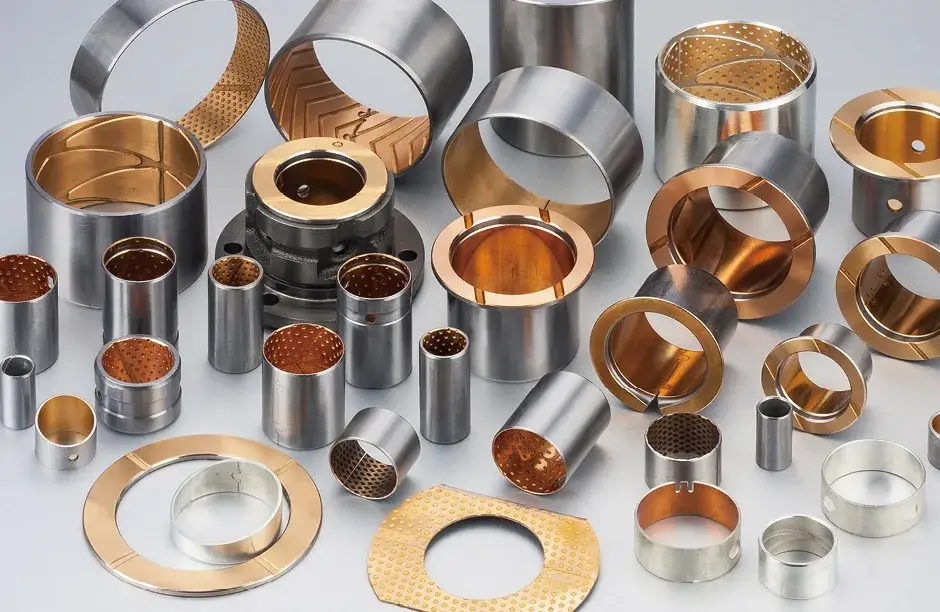
Table of Contents
1. Steel-Backed Bushing Definition and Product Architecture
Steel-backed bushing is a structural description rather than one alloy. The shell transfers load into the housing and permits a robust interference fit. The working layer controls friction, wear, conformability and compatibility with the shaft. A bimetal bearing may use steel plus a bronze-based sliding layer. A metal-polymer bearing may add porous sintered bronze and PTFE or thermoplastic overlay. Different architectures can look similar from outside yet have very different temperature limits, lubrication needs, allowable shaft finish and repair options. Identify the full cross-section before comparing quotations. The final selection must follow approved product data and actual application conditions.
Steel-backed bushing is a structural description rather than one alloy. The shell transfers load into the housing and permits a robust interference fit. The working layer controls friction, wear, conformability and compatibility with the shaft. A bimetal bearing may use steel plus a bronze-based sliding layer. A metal-polymer bearing may add porous sintered bronze and PTFE or thermoplastic overlay. Different architectures can look similar from outside yet have very different temperature limits, lubrication needs, allowable shaft finish and repair options. Identify the full cross-section before comparing quotations. This converts a broad steel-backed request into an inspectable engineering specification.
Steel-backed bushing is a structural description rather than one alloy. The shell transfers load into the housing and permits a robust interference fit. The working layer controls friction, wear, conformability and compatibility with the shaft. A bimetal bearing may use steel plus a bronze-based sliding layer. A metal-polymer bearing may add porous sintered bronze and PTFE or thermoplastic overlay. Different architectures can look similar from outside yet have very different temperature limits, lubrication needs, allowable shaft finish and repair options. Identify the full cross-section before comparing quotations. Traceable material and dimensional records improve batch-to-batch reliability.
2. Steel Shell, Bronze Layer, and Polymer Overlay Metallurgy
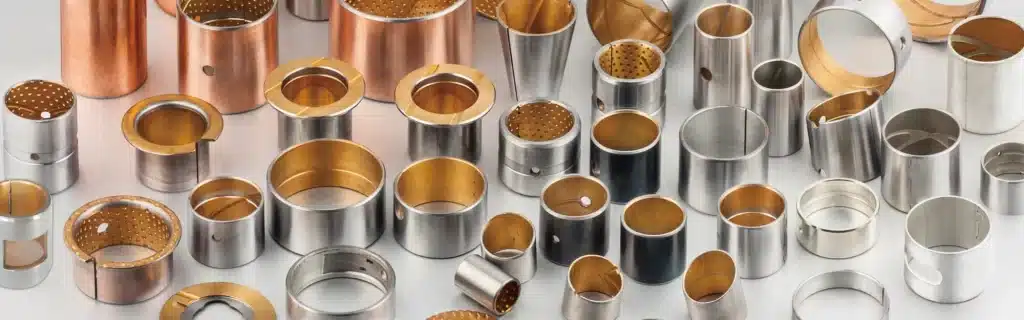
The steel backing must have adequate thickness, forming quality, surface preparation and bond compatibility. A bronze layer may be rolled, sintered, plated, cast, or metallurgically bonded; a polymer overlay may be applied above a porous bronze interlayer. Layer thickness affects load support, heat transfer, tolerance to debris and machining allowance. Materials such as leaded bronze may be restricted by regulatory or customer requirements, while lead-free alternatives have their own operating windows. Material identity must include the backing, intermediate layer, sliding layer and any coating, not just the word steel-backed. The final selection must follow approved product data and actual application conditions.
The steel backing must have adequate thickness, forming quality, surface preparation and bond compatibility. A bronze layer may be rolled, sintered, plated, cast, or metallurgically bonded; a polymer overlay may be applied above a porous bronze interlayer. Layer thickness affects load support, heat transfer, tolerance to debris and machining allowance. Materials such as leaded bronze may be restricted by regulatory or customer requirements, while lead-free alternatives have their own operating windows. Material identity must include the backing, intermediate layer, sliding layer and any coating, not just the word steel-backed. This converts a broad steel-backed request into an inspectable engineering specification.
The steel backing must have adequate thickness, forming quality, surface preparation and bond compatibility. A bronze layer may be rolled, sintered, plated, cast, or metallurgically bonded; a polymer overlay may be applied above a porous bronze interlayer. Layer thickness affects load support, heat transfer, tolerance to debris and machining allowance. Materials such as leaded bronze may be restricted by regulatory or customer requirements, while lead-free alternatives have their own operating windows. Material identity must include the backing, intermediate layer, sliding layer and any coating, not just the word steel-backed. Traceable material and dimensional records improve batch-to-batch reliability.
Layer system | Primary role | Key controls |
Steel plus bronze | Stiffness and lubricated sliding | Bond, thickness, oil or grease |
Steel plus polymer | Support and low-friction overlay | PV, shaft finish, temperature |
Steel plus solid lubricant | Support and dry or marginal duty | Load, plug/layer layout, counterface |
3. Bimetal, Metal-Polymer, and Steel-Backed Material Families
ISO 3547-1 covers dimensions and designations of cylindrical and flanged wrapped bushes made from mono- and multi-layer material. ISO 3547-3 addresses lubrication holes, grooves and indentations; ISO 3547-6 describes checking the inside diameter of wrapped bushes. GGB official data distinguish thin-walled bimetal materials, metal-polymer products and steel-backed bearing types. SAE 792 and SAE 794 are common bimetal references. Use the standard to define geometry and testing, then use the selected supplier grade for properties and application limits. The final selection must follow approved product data and actual application conditions.
ISO 3547-1 covers dimensions and designations of cylindrical and flanged wrapped bushes made from mono- and multi-layer material. ISO 3547-3 addresses lubrication holes, grooves and indentations; ISO 3547-6 describes checking the inside diameter of wrapped bushes. GGB official data distinguish thin-walled bimetal materials, metal-polymer products and steel-backed bearing types. SAE 792 and SAE 794 are common bimetal references. Use the standard to define geometry and testing, then use the selected supplier grade for properties and application limits. This converts a broad steel-backed request into an inspectable engineering specification.
ISO 3547-1 covers dimensions and designations of cylindrical and flanged wrapped bushes made from mono- and multi-layer material. ISO 3547-3 addresses lubrication holes, grooves and indentations; ISO 3547-6 describes checking the inside diameter of wrapped bushes. GGB official data distinguish thin-walled bimetal materials, metal-polymer products and steel-backed bearing types. SAE 792 and SAE 794 are common bimetal references. Use the standard to define geometry and testing, then use the selected supplier grade for properties and application limits. Traceable material and dimensional records improve batch-to-batch reliability.
4. PV Factor, Heat Flow, Load, and Speed Selection
PV factor, pressure multiplied by sliding velocity, is a useful preliminary indicator of frictional heat but cannot substitute for bearing design. Actual performance is influenced by oscillation, duty cycle, start-stop operation, heat path through the steel backing and housing, lubrication, shaft roughness, alignment, ambient temperature and contamination. A thin steel-backed bush may dissipate heat differently from a thick bronze sleeve. The buyer should provide normal and maximum load, speed, movement, temperature, cycle time and cooling condition, not only one average PV number. The final selection must follow approved product data and actual application conditions.
PV factor, pressure multiplied by sliding velocity, is a useful preliminary indicator of frictional heat but cannot substitute for bearing design. Actual performance is influenced by oscillation, duty cycle, start-stop operation, heat path through the steel backing and housing, lubrication, shaft roughness, alignment, ambient temperature and contamination. A thin steel-backed bush may dissipate heat differently from a thick bronze sleeve. The buyer should provide normal and maximum load, speed, movement, temperature, cycle time and cooling condition, not only one average PV number. This converts a broad steel-backed request into an inspectable engineering specification.
PV factor, pressure multiplied by sliding velocity, is a useful preliminary indicator of frictional heat but cannot substitute for bearing design. Actual performance is influenced by oscillation, duty cycle, start-stop operation, heat path through the steel backing and housing, lubrication, shaft roughness, alignment, ambient temperature and contamination. A thin steel-backed bush may dissipate heat differently from a thick bronze sleeve. The buyer should provide normal and maximum load, speed, movement, temperature, cycle time and cooling condition, not only one average PV number. Traceable material and dimensional records improve batch-to-batch reliability.
Layer system | Primary role | Key controls |
Steel plus bronze | Stiffness and lubricated sliding | Bond, thickness, oil or grease |
Steel plus polymer | Support and low-friction overlay | PV, shaft finish, temperature |
Steel plus solid lubricant | Support and dry or marginal duty | Load, plug/layer layout, counterface |
5. Wrapped-Bush Geometry, Fit, Clearance, and Installation
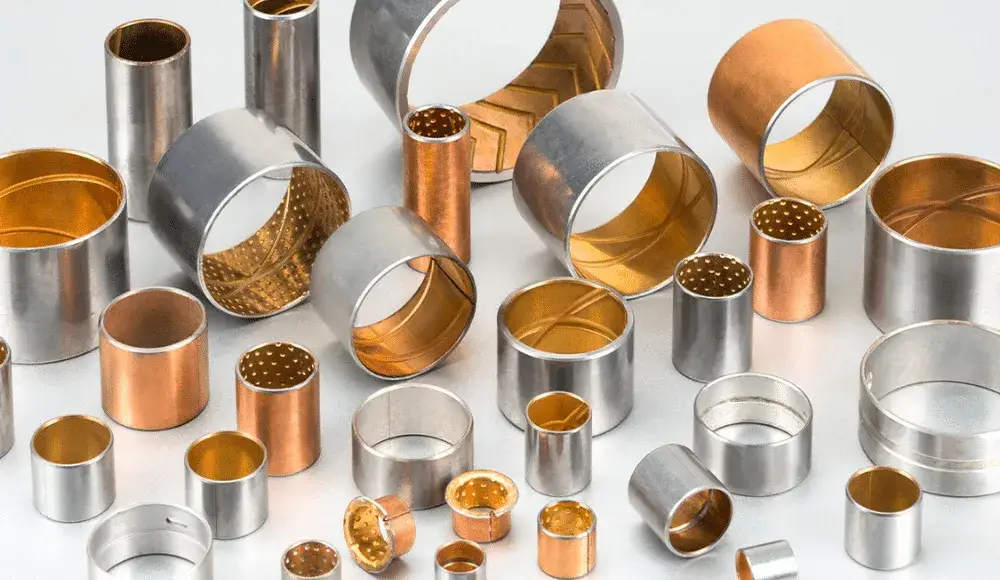
Wrapped steel-backed bushes are formed from strip and commonly have a continuous split. Their outside diameter, inside diameter and installed clearance must be evaluated after fitting because the press fit changes geometry. Excessive interference may close the bore or damage a delicate layer; insufficient interference permits rotation and fretting. Housing material, wall thickness, bore tolerance, shaft diameter, flange, split position and installation tool all matter. Do not ream, hone or machine a layer unless the material data explicitly permits it. The final selection must follow approved product data and actual application conditions.
Wrapped steel-backed bushes are formed from strip and commonly have a continuous split. Their outside diameter, inside diameter and installed clearance must be evaluated after fitting because the press fit changes geometry. Excessive interference may close the bore or damage a delicate layer; insufficient interference permits rotation and fretting. Housing material, wall thickness, bore tolerance, shaft diameter, flange, split position and installation tool all matter. Do not ream, hone or machine a layer unless the material data explicitly permits it. This converts a broad steel-backed request into an inspectable engineering specification.
Wrapped steel-backed bushes are formed from strip and commonly have a continuous split. Their outside diameter, inside diameter and installed clearance must be evaluated after fitting because the press fit changes geometry. Excessive interference may close the bore or damage a delicate layer; insufficient interference permits rotation and fretting. Housing material, wall thickness, bore tolerance, shaft diameter, flange, split position and installation tool all matter. Do not ream, hone or machine a layer unless the material data explicitly permits it. Traceable material and dimensional records improve batch-to-batch reliability.
6. Lubrication, Shaft Finish, Water, and Contamination
Some steel-backed bimetal layers are intended for oil or grease lubrication; some metal-polymer systems provide low-friction operation with limited or no routine lubricant. Water, dirt, metal fines, chemicals and heat can exceed any bearing system. Shaft hardness, roughness, roundness, taper, runout and cleanliness are essential to overlay life and transfer-film behavior. Grooves or holes must suit the specific grade: a deep groove may be acceptable in a thick bimetal sliding layer but harmful in a thin polymer overlay. Seal design and lubricant filtration are still important. The final selection must follow approved product data and actual application conditions.
Some steel-backed bimetal layers are intended for oil or grease lubrication; some metal-polymer systems provide low-friction operation with limited or no routine lubricant. Water, dirt, metal fines, chemicals and heat can exceed any bearing system. Shaft hardness, roughness, roundness, taper, runout and cleanliness are essential to overlay life and transfer-film behavior. Grooves or holes must suit the specific grade: a deep groove may be acceptable in a thick bimetal sliding layer but harmful in a thin polymer overlay. Seal design and lubricant filtration are still important. This converts a broad steel-backed request into an inspectable engineering specification.
Some steel-backed bimetal layers are intended for oil or grease lubrication; some metal-polymer systems provide low-friction operation with limited or no routine lubricant. Water, dirt, metal fines, chemicals and heat can exceed any bearing system. Shaft hardness, roughness, roundness, taper, runout and cleanliness are essential to overlay life and transfer-film behavior. Grooves or holes must suit the specific grade: a deep groove may be acceptable in a thick bimetal sliding layer but harmful in a thin polymer overlay. Seal design and lubricant filtration are still important. Traceable material and dimensional records improve batch-to-batch reliability.
7. Inspection, Layer Integrity, Wear, and Failure Analysis
Failure modes include overlay wear, bronze-layer scoring, bond separation, outer-diameter fretting, bore collapse, seizure, corrosion, cavitation, fatigue, thermal distortion and edge loading. Analyze the full assembly before replacement. Preserve bearing orientation, shaft evidence, lubricant or debris, housing dimensions, process fluid, temperature trend, load event and installation history. Quality inspection may include chemistry, strip or layer identity, thickness, bond integrity, dimensions, surface condition, bore check, hardness where relevant and agreed metallography or NDT. The final selection must follow approved product data and actual application conditions.
Failure modes include overlay wear, bronze-layer scoring, bond separation, outer-diameter fretting, bore collapse, seizure, corrosion, cavitation, fatigue, thermal distortion and edge loading. Analyze the full assembly before replacement. Preserve bearing orientation, shaft evidence, lubricant or debris, housing dimensions, process fluid, temperature trend, load event and installation history. Quality inspection may include chemistry, strip or layer identity, thickness, bond integrity, dimensions, surface condition, bore check, hardness where relevant and agreed metallography or NDT. This converts a broad steel-backed request into an inspectable engineering specification.
Failure modes include overlay wear, bronze-layer scoring, bond separation, outer-diameter fretting, bore collapse, seizure, corrosion, cavitation, fatigue, thermal distortion and edge loading. Analyze the full assembly before replacement. Preserve bearing orientation, shaft evidence, lubricant or debris, housing dimensions, process fluid, temperature trend, load event and installation history. Quality inspection may include chemistry, strip or layer identity, thickness, bond integrity, dimensions, surface condition, bore check, hardness where relevant and agreed metallography or NDT. Traceable material and dimensional records improve batch-to-batch reliability.
Layer system | Primary role | Key controls |
Steel plus bronze | Stiffness and lubricated sliding | Bond, thickness, oil or grease |
Steel plus polymer | Support and low-friction overlay | PV, shaft finish, temperature |
Steel plus solid lubricant | Support and dry or marginal duty | Load, plug/layer layout, counterface |
8. Quote-Ready Steel-Backed Bushing RFQ and Lifecycle Value
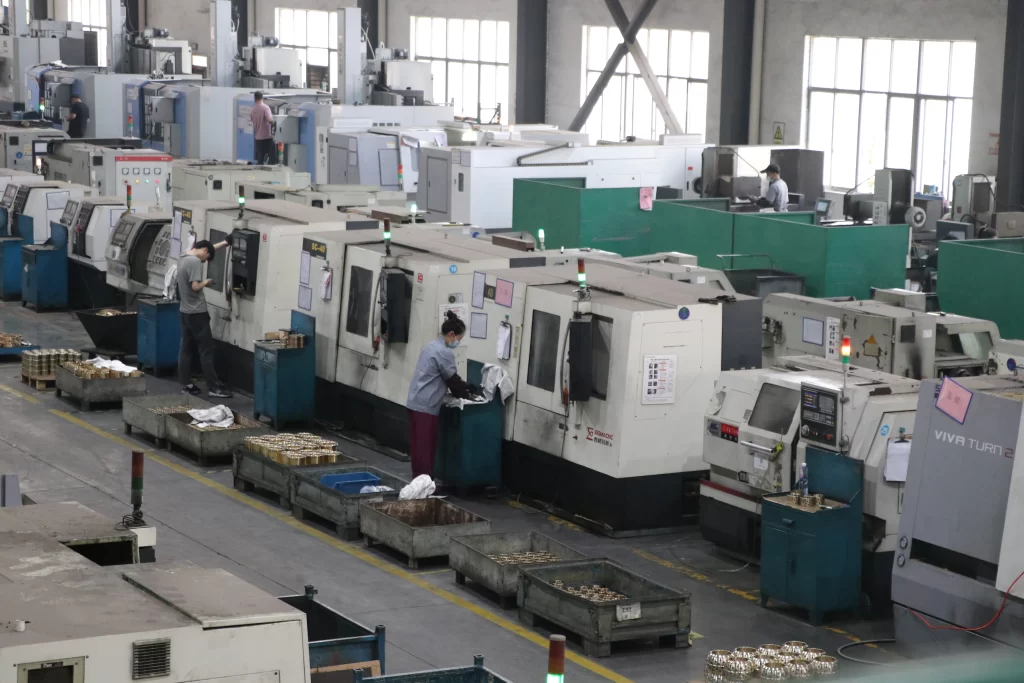
A complete RFQ identifies cylindrical, flanged, thrust or custom form; backing and sliding-layer material; thickness; dimensions; shaft and housing materials; fit and clearance; radial and axial load; speed; oscillation; PV; temperature; lubricant; water or chemical exposure; seals; quantity; certificates; sampling; packaging and destination. Ask the supplier to state the full material stack, approved shaft condition, forming limits, process restrictions, inspection method, lead time and exceptions. This creates a defensible selection rather than a generic steel-bush purchase. The final selection must follow approved product data and actual application conditions.
A complete RFQ identifies cylindrical, flanged, thrust or custom form; backing and sliding-layer material; thickness; dimensions; shaft and housing materials; fit and clearance; radial and axial load; speed; oscillation; PV; temperature; lubricant; water or chemical exposure; seals; quantity; certificates; sampling; packaging and destination. Ask the supplier to state the full material stack, approved shaft condition, forming limits, process restrictions, inspection method, lead time and exceptions. This creates a defensible selection rather than a generic steel-bush purchase. This converts a broad steel-backed request into an inspectable engineering specification.
A complete RFQ identifies cylindrical, flanged, thrust or custom form; backing and sliding-layer material; thickness; dimensions; shaft and housing materials; fit and clearance; radial and axial load; speed; oscillation; PV; temperature; lubricant; water or chemical exposure; seals; quantity; certificates; sampling; packaging and destination. Ask the supplier to state the full material stack, approved shaft condition, forming limits, process restrictions, inspection method, lead time and exceptions. This creates a defensible selection rather than a generic steel-bush purchase. Traceable material and dimensional records improve batch-to-batch reliability.
FAQ: Steel-Backed Bushings
1. What is a steel-backed bushing?
A composite plain bearing with steel structure and specialized sliding layer.
2. What is a bimetal bearing?
A bearing with two metallic layers, commonly steel backing and bronze-based sliding layer.
3. What is a metal-polymer bearing?
A backed bearing that includes a low-friction polymer sliding layer.
4. Why use steel backing?
It supplies stiffness, thin-wall strength, press-fit capacity and heat path.
5. What does ISO 3547 cover?
Dimensions and designations for cylindrical and flanged wrapped bushes.
6. What is SAE 792?
A common designation for steel-backed bimetal plain-bearing material.
7. What is SAE 794?
A common designation for lubricated steel-backed bimetal material.
8. Can steel-backed bushes run dry?
Only if the selected material is rated for the actual dry-running duty.
9. Do they need grease?
Many bimetal systems require specified oil or grease; verify the grade.
10. What is PV factor?
Pressure multiplied by sliding velocity, used as a preliminary heat screen.
11. What shaft finish is needed?
Specify hardness, roughness, roundness, taper and runout.
12. Can a wrapped bush be machined?
Only if approved; machining can damage a thin working layer.
13. What causes bond separation?
Poor bond, overload, heat, corrosion or manufacturing defect can contribute.
14. What causes bore collapse?
Excess interference, thin wall or incorrect housing geometry can reduce ID.
15. How is inside diameter checked?
ISO 3547-6 specifies a checking approach for wrapped-bush inside diameter.
16. Can steel-backed bushes carry thrust?
Flanged or thrust designs can within their specified rating.
17. What causes bush rotation?
Low interference, damaged housing, vibration or incorrect installation.
18. How are they inspected?
Layer identity, dimensions, bond, surface, bore, certificates and agreed tests.
19. How should they be stored?
Keep dry, clean, lot-identified and protected from deformation.
20. What is needed for a quote?
Material stack, form, dimensions, load, speed, environment, tests, quantity and destination.
100000+ Types of Bushings – Contact Us for Details