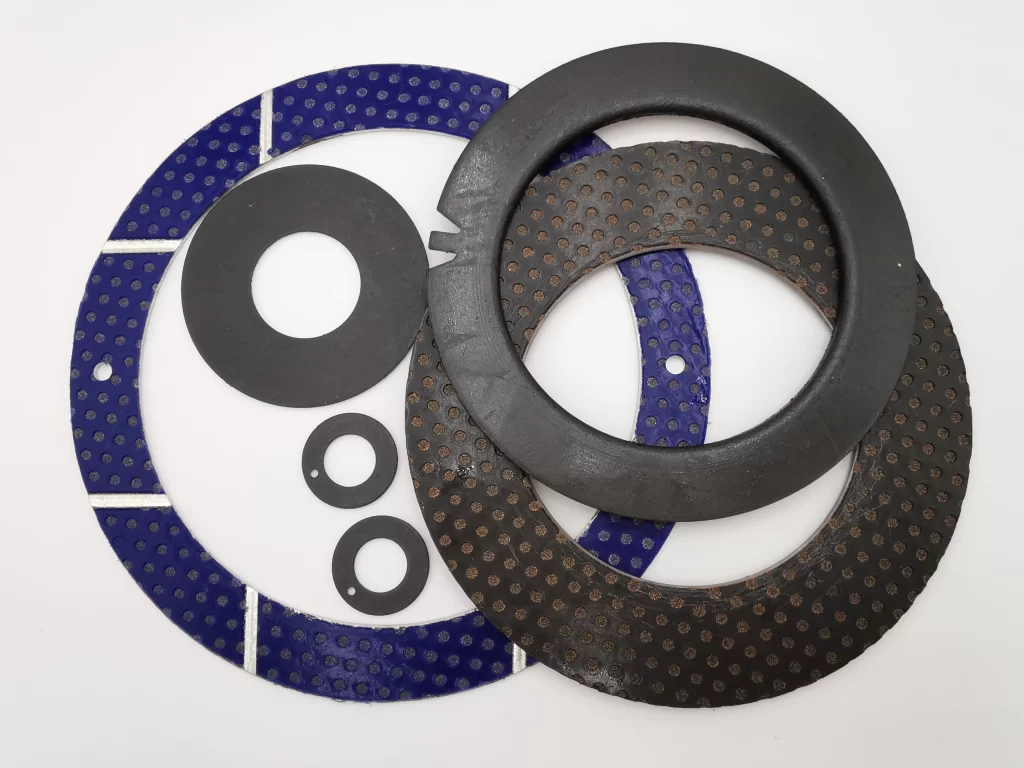
metal-polymer bearing

Steel-Backed Bushings: Bimetal Bearing Metallurgy, Load Support, Sliding Layers, and Global Procurement
Interpretation of Bushing Knowledge

Steel-Backed Bushings: Bimetal Bearing Metallurgy, Load Support, Sliding Layers, and Global Procurement

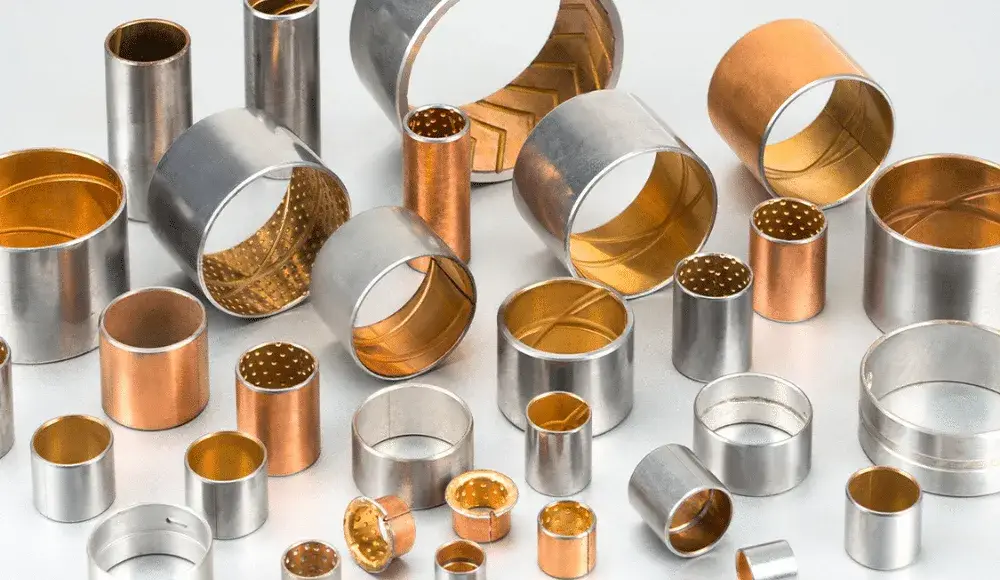
A steel-backed bushing is a composite plain bearing in which a steel shell supplies stiffness, press-fit strength and dimensional stability while a bronze, leaded-bronze, aluminum-tin, sintered, PTFE, POM, polymer or solid-lubricant layer provides the sliding surface. The architecture allows a thin wall, high housing interference, controlled bearing surface, and efficient use of specialized bearing material. Steel-backed bearings are used in automotive components, hydraulic equipment, construction machinery, compressors, agricultural equipment, machine tools, industrial handling, rolling-mill auxiliaries, pumps and general machinery. The correct grade depends on material stack, layer thickness, load, speed, lubrication, temperature, shaft finish, fit, corrosion and environment.
Self-Lubricating Bushings: The Maintenance-Free Solution for Demanding Industrial Applications
Interpretation of Bushing Knowledge

Self-Lubricating Bushing: Bearing Metallurgy, Solid Lubricants, PV Control, and Reliable Industrial Selection

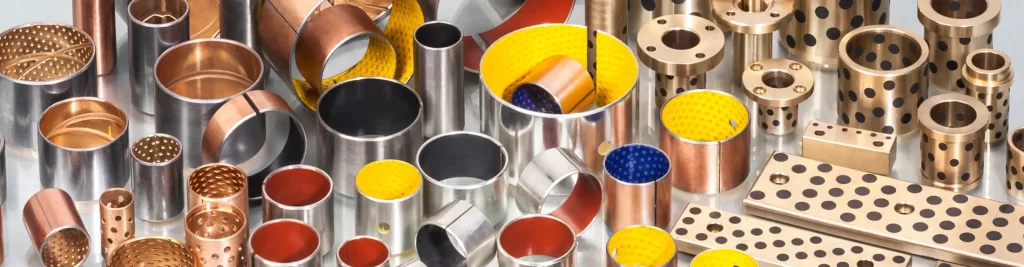
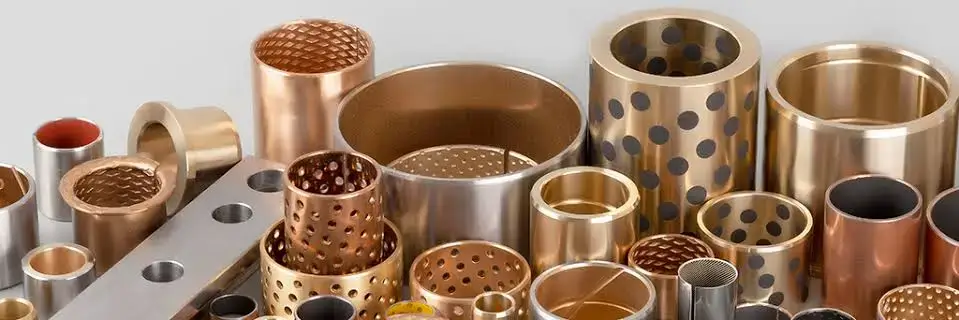
A self-lubricating bushing is a plain bearing designed to reduce friction and wear without continuous external grease or oil supply. The term covers several different material systems: oil-impregnated sintered bronze, steel-backed metal-polymer composites, cast bronze with graphite inserts, solid-lubricant-dispersed metal, engineered polymer, and fiber-reinforced composite bearings. These products do not have identical operating limits. The correct choice requires load, sliding speed, PV factor, temperature, oscillation, counterface, contamination, water or chemical exposure, fit, clearance and expected maintenance interval.

Self-Lubricating Bushings: Material Systems, Tribology, and Reliable Design for Dry-Running Motion
Interpretation of Bushing Knowledge

Self-Lubricating Bushings: Material Systems, Tribology, and Reliable Design for Dry-Running Motion

A self-lubricating bushing is a plain bearing designed to reduce friction and wear without a conventional external grease or oil line during normal service. It does not mean that every design is chemically identical, maintenance-free in every environment, or suitable for every load and speed. The term includes oil-impregnated sintered bronze bushings, steel-backed PTFE composite bearings, POM-lined bushes, graphite-plugged bronze bushes, solid-lubricant-dispersed bearings, engineered polymer bushes, and some fabric-lined spherical plain bearings. Each system stores, transfers, or presents lubricant differently.
Good selection starts with the motion and environment: radial or axial load, oscillation or rotation, speed, PV duty, temperature, shock, contamination, mating shaft hardness and finish, housing stiffness, clearance, corrosion, installation method, and service-life target.

DU Bearings: Self-Lubricating Technology That Transforms Industrial Performance
Self lubricating bushings

DU Bearings: Self-Lubricating Technology That Transforms Industrial Performance

Introduction: Why a Tiny Component Matters More Than You Think
Have you ever wondered how heavy machinery keeps running smoothly year after year without constant greasing? Or how your car’s suspension absorbs bumps silently without lubrication fittings everywhere? The answer often lies in a small but ingeniously engineered component: the DU bearing (also called DU bushing, self-lubricating bearing, or composite plain bearing).

Scroll to Top