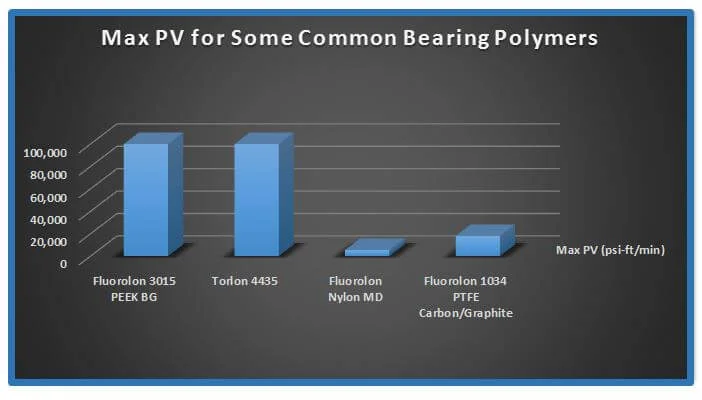
PV value

PTFE Composite Bushings and the Design Choices That Shape Bearing Life
Interpretation of Bushing Knowledge

PTFE Composite Bushings and the Design Choices That Shape Bearing Life

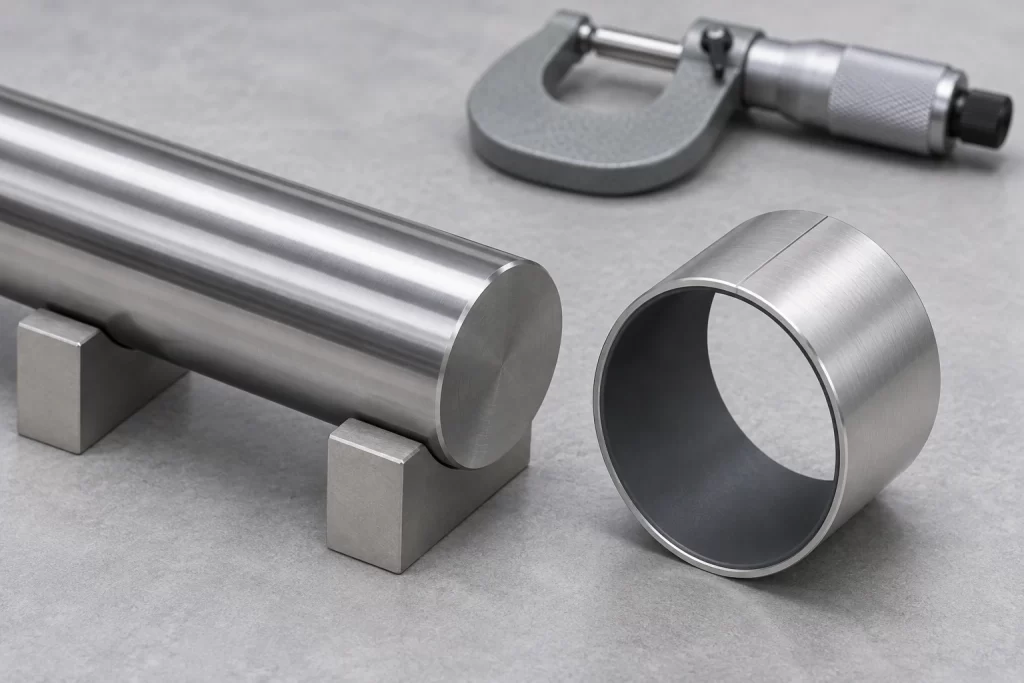
Think about the last bearing on a machine that anyone wants to grease. It may sit behind a guard, above a conveyor or inside a linkage that has to be dismantled before a grease gun can reach it. For that sort of position, a PTFE composite bushing is an attractive option. A suitable grade can run dry, and its thin wall leaves useful room for the shaft inside a small housing.
There is still some engineering to do. The sleeve does not arrive with its own finished counterface or a guarantee that the housing will stay round after assembly. Those details belong to the machine designer. They are also the details that can make two installations of the same bearing behave differently.
Suppose a new pivot feels fine when turned by hand, then gets stiff after the machine warms up. Ordering a more expensive bearing material may not address the cause. First check the fitted clearance, the temperatures of the surrounding parts and whether the housing is distorting. This article works through those decisions for metal-backed PTFE composite bushings, from the first load estimate to the questions worth answering before a production order.
Oilless Bushing Metallurgy: Solid Lubricants, Bronze, and Composite Layers Under Load
Interpretation of Bushing Knowledge

Oilless Bushing Metallurgy: Solid Lubricants, Bronze, and Composite Layers Under Load

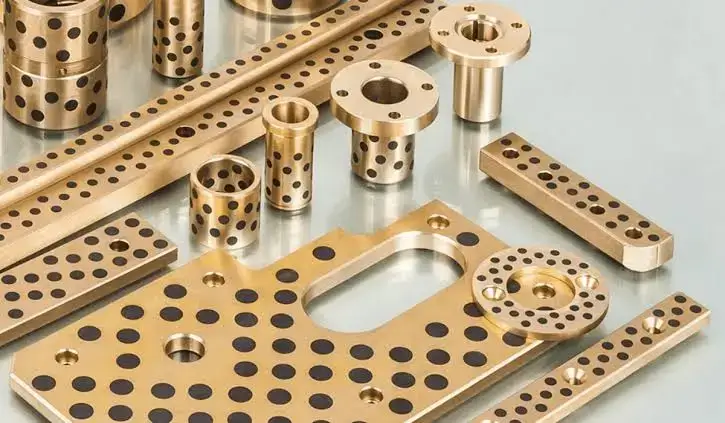
The phrase “oilless bushing” is useful in search and procurement, but it can conceal important engineering differences. Some self-lubricating bushings rely on graphite plugs embedded in cast bronze. Others use a steel-backed, porous bronze interlayer with a PTFE-based sliding surface. A third category is a sintered bronze bearing whose connected porosity stores oil released during service. Each system reduces or eliminates routine external oiling in a defined operating window; none removes the need to control pressure, speed, heat, shaft finish, alignment, and contamination. The metallurgy determines how the bearing carries load, transfers lubricant, and survives wear.

Copper Bushings in Water: Unlock Reliability in Marine, Hydraulic & Submerged Applications
Interpretation of Bushing Knowledge

Comprehensive Analysis of Bronze Properties: Metallurgy, Mechanical Performance, and Industrial Applications

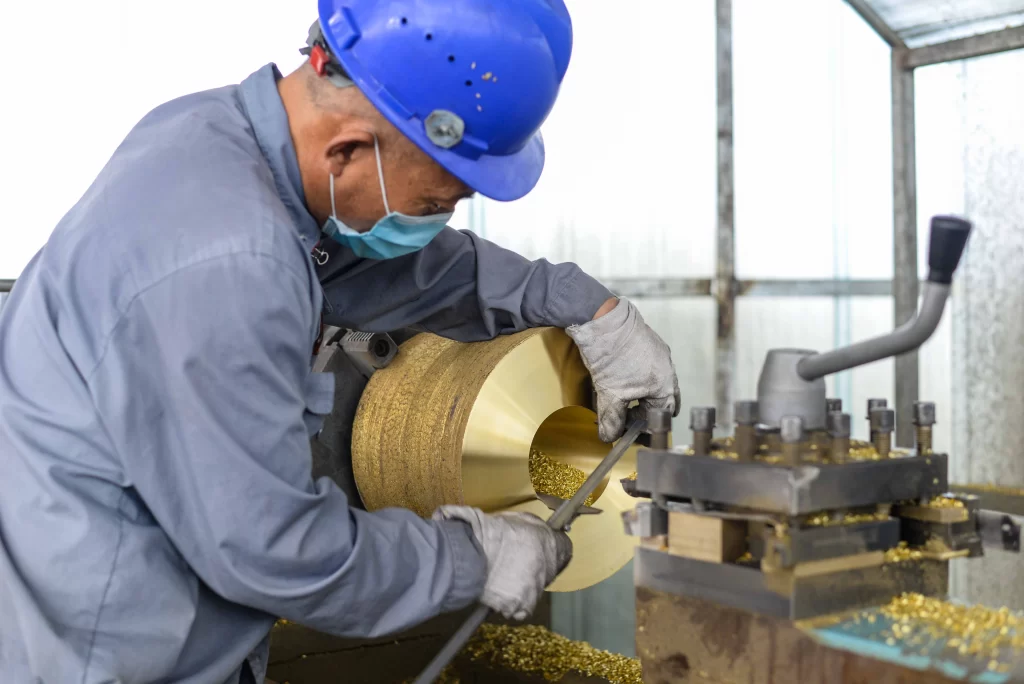
Bronze, one of the earliest engineered alloys in human history, remains a cornerstone material in contemporary mechanical engineering. This technical article provides a systematic examination of bronze metallurgy—primary base metals, alloying elements, and their influence on mechanical, tribological, and physical properties. The discussion encompasses historical context, classification of major bronze families (phosphor bronze, aluminum bronze, leaded bronze, manganese bronze, and silicon bronze), comparative analysis with brass and pure copper, and the specific engineering rationale for bronze dominance in high-reliability bushing and bearing applications.

Frequently Asked Questions About Bushing Material PV
Interpretation of Bushing Knowledge

Bushing Material PV: Pressure-Velocity Ratings and Bearing Performance

If you’ve ever wondered why some bushings fail prematurely while others run smoothly for years, the answer often lies in one critical factor: PV value. Whether you’re designing heavy machinery, automotive components, or industrial equipment, understanding the relationship between pressure and velocity in bushing materials can mean the difference between optimal performance and catastrophic failure .

Scroll to Top