
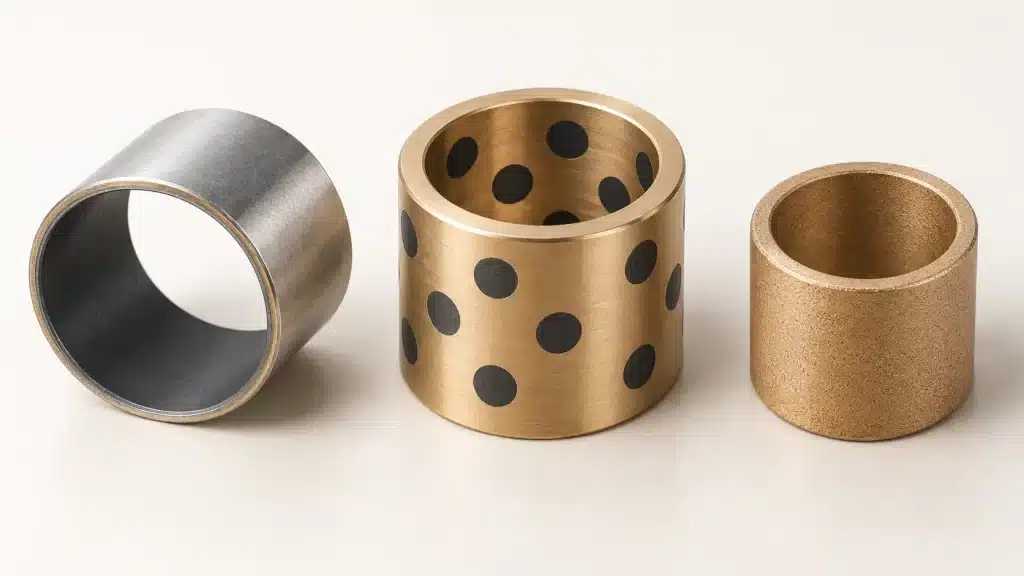
self lubricating bearing manufacturer

What “Self-Lubricating” Actually Means (And Why Half the Industry Uses the Term Wrong)
Interpretation of Bushing Knowledge

What “Self-Lubricating” Actually Means (And Why Half the Industry Uses the Term Wrong)

Let me be blunt: “self-lubricating” is one of those phrases that sounds great in a brochure and causes headaches on the factory floor. It does not mean the bushing never wears. It does not mean you can ignore load, speed, or shaft finish. What it really means is that the lubricant is already inside the material — PTFE, graphite, oil trapped in pores — and it gets released while the thing runs. This article breaks down what that looks like in real life, where self-lubricating bushings win, where they fail, and how MYWAY’s eight core bushing lines solve specific problems. If you spec bushings for a living, this is the no-BS version.
Self-Lubricating Bushings: Material Systems, Tribology, and Reliable Design for Dry-Running Motion
Interpretation of Bushing Knowledge

Self-Lubricating Bushings: Material Systems, Tribology, and Reliable Design for Dry-Running Motion

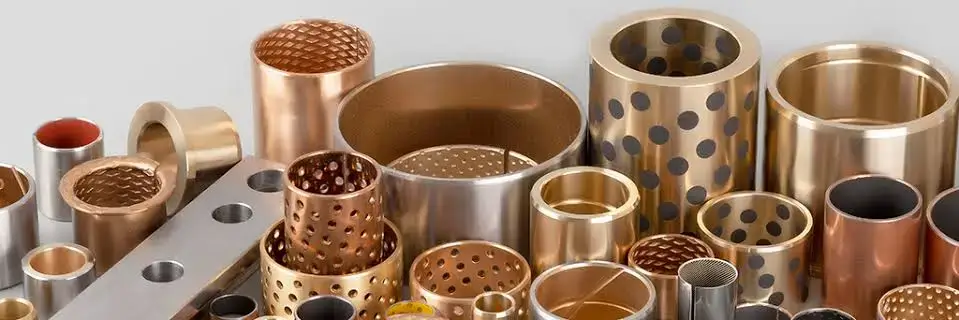
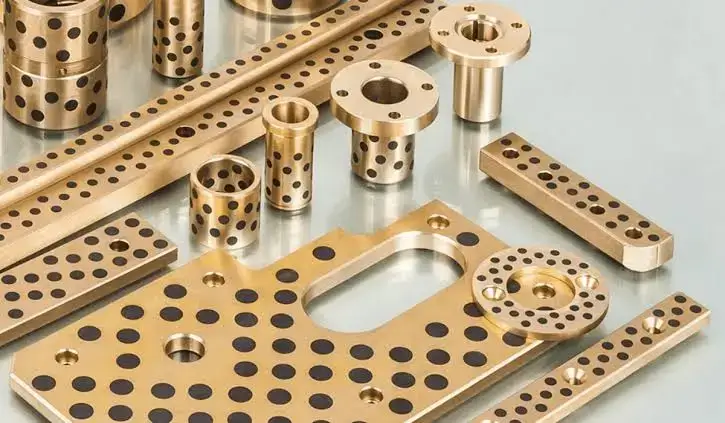
A self-lubricating bushing is a plain bearing designed to reduce friction and wear without a conventional external grease or oil line during normal service. It does not mean that every design is chemically identical, maintenance-free in every environment, or suitable for every load and speed. The term includes oil-impregnated sintered bronze bushings, steel-backed PTFE composite bearings, POM-lined bushes, graphite-plugged bronze bushes, solid-lubricant-dispersed bearings, engineered polymer bushes, and some fabric-lined spherical plain bearings. Each system stores, transfers, or presents lubricant differently.
Good selection starts with the motion and environment: radial or axial load, oscillation or rotation, speed, PV duty, temperature, shock, contamination, mating shaft hardness and finish, housing stiffness, clearance, corrosion, installation method, and service-life target.

Oilless Bushing Metallurgy: Solid Lubricants, Bronze, and Composite Layers Under Load
Interpretation of Bushing Knowledge

Oilless Bushing Metallurgy: Solid Lubricants, Bronze, and Composite Layers Under Load

The phrase “oilless bushing” is useful in search and procurement, but it can conceal important engineering differences. Some self-lubricating bushings rely on graphite plugs embedded in cast bronze. Others use a steel-backed, porous bronze interlayer with a PTFE-based sliding surface. A third category is a sintered bronze bearing whose connected porosity stores oil released during service. Each system reduces or eliminates routine external oiling in a defined operating window; none removes the need to control pressure, speed, heat, shaft finish, alignment, and contamination. The metallurgy determines how the bearing carries load, transfers lubricant, and survives wear.

Scroll to Top