
Recent Posts
The Heart of Renewable Energy: High-Performance Bearings for Hydropower Plants
In the global push for Net Zero, hydropower remains the unsung heavyweight champion of renewable energy. While solar and wind grab headlines, hydro provides the stable, on-demand baseload power that grids desperately need. According to the latest data, hydropower accounts for a significant portion of clean energy generation, with major players like India housing nearly 200 operational hydropower plants .
But the efficiency of a hydropower plant isn’t just about the flow of water or the size of the turbine. It hinges on the reliability of its internal components. Bearings are the critical interface between motion and stability. In an environment characterized by heavy loads, constant moisture, and a demand for 24/7 operation, choosing the right bearing solution—whether self-lubricating bronze bearings, composite bushings, or guide bearings—is the difference between optimized output and costly downtime.
This article dives deep into the world of bearings for hydropower plants, exploring how modern oil-free and maintenance-free technologies are reshaping the industry. If you are involved in hydro turbine refurbishment, dam gate maintenance, or OEM manufacturing, understanding these components is crucial for your bottom line.
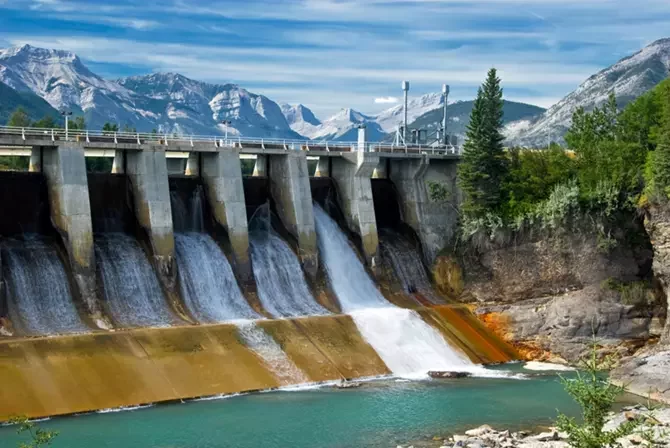
Table of Contents
1. The Critical Role of Bearings in Hydroelectric Turbines
A hydropower plant is a symphony of mechanical motion. From the massive turbine shaft spinning to generate electricity to the precise adjustment of wicket gates controlling water flow, every moving part relies on bearings to manage friction and support loads.
Hydropower bearings face unique challenges:
Submersion: Many components operate directly in water, requiring corrosion resistance and the ability to function with water as a lubricant .
High Loads: Vertical turbines place immense axial loads on thrust bearings, while radial loads must be managed by guide bearings.
Intermittent Operation: Plants often start and stop based on grid demand, subjecting bearings to boundary lubrication conditions and “stick-slip” risks.
Traditionally, these challenges were met with greased metallic bearings. However, the industry is rapidly shifting toward self-lubricating and water-lubricated technologies to eliminate oil leaks, reduce maintenance, and comply with stringent environmental regulations .
2. Key Applications: Where Bearings Matter Most
Bearings are the linchpins of several critical assemblies within a hydro plant. Understanding the specific application is the first step in selecting the right material.
1. Turbine Guide Bearings and Main Shafts
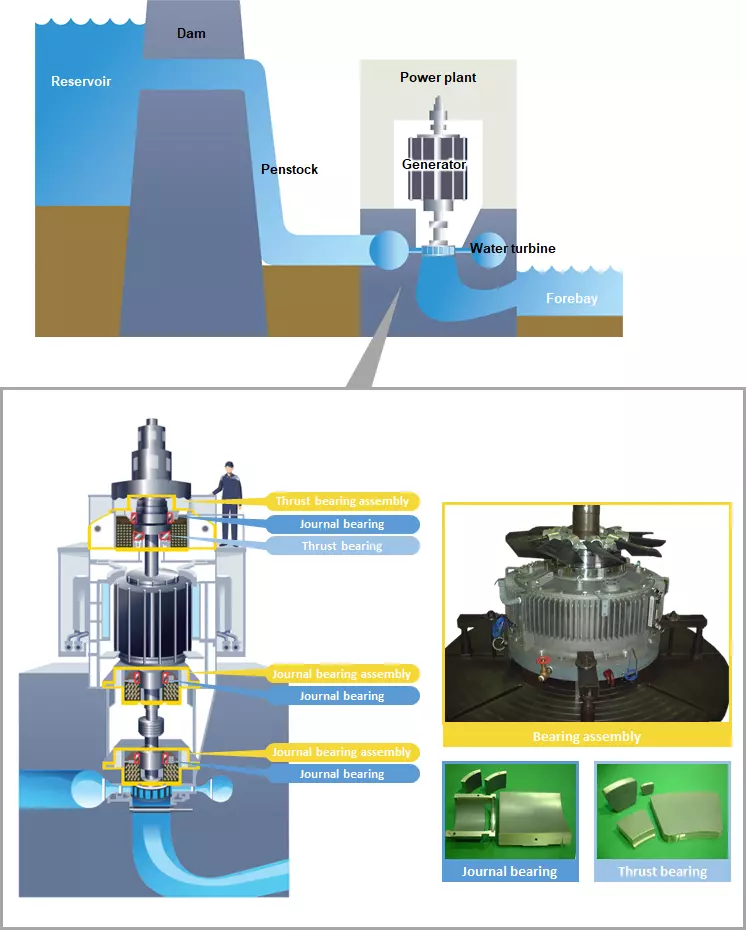
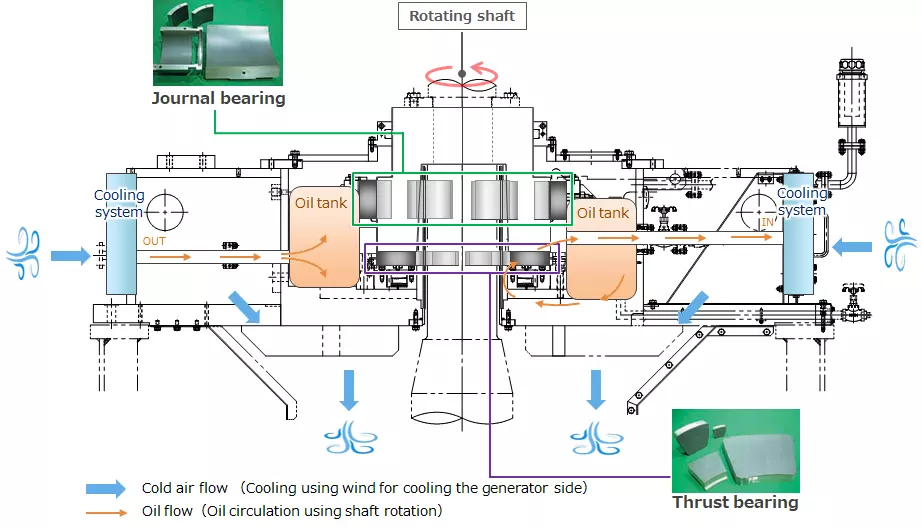
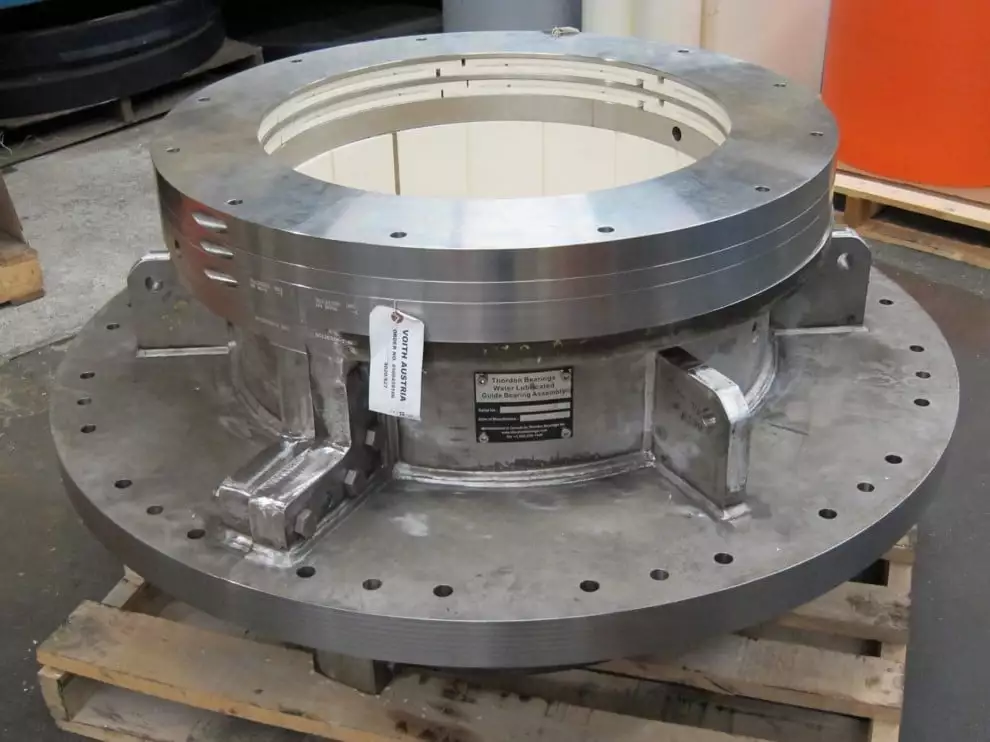
The main turbine shaft is the backbone of power generation. Guide bearings (radial bearings) keep this shaft perfectly aligned as it rotates, preventing vibration and wear. Thrust bearings support the entire weight of the turbine and generator rotors . These areas demand materials with high compressive strength and exceptional wear resistance.
2. Wicket Gate and Guide Vane Bushings
Often cited as the most demanding application, wicket gates control the flow of water into the turbine. These bushings experience oscillating motion under extreme water pressure, often in boundary or mixed lubrication conditions. A bearing failure here can lead to gate stalling or uncontrolled vibration . Independent research has shown that advanced polymer and bronze composite bearings significantly out-perform traditional materials in these roles by maintaining a stable coefficient of friction over their lifetime .
3. Operating Rings and Linkages
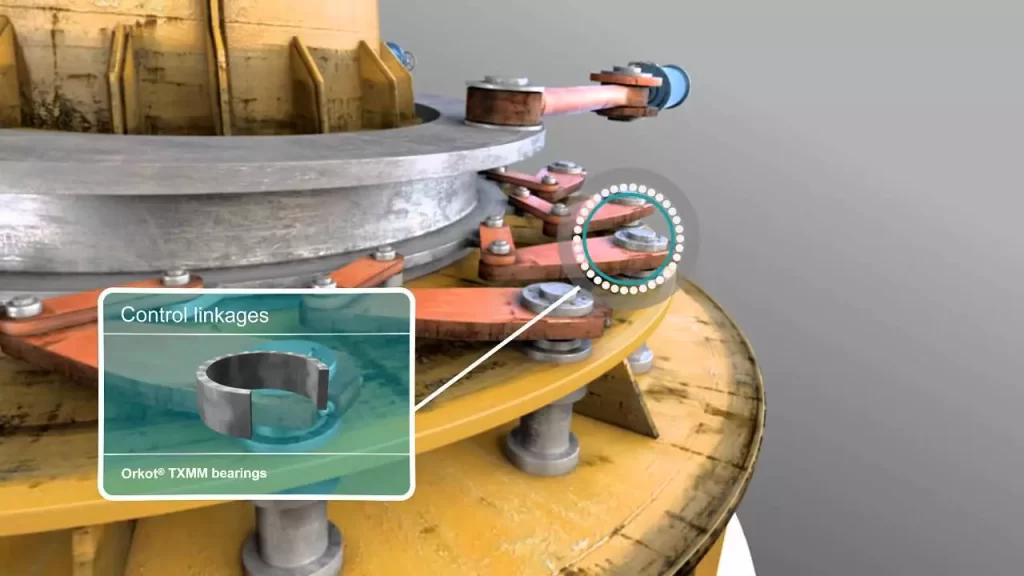
The operating ring connects the servomotor to the wicket gates via linkage bushings. This mechanism requires bearings that can handle high dynamic loads and slight misalignments. Self-lubricating spherical bearings or high-strength composite bushings are often specified here for their ability to handle multi-directional loads without grease .
4. Water Gates (Radial and Roller Gates)
Outside the turbine hall, dam gates and spillways rely on large bearings to manage the immense forces of retained water. These trunnion bearings and roller gate bushings are often submerged for years and must operate on demand without maintenance. Corrosion resistance and low friction under static load are paramount here.

3. Material Science: The Shift to Self-Lubricating Solutions
The evolution of bearings for hydropower plants is really a story of material science. Here is how modern solutions stack up against traditional options.
Traditional Materials: The Baseline
For decades, bronze alloys (like SAE 660 or aluminum bronze) were the standard. They offer decent load capacity and corrosion resistance but require a continuous supply of grease. The environmental risk of grease leakage into watercourses is no longer acceptable in many regions .
Modern Self-Lubricating Bearings
The industry is moving decisively toward materials that contain their own lubricant or utilize the environment (water) for lubrication.
1. Bronze with Solid Lubricant Inserts
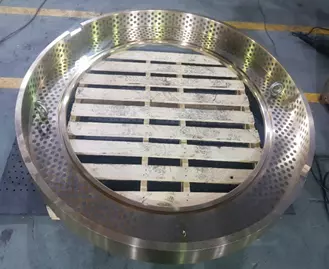
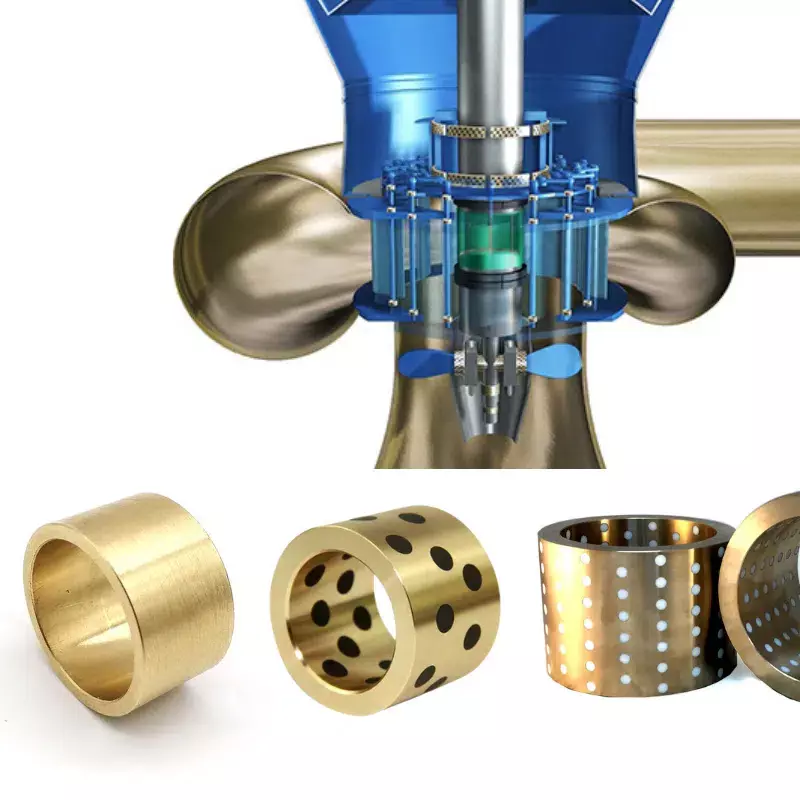
This is the “best of both worlds” approach. A high-strength bronze bushing (often aluminum or manganese bronze) provides the structural backbone to handle extreme loads. Holes drilled into the load zone are plugged with solid lubricants like graphite, PTFE, or specialized compounds .
Advantages: High load capacity, excellent for oscillating motion, and completely maintenance-free.
Best For: Wicket gate bushings, operating ring pads, and main shaft guide bearings.
2. Fiber-Reinforced Composite Bearings
These bearings, such as filament-wound structures with polyester or epoxy resins reinforced by glass fibers, use the matrix material itself (often PTFE or other polymers) as the lubricant .
Advantages: Lightweight, excellent fatigue strength, conformability, and resistance to edge loading. They are also “zero-pollution” and ideal for sensitive environments.
Best For: Linkage bearings, servomotor bushings, and applications requiring high conformability.
3. Water-Lubricated Polymer Bearings
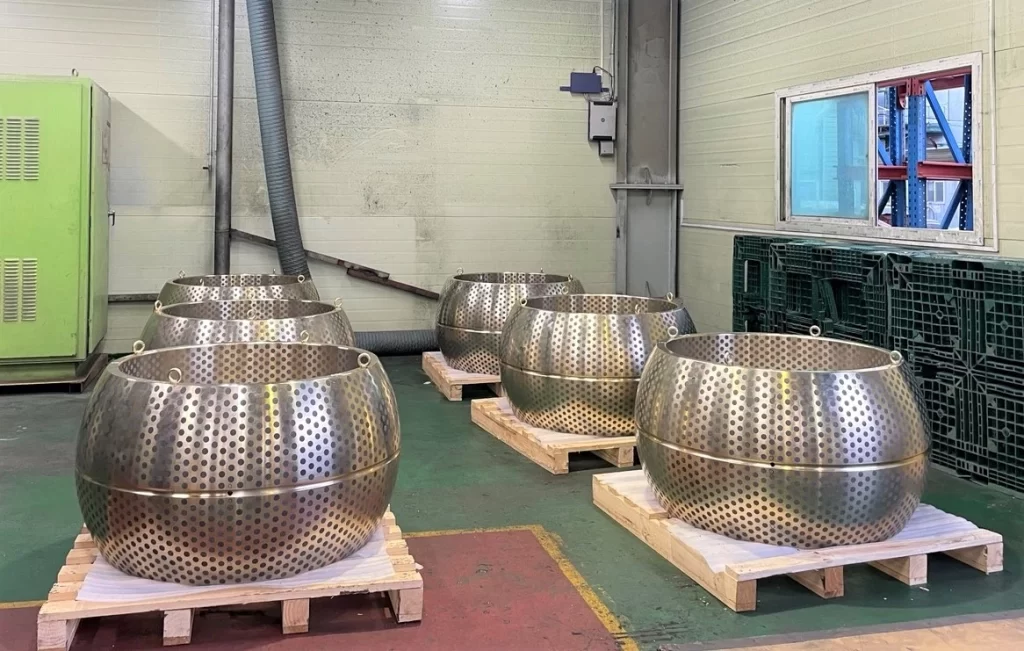
Using the process fluid (water) as the lubricant is the ultimate green solution. Advanced polymer materials like Thordon’s SXL or igus’s iglidur UW are designed to run directly on water, eliminating oil systems entirely .
Advantages: No oil means no pollution risk, simpler turbine design, and lower maintenance.
Best For: Turbine guide bearings, pumps, and submerged applications.
4. Advantages of Modern Bearings in Hydropower
Why are plant operators worldwide retrofitting their facilities with these advanced materials? The reasons are purely economic and environmental.
1. Maintenance-Free Operation (Cost Reduction)
In remote or underground powerhouses, accessing bearings for greasing is a logistical nightmare. Self-lubricating bearings eliminate the need for daily or weekly lubrication schedules . This drastically cuts down on labor costs and extends the interval between major overhauls. As one plant manager noted, switching to modern bearings resulted in a “remarkable reduction in our operating costs and maintenance downtime.”
2. Environmental Sustainability (Zero Pollution)
Traditional grease-lubricated bearings pose a constant threat of contamination. A leaking seal can introduce oil into the river, leading to hefty fines and environmental damage. Oil-free bearings remove this risk entirely. They are the cornerstone of “green” hydropower, ensuring the clean energy produced doesn’t come at the cost of a polluted waterway .
3. Enhanced Durability and Wear Resistance
Modern composites and bronze-graphite materials are engineered for high PV (Pressure-Velocity) values. They withstand the abrasive action of silt-laden water and resist corrosion from minerals and chemicals. Independent tests verify that materials like ThorPlas-Blue exhibit stable friction and low wear rates even under the variable speeds and high pressures found in hydro turbines .
4. Design Flexibility
Unlike monolithic metal bearings, composite and bimetal bushings can be customized. Whether you need a flanged bushing, a split bushing for easy installation, or a thrust washer for a Kaplan runner hub, modern manufacturing allows for precision engineering to exact specifications .
5. Global Trends: The Surge in Refurbishment and Upgrades
The hydropower sector in Asia and North America is currently experiencing a massive wave of refurbishment. According to industry experts, more than half of the hydropower plants in countries like India are over 35-40 years old and due for modernization . Governments are insisting on converting old oil-lubricated units to more efficient, environmentally friendly solutions.
Projects like the refurbishment of the Otto Holden Generating Station in Canada, which involved replacing traditional bearings with grease-free alternatives across eight turbines, highlight the industry’s direction . These large-scale overhauls specify self-lubricating bushings for wicket gates, servomotors, and operating rings to secure another 30-40 years of reliable, low-maintenance operation.
6. Why Material and Manufacturing Quality Matters
The performance of a bearing is only as good as its manufacturing quality. Poorly cast bronze or inconsistent lubrication distribution can lead to premature failure. This is why partnering with an experienced manufacturer is critical.
When selecting bearings for hydropower plants, you need a partner who can offer:
Material Integrity: High-quality continuous cast or centrifugal cast bronze ensuring no porosity.
Precision Machining: Tight tolerances on inner diameters (ID) and outer diameters (OD) to ensure proper fit and load distribution.
Quality Lubricant Plugs: Properly sized and seated graphite or PTFE plugs that won’t dislodge during operation.
Customization: The ability to produce non-standard sizes or integrate features like grease grooves (for hybrid systems) or mounting holes.
7. MYWAY: Your Partner for High-Performance Hydropower Bushings
For over two decades, MYWAY has stood at the forefront of bushing manufacturing, delivering precision-engineered solutions to the global renewable energy sector. As the demand for reliable, maintenance-free components grows, MYWAY has become the trusted partner for OEMs and plant operators seeking to maximize uptime and minimize environmental impact .
Why Choose MYWAY for Your Hydro Plant?
Proven Material Science: We specialize in high-strength aluminum bronze and manganese bronze alloys, perfectly combined with solid lubricant technology (graphite/PTFE) to create bushings that withstand the punishing loads of hydro turbines .
Comprehensive Composite Solutions: Beyond metal, our advanced composite bushings (including our high-performance PFC series) offer lightweight, corrosion-proof alternatives for linkages, guide vanes, and operating rings, engineered to operate seamlessly in wet or dry conditions .
Integrated Manufacturing: From raw material casting to final precision CNC machining, MYWAY controls every step of the process. This vertical integration ensures unbeatable quality control, dimensional accuracy, and cost efficiency .
Global Certifications: With IATF 16949 and ISO 9001 certifications, our manufacturing processes meet the rigorous standards expected by the world’s most demanding engineering firms .
Custom Engineering: Every hydropower plant is unique. MYWAY excels in creating custom oilless bearings, flanged bronze bushings, and split bushings tailored to your specific shaft diameters and housing dimensions.
MYWAY Solutions for Key Hydro Applications
For Wicket Gates: Graphite-plugged bronze bushings that eliminate stick-slip and provide a low, consistent coefficient of friction.
For Turbine Guides: High-load composite material bushings that can be water-lubricated or run dry, ensuring shaft stability.
For Dam Gates: Corrosion-resistant self-lubricating bearings designed to survive decades of submersion with zero maintenance.
The MYWAY Promise
We believe in “Quality for Survival, Reputation for Development” . By choosing MYWAY, you are not just buying a component; you are investing in the long-term reliability of your power generation assets. Our technical team works closely with clients to analyze load conditions, environmental factors, and operational parameters to recommend or develop the perfect bushing solution .
Don’t let a failed bearing interrupt your clean energy production. Elevate the efficiency and sustainability of your hydropower plant with MYWAY’s advanced self-lubricating solutions.
Frequently Asked Questions (FAQ)
Q1: What is the difference between a thrust bearing and a guide bearing in a hydro turbine?
A thrust bearing supports axial loads—essentially the weight of the turbine and generator rotors plus the hydraulic thrust of the water pushing down on the runner. A guide bearing (or radial bearing) supports radial loads, keeping the shaft centered and preventing it from bowing or vibrating as it rotates .
Q2: Why are self-lubricating bearings preferred over greased bearings in modern hydropower?
Primarily for environmental and economic reasons. Self-lubricating bearings eliminate the risk of oil spills into rivers, drastically reduce maintenance labor costs (as they don’t need regular greasing), and often provide more reliable performance in the oscillating, high-load conditions found in wicket gates .
Q3: Can bronze bushings really be “maintenance-free”?
Yes. Self-lubricating bronze bushings achieve this through the inclusion of solid lubricant plugs, typically made of graphite or PTFE. As the shaft rotates, a thin transfer film of lubricant is deposited on the shaft surface, providing continuous lubrication without the need for external oil or grease .
Q4: MYWAY provides both metal and composite bearings. How do I choose between them?
The choice depends on your specific application. Metal (bronze) bearings are typically chosen for the highest load capacities and where shock loading is a concern, such as main turbine shafts or heavy wicket gates . Composite bearings are often selected for their superior corrosion resistance, lighter weight, vibration-dampening properties, and ability to handle misalignment, making them ideal for linkages and areas with complex motion . MYWAY engineers can help you make the best choice based on your load, speed, and environmental data.
Q5: What is the typical lifespan of a hydropower bearing?
With proper material selection and installation, modern self-lubricating bearings are designed to last for decades. For critical applications like wicket gates, the USACE and other bodies have validated that fiber-reinforced composites and high-quality bronze-graphite bearings can reliably operate for 20 to 30 years or more, often aligning with the plant’s major refurbishment cycles.
Conclusion
The efficiency and sustainability of hydropower begin with the smallest components. As the industry moves toward higher reliability and zero environmental impact, the shift to self-lubricating and maintenance-free bearings is irreversible. Whether you are designing a new Francis turbine or refurbishing a 50-year-old Kaplan unit, the choice of bushing materials—from graphite-plugged bronze to advanced fiber composites—is the most critical decision you will make.
Ensure your plant operates at peak performance for decades to come. Partner with a manufacturer who understands the demands of the industry.
Contact MYWAY today to discuss your specific requirements or request a custom quote. Let us engineer the reliability your hydropower future demands.
100000+ Types of Bushings – Contact Us for Details