What Is a Bearing Surface? Key Roles, Types, Finishes & Coatings for Industrial Bearings
Introduction
If you work with rotating machinery, turbines, pumps, compressors or heavy industrial equipment, you must be familiar with the term “bearing surface”.
Simply put, it refers to the load-bearing contact area between two moving parts in a bearing unit, mainly between the rotating shaft and fixed bearing parts.
Engineered for dynamic operation, bearing surfaces control friction, share loads, keep lubricant in place, reduce wear and avoid direct metal contact. For all bearing types, surface quality, flatness, texture and coating directly affect long-term service performance.
This article covers its core functions, common classifications, key finish parameters, advanced coatings, and its influence on equipment wear, stick-slip and operating efficiency. Precision surface treatment is critical for industrial equipment. High-quality bearing components can effectively cut maintenance costs and prolong equipment service life.
1. Core Functions of a Bearing Surface
A bearing surface does far more than “touch and slide.” Its primary jobs can be summarized in five key functions:
Load Distribution
Industrial bearings—especially thrust bearings in vertical machines or heavy journal bearings—must support enormous axial or radial loads. A flat, uniform bearing surface spreads the load evenly across the entire contact area. Without proper flatness, localized pressure spikes can reach 2.5–3× the normal unit load, leading to rapid wear, babbitt fatigue, or even catastrophic bearing failure.
Friction Control & Lubricant Retention
The bearing surface texture directly impacts how well lubricant (oil, grease, or synthetic fluid) adheres to the interface. Smooth surfaces (low Ra) reduce friction during steady-state operation, while controlled micro-pockets (from scraping or textured finishes) trap oil during start-up and shutdown—when fluid films are thin or nonexistent.
Wear Resistance & Metal Contact Prevention
In ideal fluid-film conditions, a thick lubricant film completely separates rotor and bearing surfaces, so no wear occurs. However, during transitions—start-up, shutdown, speed reversals, or load changes—metal-to-metal contact is unavoidable. A well-finished bearing surface minimizes abrasive wear, galling, and seizure during these critical phases.
Conformity & Stability Under Dynamic Loads
Soft bearing materials like babbitt (white metal) deform slightly under load to “conform” to the rotor surface. A precision-machined bearing surface ensures this conformity is uniform, avoiding uneven wear patterns that can cause vibration, noise, or stick-slip.
Compatibility with Advanced Coatings
Modern bearing surfaces are often coated with polymers, metals, ceramics, or DLC (Diamond-Like Carbon) to boost performance. The base surface finish must be optimized to ensure strong coating adhesion, uniform coverage, and consistent tribological properties.
2. Common Types of Bearing Surfaces
Bearing surfaces come in many forms, tailored to the bearing type and application. The most common categories include:
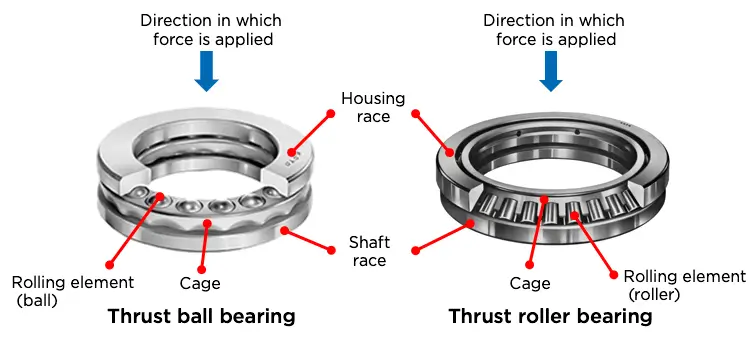
2.1 Thrust Bearing Surfaces
Found in vertical turbines, generators, pumps, and marine propulsion systems. These surfaces handle axial loads (pushing along the shaft axis). Key components include:
- Thrust shoes: Stationary, flat pads (often babbitted) that contact the rotating thrust runner.
- Thrust runner: A hardened, precision-ground disk attached to the rotor.
Thrust bearing surfaces rely on extreme flatness (often within 0.001 mm) and controlled roughness to avoid stick-slip during start-up.
2.2 Journal Bearing Surfaces
Used in horizontal rotating equipment (motors, compressors, gearboxes). These are cylindrical inner surfaces of split or solid bearings that support radial loads. The surface is typically lined with babbitt, bronze, or polymer and requires a smooth, round profile to maintain a stable oil film.
2.3 Bushing & Sleeve Bearing Surfaces
Simple, cost-effective, and widely used in low-to-medium speed applications: conveyors, agricultural machinery, automotive components, and industrial automation. The bearing surface is the inner diameter (ID) of a hollow cylindrical bushing.MYWAY bushings specialize in this category—offering precision-machined inner surfaces with optimized roughness, flatness, and optional coatings for friction reduction and wear resistance.
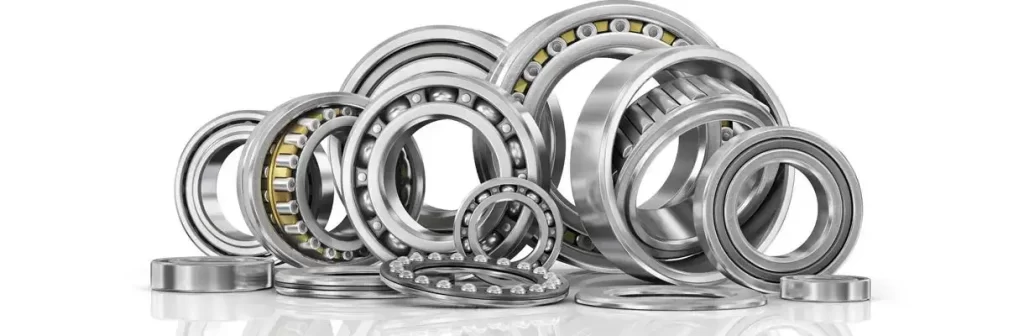
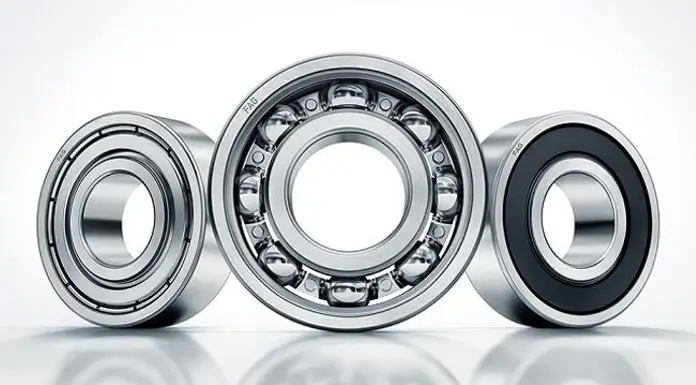
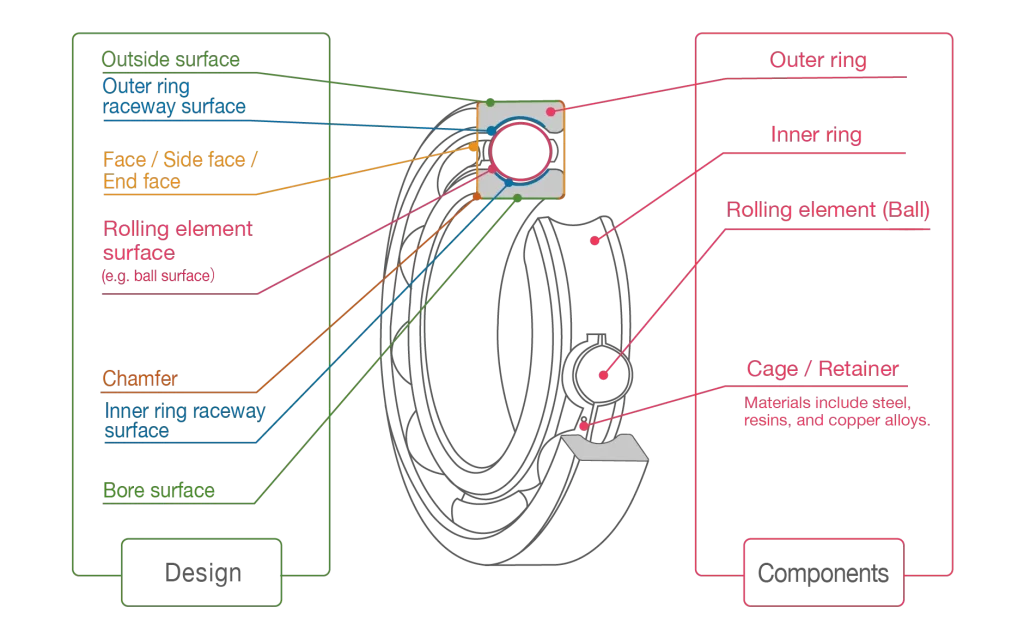
2.4 Rolling-Element Bearing Surfaces
In ball bearings and roller bearings, the bearing surfaces are:
- Raceways: Hardened, polished inner/outer rings where balls or rollers roll.
- Ball/roller surfaces: Precision-ground spherical or cylindrical surfaces.
These surfaces require ultra-smooth finishes (Ra 0.05–0.2 μm) and high hardness to withstand repeated rolling contact fatigue.
3. Critical Surface Finish Parameters: Ra, Flatness, & Texture
When engineers talk about bearing surface quality, three metrics dominate: roughness (Ra), flatness, and surface texture.
3.1 Roughness (Ra: Micro-Inches or Microns)
Ra measures the average height of surface irregularities. For bearings:
- Thrust shoes (babbitt): Ra ≤ 32 μin (0.8 μm)
- Thrust runner: Ra = 12–16 μin (0.3–0.4 μm)
- Journal bearings: Ra = 8–16 μin (0.2–0.4 μm)
- Bushing inner surfaces: Ra = 16–32 μin (0.4–0.8 μm) (varies by load/speed)
Too smooth = poor lubricant retention during start-stop. Too rough = high friction, heat, and wear in steady state.
3.2 Flatness
Flatness is critical for thrust bearings and large journal bearings. Even minor warpage (e.g., 0.002 mm over 100 mm) causes:
- Uneven load distribution
- Localized pressure spikes
- Premature babbitt wear
- Stick-slip and noise during start-up
3.3 Texture: Lapping vs. Hand Scraping
Two traditional methods achieve flatness and controlled texture for thrust bearings:
Lapping
- Process: Abrasive slurry + rotating plate → smooth, flat surface.
- Pros: Fast, consistent, ideal for small-to-medium bearings.
- Cons: No oil retention pockets; poor for heavy vertical applications with frequent start-stops.
Hand Scraping (or Power Scraping)
- Process: Skilled technicians scrape shallow, isolated pockets into the babbitt surface in crosshatched patterns.
- Pros:
- Ensures extreme flatness
- Creates micro-pockets that trap oil during start-up/shutdown
- Eliminates stick-slip and groaning noise
- Works for any size thrust shoe (no lapping machine limits)
- Best for: Vertical machines, high-load thrust bearings, frequent start-stop cycles.
4. Why Bearing Surface Quality Matters: Start-Stop Wear & Stick-Slip
The biggest enemy of bearing surfaces is transitional operation—start-up and shutdown. Here’s why:
- At Start-Up: No oil film exists yet. Metal surfaces rub directly until rotation builds enough hydrodynamic pressure to lift the rotor on an oil film. Wear happens here.
- At Shutdown: The oil film collapses as speed drops. Metal contact resumes until the rotor stops. More wear.
In vertical machines (shaft pointing up/down), the thrust bearing is under constant axial load—so start-stop wear is far more severe. Over time:
- Babbitt surfaces conform to the runner
- Contact area increases
- Lubricant can’t penetrate the interface
- Stick-slip occurs: rotor “sticks” due to static friction, then “slips” when force overcomes it—repeating, generating heat, and causing loud groaning.
Solution: A scraped bearing surface with oil pockets. The pockets break up full-surface contact, retain oil, and let lubricant seep in during transitions. This eliminates stick-slip and reduces start-stop wear by up to 80% in high-load vertical applications.
5. Advanced Bearing Surface Coatings: Boost Performance & Extend Life
For extreme conditions—high load, low lubrication, high temperature, or corrosive environments—base metal surfaces aren’t enough. Bearing coatings add a protective, high-performance layer. Below are the most common types, their benefits, and applications:
5.1 Polymer Coatings (PTFE, Polyimide)
- Benefits: Ultra-low friction, excellent wear resistance in mixed lubrication, good corrosion protection.
- Best for: Light-to-medium loads, moderate temperatures, engines, pumps, compressors.
- MYWAY option: PTFE-lined bushings for food-grade, low-noise, maintenance-free operation.
5.2 Metallic Coatings (Chromium, Chromium Nitride)
- Benefits: High hardness, excellent wear resistance, improved corrosion protection.
- Best for: Heavy loads, high speeds, gearboxes, rolling mills, industrial gear units.
5.3 Ceramic Coatings (TiN, Si₃N₄)
- Benefits: Exceptional hardness, high-temperature stability, wear resistance, chemical inertness.
- Best for: Racing engines, aerospace, food processing, high-temperature industrial equipment.
5.4 DLC (Diamond-Like Carbon)
- Benefits: Unique combo: ultra-low friction + extreme hardness + excellent wear resistance.
- Best for: High-performance machinery, automotive transmissions, precision bearings, high-speed spindles.
5.5 Key Coating Benefits Summary
 Reduce friction → lower energy consumption, less heat
- Enhance wear resistance → longer service life, fewer replacements
- Improve load capacity → handle heavier loads without failure
- Resist corrosion → survive harsh environments (moisture, chemicals)
- Accommodate boundary lubrication → prevent seizure during cold starts or low-oil conditions
MYWAY bushings offer optional PTFE, bronze, or DLC coatings tailored to your load, speed, and environment.
6. Why Choose MYWAY Bushings for Superior Bearing Surface Performance?
If you’re sourcing reliable, high-performance bearing components, MYWAY stands out as a trusted manufacturer of precision bushings, sleeves, and bearing assemblies for global industrial clients. Here’s why MYWAY bearing surfaces deliver unmatched value:
Precision Machining & Strict Quality Control
Every MYWAY bushing ID is machined to tight tolerances (Ra 0.4–0.8 μm, roundness ≤ 0.005 mm). Flatness and surface texture are verified via CMM and roughness testers—ensuring consistent performance in high-volume or critical applications.
Optimized Surface Finishes for Start-Stop & Steady State
MYWAY engineers balance smoothness (for low friction in operation) and controlled micro-texture (for oil retention during start-stop). No excessive wear, no stick-slip, no unexpected downtime.
Flexible Material & Coating Options
Choose from:
- Bronze, steel, or stainless steel bases
- PTFE, lead-free babbitt, or DLC coatings
- Custom grooves, pockets, or oil holes for your lubrication system
Cost-Effective & Maintenance-Free Solutions
MYWAY bushings eliminate the need for complex hydrostatic lift systems or frequent re-lapping. Many models run dry or with minimal lubrication—reducing maintenance labor and oil costs.
Global Application Expertise
MYWAY supports clients in automotive, agriculture, construction, food processing, packaging, and general machinery. Whether you need a standard 20mm ID bushing or a custom-engineered thrust sleeve, MYWAY delivers fast quotes, short lead times, and reliable after-sales support
Don’t let poor bearing surface quality drain your profits. Upgrade to MYWAY bushings today—get a free quote, sample testing, and engineering consultation.
7.FAQ – Bearing Surface & Bushing Selection
Q1: What is the difference between a bearing surface and a bushing?
A: A bearing surface is the functional contact area inside any bearing (thrust shoe, journal, or bushing). A bushing is a type of bearing component—a hollow cylinder—whose inner diameter (ID) is the bearing surface.
Q2: How do I know if my bearing surface is too rough or too smooth?
A: Check Ra:
Q3: Can I repair a worn bearing surface, or do I need to replace it?
A: Minor wear can be fixed by re-lapping or re-scraping. Severe wear (deep scratches, babbitt loss, or distortion) requires replacement. MYWAY offers repair services and quick replacements for all bushing models.
Q4: Are coated bearing surfaces worth the extra cost?
A: Yes—especially for high-load, frequent start-stop, or corrosive applications. Coatings extend bearing life by 2–5×, reduce friction by 30–60%, and cut maintenance costs. MYWAY’s PTFE and DLC coatings deliver fast ROI.
Q5: What industries use MYWAY bushings most?
A: Top industries:
- Automotive (chassis, transmissions)
- Agriculture (tractors, harvesters)
- Construction (excavators, loaders)
- Food & beverage (packaging, conveyors)
- General machinery (pumps, motors, gearboxes)
Q6: How do I order MYWAY bushings for my application?
A: Contact MYWAY sales with:
- Shaft diameter (ID of bushing)
- Outer diameter (OD)
- Length
- Load (radial/axial)
- Speed (RPM)
- Lubrication type (oil/grease/dry)
- Operating temperature & environment
We’ll send a free quote, 3D drawings, and material/coating recommendation within 24 hours.
100000+ Types of Bushings – Contact Us for Details