
Recent Posts
Composition of Bronze: Alloying Elements, Material Properties, and Industrial Applications
The composition of bronze is a subject of ongoing relevance in metallurgy and industrial engineering. While many recognize bronze as an alloy of copper and tin, the precise formulation varies significantly depending on the intended application. Bronze is not a single material but rather a family of copper-based alloys, each tailored for specific mechanical, chemical, or physical requirements.
This document provides a comprehensive analysis of bronze composition, ranging from its historical origins to modern engineering alloys. Emphasis is placed on bronze alloys commonly used in bushing and bearing applications. For organizations seeking high-performance bronze bushings, MYWAY offers custom-engineered solutions backed by decades of manufacturing experience.
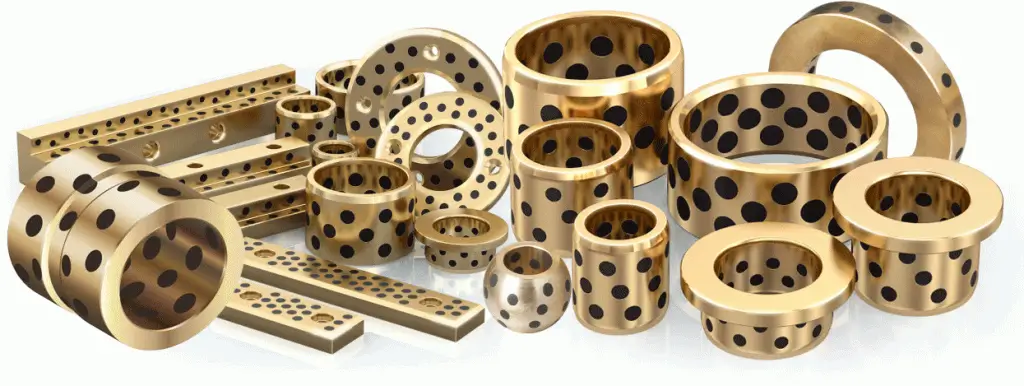
Table of Contents
1: Fundamental Composition – Copper and Tin
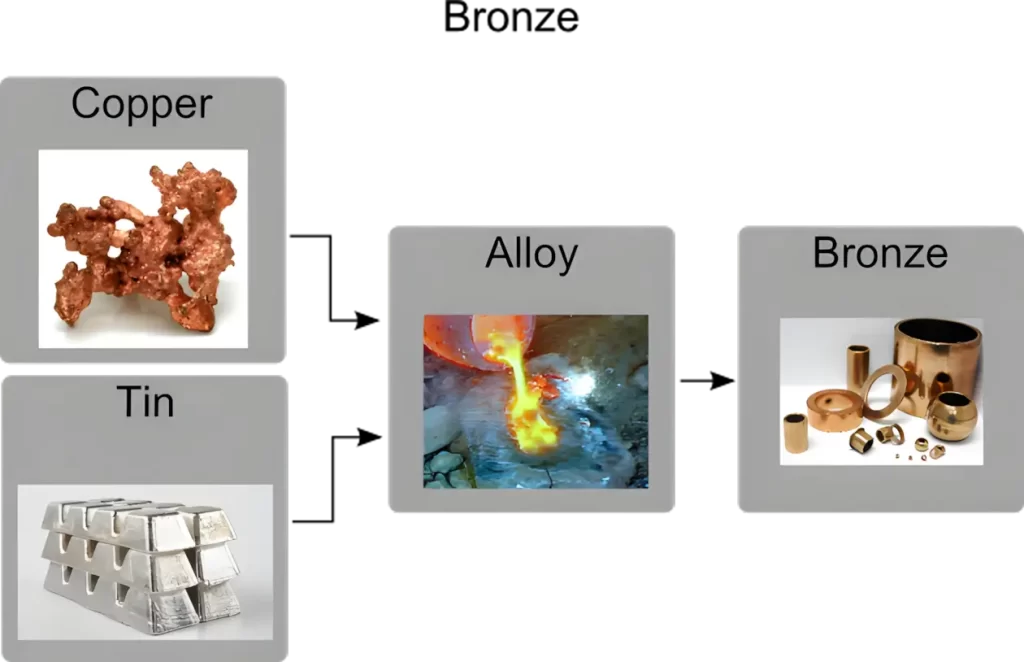
At its most basic level, bronze is an alloy composed primarily of copper (Cu) and tin (Sn). Contemporary bronze formulations typically contain approximately 88% copper and 12% tin. However, historical artifacts indicate copper content ranging from 67% to 95%, demonstrating that the alloy composition has never been rigidly fixed. The United States standard bronze, for example, uses 90% copper, 7% tin, and 3% zinc. Ancient recipes sometimes incorporated tin levels as high as 14%.
The copper-to-tin ratio directly influences mechanical properties. Higher tin content increases hardness and strength but reduces ductility. Excessive tin leads to brittleness. Consequently, metallurgists have refined the composition over centuries to suit specific operational demands.
Bronze Versus Brass
A frequent point of confusion concerns the distinction between bronze and brass. The differentiation is straightforward:
Bronze is primarily an alloy of copper and tin.
Brass is primarily an alloy of copper and zinc.
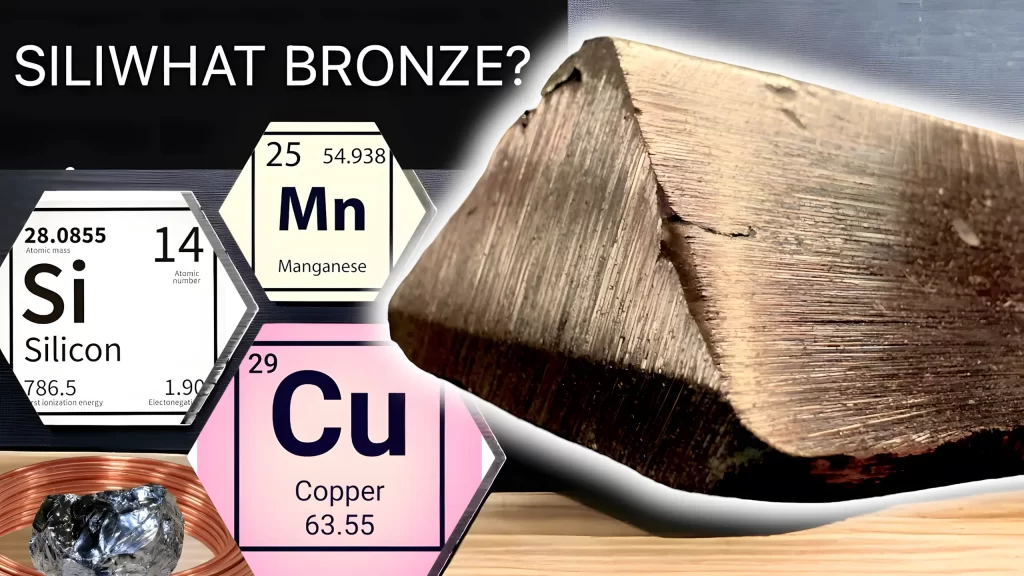
Modern industrial alloys may include additional elements, blurring this distinction. Some contemporary bronzes contain no tin at all, using aluminum, manganese, or silicon instead. Nevertheless, the conventional rule remains: tin indicates bronze, while zinc indicates brass.
2: Additional Alloying Elements and Their Effects
Pure copper is relatively soft. Adding tin produces a harder, more durable material. However, modern metallurgical practices incorporate several other elements to achieve specific performance characteristics.
Phosphorus
Adding a small quantity of phosphorus to a copper-tin alloy produces phosphor bronze. This material exhibits higher strength and hardness compared to standard bronze, making it suitable for pump plungers, valves, and bushings.
Aluminum
Aluminum bronze replaces tin with aluminum, typically 10–11.5%, plus 3–5% iron. The resulting alloy is very hard, strong, and abrasion-resistant, maintaining mechanical properties at elevated temperatures. Typical applications include heavy earth-moving equipment, roll neck bearings, and machine tool bearings.
Lead
Lead does not enhance strength but significantly improves machinability and provides a degree of self-lubrication. In bearing-grade bronze alloys such as SAE 660 (C93200), lead content ranges from 1% to 7%. Lead particles embed small abrasive contaminants and offer built-in lubrication, which is critical during startup conditions or when external lubrication is difficult to apply.
Manganese
Manganese bronze contains zinc and up to 4.5% manganese, with little or no tin. It offers excellent mechanical properties and is recommended for cast gears, bearings, propellers, and marine hardware.
Silicon
Silicon bronze uses silicon as the primary alloying element. It provides good corrosion resistance and is frequently used in architectural applications and marine hardware.
Zinc
Although zinc is the main component of brass, it also appears in certain bronze alloys. U.S. standard bronze contains 3% zinc. Zinc aids in deoxidation during casting and slightly hardens the alloy.
Other Elements
Additional alloying elements found in bronze include nickel, iron, beryllium, cadmium, zirconium, titanium, and magnesium. Each addition adjusts specific properties such as hardness, ductility, corrosion resistance, machinability, or wear resistance.
3: Tin Content and Material Properties Spectrum
The proportion of tin in bronze significantly alters its material behavior. The table below summarizes classifications by tin content.
| Tin Content | Classification | Key Characteristics | Common Applications |
|---|---|---|---|
| 4–5% Sn | Low-tin / Alpha bronze | Ductile, good cold-working properties | Coins, springs, turbines, blades |
| 8–15% Sn | Medium-tin bronze | Balanced strength and ductility | Standard bearing alloys, gunmetal |
| 12% Sn | Modern standard bronze | 88% Cu, 12% Sn – contemporary benchmark | General-purpose applications |
| 14% Sn | High-tin (ancient) | Up to 14% Sn in historical alloys | Ancient weapons and tools |
| 20–25% Sn | Bell metal | Very hard, brittle, sonorous | Bells, cymbals |
The microstructural changes occurring as tin is added to copper are complex. Different phases (α, β, γ, δ, ε) form at different tin concentrations, each possessing distinct mechanical properties. For practical purposes, a simple rule applies: higher tin content yields greater hardness but increased brittleness.
4: Why Bronze Is Preferred for Bearing Applications
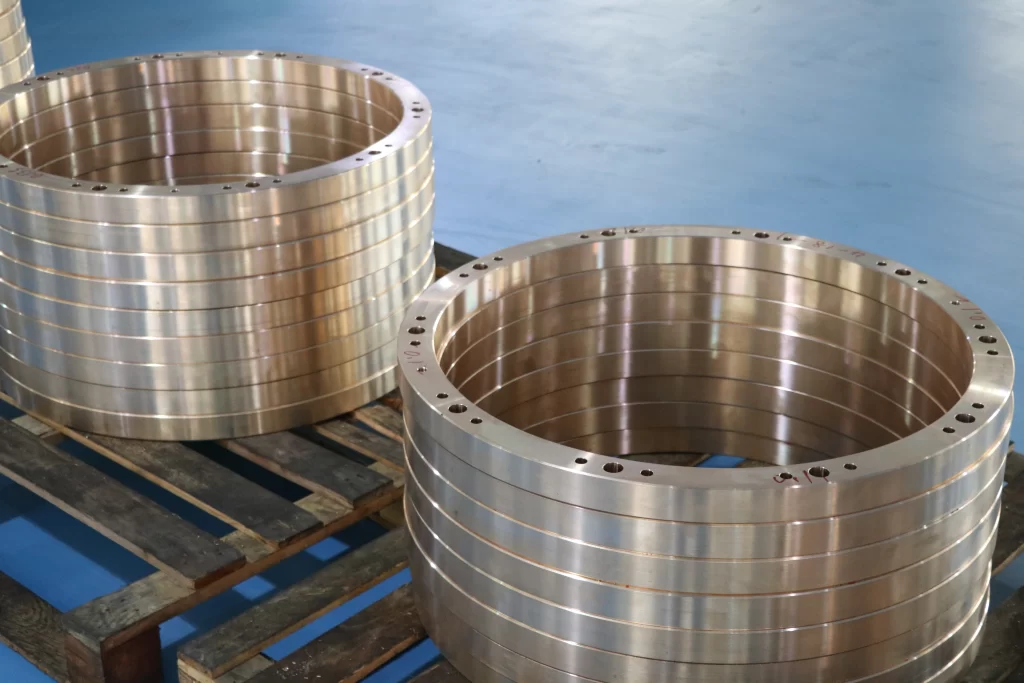
Bronze is widely used for bushings and sleeve bearings across numerous industries, including agriculture, construction, marine, automotive, machine tools, and hydraulics. The material offers several advantages over steel, plastic, or composite alternatives.
1. High Load Capacity
Bronze alloys exhibit excellent compressive strength, making them suitable for heavy-duty applications involving significant static and dynamic loads.
2. Exceptional Wear Resistance
Bronze is notably harder and more wear-resistant than standard brass. When paired with steel shafts, it demonstrates a low wear rate, extending component life and reducing maintenance downtime.
3. Corrosion Resistance
Bronze performs well in corrosive environments such as seawater, steam, and various chemicals. This property explains its widespread use in marine, offshore, and chemical processing industries.
4. Low Metal-to-Metal Friction
The coefficient of friction between bronze and steel shafts is low, resulting in smoother operation and reduced energy loss.
5. Embeddability and Self-Lubrication
In bearing-grade bronze, softer lead particles can embed small abrasive contaminants, protecting both the shaft and the bearing. These particles also contribute to built-in lubrication.
6. Heat Dissipation
Bronze dissipates heat effectively, a critical characteristic for high-speed or high-load applications where heat buildup may lead to component failure.
7. Shock and Vibration Absorption
Bronze absorbs and dampens impact loads and vibrations, protecting surrounding components and ensuring smoother operation.
8. Machinability
Bronze can be readily machined into custom shapes, sizes, and designs, allowing for tailored bearing solutions.
9. Natural Patina Formation
Bronze develops a natural protective layer (patina) on its surface, maintaining corrosion resistance over time without additional coatings.
10. Fire Safety
Bronze does not generate sparks, making it a safe choice for applications where fire or explosion risks exist.
5: Common Bronze Alloys for Bushings and Bearings
Several standard bronze alloys are frequently used in bushing and bearing manufacturing. Each alloy has specific properties suited to different operating conditions.
| Alloy Designation | Composition | Key Properties | Typical Applications |
|---|---|---|---|
| C93200 / SAE 660 | Cu 83%, Sn 7%, Pb 7%, Zn 3% | Good machinability, excellent wear resistance, embeddability | General-purpose bearings, bushings, thrust washers |
| C95400 | Cu 83% min, Al 10–11.5%, Fe 3–5% | Very hard, strong, abrasion-resistant; maintains properties at high temperatures | Heavy earth-moving equipment, roll neck bearings, machine tool bearings |
| C86300 | Manganese bronze | High strength, excellent mechanical properties | Cast gears, bearings, propellers, marine hardware |
| C51000 / Phosphor Bronze | Cu 95%, Sn 5%, P 0.2% | High strength, hardness, fatigue resistance | Pump plungers, valves, bushings |
| CuSn8P | High-density copper alloy with tin and phosphorus | High density, exceptional load capacity, excellent wear resistance | Wrapped bronze bearings, compact bushings |
Selecting the incorrect alloy leads to premature failure, costly downtime, and increased maintenance expenses. Proper alloy selection ensures long-term reliable operation.
6: Comparative Analysis – Bronze, Brass, and Copper
The following comparison clarifies the distinctions among these three material families.
| Property | Bronze (Cu + Sn) | Brass (Cu + Zn) | Pure Copper |
|---|---|---|---|
| Hardness | High | Medium | Low |
| Wear resistance | Excellent | Good | Poor |
| Corrosion resistance | Excellent (especially in seawater) | Good | Excellent |
| Machinability | Good (better with lead content) | Excellent | Good |
| Friction against steel | Low | Moderate | High |
| Melting point | ~950°C | ~900°C | 1083°C |
| Typical cost | Higher | Lower | Highest |
| Best for bushings? | Yes | Limited | No |
For applications involving significant wear, such as bushings in excavators or sleeve bearings in hydraulic pumps, bronze is the preferred material. Although brass offers lower initial costs, bronze provides superior long-term value through reduced downtime and replacement frequency.
7: MYWAY Bronze Bushings – Engineered for Industrial Demands
Since its establishment in 2005, MYWAY has specialized in the design and manufacture of bronze bushings and bearings. The company recognizes that bushing failure directly translates to production stoppages and financial losses.
Custom Engineering, Not Off-the-Shelf Solutions
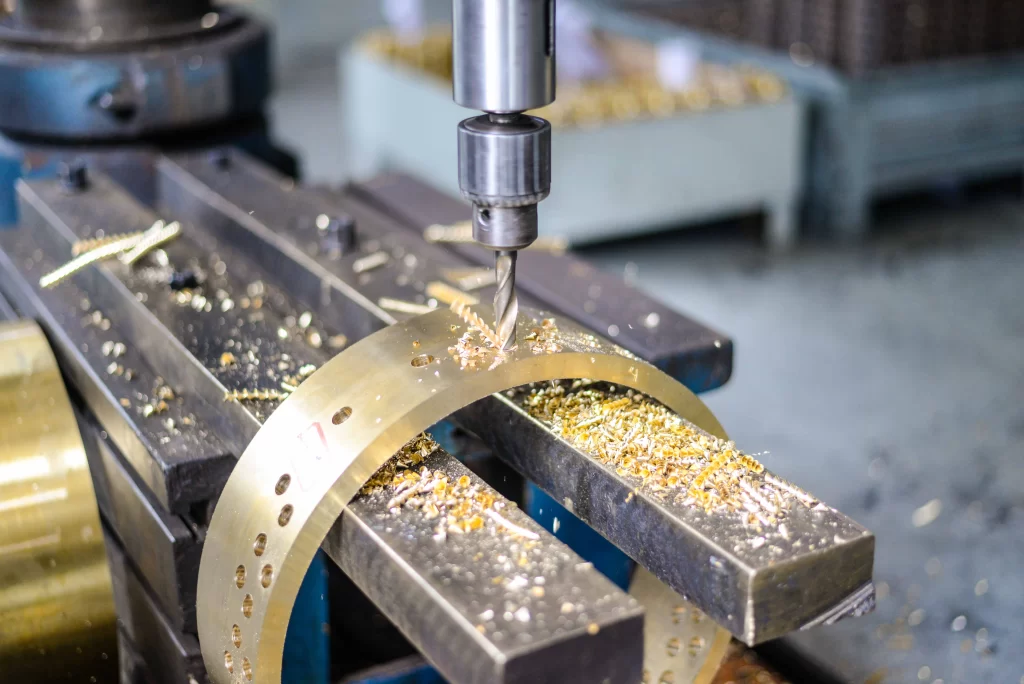
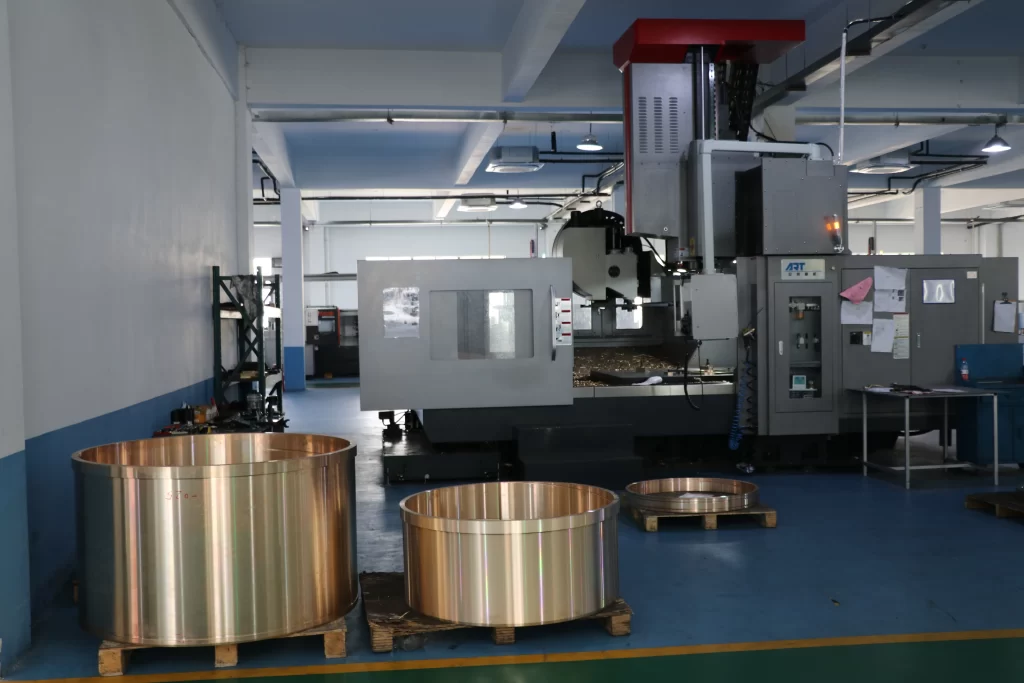
Unlike many bearing suppliers, MYWAY does not merely promote warehouse inventory. The company focuses on custom PTFE bronze bushings and cast bronze bearings tailored to specific load and application requirements. Any shape, size, or design is available.
Multiple Bronze Alloys for Varied Applications
MYWAY works with a wide range of bronze alloys to match exact performance needs.
SAE 660 / C93200 – Industry standard for general-purpose bushings. Offers excellent wear resistance, good machinability, and self-lubricating properties.
C95400 Aluminum Bronze – Provides very high strength and abrasion resistance, especially at elevated temperatures. Ideal for heavy earth-moving equipment and roll neck bearings.
CuSn8P Wrapped Bronze – High-density copper alloy with exceptional load capacity and wear resistance. Serves as a compact, cost-effective alternative to traditional cast bronze bushings.
Phosphor Bronze – Recommended for applications requiring strength, hardness, and fatigue resistance.
Leaded Bronze (CuPb10Sn10) – Delivers exceptional anti-friction properties and heat resistance, preventing seizure and wear under extreme pressure.
PTFE Integration for Superior Performance
MYWAY PTFE bronze bushings combine the strength of cast bronze with the ultra-low friction of PTFE. PTFE is known for its non-stick characteristics and solid lubricant performance, offering an ultra-low coefficient of friction, chemical resistance, temperature tolerance from -450°F to +620°F, and maintenance-free operation.
Sintered Bronze for Self-Oiling Applications
MYWAY sintered bronze bushings are produced from metal powder compressed under high pressure and then heated to fuse the particles. The resulting porous structure—similar to a metallic sponge—is vacuum-impregnated with oil. During shaft rotation, heat and pressure draw oil out to form a lubricating film. When motion stops, the oil is reabsorbed into the pores.
Decades of Experience and Global Trust
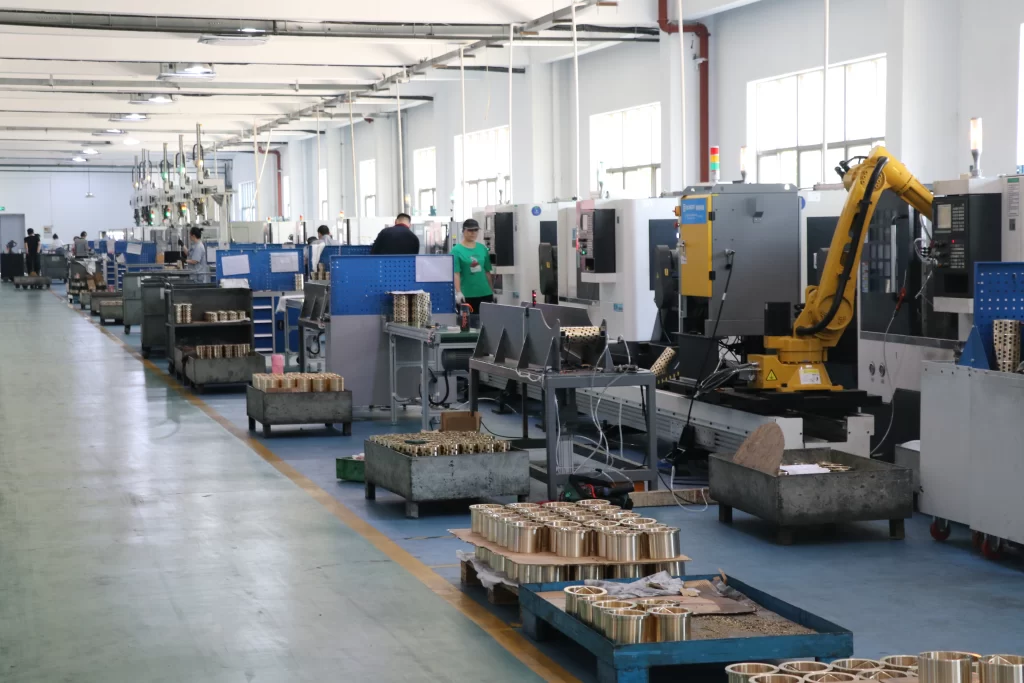
MYWAY operates with one central operations hub and three production bases. The company maintains more than 2,000 bushing molds and serves industries worldwide, including agriculture, construction, marine, automotive, and industrial machinery.
Quality Assurance
Every MYWAY bushing is precision-engineered and quality-tested to withstand real-world operational demands. Customers consistently report longer service life, better performance, and lower total cost of ownership compared to alternative products.
8: The Importance of Selecting the Right Bronze Bushing
Not all bronze bushings are manufactured to the same quality standards. An inexpensive bushing from an uncertified supplier may function for a limited period, but premature failure inevitably results in:
Production downtime
Labor costs for replacement
Potential damage to shafts or housings
Lost revenue
Investing in a MYWAY bronze bushing engineered for a specific application requires a higher initial expenditure. However, the extended service life, reduced maintenance requirements, and improved operational reliability generate significant long-term savings.
Conclusion
Bronze is fundamentally an alloy of copper and tin, but modern metallurgy has expanded the definition to include a family of precisely engineered alloys. These materials deliver exceptional strength, wear resistance, corrosion resistance, and low friction. Consequently, bronze remains the preferred material for industrial bushings and sleeve bearings after thousands of years of technological evolution.
Whether the requirement involves standard SAE 660 bushings, heavy-duty C95400 aluminum bronze bearings, or custom PTFE self-lubricating solutions, MYWAY possesses the expertise and manufacturing capability to fulfill diverse needs.
Organizations should not compromise on bushing quality when production uptime is critical. Contact MYWAY directly, provide application details, load requirements, and operating conditions, and the company will assist in selecting the appropriate bronze alloy and bushing design.
Contact MYWAY for a quotation. Reliable equipment performance begins with the right bearing components.
Frequently Asked Questions (FAQ)
Q1: What is bronze made of?
A: Bronze is primarily made of copper and tin. Modern bronze typically contains approximately 88% copper and 12% tin.
Q2: What is the difference between bronze and brass?
A: Bronze is an alloy of copper and tin. Brass is an alloy of copper and zinc. Bronze is harder, more wear-resistant, and more corrosion-resistant than brass, making it more suitable for bushing and bearing applications.
Q3: Is bronze stronger than steel?
A: Generally, no. Bronze is typically softer than steel, which is advantageous for bushings because the bushing wears instead of the more expensive steel shaft. Bronze offers superior corrosion resistance and better friction properties compared to steel.
Q4: Does bronze rust?
A: No. Bronze does not rust like iron or steel. It forms a natural protective patina layer that prevents further corrosion, making bronze ideal for marine and outdoor applications.
Q5: Which bronze alloy is best for bushings?
A: The optimal alloy depends on the application. SAE 660 (C93200) is the standard for general-purpose bushings. C95400 aluminum bronze is best for very high loads and elevated temperatures. Phosphor bronze is excellent for high-strength, high-fatigue applications.
Q6: Can MYWAY manufacture custom-sized bronze bushings?
A: Yes. MYWAY specializes in custom PTFE bronze bushings and cast bronze bearings in any shape, size, or design. The company maintains over 2,000 bushing molds and works with multiple bronze alloys to match exact requirements.
Q7: Which industries use bronze bushings?
A: Bronze bushings are used in agriculture, construction, marine, automotive, industrial machinery, hydraulics, aerospace, material handling, and many other industries.
Q8: How do self-lubricating bronze bushings work?
A: Self-lubricating bronze bushings (such as sintered bronze bushings) utilize a porous structure impregnated with oil. Shaft rotation generates heat and pressure, drawing oil out to form a lubricating film. When motion stops, the oil is reabsorbed.
Q9: Why choose MYWAY for bronze bushings?
A: MYWAY has manufactured high-quality bronze bushings since 2005. The company offers custom engineering, multiple bronze alloy options, PTFE integration for self-lubrication, and decades of experience serving global industries. Customers trust MYWAY for longer-lasting, better-performing bushings.
Q10: How can a quotation be obtained from MYWAY?
A: Contact MYWAY directly through the company website. Provide application details, load requirements, operating conditions, and any specific dimensions or alloy preferences. A competitive quotation tailored to specific needs will be provided.
100000+ Types of Bushings – Contact Us for Details