
Recent Posts
Oil‑Free Bushings – Core Performance, Applications, and the MYWAY Solution
Introduction
Oil‑free bushings (also known as self‑lubricating bushings, maintenance‑free bushings, oilless bearings, or dry plain bearings) are sliding bearings that operate reliably over long periods without external oil or grease. Their core performance characteristics include: maintenance‑free operation, high load capacity (dynamic pressure up to 140 N/mm²), a wide operating temperature range (‑200 °C to +280 °C), excellent resistance to contamination and corrosion, and a very low coefficient of friction (as low as 0.08 under dry running conditions). These properties make oil‑free bushings suitable for a broad range of applications: automotive chassis and engine components, construction machinery, heavy mining equipment, food and pharmaceutical machinery, cleanroom automation, renewable energy systems (e.g. wind turbine pitch control), marine and offshore engineering, and industrial robotics. Compared with conventional oil‑ or grease‑lubricated bearings, oil‑free bushings eliminate unplanned downtime caused by lubrication failure, reduce total life‑cycle maintenance costs, and meet environmental regulations such as RoHS and REACH.
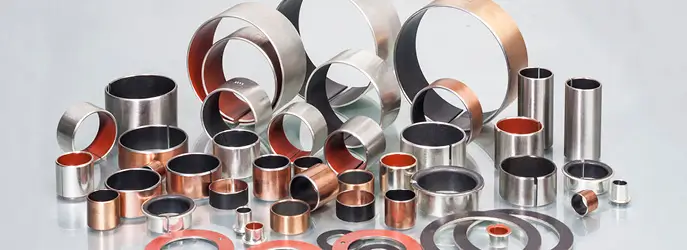
Table of Contents
1. Definition and Technical Characteristics of Oil‑Free Bushings
An oil‑free bushing is a sliding bearing that operates without external lubricant supply by relying on solid lubricants (e.g. PTFE, graphite, molybdenum disulfide) embedded in the bearing material. Such bearings have no grease nipples, oil passages, or oil reservoirs; the lubrication function is integral to the material system.
Oil‑free bushings are known by several equivalent names: self‑lubricating bushings, maintenance‑free bushings, oilless bearings, dry sliding bearings, composite bushings, DU bushings, SF‑1 bushings, etc. Despite the different names, the common feature is the elimination of periodic manual lubrication and the ability to operate stably with minimal dependence on maintenance.
It is important to note that not all bearings labelled “self‑lubricating” are truly maintenance‑free. Some products are actually oil‑impregnated bearings (e.g. sintered bronze oil‑impregnated bearings), where the oil stored in the porous structure gradually depletes, oxidises, or evaporates, eventually requiring re‑lubrication. Genuine oil‑free bushings use solid lubricants as a permanent source of lubrication, requiring no external lubrication throughout their service life.
2. Working Principle of Self‑Lubricating Bushings (Three‑Layer Composite Structure)
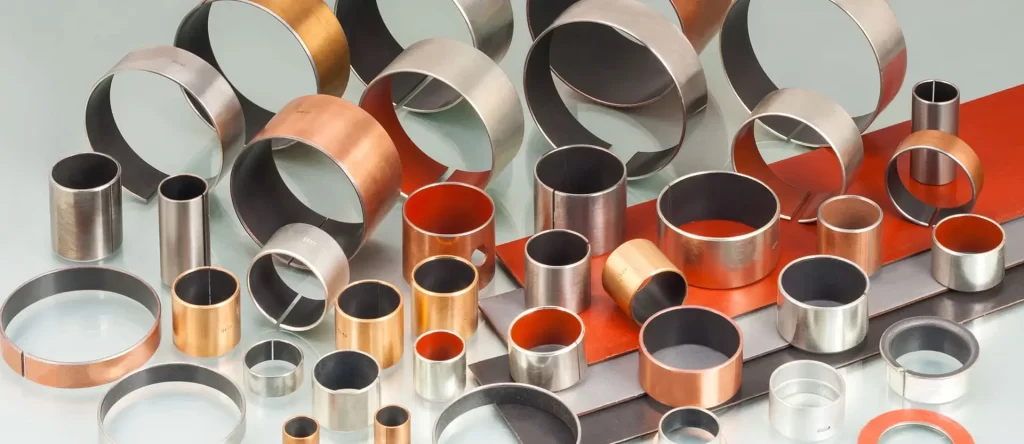
High‑quality self‑lubricating bushings typically adopt a three‑layer composite structure, exemplified by the MYWAY DU/SF‑1 series:
First layer: Steel backing
Made of low‑carbon steel, stainless steel, or copper‑alloy substrate, providing structural strength, load rigidity and dimensional stability. This layer ensures that the bushing does not deform under high pressure and maintains a precise fit with the housing.
Second layer: Porous bronze interlayer
Formed by sintered bronze powder (thickness 0.20–0.35 mm) firmly bonded to the steel backing. The porous structure not only serves as a reservoir for the PTFE mixture but also provides excellent thermal conductivity, rapidly conducting frictional heat away from the sliding surface.
Third layer: PTFE‑based sliding layer
Very thin (0.01–0.03 mm), composed of PTFE and fillers (e.g. lead, MoS₂, carbon fibre). This layer provides an extremely low dry friction coefficient (typically 0.08–0.20). During initial operation, a small amount of PTFE transfers to the mating shaft surface, forming a continuous lubricating transfer film. Once the transfer film is established, the metal surfaces no longer make direct contact, and friction occurs within the PTFE film, significantly reducing wear.
For graphite‑inlaid oil‑free bushings (e.g. JDB series), the lubrication mechanism is similar: solid graphite plugs gradually wear during sliding, depositing a graphite lubricant film on the surface. This design is more suitable for high‑temperature (>280 °C) or vacuum applications where PTFE is not appropriate.
3. Engineering Comparison between Oil‑Free Bushings and Conventional Bearings
| Parameter | Conventional oil/grease bearings | Oil‑free (self‑lubricating) bushings |
|---|---|---|
| Maintenance requirement | Regular greasing or oil change, manual tracking required | Maintenance‑free; no lubrication needed after installation |
| Operating speed range | Suitable for high‑speed rotation (thousands of rpm) | Recommended for low to medium speeds (dry <2.5 m/s, with initial lubrication <5 m/s) |
| Contamination resistance | Poor; dust, moisture, chemicals easily damage the oil film | Excellent; lubrication comes from within the material, unaffected by external contaminants |
| Load capacity | Medium to high (dependent on oil film formation) | High; dynamic pressure up to 140 N/mm² |
| Operating temperature | Limited by oil viscosity and oxidation stability (typically –30 °C to +150 °C) | Wide; PTFE type –200 °C to +280 °C; graphite type can exceed 400 °C |
| Environmental compliance | Risk of oil leakage and waste oil disposal; lead‑bronze still in use | Oil‑free, lead‑free (RoHS/REACH compliant); zero emissions |
| Total life‑cycle cost | Low initial purchase cost but high lubrication labour, consumables and downtime costs | Higher initial purchase cost but near‑zero maintenance cost |
Engineering selection conclusion: For continuous high‑speed rotation in clean environments, hydrodynamic oil‑film bearings remain the preferred choice. For low‑to‑medium speed, heavy load, high temperature, contaminated environments, or locations where maintenance access is difficult, oil‑free bushings offer significant overall advantages.
4. Technical Distinction between Oil‑Impregnated and Self‑Lubricating Bearings
In engineering practice, oil‑impregnated bearings are often mistakenly called “self‑lubricating bearings”, but there are essential differences:
Oil‑impregnated bearing (Oilite type)
Typically a sintered bronze bearing impregnated with light oil, using capillary action of the porous structure to store the oil. During operation, temperature rise causes the oil to expand and migrate to the surface for lubrication; upon cooling, the oil is drawn back in. Such bearings can operate for limited periods without maintenance, but as the oil oxidises, evaporates or leaks, lubrication performance gradually declines, eventually requiring re‑lubrication or replacement. Thus, they are not truly maintenance‑free.
Self‑lubricating bearing (genuine type)
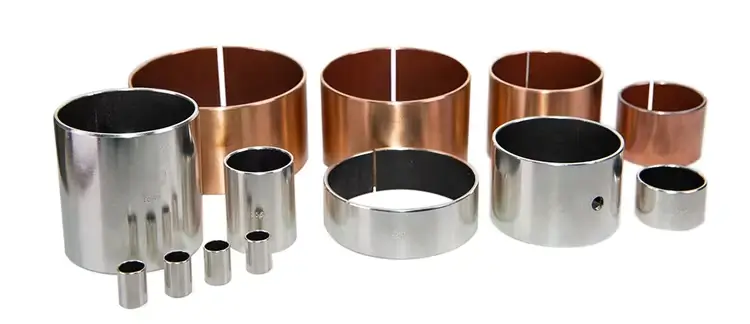
Represented by the MYWAY DU/SF‑1 series, where solid lubricants (PTFE, graphite, MoS₂) are physically embedded or compounded into the material, not dependent on liquid permeation or evaporation. Solid lubricants do not become depleted (wear is extremely low) and provide stable lubrication throughout the service life. These are truly maintenance‑free bearings.
When procuring, engineers should clearly distinguish between these two types and select according to the maintenance‑free requirement of the application.
5. Typical Applications of Oil‑Free Bushings
Based on their performance characteristics, oil‑free bushings are widely used in the following industrial sectors:
Automotive industry: suspension system bushings, shock absorber guide bushes, steering knuckle bushings, engine accessories, seat adjustment mechanisms. Reduces NVH, eliminates chassis squeaks and lubrication points.
Construction and mining equipment: excavators, loaders, bulldozers, crushers, off‑highway trucks. Withstands impact loads, mud and dust; particularly advantageous where maintenance access is limited.
Heavy industrial machinery: injection moulding machines, hydraulic presses, gear pumps, textile machinery, printing presses.
Food and pharmaceutical machinery: requires no oil contamination, meets hygienic design standards; PTFE‑based oil‑free bushings can be used in product‑contact areas.
Cleanrooms and precision equipment: semiconductor manufacturing, medical imaging devices, optical inspection instruments, vacuum coating equipment – avoids oil mist contamination.
Renewable energy: wind turbine pitch bearings and yaw drives – high‑altitude, difficult‑to‑access components greatly benefit from maintenance‑free design, reducing operational costs.
Marine and offshore engineering: steering gears, winches, deck machinery – bronze‑based self‑lubricating bushings resist seawater corrosion.
Industrial automation and robotics: linear guides, joint bearings, end effectors, material handling systems.
6. Industry Market Trends
According to industry research data, the global dry self‑lubricating sliding bearing market was valued at approximately US 2.2 billion in 2025 and is projected to reach US 3.2 billion by 2032, with a CAGR of about 5.3–5.6 %. The broader oil‑free bushing market was valued at about US 2.69 billion in 2025 and is expected to reach US 5.2 billion by 2035, at a CAGR of 6.9 %. When including all self‑lubricating bearing categories (including specialised composite bearings), some research organisations forecast the market to exceed US$ 15 billion by 2032.
Drivers of growth include:
Stricter environmental regulations – RoHS, REACH and similar directives restrict the use of lead and oil‑based substances, driving replacement of traditional products with lead‑free, oil‑free bearings.
Industry 4.0 and automation upgrades – Smart factories require reduced human intervention; maintenance‑free components become standard.
Growing total cost of ownership (TCO) awareness – Procurement decisions increasingly focus on life‑cycle cost rather than initial price; the advantages of oil‑free bushings in operational and downtime costs are widely recognised.
7. Total Cost of Ownership Analysis
Oil‑free bushings typically have a higher initial purchase price (roughly 2–3 times that of ordinary bronze or steel bushings) but a significantly lower total cost of ownership (TCO). TCO calculation should include the following elements:
Conventional bearing TCO = Purchase cost + ongoing lubricant expense + lubrication labour + downtime due to lubrication + failure replacement cost + waste oil disposal and environmental compliance
Oil‑free bushing TCO = Purchase cost (higher) + zero lubricant expense + zero lubrication labour + no lubrication downtime + longer replacement interval + zero waste oil disposal
Quantitative analysis shows that for continuously operating industrial equipment, the annual cost of grease procurement and manual lubrication often exceeds the initial purchase cost of the bearing itself. Moreover, premature bearing failure due to under‑lubrication or incorrect grease is the primary failure mode of conventional bearings. Oil‑free bushings completely eliminate this risk factor.
Therefore, for applications with annual operating hours exceeding 2000, a large number of equipment units, or poor maintenance accessibility, the payback period for oil‑free bushings is typically between 3 and 12 months, after which net savings accumulate.
Caution is needed against ultra‑low‑price products: low‑quality oil‑free bushings may cut corners in PTFE formulation, sintering processes, or dimensional tolerances, leading to early failure. Suppliers with robust quality management systems and material certifications should be preferred.
8. Technical Selection Criteria for Oil‑Free Bushings
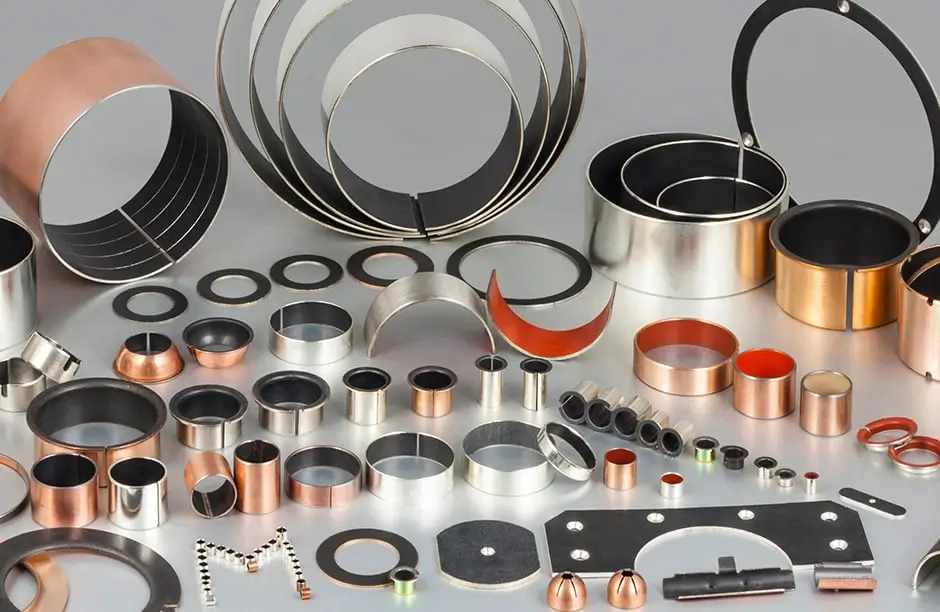
When sourcing or selecting oil‑free bushings, the following parameters should be carefully evaluated:
Material type – PTFE‑based (low friction, clean environments, moderate loads); graphite‑inlaid bronze (heavy loads, high temperatures, dirty environments); polymer‑composite (cost‑sensitive, moderate loads).
PV value – Product of pressure (P) and velocity (V), a critical indicator of bearing capability. Confirm that the supplier’s rated PV (continuous and peak) meets the application requirements. MYWAY DU series continuous PV rating is 1.8 N/mm²·m/s, with short‑term capability up to 3.6 N/mm²·m/s.
Operating temperature range – Must cover both ambient temperature and frictional temperature rise.
Corrosion resistance – For marine, chemical, or other corrosive environments, choose stainless steel‑backed or all‑bronze materials.
Dimensional tolerances – Inside diameter (ID) and outside diameter (OD) tolerances should conform to the required fit grade (e.g. H7/h6). Low‑cost bushings often exhibit high tolerance scatter, leading to loose fits or press‑fit failures.
Certifications – IATF 16949 for automotive; ISO 9001 for general industry; RoHS/REACH reports for environmental compliance.
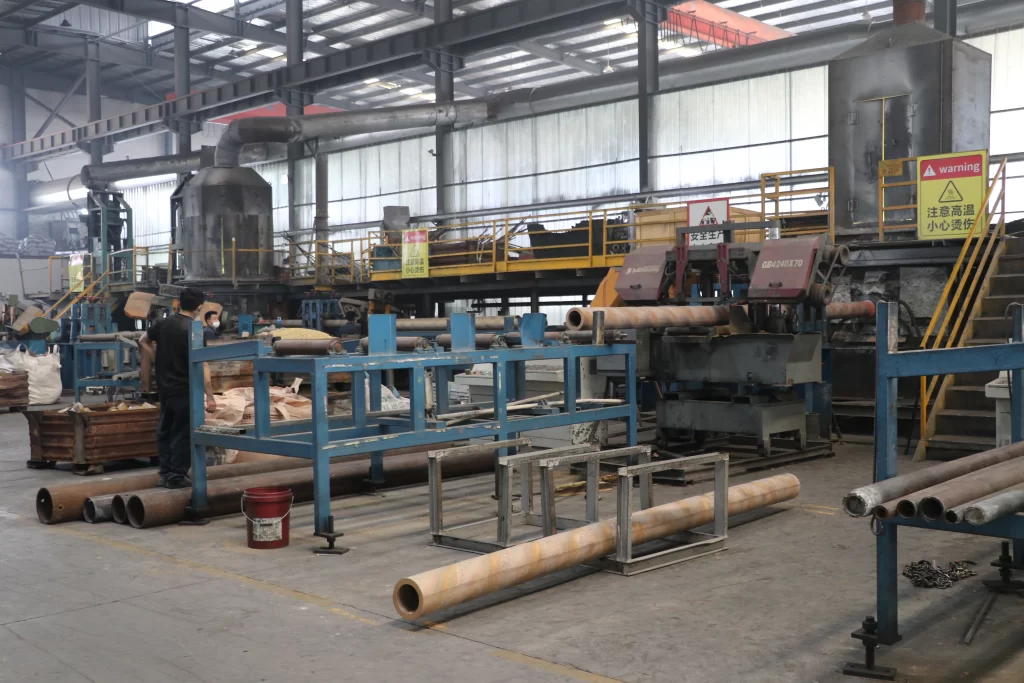
Customisation capability – For non‑standard dimensions, flanged configurations, special chamfers, etc., select a supplier with in‑house casting and machining capabilities to avoid additional tooling fees.
9. Technical Advantages of MYWAY Oil‑Free Bushings
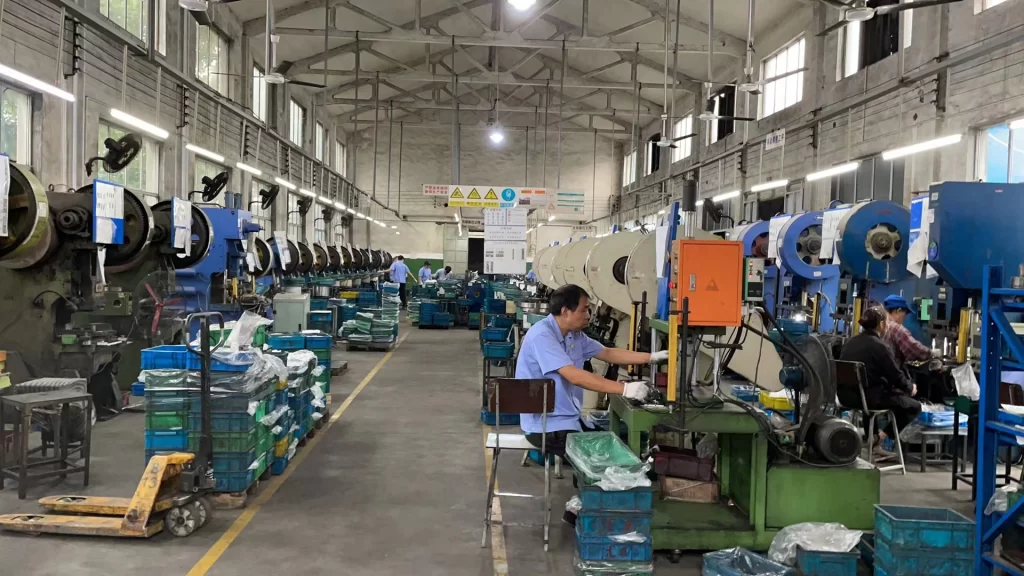
Zhejiang MYWAY Co., Ltd., established in 2005, is a national high‑tech enterprise specialising in the R&D, manufacture and sale of self‑lubricating bearings. Its oil‑free bushing products offer the following distinctive advantages:
(1) Two decades of industry experience
More than 20 years of bearing manufacturing experience, covering the complete process chain from powder metallurgy sintering and casting to precision machining.
(2) Full vertical integration
Three production bases totalling 35,000 m², with over 2,000 precision moulds, 5 continuous casting lines, automated sintering lines and a full set of imported inspection equipment. Raw material profiles (annual output exceeding 20,000 tons) are manufactured in‑house, eliminating intermediate suppliers, ensuring quality consistency and cost control.
(3) Authoritative certifications
IATF 16949:2016 (automotive quality management), ISO 9001:2015, ISO 14001:2015 (environmental management), and GB/T 29490‑2013 (intellectual property). Products comply with RoHS and REACH directives, and SGS test reports are available upon request.
(4) Complete product portfolio
Main product lines include:
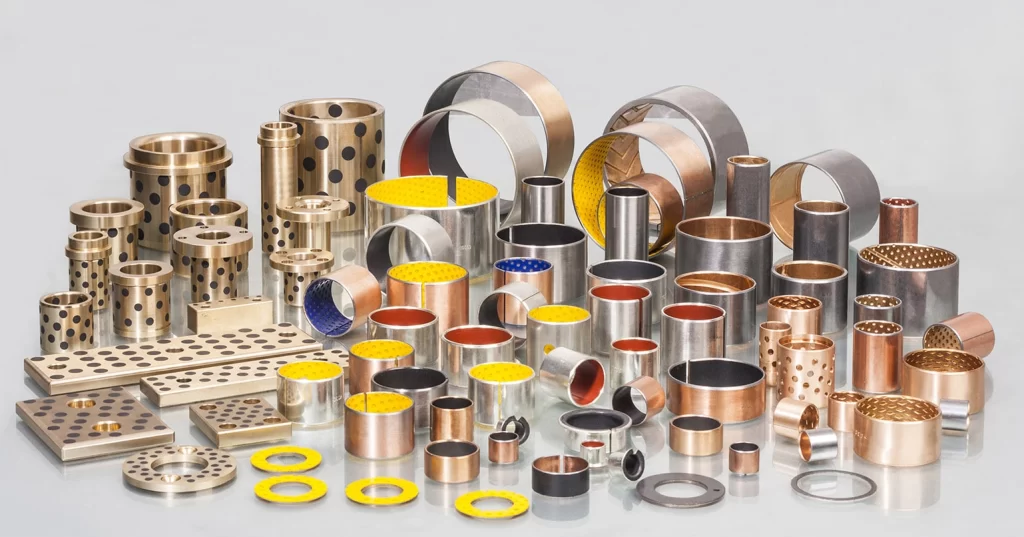
DU / SF‑1 series PTFE‑composite oil‑free bushings
JDB series graphite‑inlaid copper bushings
Bimetallic bearings
Engineering plastic bearings
Spherical plain bearings and custom non‑standard components
(5) Global market validation
Exports to more than 40 countries and regions, including Germany, Italy, Japan, the USA, Canada and South Korea, meeting the world’s most stringent quality requirements.
(6) No mould development fees for custom parts
For non‑standard designs provided by customers, MYWAY waives mould development fees (an industry‑standard charge typically ranging from several thousand to tens of thousands of US dollars), significantly reducing the cost of small batches or prototype orders.
(7) Competitive pricing
Because MYWAY controls upstream raw material production, it offers more favourable pricing than suppliers who rely on externally purchased semi‑finished goods, while maintaining equivalent quality levels.
10. Frequently Asked Questions (FAQ)
Q1: Can oil‑free bushings be used in high‑speed rotating applications?
A: Generally not recommended. Oil‑free bushings are designed for low to medium speeds (dry running line speed typically ≤2.5 m/s, up to 5 m/s with initial lubrication). For continuous high‑speed rotation exceeding 5000 rpm, hydrodynamic plain bearings or rolling bearings should be used.
Q2: Are self‑lubricating bushings truly free of any external lubrication?
A: For genuine PTFE‑based or graphite‑inlaid self‑lubricating bushings, yes, no external lubrication is required throughout the entire service life. However, care must be taken to distinguish them from oil‑impregnated (Oilite‑type) bearings, which are only maintenance‑free for a limited period and eventually require re‑lubrication.
Q3: What is the difference between DU and SF‑1 bushings?
A: Both refer to the same technical structure (steel + bronze powder + PTFE). “DU” is a trademark of the former GGB company, while “SF‑1” is the widely used generic name. MYWAY’s SF‑1/SF‑2 series are manufactured to international standards.
Q4: Are oil‑free bushings more expensive to purchase?
A: The initial purchase cost is higher, but the total cost of ownership (including lubrication labour, lubricant, downtime and failure replacement) is significantly lower than that of conventional bearings. Typical payback period is 3–12 months.
Q5: Can self‑lubricating bushings operate underwater or in seawater?
A: Yes, provided that a corrosion‑resistant substrate (bronze or stainless steel backing) and a graphite‑type lubricant are selected. PTFE‑type bushings can also be used in fresh or sea water, but the corrosion resistance of the mating shaft material must be considered.
Q6: What is the operating temperature range of oil‑free bushings?
A: For PTFE‑based types: –200 °C to +280 °C. Graphite‑inlaid bronze types can withstand higher temperatures (graphite begins significant oxidation at 400–500 °C, but most industrial machinery operates well below that).
Q7: Can MYWAY manufacture non‑standard size bushings?
A: Yes. With in‑house casting, sintering and CNC machining capabilities, MYWAY can produce bushings of any non‑standard dimensions, geometries and tolerances according to customer drawings, and mould development fees are waived.
Q8: What is the expected service life of self‑lubricating bushings?
A: It depends on PV value, hardness and surface roughness of the mating shaft, ambient temperature, etc. Under proper selection conditions, the service life of self‑lubricating bushings typically exceeds that of conventional oil‑lubricated bearings. Many customers report continuous operation of 2–5 years without replacement.
Q9: Can oil‑free bushings directly replace existing oil‑lubricated bearings in my equipment?
A: In most cases, yes. Oil‑free bushings are available in standard metric and inch size series for direct replacement. If the original bearing is a non‑standard size, MYWAY can manufacture customised replacement bushings to the required dimensions.
Q10: What quality and environmental certifications does MYWAY hold?
A: IATF 16949:2016, ISO 9001:2015, ISO 14001:2015, GB/T 29490‑2013. RoHS and REACH compliance certifications are available, and third‑party test reports can be provided upon request.
Conclusion and Inquiry Guidance
In summary, oil‑free bushings, through built‑in solid lubrication technology, offer clear technical advantages in terms of maintenance‑free operation, high load capacity, wide temperature adaptability and environmental friendliness. For industrial equipment pursuing low TCO and high reliability, upgrading from conventional bearings to self‑lubricating bearings represents an engineering decision with a strong return on investment.
MYWAY, with 20 years of manufacturing experience, full vertical integration, international certifications, and global customer validation, is a professional oil‑free bushing manufacturer capable of providing comprehensive solutions ranging from standard products to fully customised designs. Its DU/SF‑1 series, JDB series and bimetallic bearings are widely used in automotive, construction machinery, renewable energy, food and pharmaceutical, and automation industries.
For technical selection advice, product quotations, or custom design evaluation, please visit MYWAY’s official website (mybushing.com) or contact their technical sales team directly. Providing detailed operating parameters (load, speed, temperature, medium, mounting dimensions) will help obtain a precise recommendation.
This article is based on publicly available industry data, MYWAY technical documentation, and standard tribological principles. For specific selection and application recommendations, please refer to the official report issued by MYWAY’s technical engineers.
100000+ Types of Bushings – Contact Us for Details