
Recent Posts
Pilot Bearing vs. Bushing: Critical Component Selection for Manual Transmission Performance
Introduction
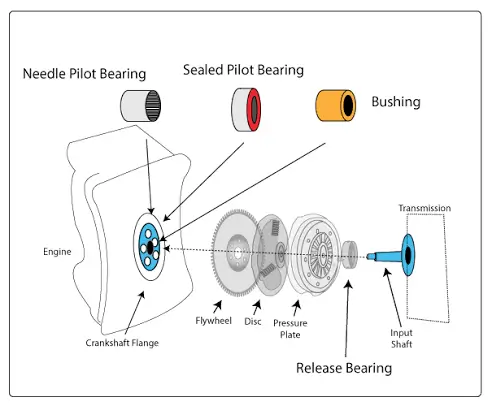
The interface between engine and transmission represents one of the most critical mechanical junctions in any manual transmission vehicle. Within this connection resides a small but essential component that directly influences clutch operation, shift quality, and drivetrain longevity. The pilot bearing or pilot bushing, pressed into the crankshaft or flywheel, supports and centers the transmission input shaft while accommodating the speed differential between engine and transmission during clutch disengagement . This component selection directly impacts transmission performance, maintenance intervals, and the risk of catastrophic drivetrain failure. Understanding the distinctions, applications, and operational characteristics of each option remains essential for builders, technicians, and performance enthusiasts seeking to optimize manual transmission reliability.
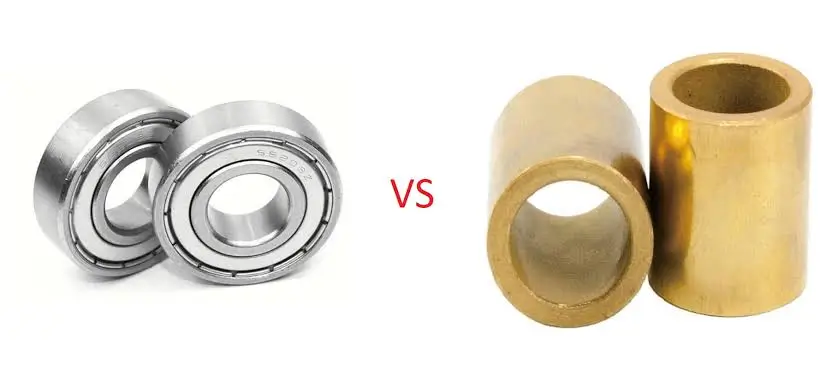
Table of Contents
1. Functional Overview and Operational Mechanism
The pilot bearing and pilot bushing serve identical fundamental purposes within the manual transmission assembly. Both components center and support the transmission input shaft while enabling the engine crankshaft and transmission input shaft to rotate at different speeds when the clutch is disengaged . This differential rotation capability is critical during gear changes and stationary idling with the clutch pedal depressed. When the clutch engages, the input shaft spins at engine speed, eliminating relative motion between the pilot component and the input shaft. The pilot component only operates under differential speed conditions, which means its duty cycle involves intermittent, high-speed operation rather than continuous rotation. This operational pattern influences material selection and failure modes. The component is typically press-fit into the crankshaft bore or flywheel center, establishing a fixed outer interface while the inner surface accommodates the input shaft tip.
2. Pilot Bearing Design and Construction Characteristics
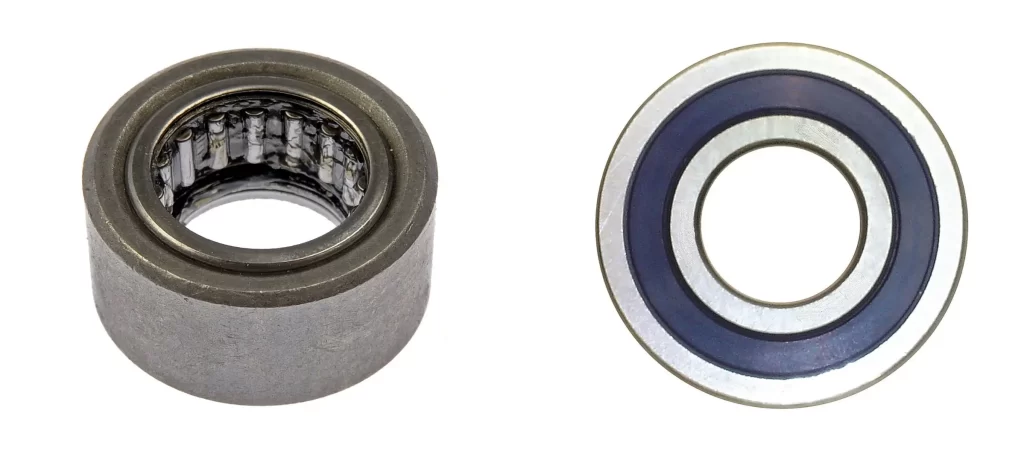
Pilot bearings utilize rolling element technology, incorporating ball bearings, roller bearings, or needle bearings within their construction . This design employs precision-ground races that contain rolling elements separated by a cage or retainer. The bearing approach theoretically offers reduced friction, enhanced longevity, and smoother operation compared to plain bearing alternatives. Sealed bearings incorporate factory lubrication intended to last the service life of the component. The rolling element design accommodates higher rotational speeds with minimal friction generation. However, repeated exposure to elevated operating temperatures can compromise bearing seals, leading to lubricant loss, contamination ingress, and subsequent bearing failure . When pilot bearings fail, the rolling elements may fragment, causing extensive damage to the transmission input shaft surface, potentially requiring shaft replacement or costly repair procedures . The steel construction of bearing components presents higher hardness than the input shaft, meaning that a failed bearing invariably damages the shaft before the bearing itself sustains catastrophic structural failure
3. Pilot Bushing Design and Construction Characteristics
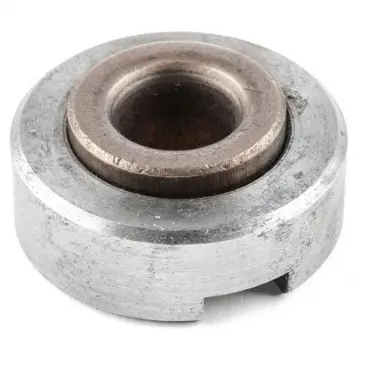
Pilot bushings employ plain bearing technology, typically manufactured from oil-impregnated bronze alloy, though variations include aluminum, brass, copper, Kevlar, and steel compositions . The oil-impregnated bronze variant, commonly known as Oilite, incorporates porous bronze structure infused with approximately twenty percent oil by volume, providing self-lubricating properties that activate under heat and load conditions . When the bushing experiences load and temperature increase, the oil migrates to the surface, establishing a lubricating film between the bushing and input shaft. This self-lubricating mechanism eliminates the need for supplementary lubrication in properly specified applications. The softer bronze material compared to the hardened steel input shaft means that wear occurs preferentially on the bushing rather than the shaft . Even under extreme wear conditions, bushings do not typically cause catastrophic damage to the input shaft because they contain no moving parts that can fragment and score the shaft surface . Bushing failure manifests as progressive wear and increased clearance rather than sudden catastrophic failure, providing operational warning signs before complete component failure occurs .
4. Material Composition and Quality Considerations
The material quality of pilot bushings varies significantly among manufacturers and suppliers. Historically, original equipment manufacturers specified non-magnetic bronze compositions that provided optimal wear characteristics and shaft protection . Contemporary aftermarket bushings increasingly utilize magnetic materials containing iron content, which accelerate wear and may cause localized welding between the bushing and input shaft under extreme temperature conditions . A simple magnet test distinguishes between quality bronze bushings and inferior magnetic variants. The superior Oilite bronze bushings require no additional lubrication during installation and provide the self-lubricating properties essential for long-term reliability . Conversely, magnetic steel bushings require external lubrication and create metal-to-metal contact that accelerates wear . Professional builders and transmission specialists recommend sourcing bushings from reputable manufacturers such as National (PB656HD series), GM, or McLeod, and verifying non-magnetic properties before installation . The cost differential between quality bushings and inferior variants is minimal relative to the labor cost of replacement or repair necessitated by premature failure
5. Application-Specific Selection Criteria
Transmission type and design significantly influence the appropriate pilot component selection. TREMEC transmissions, including TKO, TKX, and T-56 variants, operate with tighter internal tolerances and roller-style front bearings that require precise alignment . These transmissions generally perform optimally with pilot bearings that provide the tighter shaft support and reduced runout essential for proper shifting . Conversely, older transmissions such as Muncie and Borg-Warner designs utilize ball-style front bearings that accommodate greater shaft movement, making them compatible with bronze bushings that provide adequate support while tolerating minor misalignment . The LS engine family presents specific considerations regarding pilot depth selection. LS crankshafts feature two potential pilot locations: a larger opening at the crankshaft flange and a smaller opening further forward . Short input shaft transmissions including the TKO and TKX require the larger pilot position to properly support the input shaft, while longer input shaft transmissions such as the T-56 require the smaller, deeper position . Incorrect pilot selection in LS applications causes input shaft bottoming or insufficient support, resulting in shifting difficulty, clutch release problems, and premature transmission wear
6. Bellhousing Alignment and Tolerance Sensitivity
The sensitivity of pilot bearings to bellhousing alignment represents a critical selection consideration. Pilot bearings require precise alignment between the transmission input shaft and crankshaft centerline. Excessive radial runout or misalignment induces side loading on the bearing, leading to premature failure . Bellhousing alignment must be checked using a dial indicator, with offset dowels available to correct misalignment up to 0.021 inches . Bearing failures often trace to misalignment issues rather than component defects . Conversely, pilot bushings demonstrate greater tolerance for minor misalignment because the clearance between the bushing and input shaft accommodates slight angular or radial variations without inducing stress on the component . The softer bushing material conforms to minor misalignment without generating the stress concentrations that destroy rolling element bearings. This forgiveness makes bushings particularly suitable for applications where bellhousing alignment verification is impractical or where the engine and transmission combination inherently presents alignment challenges. Professional builders who prioritize bearing usage typically verify bellhousing alignment with dial indicator measurements and install offset dowels as necessary to achieve alignment within specified tolerances
7. Failure Mode Analysis and Risk Assessment
The failure modes of pilot bearings and bushings differ fundamentally, influencing risk assessment and component selection. Pilot bearings typically fail catastrophically, with rolling elements losing lubrication, overheating, and subsequently fragmenting . These fragments cause scoring and galling on the input shaft surface, often necessitating shaft replacement or specialized repair . Bearing failure may also cause the bearing to spin in the crankshaft bore, damaging the press-fit interface and requiring crankshaft repair . The failure progression is typically sudden, with minimal warning before catastrophic damage occurs. Pilot bushings fail gradually through normal wear, increasing radial clearance over time . This progressive wear manifests as shifting difficulty, increased gear noise, and clutch release irregularities, providing operational warning signs before complete failure occurs . When bushings wear excessively, the input shaft lacks proper support, causing clutch disc misalignment and potential synchronizer damage, but the bushing itself does not fragment and destroy the shaft . Experienced transmission builders report observing engines operated for tens of thousands of miles without any pilot component installed, demonstrating that the pilot provides alignment rather than essential load-bearing function . This observation supports the bushing selection, as the component serves primarily as a pilot rather than a load-bearing guide
8. Installation Procedures and Common Pitfalls
Proper installation procedures differ between bearing and bushing types and significantly influence service life. Pilot bearings must be pressed or driven into place using tools that contact only the outer race, avoiding any force transmission through the rolling elements . Impact on the inner race or bearing cage causes brinelling damage and premature failure. The freezer method, which shrinks components for easier installation, proves less effective for bearings than bushings because the steel construction exhibits minimal thermal expansion . Bushings install by pressing or driving into the crankshaft bore, requiring parallel alignment with the crankshaft centerline to prevent damage during installation . The freezer method effectively shrinks bronze bushings, facilitating installation with reduced force requirements . Removal methods include dedicated puller tools, hydraulic force using grease and a close-fitting dowel, or cutting with a rotary tool and chisel . The grease hydraulic method involves filling the cavity behind the component with grease and striking a close-fitting dowel with a hammer, generating hydraulic pressure that forces the component from the bore . This method works effectively for both bearings and bushings and minimizes the risk of crankshaft damage associated with cutting methods . A wooden dowel technique, taught in automotive education programs, provides a simple removal method for bronze bushings .
9. Service Life, Replacement Intervals, and Best Practice Recommendations
Industry consensus supports replacing pilot components whenever the clutch is replaced or whenever wear is observed . Given the labor investment required to access the pilot component, replacing it proactively with clutch service represents prudent practice. The expected service life of both component types exceeds typical clutch service intervals, meaning replacement at clutch changes provides sufficient reliability for most applications. For high-performance applications involving elevated engine speeds, aggressive clutch engagement, or frequent drag racing launches, component selection becomes more critical. High-RPM operation increases the speed differential across the pilot component during disengagement, accelerating wear and increasing stress on bearings . Builders report bearing failures in drag racing applications with lightweight flywheels and high-RPM clutch engagement, leading some to specify bushings for racing applications . Conversely, others report successful bearing operation in competition applications with properly aligned bellhousing components . The selection ultimately balances application requirements, quality considerations, and alignment capabilities. Best practice recommendations favor quality Oilite bronze bushings for classic vehicle applications and older transmission designs, and OEM-specification bearings for modern transmissions requiring tighter alignment tolerances . Selecting non-magnetic bushings from reputable suppliers and verifying bellhousing alignment before bearing installation prevents the most common failure modes for both component types .
Frequently Asked Questions
Q: Which lasts longer, a pilot bearing or pilot bushing?
A: Under ideal conditions with perfect alignment, pilot bearings theoretically provide extended service life due to reduced friction and rolling element design. However, actual service life depends heavily on alignment, installation quality, and operating conditions. Pilot bearings can fail prematurely from misalignment, contamination, or seal failure. Quality Oilite bushings frequently outlast bearings in real-world applications due to their tolerance of minor misalignment and self-lubricating properties.
Q: What are the signs of pilot bearing or bushing failure?
A: Common failure indicators include difficulty shifting gears, particularly when stationary, grinding or whining noise with the clutch pedal depressed, vibration during clutch engagement, and the transmission jumping out of gear . The pilot component typically produces maximum noise when the clutch is fully disengaged because the speed differential between crankshaft and input shaft is highest .
Q: Can I replace a pilot bearing with a bushing or vice versa?
A: Replacement depends on the transmission type and crankshaft pilot bore dimensions. TREMEC transmissions typically require bearings, while older Muncie and Borg-Warner designs accept bushings . Pilot bore diameter and depth must match the replacement component dimensions. Consult transmission specifications and crankshaft measurements before substituting component types .
Q: Why do some builders prefer pilot bushings over bearings?
A: Builders often prefer bushings because they have no moving parts that can fragment and destroy the input shaft, they tolerate minor bellhousing misalignment, they are less expensive, and they install easily . Bronze bushings are softer than the input shaft, so wear occurs on the bushing rather than the shaft. The self-lubricating Oilite bronze material provides reliable performance without maintenance requirements .
Q: How do I determine whether my application requires a pilot bearing or bushing?
A: Application requirements depend on transmission type, crankshaft specifications, and intended use. Modern TREMEC transmissions require bearings for proper function, while older transmissions generally accept bushings . LS engine swaps require matching the pilot component to input shaft length and crankshaft pilot position . Consult the transmission manufacturer specifications and verify crankshaft pilot bore dimensions before selection.
Q: What is an Oilite bushing and why is it recommended?
A: Oilite is a brand of oil-impregnated porous bronze material. The porosity allows the bushing to hold approximately twenty percent oil by volume. Under heat and load conditions, the oil migrates to the surface, providing self-lubrication . This self-lubricating property eliminates the need for additional lubrication and contributes to extended service life. Quality Oilite bushings are non-magnetic, distinguishing them from inferior iron-containing alternatives
100000+ Types of Bushings – Contact Us for Details