
Recent Posts
Beyond Conventional Constraints: The DU Bushing Advantage in High-Stress Rotating Systems
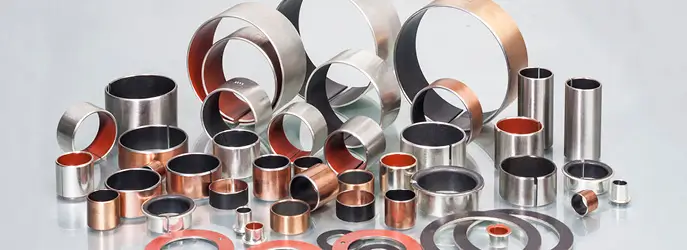
Table of Contents
1. Introduction: The Silent Revolution in Mechanical Engineering
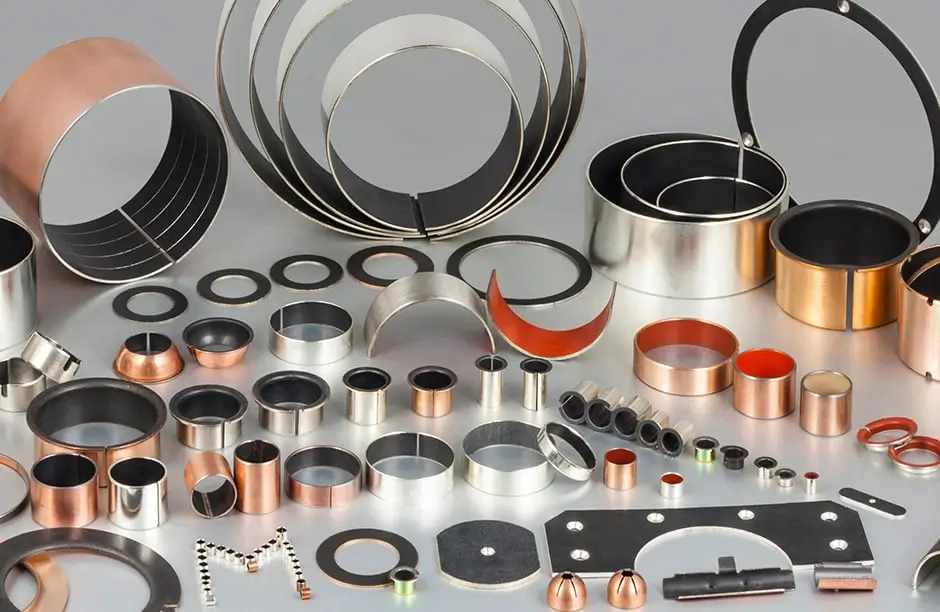
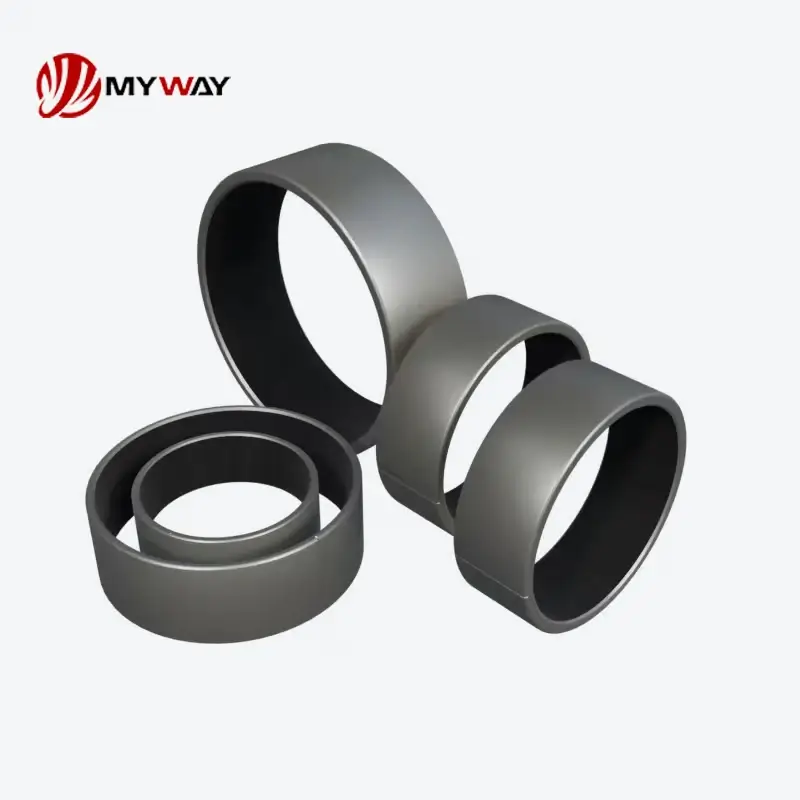
Industrial rotating assemblies have long been constrained by a fundamental dilemma: achieving low friction without compromising load capacity. Traditional plain bearings require continuous lubrication, while self-lubricating alternatives often sacrifice strength for convenience. The DU bushing—a metal-polymer composite plain bearing—has emerged as the definitive solution that reconciles these opposing requirements. Unlike conventional bronze bushings that depend on external lubricants, DU-type composite bushings integrate a PTFE-based sliding layer with a porous bronze interlayer and steel backing, creating a self-lubricating system that maintains structural rigidity under extreme loads.
2. Metallurgical Architecture: The Tri-Layer Composite Structure
2.1 Steel Backing Foundation
The foundational layer of a DU bushing consists of low-carbon steel strip that provides exceptional load-carrying capacity and dimensional rigidity. This steel backing—typically manufactured to DIN 1494 and ISO 3547 standards—delivers static load ratings up to 250 N/mm² and dynamic load capacities reaching 140 N/mm², depending on specific material grades and wall thickness configurations. The steel layer serves multiple critical functions: absorbing mechanical shock loads, maintaining geometric stability under thermal cycling, and enabling interference-fit installation without deformation.
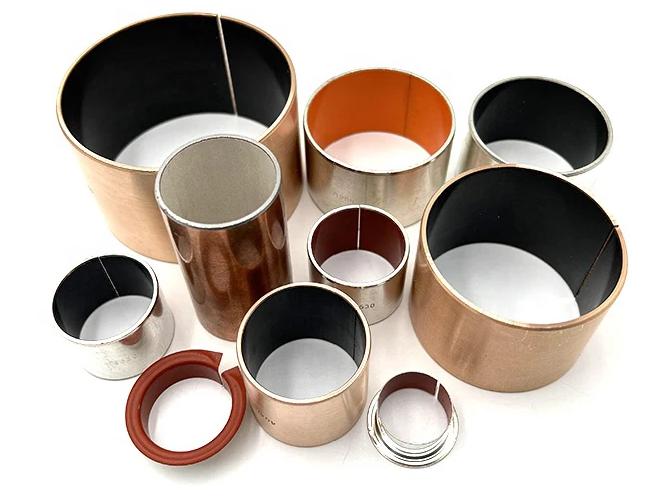
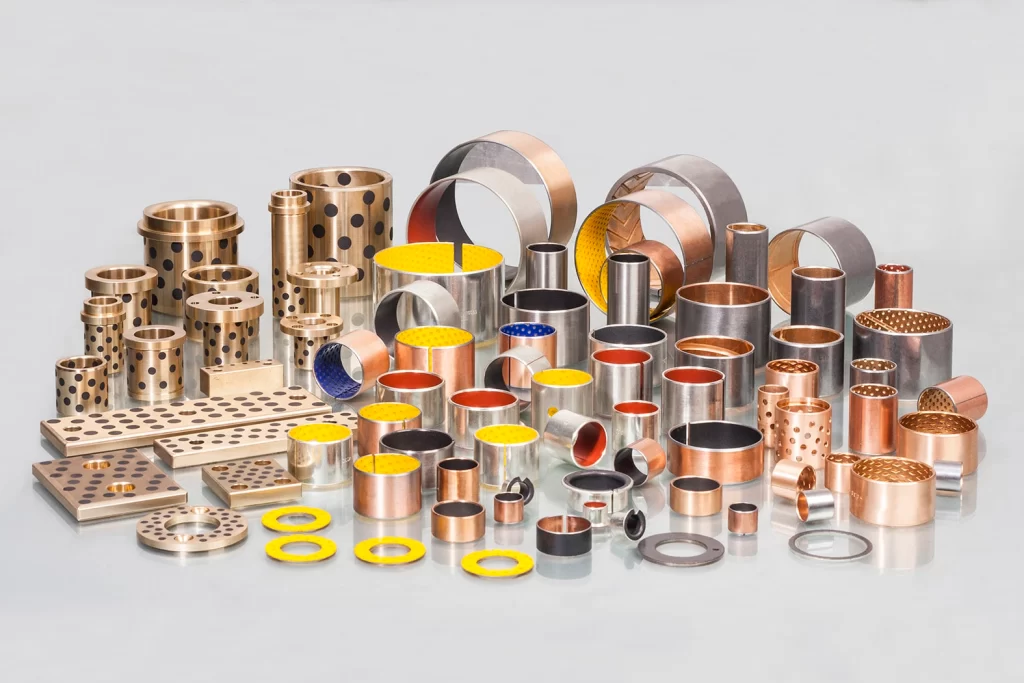
For specialized applications requiring enhanced corrosion resistance, MYWAY offers bronze-backed DU bushings and stainless steel variants. Bronze-backed configurations provide superior protection in humid, saline, or chemically aggressive environments while maintaining the core self-lubricating properties of the PTFE sliding layer. These material options expand DU bushing applicability into marine equipment, offshore platforms, chemical processing, and food-grade machinery where conventional steel-backed designs may be unsuitable.
2.2 Sintered Bronze Intermediate Layer
Bonded to the steel backing through a high-temperature sintering process, a porous bronze layer—typically 0.2 mm to 0.3 mm in thickness—constitutes the second structural component. This sintered bronze matrix serves as an anchoring medium for the PTFE-based sliding layer while simultaneously providing exceptional thermal conductivity–. The porosity of this bronze layer is precisely controlled during manufacturing to optimize the mechanical interlock with the overlying PTFE composite.
The bronze interlayer fulfills three essential functions: first, it creates a robust mechanical bond between the steel backing and PTFE sliding layer, preventing delamination under shear stress. Second, the porous bronze structure acts as a thermal dissipation pathway, conducting frictional heat away from the sliding interface and maintaining stable operating temperatures. Third, this layer contributes additional wear resistance, serving as a secondary sliding surface should the PTFE layer become fully depleted under extreme operating conditions.
2.3 PTFE-Based Sliding Layer
The outermost working surface consists of a modified polytetrafluoroethylene (PTFE) compound, typically 0.01 mm to 0.03 mm in thickness, blended with lead (Pb) or alternative fillers to optimize tribological performance–. This PTFE-lead formulation exhibits the lowest coefficient of friction among all solid lubricant materials, typically ranging from 0.05 to 0.15 under dry running conditions. During initial operation, the PTFE layer transfers onto the mating shaft surface, forming a continuous transfer film that eliminates metal-to-metal contact and significantly reduces friction and wear.
The self-lubrication mechanism of DU bearings relies on this transfer film principle. Under load and sliding motion, PTFE particles migrate from the bushing surface onto the counterface, creating a low-shear sacrificial layer. Once established, subsequent sliding occurs between PTFE and PTFE rather than between dissimilar materials, yielding stable friction coefficients throughout the service life–. For applications where lead content is restricted—such as food processing equipment or environmentally sensitive installations—MYWAY produces lead-free PTFE formulations that maintain comparable low-friction characteristics using alternative solid lubricant additives including graphite and molybdenum disulfide (MoS₂).
3. Technical Specifications and Performance Parameters
3.1 Operational Limits
| Parameter | Value Range | Conditions |
|---|---|---|
| Maximum static load | 250 – 360 N/mm² (36,000 – 52,000 psi) | Depending on wall thickness– |
| Maximum dynamic load | 140 – 200 N/mm² | Rotating/oscillating applications |
| Maximum sliding speed | 2.5 m/s (dry) | Continuous operation |
| Maximum PV value | 1.0 – 3.6 N/mm²·m/s | Dry running conditions– |
| Temperature range | -40°C to +280°C (-40°F to +536°F) | Extended limits available– |
| Coefficient of friction | 0.05 – 0.20 (dry), 0.02 – 0.08 (lubricated) | After transfer film formation |
3.2 Surface Finish and Installation Requirements
To achieve optimal performance, mating shaft surfaces should exhibit roughness values between Ra 0.2 μm and Ra 0.8 μm, with hardness exceeding HB 200 for unhardened shafts–. Excessive shaft roughness increases initial wear rates, while excessively smooth surfaces may impede transfer film adhesion. Shaft hardness recommendations vary by application; harder shafts yield extended bushing life under high-load conditions, but unhardened shafts remain acceptable for moderate-duty applications.
Installation interference fits follow ISO 286-2:2010 recommended tolerance limits, with h9 shaft tolerances and H9 bore tolerances serving as standard references–. Proper installation requires press-fit tooling that applies force uniformly across the bushing face to prevent localized deformation or edge curling. MYWAY provides comprehensive installation guides and custom tooling recommendations for each DU bushing configuration.
4. Comparative Analysis: DU Bushings Versus Alternative Technologies
4.1 DU Bushing Versus Bronze Bushings
Traditional oil-impregnated sintered bronze bushings—commonly known as Oilite bearings—have served industrial applications for decades but present inherent limitations that DU-type composite bushings directly address. While bronze bushings retain oil within their porous structure, this reservoir gradually depletes over time, particularly under elevated temperatures or continuous operation. As the lubricant degrades or evaporates, bronze bushings experience accelerating wear rates leading to premature failure.
DU bushings operate effectively without supplementary lubrication, eliminating dependency on external lubricant supplies. When properly matched with appropriate shaft finishes, DU composite bushings frequently outperform bronze bearings in service life while requiring no routine maintenance. Engineered composite plastic bushings have been shown to deliver longer service life than oil-impregnated sintered bronze bearings while reducing maintenance costs by up to 40 percent–. For automotive applications where weight reduction correlates directly with fuel efficiency, DU bushings offer substantial mass savings compared to bronze alternatives.
4.2 DU Versus DX and SF-1 Series
The DX bushing type differs fundamentally from DU in its sliding layer composition. Whereas DU employs PTFE for dry-running capability, DX uses polyoxymethylene (POM) as the primary sliding material, optimized for boundary-lubricated applications requiring minimal initial grease fill. Once installed and greased, DX bushings perform effectively with minimal subsequent lubrication under demanding operational conditions–.
The SF-1 series, widely manufactured in Asia, represents a functionally equivalent alternative to DU-type bushings. MYWAY produces both DU-equivalent SF-1 bushings with PTFE sliding layers and SF-2 bushings employing POM composite materials. SF-2 variants feature copper-plated steel backing with sintered tin-bronze powder, onto which modified POM resin is firmly anchored. The surface of the covering layer incorporates multiple pockets to retain lubricating grease for extended service intervals–. These product families enable application-specific optimization between dry-running performance, lubricated life, and cost considerations.
4.3 Performance Comparison Summary
| Characteristic | DU Bushing | Bronze Bushing | DX/POM Bushing |
|---|---|---|---|
| Self-lubricating dry operation | Excellent | Poor | Fair |
| Maximum load capacity | Very high | Moderate | High |
| Operating temperature range | -40°C to +280°C | -40°C to +150°C | -40°C to +130°C |
| Maintenance requirement | None | Periodic lubrication | Initial grease fill |
| Corrosion resistance | Good (steel), Excellent (bronze/SS) | Moderate | Good |
| Weight | Low | High | Very low |
5. Industrial Application Domains
5.1 Automotive Systems
DU bushings have become standard components across automotive suspension systems, steering linkages, brake calipers, and drivetrain assemblies. Suspension arm bushing segments alone accounted for 34 percent of the automotive bushing market share in 2025, driven by their essential role in vehicle stability, ride quality, and vibration isolation–. Within braking systems, MYWAY caliper pin bushings manufactured from self-lubricating materials ensure smooth, consistent sliding motion while preventing stick-slip phenomena that compromise braking performance–. Transmission applications benefit from DU bushings placed between rotating shafts and stationary housings, maintaining precise alignment while accommodating thermal expansion.
5.2 Heavy Machinery and Construction Equipment
Excavators, loaders, bulldozers, and hydraulic cranes operate under conditions where conventional bushing technologies fail prematurely. Hydraulic cylinder bushings experience cyclic loading, contamination ingress, and extreme temperature variations. DU-type composite bushings withstand these demands due to their embedded solid lubricants, eliminating grease fittings and routine lubrication intervals that become inaccessible on large mobile equipment–. Construction machinery manufacturers increasingly specify DU bushings for pivot points, track linkages, and attachment mounting locations where maintenance access is restricted.
5.3 Agricultural Machinery
Tractors, harvesters, seeders, and sprayers operate in abrasive environments where dust, soil, and crop residues threaten bushing service life. MYWAY serves the agricultural sector with high-performance bearings designed for these challenging conditions. For tillage implements, planter mechanisms, and harvest header assemblies, DU bushings provide reliable performance without requiring daily lubrication–. The self-lubricating characteristic proves particularly valuable for seasonal equipment that remains idle for extended periods, as PTFE-based transfer films remain intact regardless of storage duration.
5.4 Industrial Automation and Material Handling
Packaging machinery, conveyors, printing presses, textile equipment, and material handling systems demand bushings that operate cleanly without oil leakage that could contaminate products or work surfaces. DU bushings meet these cleanliness requirements while delivering maintenance-free operation across millions of cycles. Within hydraulic and pneumatic cylinder assemblies, DU-type bearing materials serve as guide rings and wear components, managing side loads while preventing metal-to-metal contact between cylinder rod and housing.
6. Failure Mode Analysis and Prevention Strategies
6.1 Common Failure Mechanisms
Abrasive wear constitutes the most frequently encountered bushing failure mode. Contamination ingress—including dust, sand, metal particles, or process debris—becomes embedded within the PTFE sliding layer, subsequently abrading both the bushing and mating shaft surface–. In DU bushings, the porous bronze layer helps trap contaminants, but excessive particulate loads eventually overwhelm this capacity.
Inadequate lubrication film failure occurs when traditional bushings lose lubricant due to high operating temperatures, extended duty cycles, or insufficient initial grease fill. Adhesive and abrasive wear subsequently accelerate, leading to plastic extrusion and eventual seizure. Bushing damage frequently results from lubrication film failure, which initiates adhesive and abrasive wear followed by plastic extrusion of bushing material.
Surface finish incompatibility between bushing and mating shaft presents another failure pathway. Excessive shaft roughness accelerates PTFE layer depletion, while overly smooth surfaces prevent proper transfer film adhesion. For optimal results, shaft surface finish must be controlled within specified ranges, typically Ra 0.2 μm to 0.8 μm.
Insufficient load capacity manifests when applied loads exceed bushing specifications. Hydrodynamic pressure within the lubricant film becomes excessive, preventing stable film maintenance and causing rapid wear progression.
6.2 Preventive Measures
Regular lubrication verification: Ensure adequate lubricant supply reaches each bushing location, verifying proper lubricant routing and absence of blockages–.
Surface finish control: Specify appropriate shaft hardness and roughness for each application. Process documentation should define acceptable ranges and verification methods.
Installation interference verification: Validate press-fit interference values against design specifications to prevent bore deformation or bushing displacement.
Environmental contamination control: Implement seals, wipers, and filtration systems appropriate for each operating environment, preventing abrasive particle ingress.
7. DU Bushing Applications and Sealing Integration
In rotating machinery where DU bushings serve as primary bearing elements, complementary sealing systems retain lubricants for adjacent components while preventing contaminant migration. Hydraulic and pneumatic applications require dynamic seals that accommodate shaft rotation while maintaining pressure integrity. For rotational pressure sealing applications, capped piston seals combining PTFE caps with elastomeric energizers provide effective sealing across wide pressure ranges–. Aerospace-grade PTFE rotary shaft seals and spring-energized Teflon seals serve hydraulic controls, pumps, and engine cooling systems where reliability requirements are stringent. When designing assemblies incorporating DU bushings, engineers should consider seal selection as part of an integrated bearing and sealing system rather than treating each component independently.
8. MYWAY: Your Engineering Partner for Precision Bushings
8.1 Manufacturing Excellence
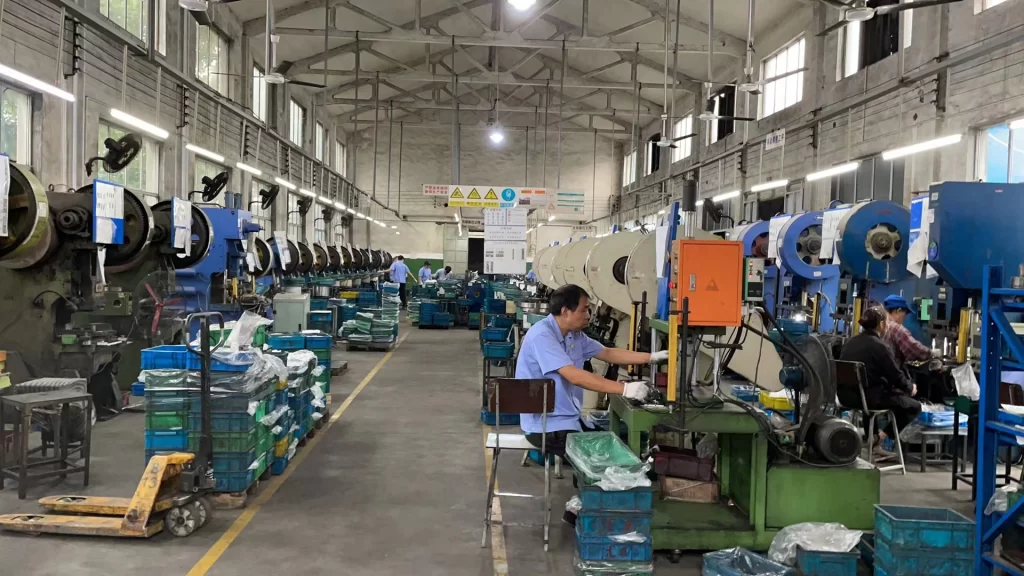
Established in 2005, Zhejiang MYWAY Co., Ltd. has evolved into a national high-tech enterprise specializing in the research, development, production, and sales of bushings, bearings, and related raw materials–. With over twenty years of industry experience, MYWAY has developed comprehensive manufacturing capabilities spanning custom and standard part production from casting to finished components. The company maintains IATF 16949 and ISO 9001 certifications, serving clients across more than forty countries with consistently high quality standards.
8.2 Product Portfolio
MYWAY manufactures the full spectrum of self-lubricating bushing technologies:
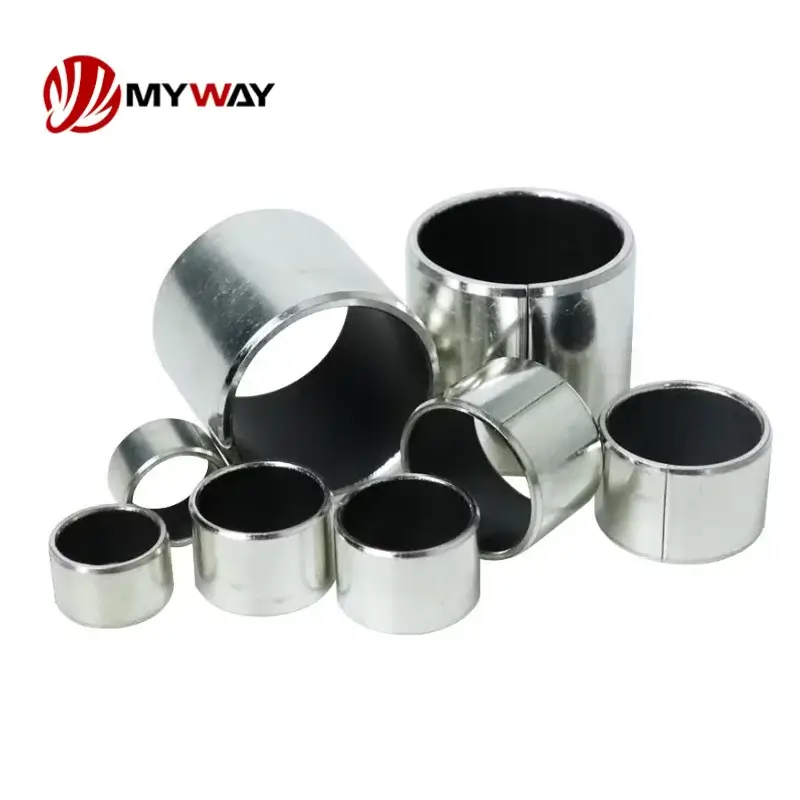
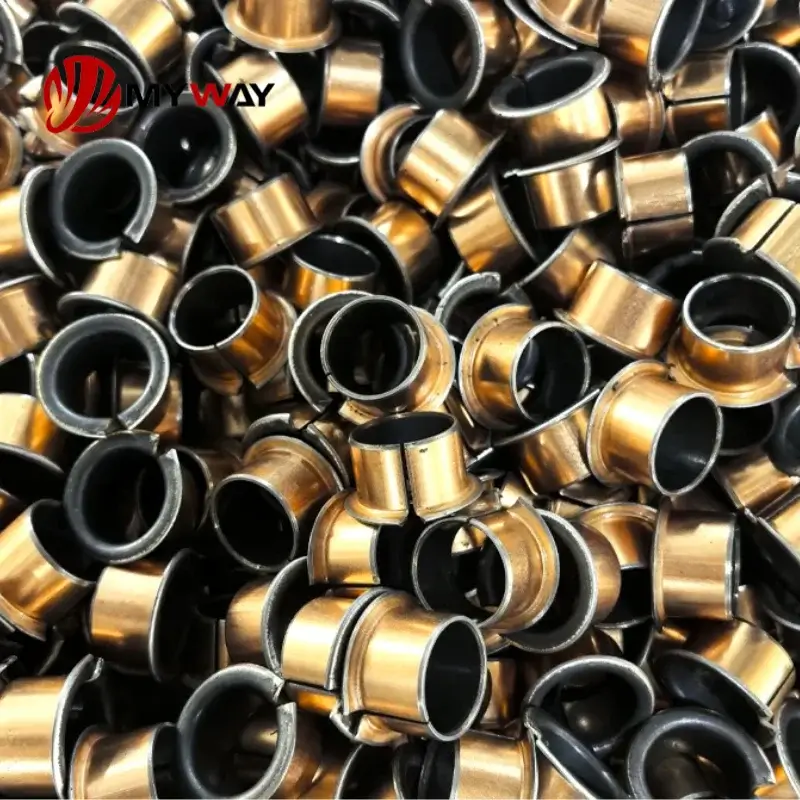
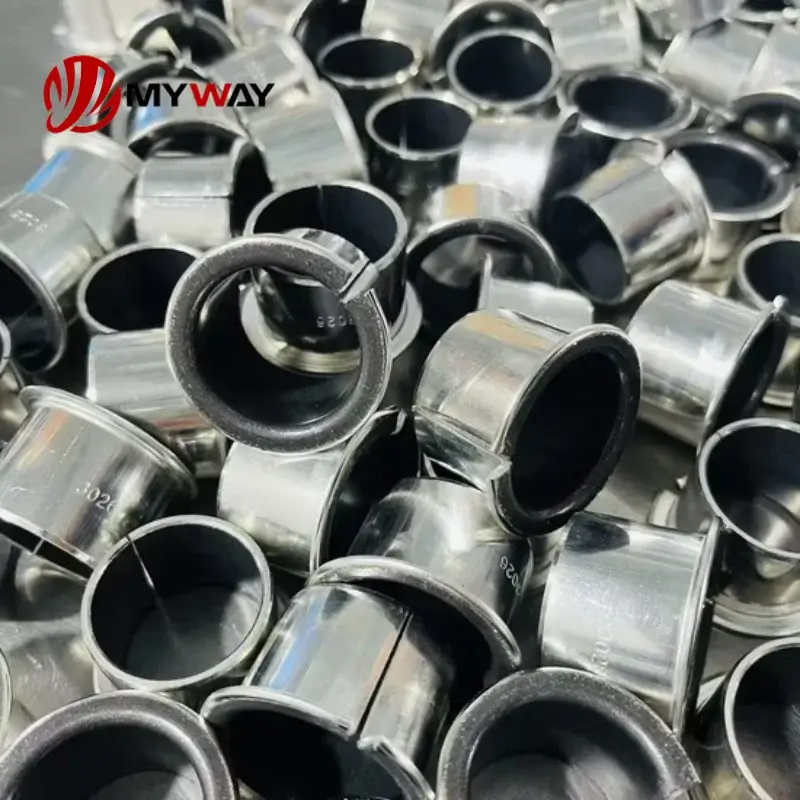
SF-1 (DU-equivalent) series: PTFE-based self-lubricating bushings for dry-running applications, featuring steel-backed construction with sintered bronze intermediate layer.
SF-2 series: POM composite bushings optimized for boundary-lubricated conditions, requiring only initial grease fill for extended service.
Wrapped steel bushings: Precision-wound configurations suitable for spring steel applications.
Solid lubricating bushings: High-durability options for extreme environmental conditions.
Hydraulic cylinder bushings: Specialized configurations for mobile equipment and industrial cylinders.
Agricultural machinery bushings: Designed for tractors, harvesters, seeders, and associated implements.
Automotive braking system bushings: Caliper pin bushings ensuring smooth, consistent sliding motion without stick-slip–.
8.3 Custom Engineering Capabilities
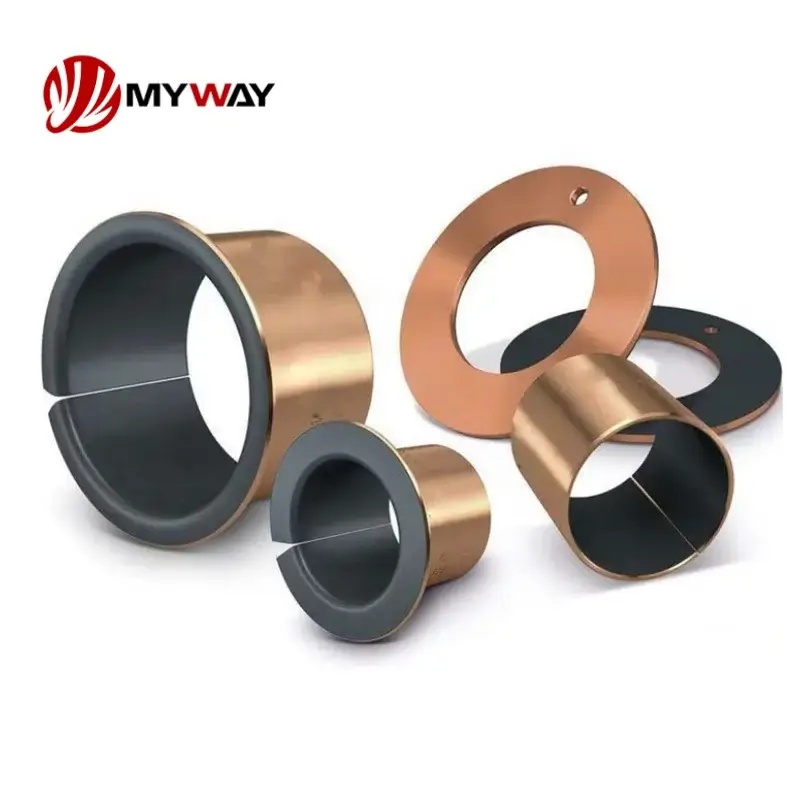
Beyond standard product offerings, MYWAY delivers custom-engineered solutions tailored to specific application requirements. Computer numerical control (CNC) machining enables precise geometric configurations including flanged bushings, thrust washers, slide plates, and semi-finished blanks for secondary operations. Material selections extend beyond standard DU-type constructions to include stainless steel backings for enhanced corrosion resistance, lead-free PTFE formulations for restricted applications, and custom bronze alloys for specialized tribological requirements.
9. Future Outlook for Self-Lubricating Bushing Technology
The global automotive bushing market continues its strong growth trajectory, expanding from USD 167.47 billion in 2025 to USD 177.38 billion in 2026, representing a compound annual growth rate of 5.9 percent. Within this expanding market, several trends favor DU-type self-lubricating bushings. The shift toward lightweight and durable bushings aligns perfectly with the steel-backed composite construction of DU bearings. Rising demand for noise and vibration reduction benefits from the damping properties inherent in PTFE-based sliding layers. Growth of aftermarket replacement channels and increased focus on ride comfort drive specifications toward maintenance-free, high-performance bearing solutions.
Engineered composite plastic bushings have been proven to deliver longer service life than traditional oil-impregnated sintered bronze bearings, saving users up to 40 percent on maintenance costs–. As industries worldwide seek to reduce operational expenditures and minimize unplanned downtime, the value proposition of DU-type self-lubricating bushings becomes increasingly compelling.
10: Conclusion
DU bushings represent the convergence of tribological science and practical engineering—a self-lubricating bearing solution that eliminates routine maintenance while withstanding loads exceeding 250 N/mm². The tri-layer composite structure integrates steel backing for strength, sintered bronze for thermal management and wear resistance, and PTFE-based sliding layers for minimal friction across diverse operating conditions.
For engineers and procurement professionals seeking reliable DU bushing sources, MYWAY offers manufacturing expertise backed by two decades of experience, international certifications, and service to clients across more than forty countries. Whether your application demands standard SF-1 series bushings, custom-engineered geometries, or specialized material formulations, MYWAY delivers precision components that optimize performance while reducing total cost of ownership.
Contact MYWAY today to discuss your specific bushing requirements. Our engineering team provides application analysis, material recommendations, and custom design support to ensure optimal component selection.
Frequently Asked Questions (FAQ)
Q1: What does “DU” stand for in DU bushing terminology?
The designation “DU” refers to a specific grade of metal-polymer composite plain bearing originally developed by GGB. The term has since become industry shorthand for self-lubricating PTFE-based bushings of this construction type. DU is a registered trademark; functionally equivalent products are marketed under designations including SF-1 and DU-type bushings.
Q2: Can DU bushings operate completely without any lubricant?
Yes, DU-type bushings are specifically engineered for dry-running operation. The PTFE-based sliding layer forms a transfer film on the mating shaft surface, eliminating metal-to-metal contact and enabling friction coefficients as low as 0.05 without any external lubricant. However, DU bushings perform equally well in lubricated applications, where the presence of oil or grease further reduces friction and extends service life.
Q3: What is the maximum temperature limit for DU bushings?
Standard DU bushings operate reliably across a temperature range of -40°C to +280°C (-40°F to +536°F). For applications exceeding 280°C, specialized high-temperature formulations are available. Low-temperature performance remains excellent down to -200°C when mating shaft materials retain adequate impact resistance.
Q4: How does shaft surface finish affect DU bushing performance?
Shaft surface finish significantly influences DU bushing wear rates. Recommended roughness values range from Ra 0.2 μm to Ra 0.8 μm. Shafts smoother than Ra 0.1 μm may not allow proper transfer film adhesion, resulting in higher initial wear. Shafts rougher than Ra 1.2 μm accelerate PTFE layer depletion, reducing bushing service life.
Q5: Are DU bushings suitable for underwater or marine applications?
Yes, DU bushings perform effectively in underwater and marine environments, particularly when configured with bronze backing or stainless steel backing materials that resist saltwater corrosion. The PTFE sliding layer remains unaffected by water exposure, and the self-lubricating mechanism does not depend on oil-based lubricants that could be washed away.
Q6: What is the typical service life of a DU bushing?
DU bushing service life varies with application parameters including load magnitude, sliding speed, operating temperature, and shaft surface condition. Under moderate loads and speeds, DU bushings commonly achieve service lives exceeding 10,000 operating hours. Properly specified DU bushings frequently outlast conventional bronze bushings by factors of two to five times in equivalent applications.
Q7: Can MYWAY produce custom DU bushings to non-standard dimensions?
Absolutely. MYWAY specializes in custom-engineered bushing solutions, manufacturing components to customer-supplied specifications across a wide range of diameters, lengths, wall thicknesses, and geometric configurations including flanged bushings, thrust washers, and slide plates.
Q8: What certifications does MYWAY hold?
MYWAY maintains IATF 16949 and ISO 9001 international quality management certifications, ensuring consistently high manufacturing standards for all bushing products.
Q9: Does MYWAY offer lead-free DU bushing formulations?
Yes. For applications requiring lead-free materials, MYWAY produces PTFE formulations incorporating alternative solid lubricants including graphite and molybdenum disulfide. These lead-free formulations maintain low-friction characteristics comparable to traditional PTFE-lead compounds.
Q10: How should DU bushings be installed?
DU bushings require press-fit installation using tooling that applies uniform force across the bushing face. The bushing should be pressed into the housing bore using a mandrel slightly smaller than the bushing inside diameter. Installation must follow ISO 286-2:2010 recommended tolerance limits, with h9 shaft tolerances and H9 bore tolerances serving as standard references.
100000+ Types of Bushings – Contact Us for Details