
Recent Posts
MYWAY Bushing: Top 5 Bushing and Bearing Manufacturers in China
Introduction
Let me tell you something that might surprise you.
Over the past decade, I’ve watched hundreds of sourcing managers change their minds about Chinese bushing manufacturers. They used to assume “made in China” meant “cheap and short-lived.” But not anymore.
Today, some of the most demanding engineering teams in Germany, Japan, and the United States are quietly switching to Chinese suppliers for their plain bearings, self-lubricating bushings, and composite sleeves. Not because they’re cheaper—although that helps—but because the reliability has caught up.
The question is no longer “should I source bushings from China?” It’s “which Chinese bushing manufacturer can actually deliver consistent quality, order after order?”
This article is written for buyers, engineers, and distributors who are done gambling on unknown suppliers. We’ll talk about what makes a good bushing factory, why MYWAY Bushing has earned a spot among China’s top 5, and how you can avoid the common pitfalls when sourcing from Asia.
No marketing fluff. Just practical insights.
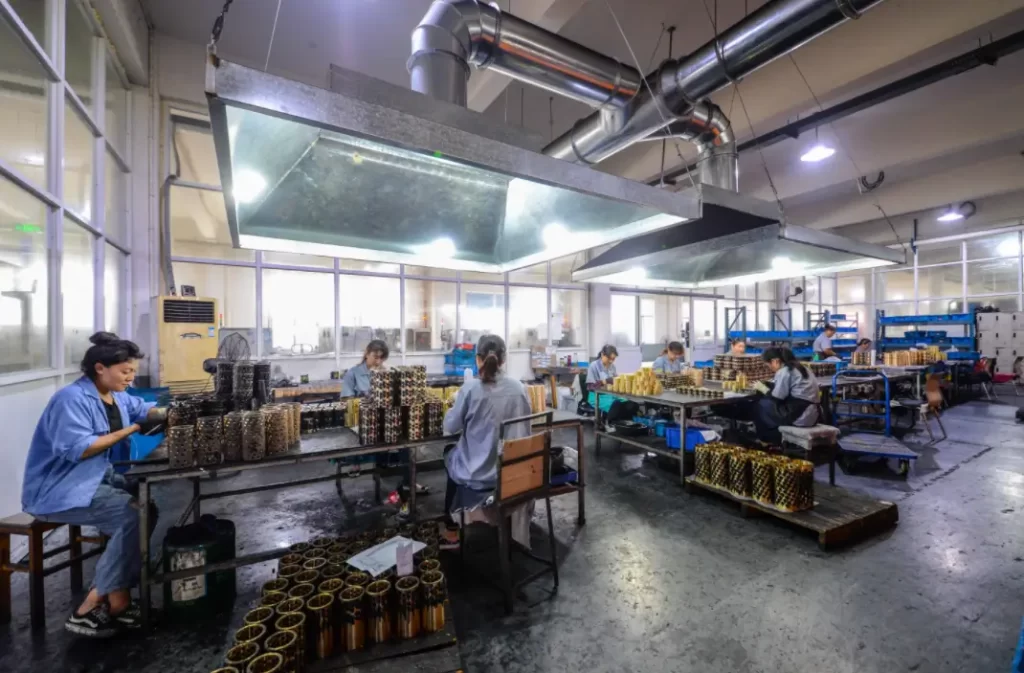
Table of Contents
1: The Shift: Why Global Buyers Are Taking Chinese Bushings Seriously
Let’s rewind ten years. Back then, most Chinese bushing workshops were small, poorly equipped, and focused entirely on price. Quality was inconsistent. Lead times were unpredictable. And if you had a technical question, good luck getting a straight answer.
Fast forward to today. The landscape has changed completely.
The surviving manufacturers—the ones now competing for export business—have done three things right:
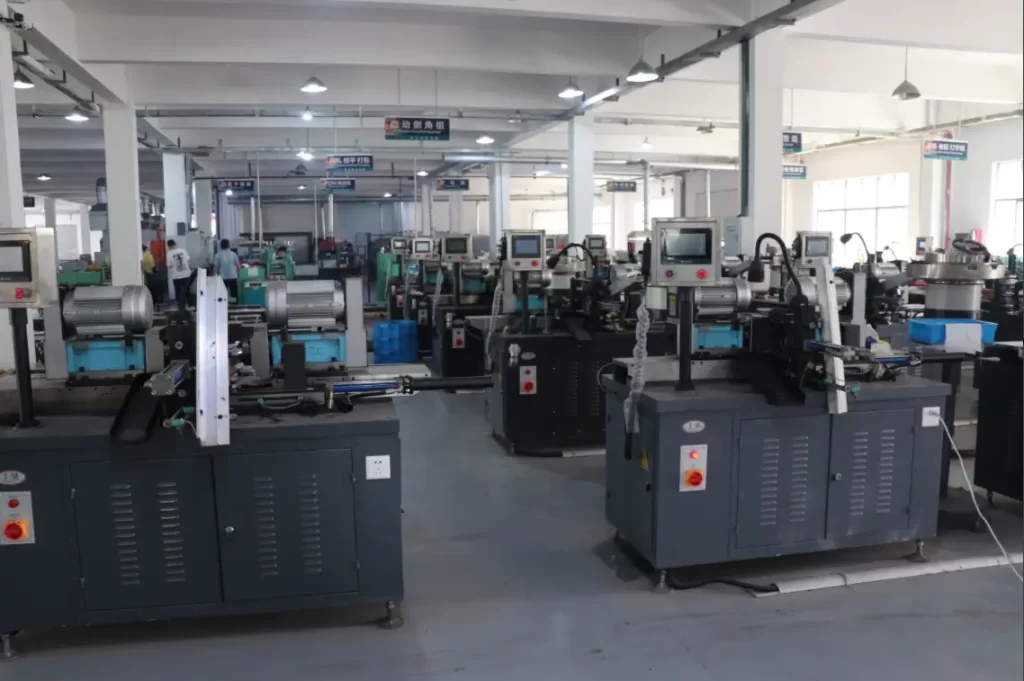
1. Invested heavily in automation and precision equipment
2. Obtained international certifications like IATF 16949.
3. Built English-speaking sales teams that understand export logistics.
MYWAY Bushing started this transformation early. While other factories were still cutting corners, MYWAY was building their own foundry, hiring metallurgists, and sending their quality team to ISO training.
The result? A manufacturer that can sit at the same table as European and Japanese suppliers—without the premium price tag.
2: What Actually Goes Wrong When You Pick the Wrong Bushing Supplier
Before we talk about why MYWAY is different, let’s be honest about the risks.
I’ve heard horror stories from procurement managers who chose a supplier based solely on price. Here’s what happened to them:
- Bushings arrived with porosity voids because the factory outsourced casting to a backyard foundry. The parts failed within weeks.
- Dimensional inconsistency across batches. One order fit perfectly. The next order was 0.2mm off—enough to seize a hydraulic cylinder.
- No traceability. When a batch failed, the supplier couldn’t tell which casting lot or machining shift produced it. No accountability.
- Shipping delays because the factory didn’t have enough working capital to buy raw copper. Your production line stopped. Your customer was furious.
- These aren’t hypothetical problems. They happen every day to buyers who skip the vetting process.
So how do you avoid them? You choose a manufacturer with vertical integration, rigorous inspection, and a proven export track record.
That’s MYWAY Bushing in three sentences.
3: Why Vertical Integration Is the Secret Sauce
Here’s a simple test you can run on any potential bushing supplier.
Ask them: “Where do you get your raw castings or sintered blanks?”
If they say “we buy them from another factory,” run. Not walk. Run.
Because once you separate casting from machining, you lose control over the most critical part of bushing quality: the material.
MYWAY Bushing doesn’t have that problem.
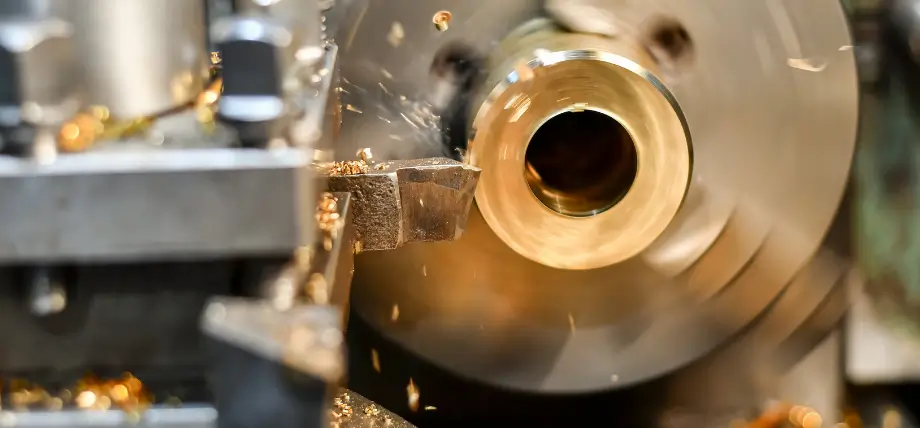
They operate their own casting workshop with continuous casting lines and centrifugal casting machines. They melt their own copper alloys. They control the cooling rates. They inspect every batch of raw material before it moves to the machining floor.
What does that mean for you?
- Consistent material properties (hardness, tensile strength, elongation)
- No hidden porosity or cold shuts
- Full traceability from melt to finished part
And because they also run their own sintering lines for composite bushings (like SF-1 and DX types), they control the bonding quality between the steel backing, the bronze layer, and the PTFE/POM top coat. That’s where most cheap composite bushings fail—delamination. MYWAY’s in-house sintering prevents it.
4: The Equipment List That Actually Matters
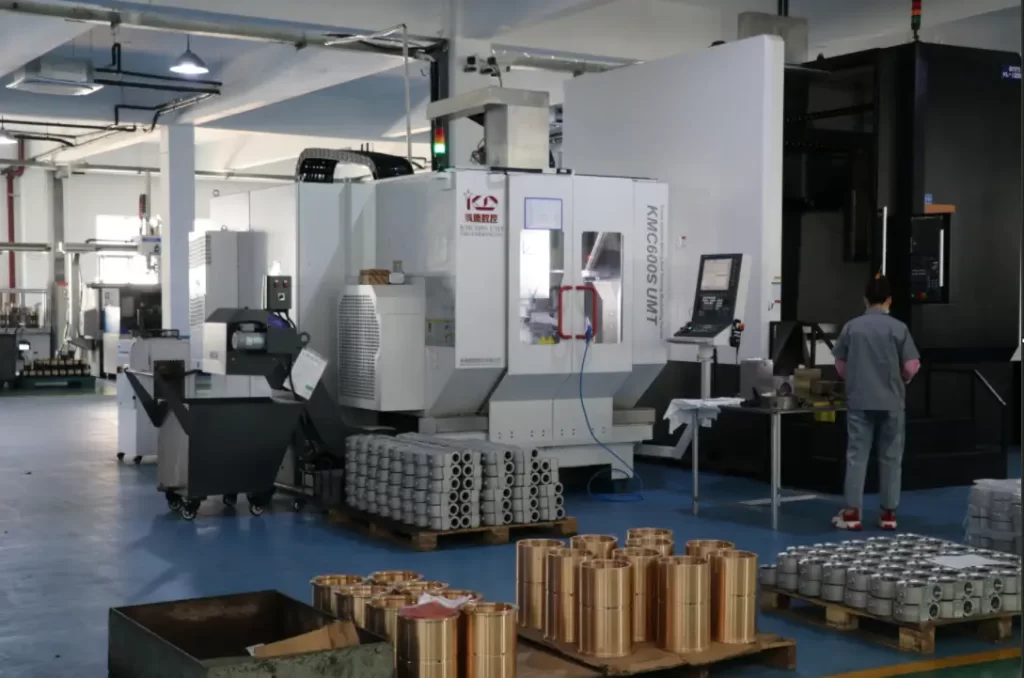
You don’t need to be a machining expert to spot a well-equipped factory. Just look for three things:
- Scale of casting equipment
MYWAY runs five horizontal continuous casting lines and eight medium-frequency furnaces. That’s not a pilot line. That’s industrial-scale production capable of 25,000 tons per year. For buyers who need volume, this matters.
- Large-part capability
Most bushing factories max out at 300mm or 500mm diameter. MYWAY regularly centrifugally casts up to 3,000mm. If you’re in mining, wind energy, or heavy construction, that’s a game-changer.
- Advanced inspection gear
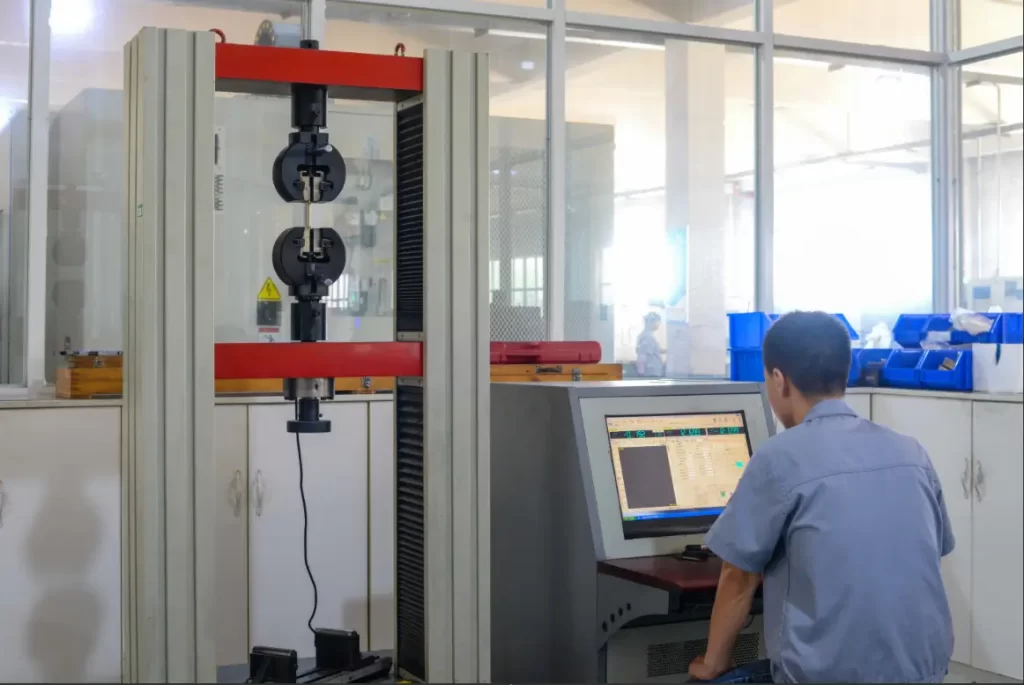
Any factory can buy a caliper. Few invest in three-coordinate measuring machines (CMM), spectrometers, tensile testers, and metallographic microscopes. MYWAY has all of them. And they use them on every batch—not just the first sample.
5: From the Shop Floor to Your Dock: How MYWAY Handles Logistics
One underrated advantage of working with MYWAY? Their foreign trade center is in Hangzhou.
Why does that matter?
Hangzhou is in the Yangtze River Delta, China’s manufacturing and export hub. It’s a short drive to Ningbo Port and Shanghai Port—two of the busiest and most efficient ports in the world.
That means:
- Faster freight booking
- Lower inland trucking costs
- Easier access to consolidation services
- Quicker response times for urgent orders
- Compare that to a factory buried deep inland, where it takes three days just to get the container to the port. You’ll feel the difference in your total lead time.
MYWAY also runs a digital warehouse with 500–600 tons of finished and semi-finished stock. Standard bushings ship the same week. Custom orders move faster because they’re not waiting on raw castings from a third party.
6: Real-World Applications: Where You’ll Find MYWAY Bushings
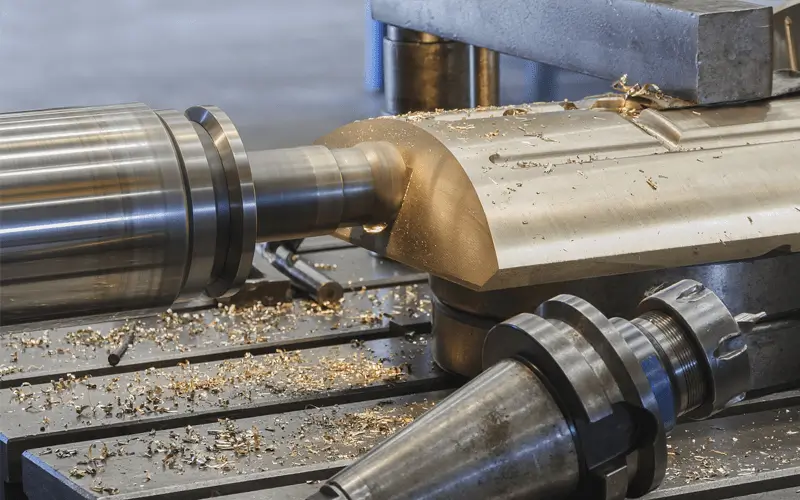
I’m not going to list every industry. Instead, let me give you three concrete examples where MYWAY bushings solve real engineering problems.
Example 1: Hydraulic Cylinder Manufacturer in Italy
This company builds cylinders for earthmoving equipment. The original bushing supplier had long lead times and inconsistent ID tolerances. MYWAY stepped in with bimetal bushings (steel-backed bronze). Because MYWAY controls both casting and machining, they held tolerances within 0.05mm across 5,000 pieces. The Italian customer extended the contract for three more years.
Example 2: Agricultural Machinery OEM in the US
A tractor manufacturer needed self-lubricating bushings for linkage pivot points. Grease access was difficult, so standard steel-on-steel wasn’t an option. MYWAY supplied SF-1 type bushings with PTFE-lead-free lining. The bushings have been running for four seasons without a single warranty claim.
Example 3: Solar Tracker Company in Spain
This renewable energy company needed large-diameter, low-friction bushings for solar panel tracking mechanisms. The environment was dusty, and maintenance crews couldn’t grease every joint twice a year. MYWAY provided graphite-inlaid solid bronze bushings. No lubrication needed. Three years of field data shows minimal wear.
These aren’t marketing stories. They’re real results from real customers who chose MYWAY over European and domestic alternatives.
FAQ: Everything You Wanted to Ask But Didn’t
Q1: Is MYWAY Bushing a real factory or a trading company?
A: Real factory. They own the foundry, sintering lines, machining shop, inspection lab, and warehouse. You’re welcome to visit.
Q2: What certifications does MYWAY hold?
A: ISO 9001:2015, IATF 16949:2016, and ISO 14001:2015. These are independently audited.
Q3: Can MYWAY make bushings that aren’t in their catalog?
A: Yes. Over 2,000 molds and an in-house engineering team means they can produce custom sizes, shapes, and materials. Send a drawing or sample.
Q4: How does MYWAY compare to bushing manufacturers in Europe or Japan?
A: In terms of quality and consistency, they’re competitive. The main difference is price and lead time—MYWAY offers better value without cutting corners.
Q5: What’s the minimum order quantity for custom bushings?
A: MYWAY works with both small-batch prototyping and high-volume production. Contact them with your requirements for a specific answer.
Q6: Does MYWAY export to my country?
A: They ship to over 40 countries, including Germany, Italy, Japan, USA, Canada, South Korea, Australia, and many more. Ask them for your specific destination.
Q7: How does MYWAY prevent counterfeit materials?
A: Every incoming raw material batch is tested with a spectrometer. Only certified copper alloys, steel, and PTFE compounds enter production.
Q8: Can I get samples before placing a bulk order?
A: Yes. Sample orders are standard practice. MYWAY can produce samples based on your drawing, usually within a few weeks.
Q9: What payment terms does MYWAY offer?
A: Typical terms for new customers include T/T deposit with balance against copy of Bill of Lading. For established relationships, terms can be discussed.
Q10: Why should I choose MYWAY over hundreds of other Chinese bushing suppliers?
A: Because they control the entire process—from melting metal to final inspection. That means consistent quality, traceability, and accountability. No outsourcing, no guesswork.
8.The Bottom Line: Don’t Shop on Price Alone
Here’s the thing about bushings. They’re small. They’re relatively cheap. But when one fails, the damage isn’t small. A failed bushing can seize a hydraulic cylinder, throw off a suspension alignment, or shut down a production line. The cost of that downtime is hundreds of times the price of the part.
That’s why smart buyers don’t look for the cheapest bushing. They look for the most reliable bushing at a fair price.
MYWAY Bushing has spent over 20 years earning that reputation. Not through flashy marketing, but through furnaces that run 24/7, CNC machines that hold tolerances, and inspectors who reject parts that are “close enough.”
If you’re sourcing bushings for automotive, construction, agriculture, automation, or renewable energy, MYWAY deserves a spot on your supplier shortlist.
Ready to stop gambling on unknown suppliers? Reach out to MYWAY Bushing. Send them your drawings or specs. Let their engineers show you what “consistent quality” actually looks like.
Frequently Asked Questions (FAQ)
Q1: What is the difference between H7/g6 and H7/h6? Which should I use for a rotating shaft?
H7/g6 provides a slightly tighter clearance than H7/h6, making it better suited for rotating shafts that require precise positioning. H7/h6 provides more generous clearance for freer movement. For most rotating shaft applications in bronze bushings, H7/g6 is the recommended starting point.
Q2: How much press-fit interference is needed for a bronze bushing in a steel housing?
The required interference depends on bushing size, wall thickness, and operating conditions. For standard applications, ISO pairings H7/p6 or H7/r6 provide guaranteed interference. For more precise calculations, use the formula: ΔD = (housing ID upper limit) – (bushing OD lower limit). A typical guideline is 0.001–0.002 inches per inch of diameter, but always verify using ISO tolerance tables for your specific dimensions.
Q3: What happens if a bushing is pressed in with too much interference?
Excessive interference distorts the bushing‘s inner bore, reducing running clearance and creating localized high-friction zones. This leads to overheating, accelerated shaft wear, and potential seizure.The press force also transfers fully into the housing wall, potentially cracking thin-walled housings.
Q4: How do I account for thermal expansion when selecting shaft tolerances for high-temperature applications?
Calculate the effective clearance change using ΔD = D₀ × (α_bushing – α_shaft) × ΔT. Bronze expands more than steel (typically 6–8 × 10⁻⁶/K difference). For every 100°C temperature rise, a 20 mm diameter bronze-steel pair experiences approximately 0.012–0.016 mm of additional clearance. Increase initial room-temperature clearance accordingly.
Q5: Can self-lubricating bronze bushings be used without any external lubrication?
Yes. MYWAY PTFE bronze and leaded bronze bushings are specifically designed for maintenance-free operation. The embedded solid lubricants (PTFE or lead) provide permanent lubrication for the life of the bearing, even in start-stop or boundary lubrication conditions.
Q6: What shaft surface finish is recommended for MYWAY bronze bushings?
For optimal performance with bronze bushings, shaft surfaces should be ground to Ra 0.4–0.8 µm (16–32 µin). Hardened steel shafts (55 HRC or higher) significantly extend bushing life, especially in high-load or abrasive environments.
Q7: How do I select the right fit if my bushing is pressed into a plastic or aluminum housing?
Plastic and aluminum housings have different thermal expansion and elastic properties than steel. For aluminum housings, reduce interference by approximately 20–30% compared to steel to avoid bore distortion. For plastic housings, use a light transition fit (H7/k6) or even a clearance fit with mechanical retention features, as plastics cannot sustain high press-fit stresses without deforming.
Q8: What does the “H7” tolerance mean in real numbers?
H7 defines a hole whose lower deviation is exactly at the basic size (zero) and whose upper deviation equals the IT7 tolerance grade value. For a 20 mm hole, IT7 = 21 micrometers, so the hole tolerances are 0 to +0.021 mm.
Q9: Why does my bushing’s inner diameter shrink after press-fitting?
When a bushing is pressed into a smaller housing, the bushing wall compresses radially, reducing its inner diameter. This is called “bore reduction.” For MYWAY press-fit bushings, the final ID tolerance is calibrated after installation to account for this effect. Always follow the manufacturer’s housing bore recommendation (typically H7) and specified post-press ID tolerance.
Q10: How do I request a custom MYWAY bushing with specific tolerances for my application?
Contact MYWAY‘s engineering team with your shaft diameter, housing bore dimensions, operating temperature range, load conditions, and application environment. MYWAY provides custom tolerance machining, non-standard sizes, specialized materials, and unique lubricant configurations to match your exact requirements.
100000+ Types of Bushings – Contact Us for Details