
Recent Posts
Brass Is Copper – A Ten‑Point Engineering Deep Dive into High‑Performance Copper‑Alloy Bushings
Introduction
Every brass bushing begins its life as copper. This is not a metaphor—it is metallurgical fact. Brass is fundamentally a copper‑based alloy, typically containing 60% to 90% copper, with zinc and other elements added to enhance strength, machinability, and wear resistance. Understanding that “brass is copper” unlocks a clearer view of the entire family of copper‑based bearing materials: pure copper, versatile brass, and the superior bronze alloys that dominate demanding bushing applications.
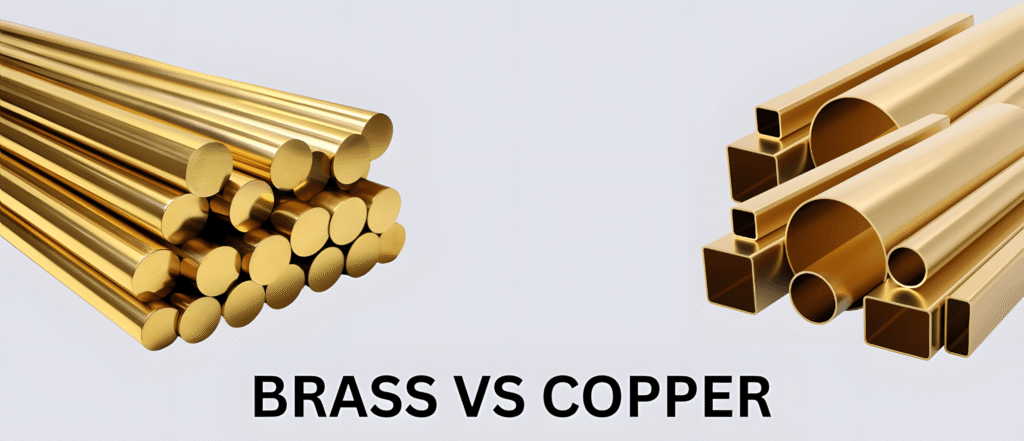
Table of Contents
1 . Metallurgical Truth: Brass Is Copper, Alloyed Not Replaced
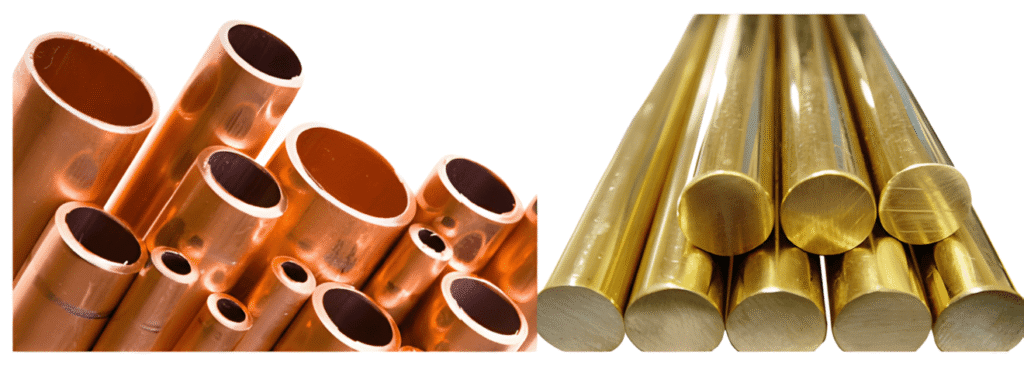
Every kilogram of brass begins as copper. The base metal is simply transformed by adding zinc—typically between 5% and 45% by weight—along with smaller amounts of lead, tin, or manganese. This means that when you select a brass bushing, you are fundamentally working with a copper‑based material. Pure copper (≥99.3% Cu) is an elemental metal; brass is a copper‑zinc alloy. Bronze is a copper‑tin or copper‑aluminum alloy. All three share the same foundation: the reddish, ductile, highly conductive element that humans have used for ten thousand years. Understanding this lineage prevents the common mistake of treating brass and copper as unrelated competitors. They are cousins on the same family tree.
Why this matters for bushings: Because brass retains copper’s natural corrosion resistance and thermal conductivity while gaining mechanical strength from zinc, it occupies a unique middle ground between soft, expensive pure copper and harder, more wear‑resistant bronze.
SEO keywords embedded: copper alloy bearing, brass bushing material, plain bearing metallurgy, copper zinc alloy.
2 .Composition Spectrum: From Pure Copper to High‑Zinc Brass
Copper‑based bearing materials span a continuous composition range. At one end stands pure copper (C11000, C10100) with copper content above 99.9%. At the other end are high‑strength brasses with up to 45% zinc and specialized bronzes with tin or aluminum. The table below shows where common bushing alloys fall on this spectrum.
| Alloy Family | Typical Composition | Key Characteristics |
|---|---|---|
| Pure Copper (C110) | 99.9% Cu | Highest conductivity, very soft |
| Red Brass (C23000) | 85% Cu / 15% Zn | Good formability, light duty |
| Yellow Brass (C26800) | 65% Cu / 35% Zn | Higher strength, lower cost |
| Free‑Cutting Brass (C36000) | 61.5% Cu / 35.5% Zn / 3% Pb | Excellent machinability |
| Leaded Tin Bronze (C93200 / SAE 660) | 83% Cu / 7% Sn / 7% Pb / 3% Zn | General‑purpose bearing bronze |
| Aluminum Bronze (C95400) | 85% Cu / 11% Al / 4% Fe | High strength, corrosion resistant |
This spectrum proves that “brass is copper” in a literal, quantifiable sense. Every brass bushing shares the copper heritage, but specific performance depends on the exact alloy formulation.
SEO keywords: C36000 brass bushing, SAE 660 bearing bronze, C95400 aluminum bronze, copper alloy composition.
3: Mechanical Properties: Strength, Hardness, and Wear Resistance
When comparing pure copper, brass, and bronze for bushing applications, three mechanical properties dominate: tensile strength, surface hardness, and resistance to abrasive wear. Pure copper fails on all three for any meaningful load. Its yield strength rarely exceeds 75 MPa, and its low hardness (40–60 HB) means it deforms under contact pressure. Brass, by contrast, achieves yield strengths of 340–469 MPa (C36000) and hardness up to 140 HB. This is a five‑fold improvement.
Bronze goes even further. Leaded tin bronze (C93200) delivers 240–310 MPa tensile strength with excellent anti‑seizure properties. Aluminum bronze (C95400) reaches 550–650 MPa tensile strength and hardness up to 190 HB. For a bearing bushing rotating against a steel shaft, wear resistance directly determines service life. Bronze typically outlasts brass by a factor of three to ten in identical conditions.
Practical takeaway: If your application involves measurable radial load or continuous sliding motion, pure copper is inadequate. Brass works for light duty. Bronze is the professional choice for reliability and long life.
SEO keywords: tensile strength bushing alloy, high hardness bronze bearing, wear resistance comparison copper brass bronze.
4:Thermal and Electrical Conductivity Trade‑Offs
One area where pure copper remains unbeaten is thermal and electrical conductivity. Copper’s thermal conductivity (~390 W/m·K) is among the highest of any engineering metal. This makes it ideal for heat sinks, electrical contacts, and applications where frictional heat must be rapidly dissipated. Brass retains only about 30% of copper’s thermal conductivity (~120 W/m·K). Bronze is even lower, typically 60–90 W/m·K.
When conductivity matters for bushings: In high‑speed, low‑load spindles or electrical grounding bushings, pure copper may be specified despite its softness. However, for the vast majority of bearing applications, heat dissipation is secondary to wear resistance and load capacity. A brass bushing conducts heat adequately for most purposes; a bronze bushing does the same while lasting far longer. Unless thermal management is the absolute primary design constraint, brass or bronze will serve better than pure copper.
SEO keywords: thermal conductivity of copper bushing, electrically conductive bearing, heat dissipation plain bearing.
5: Machinability and Manufacturing Cost
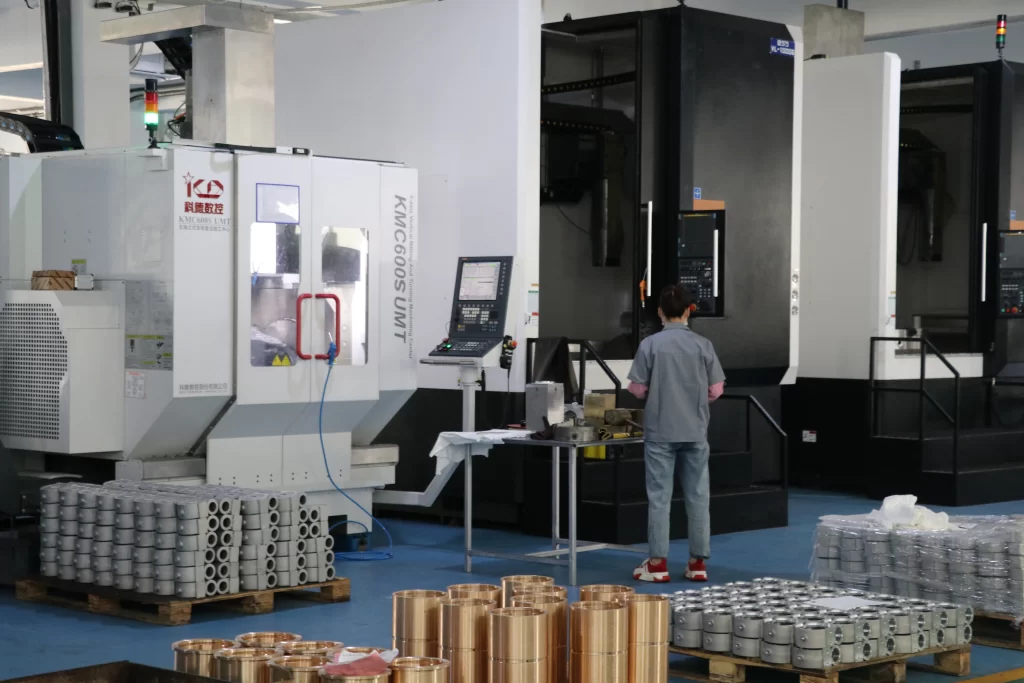
Brass, especially free‑cutting C36000 brass, is arguably the most machinable metal available. The lead particles dispersed throughout the microstructure act as chip breakers, producing short, brittle chips that clear easily from the cutting zone. This allows high cutting speeds, tight tolerances, and excellent surface finishes. Consequently, custom brass bushings can be produced quickly and economically.
Pure copper, in contrast, is notoriously “gummy”. It forms long, stringy chips that wrap around tools, leading to increased cycle times, tool wear, and surface finish defects. Machining copper is slower and more expensive. Bronze falls between the two. Leaded bronzes (C93200) machine reasonably well, while aluminum bronze (C95400) is tougher and requires slower speeds and rigid setups.
Cost implication for custom bushings: For high‑volume production of moderate‑load bushings with complex features, brass offers the lowest total cost. For demanding applications where longevity justifies higher upfront expense, bronze is the better value over the equipment’s lifetime.
SEO keywords: free machining brass bushing, custom bronze bushing manufacturer, high volume bushing production, CNC machined plain bearing.
6: Corrosion Resistance and the Dezincification Risk
Brass inherits good corrosion resistance from its copper parent, but it also introduces a unique vulnerability: dezincification. This is a selective corrosion process in which zinc leaches out of the brass alloy when exposed to certain aqueous environments—stagnant or slowly moving water containing chlorides, carbon dioxide, or low pH. What remains is a porous, weak copper sponge that retains the original shape but has lost nearly all mechanical strength.
Risk factors for dezincification:
Zinc content above 15%
Stagnant or low‑flow water
Presence of chlorides (seawater, deicing salts)
Acidic conditions (pH <7) or dissolved CO₂
Elevated temperatures accelerate the process
How to avoid it:
Use dezincification‑resistant (DZR) brass alloys when brass is required.
Apply protective coatings or cathodic protection.
Best practice: Switch to a bronze alloy. Tin bronzes and aluminum bronzes contain no free zinc and are immune to dezincification.
For marine equipment, pump bushings, water treatment valves, or any outdoor component exposed to moisture, bronze is the safer long‑term choice. MYWAY engineers routinely replace failed brass bushings with bronze equivalents, achieving three to five times longer service life.
SEO keywords: dezincification resistant bearing, marine bronze bushing, aluminum bronze corrosion, brass bushing failure prevention.
7: Bronze: The Superior Bearing Champion
While “brass is copper” is true, bronze represents the highest evolution of copper‑based bearing materials. Traditional bearing bronze (C93200 / SAE 660) contains copper, tin, lead, and a small amount of zinc. Each element serves a purpose:
Tin increases strength, hardness, and wear resistance.
Lead provides lubricity, embedability (ability to swallow small debris), and anti‑seizure properties.
Copper maintains corrosion resistance and thermal conductivity.
For extreme conditions, aluminum bronze (C95400) delivers exceptional strength (550–650 MPa) and outstanding corrosion resistance in seawater, acids, and high‑temperature environments. Phosphor bronze (C54400) offers excellent fatigue strength for cyclic or shock loading.
Why bronze is the bearing champion:
Superior wear resistance under both lubricated and boundary‑lubricated conditions.
Higher load capacity without plastic deformation.
Lower friction coefficient against steel shafts.
Good conformability – allows minor misalignment.
Excellent seizure resistance.
No serious engineer specifies pure copper for a heavy‑duty bushing. Brass is acceptable for light, intermittent duties. But for reliable, long‑lasting performance, bronze is the industry standard.
SEO keywords: SAE 660 bearing bronze, aluminum bronze bushing C95400, high load plain bearing, anti seizure bearing material.
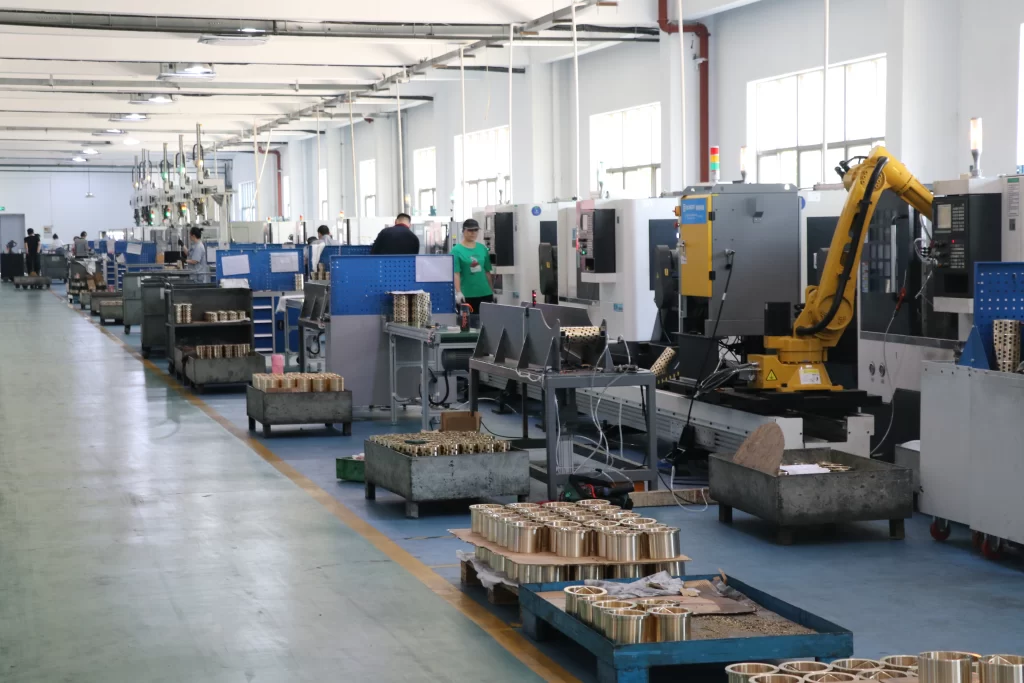
8: MYWAY’s Copper‑Based Bushing Portfolio (Ten Core Offerings)
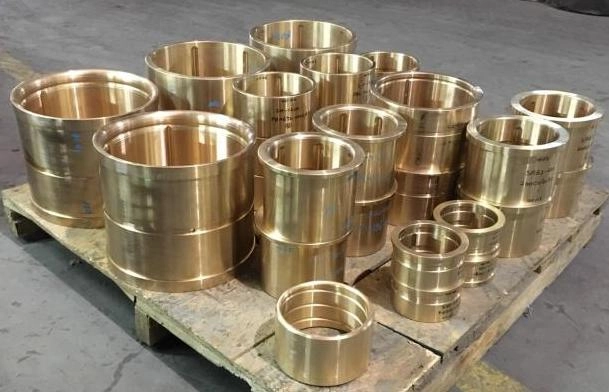
With over twenty years of focused manufacturing, MYWAY delivers precision bushings across the entire copper alloy spectrum. Our product lines are engineered to solve real‑world bearing problems.
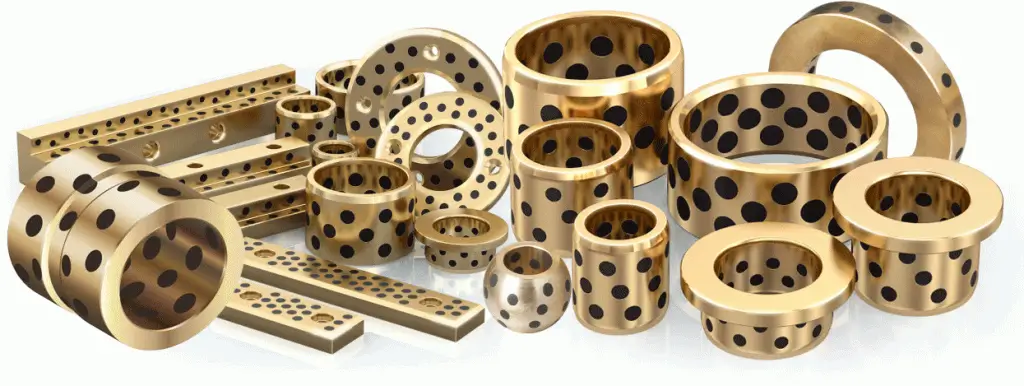
| Product Type | Alloy Example | Key Feature | Typical Application |
|---|---|---|---|
| Self‑lubricating bronze bushing | C93200 (leaded) | Lead particles provide emergency lubricity | Conveyors, agricultural equipment |
| High‑strength aluminum bronze bushing | C95400 | 550+ MPa tensile, seawater resistant | Hydraulic cylinders, marine gear |
| Phosphor bronze bushing | C54400 | Excellent fatigue resistance | Gear pumps, connecting rods |
| Free‑cutting brass bushing | C36000 | Best machinability, low cost | Instrument pivots, light linkages |
| Flanged bronze bushing | C93200 or C95400 | Radial + thrust bearing in one | Pivot points, guide rods |
| PTFE‑impregnated bronze bushing | C93200 + PTFE | Maintenance‑free, low friction | Food machinery, clean rooms |
| Graphite‑plugged bronze bushing | C95400 + graphite | High temperature self‑lube | Furnace equipment, kilns |
| Thin‑wall brass sleeve | C26000 | Compact, lightweight | Automotive shift mechanisms |
| Heavy‑wall bronze bushing | C86300 manganese bronze | Extreme impact resistance | Mining equipment, crushers |
| Fully custom non‑standard bushing | Any alloy, any dimension | Customer‑specified ID/OD/length/features | Replacement parts, prototypes |
Every MYWAY bushing is CNC machined, not cast with rough surfaces. We hold tolerances as tight as ±0.005 mm on critical diameters. Material certifications are traceable to original mill test reports. Compliance with ASTM, DIN, EN, JIS, and GB/T is standard.
SEO keywords: self lubricating bronze bushing, flanged bronze bushing, MYWAY bearing solutions, custom brass sleeve, PTFE impregnated bearing.
9: Custom Engineering: Flanged Bushings, Grooves, Holes, and Special Features
Standard off‑the‑shelf bushings cannot solve every application problem. MYWAY specializes in custom features that transform a simple sleeve into a high‑performance component.
Flanged bronze bushings deserve special emphasis. The integral flange provides two functions simultaneously:
Axial location: The flange positively positions the bushing inside the housing, preventing movement along the shaft axis.
Thrust bearing surface: The flange face can accommodate light to moderate axial (thrust) loads, eliminating the need for a separate thrust washer.
Other custom features we machine:
Grease distribution grooves (spiral, annular, or axial patterns)
Lubrication holes (radial or angled)
Internal or external chamfers for easy assembly
Special radii or tapers
Keyways or flats for anti‑rotation
Split lines for easy installation (split bushings)
Multiple material zones (bimetallic bushings)
Why custom matters: A bushing that exactly matches your housing bore and shaft diameter—with proper running clearance and lubrication features—will last significantly longer than a “close enough” standard part. MYWAY’s engineering team works from your drawings or even reverse‑engineers an obsolete part from a sample.
SEO keywords: flanged bronze bushing custom, grease groove bushing, oil hole plain bearing, bimetallic bearing bush, reverse engineered bushing.
10:Total Cost of Ownership: Why Engineers Partner with MYWAY
The cheapest bushing is rarely the least expensive over the life of the equipment. Material selection, manufacturing precision, and design features directly affect maintenance frequency, downtime costs, and replacement intervals. MYWAY helps customers calculate total cost of ownership (TCO) rather than focusing solely on piece price.
TCO factors for copper‑based bushings:
Initial material and machining cost
Installation labor
Lubrication requirements (manual vs. self‑lube)
Expected service life under actual operating conditions
Downtime cost for replacement
Risk of collateral damage if the bushing fails catastrophically
Real‑world example: A brass bushing in a wet agricultural application may fail from dezincification in 6–12 months. A bronze bushing in the same location may last 5–7 years. The bronze bushing costs perhaps 30–50% more upfront, but the TCO is dramatically lower when replacement labor and lost production are counted. MYWAY has documented dozens of such case studies.
Why MYWAY is the right partner:
Twenty years of bearing‑specific metallurgical expertise.
In‑house CNC machining – no outsourcing, full quality control.
Rapid prototyping and short lead times for custom orders.
Global shipping with proper packaging to prevent damage.
Technical support for material selection and design optimization.
Call to action: Do not let “brass is copper” confuse your material choice. Use the right copper‑based alloy for your load, environment, and budget. Contact MYWAY today with your bushing specifications. Our engineers will recommend the optimal alloy, provide a competitive quote, and deliver precision components that reduce downtime and extend equipment life.
MYWAY – Where Copper, Brass, and Bronze Become Reliable Bearings.
Frequently Asked Questions (FAQ)
Q1: Is a brass bushing stronger than a copper bushing?
Yes, significantly. Pure copper has low yield strength (~75 MPa), while free‑cutting brass (C36000) reaches 340–469 MPa. Brass is five times stronger for practical bushing applications.
Q2: Can I use a brass bushing in saltwater?
Not recommended for long‑term immersion. Brass is susceptible to dezincification in seawater. Use aluminum bronze (C95400) or tin bronze (C93200) instead.
Q3: What is the difference between a flange bushing and a plain sleeve?
A plain sleeve is a simple cylinder. A flanged bushing has a radial lip at one end that provides axial positioning and can handle light thrust loads. MYWAY manufactures both in custom dimensions.
Q4: Does MYWAY offer self‑lubricating bushings that never need oil?
Yes. Our PTFE‑impregnated bronze bushings and graphite‑plugged bronze bushings operate without external lubrication for the life of the part. Suitable for food machinery, clean rooms, and high‑temperature furnaces.
Q5: How do I order a custom bronze bushing from MYWAY?
Provide your required inner diameter (ID), outer diameter (OD), length, preferred alloy (or let us recommend one), and any special features (flange, groove, holes, etc.). Email or use the web form. We respond with a quote and lead time within two business days.
Q6: Why is C36000 brass so popular for bushings?
C36000 free‑cutting brass contains about 3% lead, which acts as a chip breaker and lubricant during machining. This makes it extremely fast and economical to produce with tight tolerances. For light‑load applications, it is the most cost‑effective choice.
Q7: Can bronze bushings be used without any lubrication?
Some bronze alloys (C93200 leaded bronze) have limited self‑lubricating properties from lead particles. However, for continuous unlubricated operation, we recommend PTFE‑impregnated or graphite‑plugged bronze bushings.
Q8: What industries does MYWAY serve?
Automotive, heavy construction, agricultural machinery, marine, aerospace, oil and gas, food processing, packaging equipment, and general industrial machinery.
Q9: Does MYWAY provide material certifications?
Yes. Every batch of raw material is accompanied by a mill test report (MTR) certifying chemical composition and mechanical properties. We can also provide dimensional inspection reports upon request.
Q10: How can I get a quick estimate for a large quantity of custom bushings?
Send your drawing or specification sheet to MYWAY’s sales team. Indicate annual quantity or total order volume. We provide tiered pricing for high volumes and can suggest design optimizations to reduce machining costs.
100000+ Types of Bushings – Contact Us for Details