
Recent Posts
Flanged Bushing Solutions: Engineering Performance for Radial and Axial Load Management
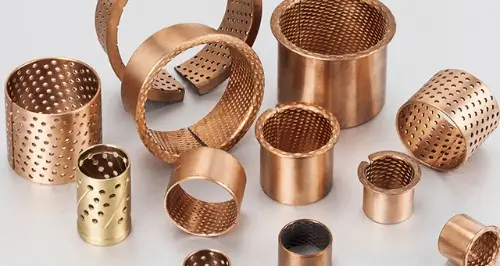
Table of Contents
1. Understanding the Flanged Bushing Structure and Function
A flanged bushing is a cylindrical plain bearing distinguished by an integral flange—a projecting rim at one end—that extends radially outward from the sleeve body . This seemingly simple design feature transforms a conventional sleeve bearing into a versatile component capable of managing both radial loads (perpendicular to the shaft axis) and axial or thrust loads (parallel to the shaft axis) simultaneously . The cylindrical sleeve portion supports the shaft and accommodates radial forces, while the flange acts as a thrust-bearing surface that prevents axial displacement and provides precise positioning . This dual-function capability makes flanged bushings an efficient alternative to installing separate radial and thrust bearings in compact mechanical assemblies.
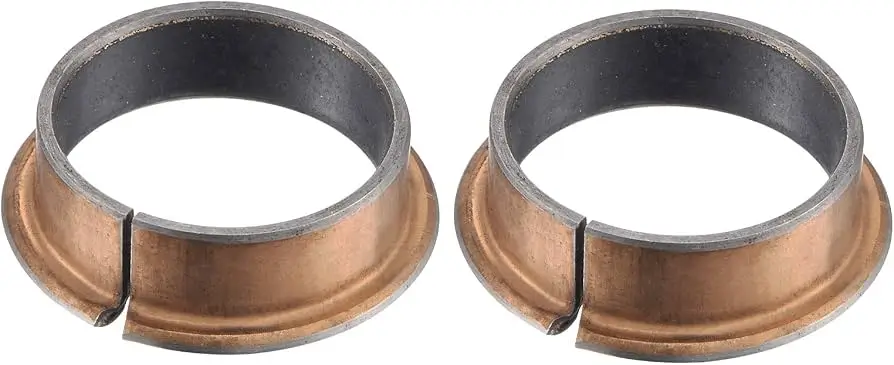
The flange also serves as a mechanical stop, ensuring the bushing remains properly seated within the housing bore and preventing it from being pushed through during operation or assembly . This locating function is essential in applications where maintaining consistent axial positioning is critical for system performance. Flanged bushings are available in various configurations—standard cylindrical designs, split bushings for easier installation around shafts, and wrapped steel constructions that leverage spring elasticity for self-retention
2. Core Functional Advantages in Mechanical Systems
Flanged bushings deliver several critical functional benefits that make them indispensable across industrial applications. Their primary advantage is friction reduction between moving parts, achieved through either self-lubricating material compositions or the retention of lubricants within the bushing structure . Bronze-based flanged bushings, particularly those made from SAE 841 material, are oil-impregnated or oil-filled, allowing them to self-lubricate during operation without requiring frequent manual greasing . This property is especially valuable in applications where regular maintenance access is limited or where external lubrication would attract contaminants.
Beyond friction management, these components provide excellent wear resistance, extending service life in demanding environments . The flange geometry also contributes to load distribution—by providing additional bearing surface area, the flange helps spread axial forces over a larger area, reducing localized stress and preventing premature failure . In oscillating or start-stop applications, flanged bushings with PTFE or composite liners excel, maintaining consistent performance in boundary lubrication regimes where traditional bearings might experience stick-slip or high breakaway torque
3. Material Selection and Performance Characteristics
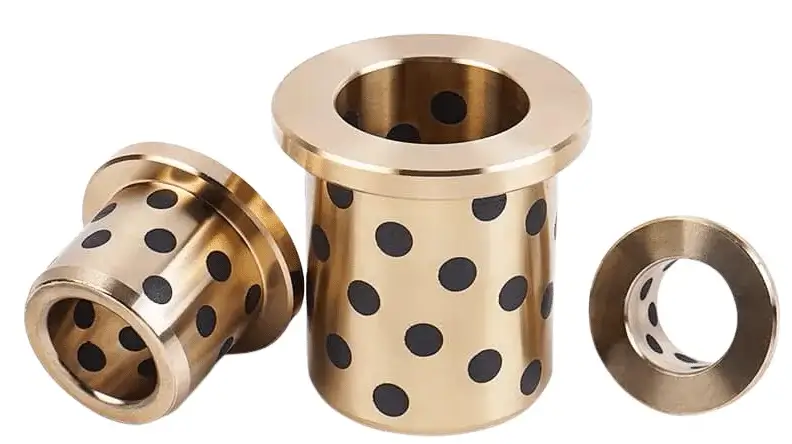
Material selection is a critical determinant of flanged bushing performance, with options ranging from metallic alloys to advanced engineered polymers . Bronze alloys, including C93200 (SAE 660) and aluminum bronze variants, are widely preferred for their exceptional strength, corrosion resistance, and machinability . Tin bronze offers optimal strength for heavy-load applications, while leaded tin bronze provides enhanced antifriction properties. For extreme environments—marine, chemical, or high-temperature applications—bronze bushings demonstrate superior resistance compared to brass alternatives .
Composite and plastic compound bushings represent a modern alternative, combining polymer matrices with reinforcing fibers and solid lubricants . These materials are lightweight, inherently corrosion-resistant, and often truly maintenance-free. PTFE-lined composite bushings excel in dry-running applications where lubricants cannot be used or would quickly deplete . Spring steel or wrapped steel bushings offer moderate hardness with high load capacity and inherent elasticity, providing a buffering effect that protects shafts under impact conditions . The elasticity also simplifies installation—once pressed into the housing, the bushing remains securely held by its own spring force.
4. Self-Lubricating and Maintenance-Free Operation
Self-lubrication is one of the most valued features in modern flanged bushing designs . Oil-impregnated bronze bushings contain lubricant distributed throughout the porous bronze matrix; during operation, heat and friction cause the oil to migrate to the bearing surface, forming a continuous lubricating film . When the equipment stops, the oil is reabsorbed into the pores—a self-regulating cycle that ensures lubrication is available exactly when needed. This mechanism eliminates the need for external lubrication systems, reducing maintenance downtime and operational costs.
For applications where oil contamination is unacceptable—such as food processing equipment, textile machinery, or cleanroom environments—dry-running composite bushings with embedded solid lubricants (graphite, PTFE, or molybdenum disulfide) provide an effective solution . These bushings operate without any external lubrication, offering quiet, clean performance while maintaining low friction coefficients. The maintenance-free characteristic is particularly advantageous in applications involving difficult-to-reach locations, high-altitude equipment, or machinery where scheduled lubrication would disrupt production
5. Combined Radial and Axial Load Management
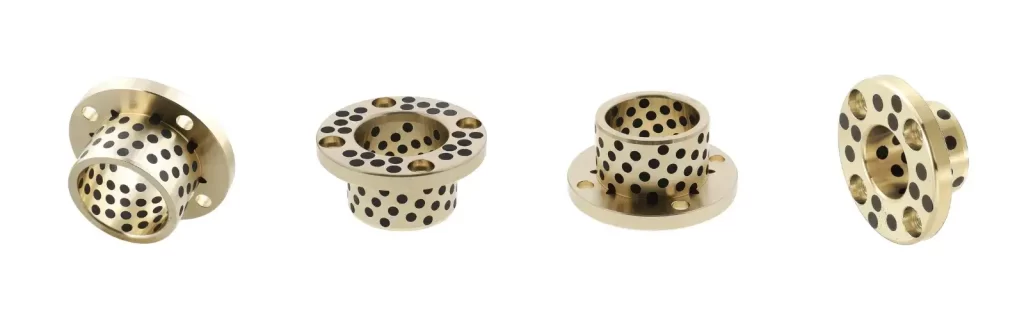
The distinguishing feature of flanged bushings is their ability to simultaneously support radial and axial loads within a compact footprint . The cylindrical inner diameter (ID) of the sleeve carries radial loads from the shaft, while the flange face accommodates axial (thrust) loads, preventing the shaft from moving longitudinally . This combined-load capability enables engineers to simplify bearing arrangements, reducing part counts and assembly complexity.
However, proper load management requires careful consideration of both load directions. The flange area must be adequate for the axial thrust; if the axial load exceeds the flange’s pressure capacity, a separate thrust washer may be more appropriate . For combined-load applications involving oscillation or repeated start-stop cycles, materials with excellent boundary lubrication performance—such as PTFE-lined composites or oil-impregnated bronze—are recommended . The flange also resists edge loading from torsional or tilting moments, but designers must ensure housing holes are perpendicular to the mounting surface and burr-free to prevent flange deformation or fracture during assembly
6. Key Applications Across Industries
Flanged bushings are ubiquitous across nearly every industrial sector, valued for their versatility and reliability. In automotive applications, they are found in suspension systems, steering linkages, brake components, and transmission assemblies . The ability to handle both radial and axial loads makes them ideal for pivot points, control arms, and shock absorber mounts. Agricultural and construction equipment—including excavators, loaders, tractors, and harvesters—rely on heavy-duty flanged bushings in hydraulic cylinders, boom pivots, and attachment points where high loads and harsh environments are common .
Industrial machinery such as pumps, compressors, conveyors, and gearboxes use flanged bushings for shaft support and axial positioning . Aerospace applications include landing gear assemblies and flight control systems where weight reduction and reliability are paramount—composite plastic bushings are often preferred here for their light weight . Food processing and packaging equipment benefit from maintenance-free, corrosion-resistant flanged bushings that meet sanitary requirements . Marine and offshore applications, including steering mechanisms and propulsion systems, leverage the corrosion resistance of bronze alloys in seawater environments
7. Installation and Design Considerations
Proper installation is essential for maximizing flanged bushing performance and service life . The housing bore must be perpendicular to the component mounting surface; if misaligned, the flange will not sit flush, leading to deformation or fracture under load . Burrs at the bore edge must be removed, and a small chamfer is recommended to facilitate smooth insertion—oversized chamfers can reduce load capacity. For split flanged bushings used in shaft mounting applications, the split design allows compression around the shaft, with the integral key engaging the shaft keyway to prevent relative rotation .
Design engineers must also consider the operational parameters: speed, load, temperature, and duty cycle. Sustained rotation typically favors oil-fed bronze or babbitt bearings, while oscillation or intermittent operation is better suited to PTFE/composite liners . For applications involving washdown or abrasive environments, stainless steel or coated bushings provide additional protection. The clearance between shaft and bushing must accommodate thermal expansion—excessively tight clearances can lead to seizure, while excessive clearance allows shaft movement and misalignment
8. Common Failure Modes and Prevention
Understanding failure mechanisms helps engineers select the correct bushing and avoid premature replacement . Thrust face wear or grooving manifests as rising axial play, scratch rings, and torque fluctuations—typically caused by abrasive ingress, excessive PV (pressure-velocity) values, or inadequate lubrication. Improved sealing and appropriate surface treatments (hard chrome coatings) can mitigate this issue . Seizure or scoring on the ID or flange face, indicated by squealing, heat spikes, and visible scoring, often results from insufficient clearance at operating temperature, low lubricant viscosity, or misalignment—remedies include adjusting clearances, increasing viscosity, and correcting alignment .
Fretting at the flange seat or OD—characterized by reddish oxide deposits and creaking sounds—arises from insufficient interference fit, vibration, or thermal cycling. Increasing interference or adding anti-rotation features can prevent movement. Flange cupping or extrusion, visible as edge-high contact and uneven wear rings, results from unsupported flange faces or over-torqued clamping—improving support geometry and adjusting clamp forces addresses the issue . Stick-slip or high breakaway torque—jerky starts and audible squeaking—is typically a boundary lubrication issue; changing grease chemistry, polishing faces, or applying low-roughness coatings can eliminate the problem
9. Advanced Solutions from MYWAY
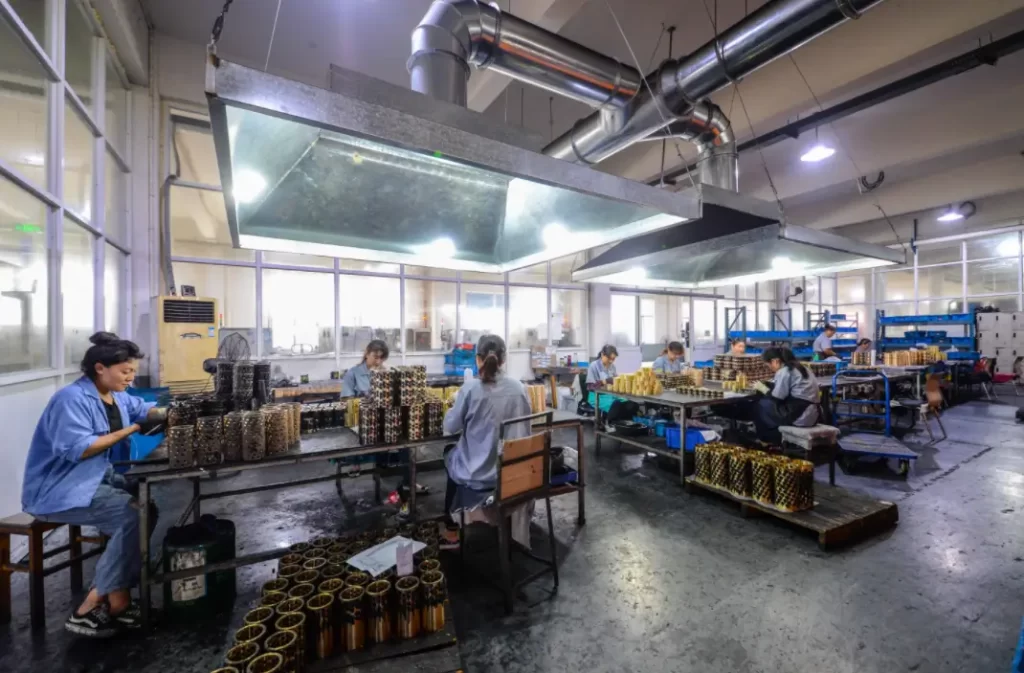
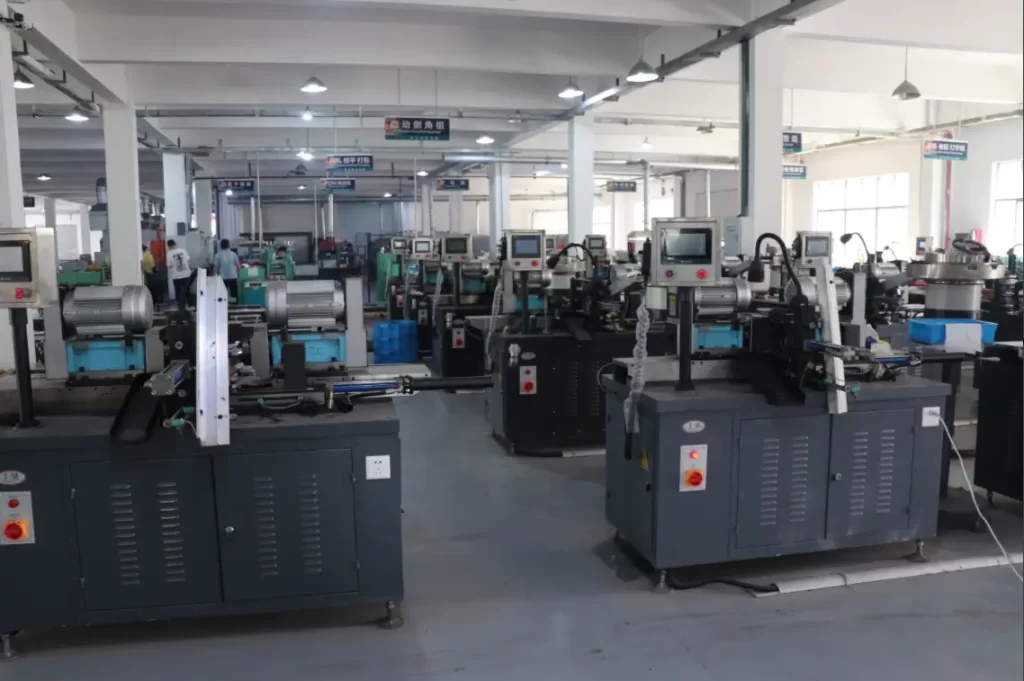
MYWAY stands as a premier manufacturer of high-performance flanged bushings, combining 20 years of engineering expertise with IATF/ISO-certified quality standards . Our comprehensive product portfolio encompasses bronze flanged bushings with exceptional strength and corrosion resistance, manufactured through precision centrifugal casting and CNC machining to micron-level tolerances . For self-lubricating applications, our oil-impregnated bronze bushings (SAE 841 specification) provide maintenance-free operation ideal for demanding environments .
For lightweight, corrosion-resistant solutions, MYWAY plastic compound and composite flanged bushings leverage advanced polymer technology with PTFE, POM, and nylon matrices, reinforced with fibers and solid lubricants for optimal wear resistance . Our spring steel/wrapped steel bushings deliver high load capacity and shock absorption through their inherent elasticity, with a scientific seam design that eases assembly and ensures self-retention in the housing .
MYWAY’s vertical integration—from casting and sintering to final CNC machining and inspection—ensures consistent quality and cost-effectiveness. CMM and optical inspection systems verify every product’s specifications, while our engineering team provides comprehensive application support to help customers select or customize the ideal flanged bushing for their operational requirements . Whether you need standard sizes or custom-engineered solutions, MYWAY delivers reliability that reduces downtime, lowers maintenance costs, and improves equipment performance.
Frequently Asked Questions
Q1: When should I use a flanged bushing instead of a plain sleeve bearing?
Choose a flanged bushing when your application requires both radial load support and axial (thrust) load management or precise axial positioning within a compact assembly. The integral flange prevents axial displacement and locates the bushing in the housing
Q2: What is the difference between brass and bronze flanged bushings?
Bronze bushings offer higher strength, superior wear resistance, and better corrosion resistance—making them suitable for heavy-duty and harsh-environment applications. Brass bushings are softer, easier to machine, and typically more economical for lighter-duty, general-purpose use .
Q3: Can flanged bushings operate without lubrication?
Some can. Self-lubricating flanged bushings—oil-impregnated bronze or composite bushings with embedded solid lubricants (PTFE, graphite)—are designed for dry-running or maintenance-free operation. However, standard bronze or steel bushings generally require external lubrication .
Q4: What causes flange failure in flanged bushings?
Common causes include misaligned housing holes (flange not seating flat), burrs at the bore edge causing deformation, edge loading from torsional or tilting moments, insufficient support for the flange face, or over-torqued clamping .
Q5: How do I select the right flanged bushing for my application?
Consider load type and magnitude (radial vs. axial), speed and duty cycle (continuous rotation vs. oscillation), operating temperature range, environmental exposure (moisture, chemicals, abrasives), and maintenance access. MYWAY’s engineering team can assist with material selection and customization .
Q6: Are flanged bushings available in custom sizes?
Yes. MYWAY offers custom flanged bushings engineered to specific dimensions, tolerances, and material requirements. From small precision bushings to large-diameter heavy-duty components, we deliver solutions tailored to your application
100000+ Types of Bushings – Contact Us for Details