
Recent Posts
Metallurgical Equipment Reliability: The Critical Role of Shear Machine Bushings in High-Impact Steel Processing
Introduction
Shear machines constitute essential capital equipment in metallurgical processing lines, performing precision cutting operations on hot-rolled blooms, slabs, and billets under extreme operational conditions. The bushing—a cylindrical bearing component—serves as the critical interface between moving shear components, directly influencing equipment reliability, production uptime, and maintenance costs. These components function in environments characterized by high impact loads, elevated temperatures reaching 300°C, abrasive particulate contamination, and frequent start-stop cycling. The selection, application, and maintenance of shear machine bushings represent key determinants of operational efficiency in steel mills and metal processing facilities worldwide.
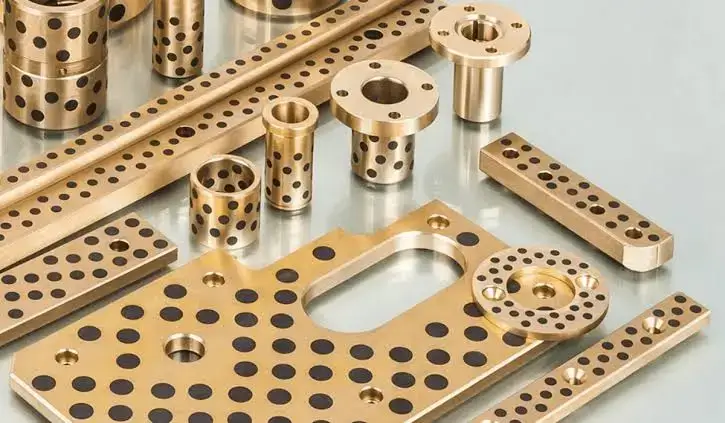
Table of Contents
1. Shear Machine Bushing Fundamentals: Engineering Function and Operational Demands
Shear machine bushings function as sliding bearings that support rotating shafts, crank mechanisms, and blade guidance systems within shearing equipment. These components must accommodate complex motion profiles, including rotation, reciprocation, and oscillation, while maintaining precise clearances under fluctuating load conditions.
The primary engineering challenge in shear bushing applications involves managing the tribological interface between moving steel components. In flying shear systems, bushings support crankshaft rotation speeds that enable high-speed cutting of continuously moving workpieces, with typical billet dimensions ranging from 50–200 mm and slabs measuring 50×200 mm to 125×400 mm. The bushing must absorb both radial and axial forces while maintaining dimensional stability to prevent excessive clearance that compromises cut quality.
Operational parameters impose severe demands on bushing materials. The maximum load capacity for heavy-duty shear bushings typically reaches 65 N/mm², with dynamic pressure conditions requiring materials capable of withstanding repetitive impact without plastic deformation. Temperature management presents another critical factor, as inadequate cooling can cause lubricant degradation and accelerated wear. Field data from hot rolling operations indicate that crankshaft and knife shaft temperatures can reach 300°C during continuous shearing, leading to grease leakage and bushing failure if proper thermal management strategies are not implemented
2. Material Selection Criteria: Copper Alloys and Advanced Alternatives
Material selection for shear machine bushings requires balancing multiple performance attributes, including wear resistance, load-bearing capacity, thermal conductivity, corrosion resistance, and cost-effectiveness. Copper-based alloys represent the predominant material class for metallurgical shear applications, with specific compositions selected based on operational requirements.
Phosphor bronze (CuSn8P) demonstrates exceptional wear resistance and corrosion resistance in high-temperature environments, making it suitable for hot rolling mill applications. Its low and stable friction coefficient reduces adhesion tendencies, effectively preventing shaft seizure. The material maintains operational stability under demanding conditions, resisting corrosion, dust, impact, and edge loading while functioning in both high and low temperature environments.
Aluminum bronze alloys (C95400, C95500) offer higher strength and hardness compared to tin bronzes, with tensile strength exceeding 600 MPa and yield strength above 240 MPa. These compositions suit high-impact applications where static loads exceed those manageable by leaded bronzes. The material’s excellent thermal conductivity facilitates heat dissipation from friction interfaces, preserving adjacent seal integrity and preventing thermal degradation.
Leaded tin bronzes (C93200/SAE 660, C93700/SAE 64) provide superior embeddability, allowing contaminant particles to embed in the bushing surface rather than scoring the hardened steel shaft. This sacrificial characteristic protects expensive shaft components, extending overall equipment service life. C93200 exhibits tensile strength of 241 MPa, yield strength of 138 MPa, and Brinell hardness of 65 HB, with allowable pressure ceilings of 27.6 MPa and PV limits of 2.6 MPa·m/s.
Advanced alternatives to traditional bronze bushings include surface-engineered products such as PEL bushings, which incorporate thermochemical treatments that provide high surface hardness and excellent seizure resistance. These components feature optimized surface topography that creates lubricant reservoirs and enables removal of abrasive particles from contact surfaces. With maximum operating temperatures reaching 250°C and dynamic pressure capacities of 100 N/mm², surface-treated steel bushings offer viable alternatives in applications where bronze materials may prove inadequate
3. Self-Lubricating Bushing Technology: Maintenance-Free Solutions
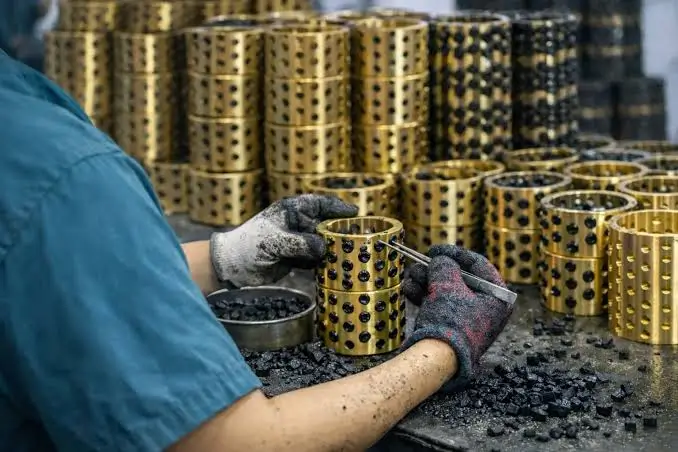
Self-lubricating shear machine bushings represent a significant advancement in metallurgical equipment design, eliminating the need for external lubricant supply systems while improving reliability in difficult-to-lubricate locations. These components incorporate graphite plugs or other solid lubricants embedded in the bearing surface, providing continuous lubrication during operation.
The graphite-embedded copper sleeve design features lubricant distribution areas comprising up to 25% of the friction surface, strategically positioned to maintain a consistent lubricating film during shaft rotation and oscillation. The fine texture of machined graphite offers superior lubrication performance compared to powder-pressed alternatives, enabling oil-free operation that eliminates lubricant contamination concerns and reduces maintenance costs.
Self-lubricating bushings prove particularly suitable for shear machine applications characterized by:
Frequent starts and stops where hydrodynamic oil film formation is difficult
Intermittent operation where lubricant retention challenges exist
Oscillating or reciprocating motion patterns that challenge conventional lubrication systems
Locations where external lubricant supply would be impractical or contamination-prone
The operational benefits of self-lubricating technology translate to extended service intervals and reduced maintenance requirements. Field data from shear machine applications indicate that graphite copper bushings extend service life from 4–6 months to 9–11 months compared to conventional lubricated bronze bushings under identical operating conditions. Additional advantages include lower noise levels, reduced environmental impact from eliminating oil leakage, and improved energy efficiency through decreased friction losses.
4. Design Configurations: Matching Bushing Geometry to Application Requirements
Shear machine bushing designs must accommodate specific installation requirements, load conditions, and maintenance considerations. The geometry selection directly impacts performance, service life, and ease of replacement.
Cylindrical (straight) bushings represent the most common configuration for shear machine applications, providing uniform radial support along the shaft length. These components are typically installed with interference fits in housing bores, with standard fit tolerances following ISO 286 guidelines (housing H7, bushing OD p6, shaft f7). The dimensional control ensures proper load distribution and prevents bushing rotation within the housing.
Flanged bushings incorporate an integral flange that provides axial positioning and thrust load capacity. This design eliminates the need for separate thrust washers in applications where axial forces exist. In flying shear installations, flanged bushings are commonly mounted at crank shaft flange connections, providing stable bearing support on both sides of the crank shaft mid-section where diameters range from approximately 630 to 700 mm.
Split bushings facilitate installation and removal in applications where equipment disassembly would prove difficult or time-consuming. The split configuration allows fitting around shafts without removing connected components, significantly reducing maintenance downtime. Split designs are particularly valuable in large-scale rolling mill applications where bushing dimensions may exceed 1200 mm outside diameter with lengths approaching 2000 mm.
Composite and multi-layer bushings incorporate different materials to achieve specific performance characteristics. Hard-soft composite designs combine a hard outer shell with a softer bearing layer, enabling controlled elastic deformation that matches cutting blade deflection patterns. These configurations improve cutting precision and reduce surface quality defects in cold-rolled strip processing applications.
5. Quality Assurance and Dimensional Precision: Ensuring Optimal Performance
Manufacturing quality and dimensional precision fundamentally determine shear machine bushing performance and service life. Rigorous quality assurance programs incorporating advanced inspection techniques ensure product consistency and reliability.
Dimensional accuracy requirements for shear machine bushings are stringent, with typical tolerance control within 0.003 mm for critical dimensions. Inner diameter tolerances typically conform to H9 specifications, ensuring correct shaft fit and proper load distribution. The interference fit between bushing outer diameter and housing bore (p6 tolerance class) prevents relative motion during operation.
Surface finish quality significantly influences tribological performance. Optimal shaft surface roughness for bronze bushing applications is below Ra 0.8 μm, with shaft hardness exceeding 56 HRc to prevent premature wear. For self-lubricating bushings, the inner diameter is often honed to a mirror finish, reducing friction coefficient and minimizing heat generation during operation.
Non-destructive testing (NDT) methods verify internal integrity and detect casting defects. Advanced manufacturers utilize ultrasonic testing and surface integrity inspections to confirm freedom from porosity and casting irregularities that could compromise structural strength. These quality control measures ensure that installed bushings meet rated load capacities and performance specifications.
Centrifugal and continuous casting processes enable production of large monolithic bushings with consistent microstructure and material properties. These manufacturing methods provide superior product consistency compared to sand casting techniques, reducing the risk of material defects that could lead to premature failure in demanding shear applications.
6. Installation Methodologies and Precision Tolerance Management
Proper installation procedures are essential to achieving designed bushing performance and maximum service life. The installation approach must account for fit type, component geometry, and operational requirements.
Interference fit installation typically employs press fitting or nitrogen cooling methods to achieve the required dimensional relationships. Press fitting requires controlled axial force application to prevent bushing deformation or scoring of the shaft surface. Nitrogen mounting, which involves cooling the bushing to contract its diameter before insertion, provides a controlled method for achieving interference fits with reduced installation force requirements.
Clearance and alignment verification during installation ensures proper bushing operation. For shear machine applications, technicians should verify bushing-to-shaft clearance using dial gauge measurements at multiple circumferential positions. The clearance should remain consistent within specified limits to ensure even load distribution and proper lubricant film formation. In maintenance contexts, clearance exceeding 0.012 inches (0.3 mm) typically indicates the need for bushing replacement.
Assembly sequence and torque specifications must follow manufacturer recommendations to avoid component damage. In QD bushing installations, cap screws should be alternately and evenly tightened to achieve uniform clamping force. Lubricants should not be applied to tapered surfaces or bushing interfaces, as these materials can alter friction characteristics and affect torque transmission.
Post-installation verification involves operational testing to confirm proper function. Shear beam vertical movement should be visually monitored while the machine operates, with excessive movement indicating potential bushing issues. If clearance measurements exceed specified limits, the bushing requires replacement to prevent accelerated shaft wear and cutting quality degradation.
7. Wear Monitoring and Predictive Maintenance Strategies
Implementing systematic wear monitoring and predictive maintenance programs extends shear machine bushing service life and prevents catastrophic equipment failures. Regular inspection protocols identify developing issues before they result in production interruptions.
Clearance measurement during scheduled maintenance provides quantitative data on bushing wear progression. Recommended inspection intervals of 500 operating hours or six months establish baseline wear rates and enable predictive replacement planning. Measurements should be performed with the shear beam blocked or supported, using dial gauges to detect both radial clearance and vertical movement during operation.
Visual inspection indicators reveal developing problems requiring attention. Primary wear indicators include:
Vertical movement of the shear beam during operation
Visible leakage from cylinder seals indicating pin instability
Increased noise levels suggesting clearance expansion
Cut quality deterioration indicating misalignment or clearance issues
Lubrication system monitoring ensures that automatic lubrication lines feeding shear bushings remain clear and functional. Blockages must be cleared immediately to prevent dry-running conditions that lead to bushing seizure and thermal damage. For self-lubricating bushings, graphite plug condition and distribution should be verified during maintenance intervals.
Vibration analysis provides advanced warning of developing bushing problems. Changes in vibration signatures often precede clearance deterioration, enabling maintenance planning before production impact occurs. This condition monitoring approach is particularly valuable in high-production environments where unexpected downtime carries significant cost penalties.
8. Failure Analysis and Service Life Optimization
Understanding failure mechanisms and implementing service life optimization strategies enables metallurgical operations to maximize bushing performance and minimize total cost of ownership.
Common failure modes in shear machine bushings include:
Excessive clearance from abrasive wear, leading to reduced cut quality and increased impact loading
Seizure from inadequate lubrication, causing shaft damage and requiring thermal lance removal
Plastic deformation from excessive static loading, resulting in out-of-round condition known as “egging”
Thermal degradation from inadequate cooling, causing lubricant breakdown and accelerated wear
Root cause analysis of bushing failures should examine installation, operation, and maintenance factors. Contributing causes often include improper clearance settings, inadequate lubrication, contaminated lubricant, overload conditions, or thermal management deficiencies. Identification of failure mechanisms enables targeted corrective actions to prevent recurrence.
Cooling system effectiveness significantly influences bushing service life in shear applications. In flying shear operations, knife shaft and crankshaft temperatures reaching 300°C can cause grease leakage and accelerated bushing wear. Water cooling systems designed to reduce component temperatures extend bushing life and improve shear quality. Implementation of automated cooling control systems reduces water consumption while maintaining effective thermal management.
Service life optimization strategies combine material selection, design improvement, and maintenance program enhancements:
Upgrading from conventional to self-lubricating bushings in problematic applications
Implementing precision clearance control to reduce impact loading
Improving contamination control through enhanced sealing systems
Establishing predictive maintenance programs with regular wear monitoring
Performance Data Summary Table
| Parameter | Specification | Relevant Condition |
|---|---|---|
| Maximum Load Capacity | 65 N/mm² | Heavy-duty shear bushings |
| Dynamic Pressure Capacity | 100 N/mm² | Surface-treated steel bushings |
| Maximum Operating Temperature | 250°C | Advanced PEL bushings |
| Typical Clearance Limit | 0.012 inches (0.3 mm) | Replacement threshold |
| Shaft Surface Roughness | Ra < 0.8 μm | Optimal bushing performance |
| Shaft Hardness | > 56 HRc | Matching shaft specification |
| C93200 Tensile Strength | 241 MPa | Leaded tin bronze |
| C93200 Brinell Hardness | 65 HB | Leaded tin bronze |
| C95400 Tensile Strength | > 600 MPa | Aluminum bronze |
| Maximum Bushing Diameter | 1200 mm | Large-scale applications |
| Maximum Bushing Length | 2000 mm | Continuous casting capability |
Frequently Asked Questions (FAQ)
Q1: What is the primary function of a shear machine bushing?
The bushing serves as a sliding bearing that supports rotating shafts, crank mechanisms, and blade guidance systems in shearing equipment, accommodating radial and axial forces while maintaining precise clearances.
Q2: What materials are commonly used for shear machine bushings?
Copper-based alloys predominate, including phosphor bronze (CuSn8P), aluminum bronze (C95400, C95500), and leaded tin bronze (C93200/SAE 660). Surface-treated steel alternatives such as PEL bushings are also available.
Q3: What advantages do self-lubricating bushings offer in shear applications?
Self-lubricating bushings eliminate external lubricant supply requirements, extend service intervals from 4–6 months to 9–11 months, reduce contamination risks, and lower noise levels while improving energy efficiency through decreased friction.
Q4: What temperature conditions do shear machine bushings experience?
Bushing temperatures can reach 300°C during continuous shearing operations, necessitating thermal management strategies including water cooling systems to maintain performance.
Q5: How is proper bushing fit determined during installation?
Standard fits follow ISO 286 guidelines with housing H7, bushing OD p6, and shaft f7 tolerances. Installation typically employs press fitting or nitrogen cooling methods.
Q6: What clearance indicates bushing replacement is needed?
Clearance exceeding 0.012 inches (0.3 mm) typically indicates the need for bushing replacement to maintain cut quality and prevent accelerated shaft wear.
Q7: How often should shear machine bushings be inspected?
Inspection intervals of 500 operating hours or six months are recommended, with clearance measurements and visual checks performed during scheduled maintenance.
Q8: What common failure modes affect shear machine bushings?
Primary failure modes include excessive clearance from abrasive wear, seizure from inadequate lubrication, plastic deformation from excessive loading, and thermal degradation from inadequate cooling.
Q9: What quality assurance methods apply to bushing manufacturing?
Non-destructive testing including ultrasonic inspection, dimensional verification to 0.003 mm precision, and surface finish measurement (Ra < 0.8 μm) are standard quality assurance practices.
Q10: What is the significance of embeddability in bushing materials?
Embeddability allows contaminant particles to embed in the bushing surface rather than scoring the hardened steel shaft, protecting expensive components and extending equipment service life.
Q11: Can split bushings be used in shear machine applications?
Yes, split bushings facilitate installation and removal in applications where equipment disassembly would prove difficult, significantly reducing maintenance downtime in large-scale rolling mill applications.
Q12: How does inadequate cooling affect bushing performance?
Inadequate cooling can cause lubricant degradation and accelerated wear, with knife shaft and crankshaft temperatures reaching 300°C leading to grease leakage and bushing failure.
Q13: What vibration analysis applications exist for bushing monitoring?
Vibration analysis provides early warning of developing bushing problems, as changes in vibration signatures often precede clearance deterioration, enabling maintenance planning before production impact occurs.
Q14: What manufacturing processes produce large shear bushings?
Centrifugal and continuous casting processes enable production of large monolithic bushings with consistent microstructure and material properties, capable of 1200 mm outside diameter and 2000 mm length.
Q15: How does bushing geometry selection impact performance?
Geometry selection—cylindrical, flanged, split, or composite—directly impacts load distribution, axial positioning capability, installation ease, and maintenance accessibility.
Q16: What role do graphite plugs play in self-lubricating bushings?
Graphite plugs embedded in the bearing surface provide continuous lubrication without external lubricants, with lubricant distribution areas comprising up to 25% of the friction surface.
Q17: What shaft characteristics optimize bushing performance?
Optimal shaft surface roughness below Ra 0.8 μm and hardness exceeding 56 HRc minimize wear, with proper hardness matching preventing premature shaft damage.
Q18: How does surface finish quality affect bushing tribology?
Superior surface finish quality reduces friction coefficient and minimizes heat generation during operation, preserving lubricant properties and extending component service life.
Q19: What cooling methods apply to shear machine bushings?
Water cooling systems using thermal sensors for automated control reduce component temperatures during continuous operation, extending bushing life while conserving water resources.
Q20: How does total cost of ownership compare between conventional and advanced bushings?
Advanced self-lubricating and surface-treated bushings reduce maintenance frequency, extend service life, and eliminate lubricant costs, often providing lower TCO despite higher initial acquisition costs
100000+ Types of Bushings – Contact Us for Details