
Recent Posts
Rolling Mills Steel Metallurgy: How Deformation, Temperature, and Cooling Define Steel Performance
Introduction
Steel rolling is commonly described as thickness reduction, but its metallurgical effect is more consequential. Reheating, descaling, roughing, finishing, coiling, cold reduction, annealing, and temper rolling determine grain size, texture, residual stress, surface condition, flatness, strength, formability, and downstream consistency. A coil with the correct nominal thickness can still be unsuitable if its microstructure, crown, edge condition, or mechanical-property variation is not controlled. For customers buying hot rolled steel coil, cold rolled steel sheet, plate, strip, bar, or rolling-mill equipment, the valuable discussion begins with process capability rather than with gauge alone.
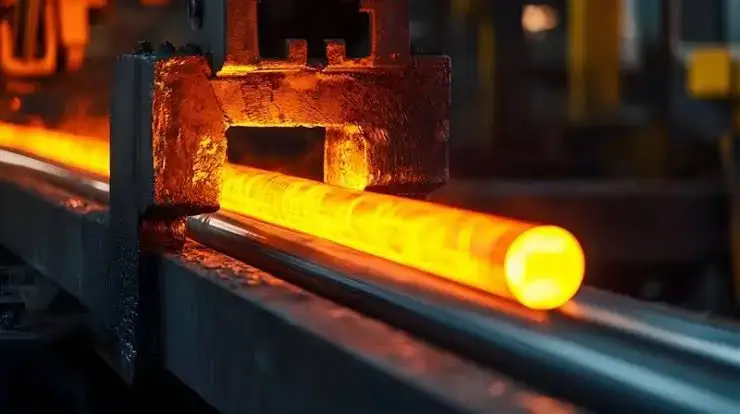
Table of Contents
1.Rolling Mills Steel: The Process Is a Metallurgical System, Not Only a Reduction Machine
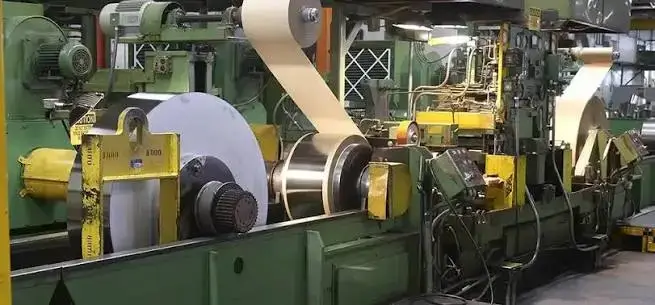
A rolling mill applies compressive force through rotating rolls to reduce thickness, change cross-section, or impose a controlled shape. World Steel Association distinguishes hot-rolling mills, where preheated solid steel is continuously rolled between cylinders, from cold-rolling mills, where flat products are reduced between alloy-steel cylinders at room temperature. This distinction changes the metal itself. Hot rolling deforms steel at elevated temperature, usually while the microstructure is austenitic for carbon and low-alloy steels; recovery, recrystallization, phase transformation, and scale formation occur within the process route. Cold rolling imposes deformation below recrystallization conditions, raising dislocation density and strength while reducing ductility until annealing restores a controlled microstructure.
The mill therefore operates as one segment of a larger conversion chain: steelmaking establishes chemistry and cleanliness; continuous casting produces slab, bloom, or billet; reheating makes the feedstock workable; rolling creates geometry and deformation history; cooling and coiling set transformation products and precipitation state; and downstream pickling, cold rolling, annealing, coating, or cutting prepare steel for fabrication. The buyer who specifies only “hot rolled steel” leaves too many performance variables unresolved. Grade, standard, thickness tolerance, width, flatness, surface class, coil condition, mechanical properties, test direction, and intended end use must be aligned with the rolling route.
- Hot rolling: deforms steel at elevated temperature, enables large reductions, and establishes much of the final grain and transformation history.
- Cold rolling: improves gauge and surface control while introducing work hardening; annealing and temper rolling are normally used to tailor final properties.
- Controlled rolling and controlled cooling: deliberately combine deformation schedule, finish temperature, and cooling rate to refine microstructure and balance strength with toughness.
2.From Slab, Bloom, or Billet to a Product Family: Choosing the Correct Mill Route
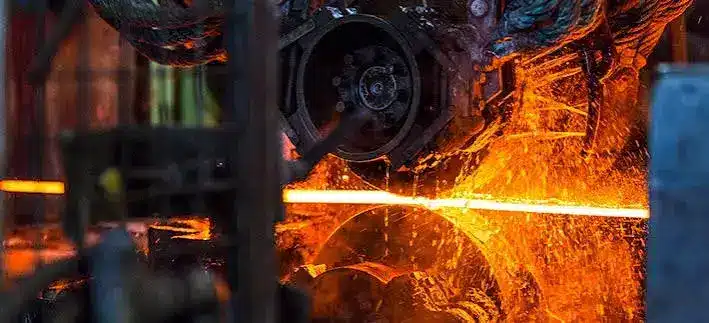
The starting form influences the mill configuration and product. Slabs are normally rolled into plate, hot strip, and sheet; blooms and billets enter section, bar, wire rod, rail, and tube routes. A plate mill may use reversing passes to achieve heavy-gauge plate; a hot strip mill uses roughing and finishing stands to produce coil; a Steckel mill combines reversible rolling with coiler furnaces; a bar or rod mill uses a sequence of grooved stands to manage section and speed. Twin-roll casting is another route in which thin steel sheet is cast and hot rolled in a compact process chain. ISO 15179 covers hot-rolled twin-roll cast structural-quality and high-strength sheet intended for specified mechanical properties.
Product terminology should be translated into a technical request. “Steel plate” is not simply a thick coil, and “steel strip” is not simply a narrow sheet. For a structural fabricator, plate flatness, through-thickness quality, weldability, and impact properties may dominate. For an automotive or appliance line, gauge consistency, surface quality, drawability, and coating compatibility may dominate. For a pipe mill, strength, toughness, inclusion control, edge quality, and coil-to-coil consistency become decisive. For a rolling-mill equipment project, feedstock range, pass schedule, reduction per stand, rolling force, drive torque, cooling system, coiler tension, automation, and maintenance access must be specified together.
Product route | Typical feedstock | Key metallurgical control | Common customer requirement |
Hot strip mill | Slab or thin slab | Reheat, roughing reduction, finish temperature, run-out cooling, coiling temperature | Hot rolled coil with specified grade, gauge, width, flatness, and mechanical-property range |
Plate mill | Slab | Reversing-pass schedule, temperature uniformity, controlled rolling, accelerated cooling | Heavy plate for structures, pressure service, shipbuilding, pipe, or machinery |
Bar, section, or rod mill | Billet or bloom | Groove design, strain distribution, finishing temperature, cooling bed control | Rebar, merchant bar, wire rod, structural section, rail, or engineered bar |
Cold rolling and annealing line | Pickled hot band | Cold reduction, anneal cycle, temper rolling, cleanliness and tension control | Cold rolled sheet or strip with tight gauge, surface, formability, or strength target |
3. Reheating and Descaling: The First Controls on Grain, Surface, and Throughput
Reheating is not merely a furnace stage before rolling. It must deliver a sufficiently uniform temperature for deformation while avoiding excessive austenite grain growth, decarburization, surface scale, and avoidable energy use. Alloy chemistry matters. In microalloyed grades, niobium, titanium, and vanadium precipitates may need to dissolve or remain controlled according to the intended thermomechanical route. A furnace temperature that works for one carbon-manganese grade can be inappropriate for a microalloyed, high-strength, or alloy steel. Residence time, slab thickness, skid marks, furnace atmosphere, and discharge temperature affect temperature uniformity entering the roughing mill.
Oxide scale is a production and surface-quality issue. During high-temperature exposure, iron oxides form on the surface; high-pressure water descaling removes scale ahead of critical reductions. Incomplete descaling can roll scale into the surface, while aggressive or poorly timed water application can disturb temperature control. Descaling performance is therefore linked to roll wear, surface defects, strip temperature, water quality, nozzle condition, and maintenance. A sound mill specification includes descaler pressure and coverage, scale handling, water treatment, and access for inspection, not merely furnace capacity.
Published microalloy technical literature illustrates the importance of temperature sequencing rather than a single universal set point. One niobium structural-section example describes deformation above 1050 deg C to refine austenite, followed by finishing below approximately 900 deg C to exploit delayed recrystallization. A separate industrial example reports a roughly 1250 deg C slab reheat, about 875 deg C finish temperature, and around 600 deg C coiling temperature for particular niobium-alloyed grades. These are route-specific examples, not default settings for all rolling mills steel.
4.Roughing, Finishing, and Controlled Rolling: Managing Recrystallization Rather Than Chasing Gauge
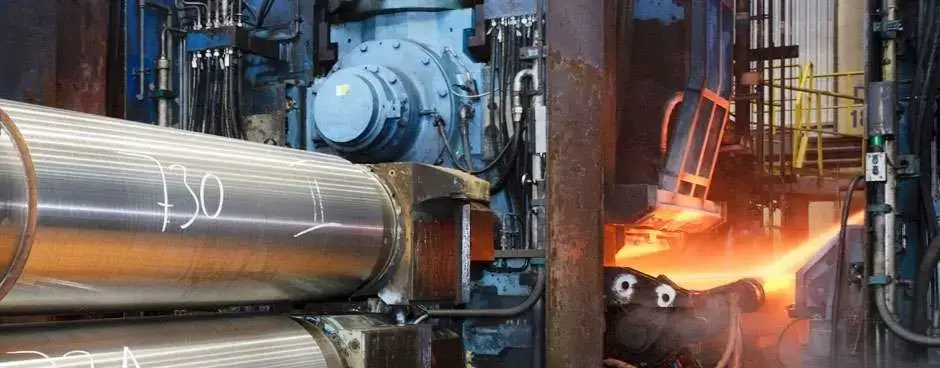
Roughing mills break down the cast structure, close porosity, redistribute segregation at a macroscopic scale, and establish transfer-bar geometry. Finishing mills deliver final gauge and generate a deformation history that directly affects austenite condition before transformation. Between passes, austenite may recover or recrystallize depending on temperature, interpass time, strain, strain rate, and alloying. In a conventional carbon steel, high-temperature deformation can be followed by rapid recrystallization. In niobium-microalloyed steel, solute drag and fine precipitates can retard recrystallization, allowing pancaked austenite grains and a finer transformed ferrite structure after cooling.
Controlled rolling uses this behavior intentionally. The process is designed so that enough deformation occurs in a selected temperature range to refine prior-austenite grains and create favourable nucleation conditions for the next phase. NIST research on hot-rolling conditions for a medium-carbon steel found total reduction and finishing temperature to have more influence on mechanical properties than pass reduction or roll speed in that study. This is a valuable production principle: the pass schedule cannot be optimized by rolling force or throughput alone; the end-of-rolling thermal state must also be controlled.
A rolling schedule should define reduction distribution, draft per pass, roll diameter, friction model, torque, interstand tension, interpass delay, target temperature, and allowable deviation. Equipment data should be connected to metallurgical data. A new finishing stand that increases speed but disrupts thermal consistency may improve tonnes per hour while making strength or flatness harder to hold. Conversely, a mill with controlled interstand cooling, pyrometry, and automation can make a narrow processing window commercially repeatable.
5.Run-Out Cooling, Coiling, and Phase Transformation: Where Strength Is Often Decided
After final hot rolling, the strip or plate cools through transformation temperatures. The cooling path changes ferrite grain size, pearlite spacing, bainite fraction, precipitation behavior, residual stress, and mechanical-property balance. Run-out table cooling on a hot strip mill uses water flow, cooling-zone length, strip speed, temperature feedback, and control logic to target a cooling curve before coiling. For plate, accelerated cooling may be used after controlled rolling to obtain a desired combination of strength and toughness. The relevant question is not only “how fast is the cooling,” but also when cooling begins, how uniform it is through width and length, and what temperature the product reaches before coiling or stacking.
Microalloy literature provides a useful but non-universal example: for an Nb-Mo high-performance steel study, cooling above 10 deg C/s and a final cooling temperature below 450 deg C were identified for the investigated chemistry and target microstructure. Such figures should be treated as alloy-specific metallurgical windows. Different carbon, manganese, niobium, molybdenum, thickness, and product forms require different transformation-control strategies. A coil temperature that gives desirable precipitation hardening in one grade can create excessive residual stress or unsuitable formability in another.
Process variable | Why it matters | Route-specific example | Purchasing or control implication |
Finish rolling temperature | Sets austenite condition, recrystallization response, and transformation starting state | Niobium structural rolling examples commonly discuss finishing near or below 900 deg C | Specify target range, pyrometer location, and response to temperature deviation |
Total reduction | Influences cast-structure breakdown, stored strain, and grain refinement | NIST identified total reduction as an important variable in the studied carbon steel | Define pass schedule capability instead of only final thickness |
Cooling rate and final cooling temperature | Controls phase transformation, precipitation, strength, and residual stress | One Nb-Mo study used >10 deg C/s and <450 deg C for its target grade | Validate by chemistry, thickness, cooling uniformity, and test results |
Coiling temperature | Affects precipitation, transformation completion, coil shape, and property stability | A reported Nb-alloyed hot-strip route used approximately 600 deg C | Set grade-specific coiling window and coil-temperature traceability |
6.Cold Rolling, Annealing, and Temper Rolling: Precision Comes With Work Hardening
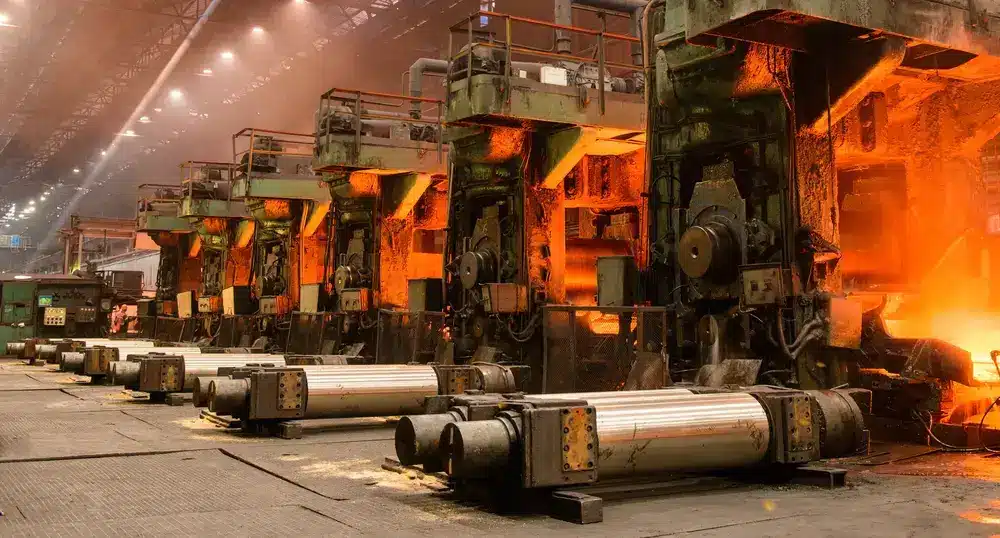
Cold rolling begins with clean hot band, typically after pickling removes scale. The process reduces thickness at room temperature and introduces a high density of dislocations. This raises strength and improves thickness and surface control, but it also reduces formability and changes texture. The material is then batch annealed or continuously annealed when a softer, more formable, or specifically transformed microstructure is required. Temper rolling or skin passing introduces a small final reduction to improve flatness, surface appearance, yield-point behaviour, and shape stability.
Cold rolling is not automatically superior to hot rolling. It is selected when the end use values tighter gauge, smoother surface, flatness, controlled strength, or deep-drawing behavior. Hot rolled material may be preferred for heavier gauges, structural applications, lower processing cost, or routes where subsequent heat treatment and machining dominate. ASTM A1011/A1011M-25 covers hot-rolled carbon, structural, HSLA, HSLA with improved formability, and ultra-high-strength sheet and strip; ASTM A1008/A1008M is among the related cold-rolled sheet standards listed by ASTM Committee A01.19. The correct standard must match product form, grade family, and intended property basis.
For a customer inquiry, “cold rolled steel coil” should be expanded into required thickness tolerance, width, edge condition, surface quality, oiling, coil ID and OD, hardness or temper, yield and tensile targets, elongation, r-value or n-value if forming is critical, coating route if applicable, and test-certificate requirements. For equipment sourcing, rolling-force envelope, strip tension, flatness-actuator design, work-roll surface, coolant filtration, automatic gauge control, shape measurement, and annealing integration define the outcome more accurately than mill width alone.
7.Defects, Flatness, Crown, and Surface: Metallurgical Quality Must Be Measured Across the Coil
Rolling defects are often interactions between material and equipment. Crown, wedge, edge drop, centre buckle, edge wave, camber, and coil telescoping involve roll bending, thermal crown, roll wear, strip tension, incoming thickness variation, and control-system response. Surface defects such as rolled-in scale, scratches, pits, oxide patches, laps, seams, and inclusions can begin in casting, reheating, descaling, rolling, handling, or coiling. The corrective action must be based on origin and pattern, not only on the defect label.
Metallurgical defects include coarse grain, banding, abnormal texture, non-uniform precipitation, decarburization, and mechanical-property variation across coil length or width. A mill may meet average tensile strength while still producing unacceptable variation for a press shop, laser-processing line, or pipe-forming operation. ISO 16160:2012 applies to dimensional and shape tolerances for hot-rolled steel sheet products and was confirmed in 2024. It should be used alongside the applicable grade and contractual tolerance requirements, not as a replacement for material-property acceptance criteria.
- Use coil maps and process data to correlate gauge, crown, flatness, temperature, cooling flow, and mechanical-test locations.
- Separate upstream-origin defects from rolling-origin defects before changing mill settings or rejecting a supplier.
- Define inspection language: surface class, allowable defect size, edge condition, flatness method, test sampling plan, and certificate format.
- For critical strip, request coil-to-coil and within-coil consistency data rather than a single average test result.
8.Standards, Traceability, and Customer Specifications: Turning “Steel Grade” into a Verifiable Contract
Steel standards define product families, chemistry limits, mechanical-property requirements, test methods, and general delivery conditions, but a standard designation is rarely a complete order. ASTM A1011/A1011M-25 covers hot-rolled sheet and strip across carbon, structural, HSLA, improved-formability HSLA, and ultra-high-strength categories. ISO 10384:2012 applies to hot-rolled carbon steel sheet defined by chemical composition, while ISO 16160:2012 addresses dimensional and shape tolerances for hot-rolled sheet. Plate, long product, stainless, electrical steel, and pressure-vessel routes may use different standards entirely.
A robust purchase specification connects the standard to the physical coil or plate. It should state grade, condition, chemistry restrictions, thickness, width, length or coil mass, dimensional and shape tolerance, edge state, surface requirement, mechanical-property values and test direction, impact or bend test where relevant, coating or oiling, heat and coil traceability, inspection frequency, and certificate type. If the material will be laser cut, welded, bent, galvanised, cold formed, or machined, disclose that end use. The rolling route may need to change to deliver the desired downstream result.
Traceability must survive conversion. Heat number, cast number, slab identity where available, coil number, rolling date, process data, and test records enable an investigation when a customer finds variation in forming, weldability, or surface. For rolling-mill equipment makers, acceptance testing should include dimensional capability, yield, gauge control, shape-control response, vibration, lubrication, automation records, safety interlocks, and maintainability rather than a single no-load demonstration.
9.From Steel Requirement to Rolling-Mill Inquiry: The Data That Produces a Credible Offer
Whether the inquiry is for rolled steel or rolling-mill machinery, commercial information must be translated into process data. A steel purchase request should include product form, grade, applicable standard, thickness and tolerance, width, length or coil dimensions, required mechanical properties, surface and edge condition, end use, quantity, delivery condition, documentation, and any qualification test. A mill-equipment request should include feedstock grade and dimensions, product range, annual throughput, pass schedule or target reductions, finish and coiling temperatures where applicable, rolling force and torque envelope, roll changing, cooling, automation, utility availability, safety requirements, civil constraints, and service expectations.
Ask the supplier to state design assumptions and process limits. For steel, request the production route, standard basis, test plan, certificate content, tolerances, and any property variation expected across the coil. For equipment, request a capability matrix linking product dimensions and grades to line speed, reduction, force, power, cooling, control accuracy, and commissioning tests. A technically useful quotation explains what the mill can produce repeatably, not only what it can produce once under favourable conditions.
Inquiry note: For hot rolling mill, cold rolling mill, steel rolling mill, rolling mill equipment, hot rolled steel coil, cold rolled steel sheet, HSLA steel, structural steel plate, rebar rolling mill, wire rod mill, plate mill, or custom rolling line projects, send the product specification and operating data before requesting price. The best commercial result follows a clear metallurgical target, documented acceptance criteria, and a process route that can sustain them.
FAQ: Rolling Mills Steel and Steel Rolling Metallurgy
1. What is a steel rolling mill?
It is equipment that reduces or shapes steel by passing it between rotating rolls. Depending on the route, it can produce plate, strip, sheet, bar, section, rod, rail, or other products.
2. What is the difference between hot rolling and cold rolling?
Hot rolling deforms steel at elevated temperature and is used for large reductions and primary product formation. Cold rolling deforms steel near room temperature for tighter gauge, surface, and work-hardened properties.
3. Why is finish rolling temperature important?
It affects austenite recrystallization, grain refinement, phase transformation, and resulting strength and toughness. The appropriate window depends on grade, reduction, and cooling route.
4. What is controlled rolling?
It is a thermomechanical process that coordinates deformation and temperature to refine microstructure, often using microalloy additions such as niobium, vanadium, or titanium.
5. What is controlled cooling after hot rolling?
It is the managed cooling of steel after final passes to influence transformation products, precipitation, grain size, strength, toughness, and residual stress.
6. What is a hot strip mill?
It is a line that rolls heated slab or thin slab through roughing and finishing stages into hot rolled steel strip, commonly coiled at the exit.
7. What is a plate mill?
It is a mill, often reversing, that rolls slabs into heavier plate. It is selected when plate thickness, width, flatness, and mechanical-property control are required.
8. What is a Steckel mill?
It is a reversible rolling mill with coiler furnaces that retain heat in the strip ends, allowing production of plate or coil in selected thickness ranges.
9. What causes edge wave or centre buckle?
Shape defects can arise from non-uniform elongation across width due to roll crown, thermal crown, roll wear, tension distribution, incoming profile, or control response.
10. What is strip crown?
Crown is the thickness difference between the centre and edges of strip. It is managed through roll profile, bending, shifting, cooling, wear control, and gauge-control systems.
11. Why is descaling needed before hot rolling?
High-temperature steel forms oxide scale. Descaling removes it before reduction so it is less likely to be rolled into the surface or damage quality.
12. What is HSLA steel?
High-strength low-alloy steel uses controlled chemistry and often microalloying to provide higher strength with useful formability, toughness, or weldability.
13. How do niobium and vanadium affect rolled steel?
They can influence recrystallization, grain refinement, and precipitation strengthening. Their effect depends on chemistry and the complete thermal-deformation route.
14. What standard applies to hot rolled steel sheet?
ASTM A1011/A1011M covers several hot-rolled sheet and strip families; ISO 10384 and ISO 16160 cover specific chemistry and tolerance subjects. The correct standard depends on product and market.
15. Can hot rolled steel be used for laser cutting and welding?
Often yes, but the required chemistry, thickness consistency, surface condition, flatness, and mechanical properties should be specified for the process and end product.
16. Why are coil temperature records important?
They help link coiling and cooling conditions to microstructure, strength, flatness, residual stress, and property consistency throughout a production lot.
17. What information is required to quote a hot rolling mill?
Provide feedstock dimensions and grades, finished product range, throughput, reduction schedule, temperature range, force and torque needs, utilities, automation, safety, and site constraints.
18. What information is required to buy hot rolled steel coil?
Provide grade, standard, thickness and tolerance, width, coil dimensions, surface/edge condition, mechanical requirements, end use, quantity, and required certification.
19. How can rolling defects be reduced?
Use traceable process data, maintain rolls and descalers, control temperature and tension, inspect incoming material, and determine the actual defect origin before changing settings.
20. How should steel-supplier quotations be compared?
Compare production route, standard, tolerance, test plan, property range, certificate content, traceability, delivery condition, and application assumptions rather than only price.
100000+ Types of Bushings – Contact Us for Details