
Recent Posts
Spherical Plain Bearing: Essential Component for Heavy-Duty Industrial Linkages
Introduction
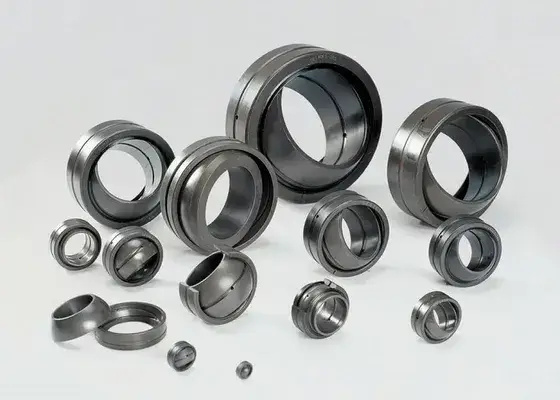
Spherical plain bearings, also known as spherical bushings or plain shaft bearings, serve as critical components in heavy machinery and industrial equipment where angular misalignment, oscillating movements, and substantial load capacities converge. These bearings facilitate smooth rotational motion between two components through a sliding contact interface between an inner ring and an outer ring with a spherical geometry. Unlike rolling-element bearings, spherical plain bearings rely on sliding surfaces to accommodate both radial loads and thrust loads in multiple directions, making them indispensable for demanding applications in construction machinery, agricultural equipment, hydraulic systems, and metallurgical plants
Table of Contents
1. Structural Configuration and Operating Principles
The spherical plain bearing comprises an inner ring featuring a convex spherical surface and an outer ring with a matching concave spherical surface. This geometry enables the bearing to support large radial loads while simultaneously accommodating thrust loads in both directions. The sliding interface between these rings allows for angular misalignment compensation, typically up to several degrees depending on the specific design and series.
The operating principle relies on the relative sliding motion between the spherical surfaces. When subjected to loads, the bearing distributes the force across the contact area, minimizing stress concentrations. This mechanism proves particularly effective for low-speed, heavy-load oscillating components such as cylinder clevises, hinges in construction equipment, and suspension systems in heavy vehicles. The self-aligning nature of these bearings ensures that even when mounting misalignments occur, the bearing maintains optimal load distribution and operational stability.
2. Material Selection and Surface Treatments
The performance and longevity of spherical plain bearings depend substantially on material choices and surface treatments. High-carbon chromium bearing steel serves as the primary material for both inner and outer rings, providing the necessary hardness, wear resistance, and structural integrity for demanding applications. This material undergoes hardening and grinding processes to achieve precise dimensional tolerances and optimal surface finish.
Surface treatments enhance the bearing’s resistance to wear, corrosion, and friction. Phosphate coating provides corrosion resistance while serving as a carrier for solid lubricants such as molybdenum disulfide (MoS2). This treatment combination substantially reduces friction coefficients during operation and extends service life in challenging environments. Additionally, chromium plating of sliding surfaces offers enhanced wear resistance and contributes to consistent friction characteristics over extended operational periods
3. Metal-on-Metal vs. Self-Lubricating Designs
Spherical plain bearings are categorized into two primary design configurations: metal-on-metal and self-lubricating types. Metal-on-metal designs feature hardened steel sliding surfaces that require external lubrication, typically through grease or oil applied during installation and periodic maintenance intervals. These bearings deliver exceptional load capacity and demonstrate high resistance to impact loads and shock forces, making them suitable for the most demanding heavy machinery applications.
Self-lubricating spherical plain bearings incorporate specialized liners or materials that eliminate the need for external lubrication. Steel/PTFE sintered bronze and steel/PTFE fabric sliding contact surface combinations transfer PTFE material to the counter surface during operation, creating a dry lubricating film that reduces friction. These bearings prove particularly advantageous in maintenance-restricted environments or applications where contamination from lubricants must be avoided. Some self-lubricating designs feature initial lubrication with occasional replenishment to extend service life by two or more times, depending on operating conditions and grease aging characteristics
4. Construction and Civil Engineering Applications
Construction and civil engineering machinery represent primary application domains for spherical plain bearings. Excavators, loaders, and bulldozers employ these bearings in various linkage points, including bucket pivots, boom connections, and cylinder attachments. The bearings accommodate substantial radial loads while compensating for angular misalignments that inevitably occur during operation in uneven terrain.
Hydraulic cylinder clevises and pivot joints benefit significantly from the self-aligning capabilities of spherical plain bearings. These components must withstand repeated oscillating movements under heavy loads while maintaining precise alignment despite mounting tolerances and structural deflections. The high impact resistance of metal-on-metal spherical plain bearings proves essential in construction applications where shock loads are prevalent and operational reliability is paramount.
5. Agricultural Equipment and Off-Highway Machinery
Agricultural machinery such as tractors, combines, harvesters, and implements rely heavily on spherical plain bearings for their linkage systems and articulation points. Soil preparation equipment, including plows and harrows, utilize spherical bushings to accommodate the varying angles and loads encountered during field operations. The ability to handle both radial loads and thrust loads in multiple directions makes these bearings ideal for the complex motion patterns common in agricultural equipment.
The suspension systems of off-highway vehicles and trucks also incorporate spherical plain bearings to manage the dynamic loads and angular movements experienced during operation. These bearings support substantial static and dynamic loads while allowing the necessary articulation for maintaining traction and stability across uneven surfaces. The durability and reliability of spherical plain bearings contribute directly to reduced downtime and lower maintenance costs in agricultural and off-highway applications.
6. Metallurgical Equipment and Steelmaking Applications
In the demanding environment of steelmaking and metallurgical processing, spherical plain bearings perform critical functions in equipment such as converters, ladles, and continuous casting machinery. The converter tilting mechanism in basic oxygen steelmaking processes employs self-lubricating spherical plain bearings within the suspension system to connect the furnace shell with the support ring. These bearings must accommodate substantial thermal expansion differences between components while maintaining precise alignment and load distribution.
The self-lubricating characteristics prove essential in metallurgical applications where high temperatures and limited accessibility make conventional lubrication challenging. Bearings with specialized surface treatments and self-lubricating liners maintain operational integrity despite the intense heat and heavy loads characteristic of steelmaking environments. The engineering design ensures that forces are transmitted uniformly, minimizing stress concentrations and extending service life
7. Industrial Machinery and Automation Systems
Industrial machinery across diverse sectors—including material handling, packaging, and processing equipment—incorporates spherical plain bearings in their mechanical linkages and pivot points. Conveyor systems, mixers, agitators, and gear-driven assemblies benefit from the load-carrying capacity and misalignment accommodation offered by these components. Linear slide units and pillow block bearing arrangements frequently utilize spherical bushings to support shafts while compensating for misalignment between guide rails and moving components.
Automation systems increasingly integrate spherical plain bearings in robotic arms, pick-and-place units, and other motion control applications. The compact design and predictable friction characteristics support precise positioning while accommodating the angular deflections that occur during acceleration and deceleration cycles. Sealed variants protect against contamination in dusty or abrasive environments, ensuring consistent performance and extended service intervals
8. Lubrication Strategies and Maintenance Considerations
Effective lubrication remains crucial for the performance and longevity of metal-on-metal spherical plain bearings. Initial lubrication before commissioning and regular relubrication during operation ensure optimal sliding characteristics and prevent premature wear. Lithium-based and lithium complex greases with pressure-resistant properties have proven effective for metallic sliding couples, with selection criteria including operating temperature range, load conditions, and environmental factors.
Self-lubricating bearings significantly reduce maintenance requirements by incorporating solid lubricants or specialized liners that eliminate the need for external lubrication. Bearings with PTFE-based self-lubricating materials must not be externally lubricated, as additional lubricants would interfere with the self-lubrication mechanism and potentially shorten service life. Some self-lubricating designs, however, benefit from initial lubrication followed by occasional replenishment to extend operational life, particularly in harsh environments
9. Quality Assurance and Manufacturing Standards
The reliability and performance of spherical plain bearings depend significantly on manufacturing quality and adherence to international standards. Precision manufacturing ensures dimensional accuracy, proper clearance, and optimal surface finish for consistent performance. ISO standards and certification such as IATF 16949 demonstrate commitment to quality management and continuous improvement in manufacturing processes.
Advanced manufacturing capabilities—including in-house material casting, sintering, and CNC finishing—enable precise control over product quality and consistency. The integration of vertically managed production facilities ensures traceability and accountability throughout the manufacturing process, from raw material selection to final inspection and packaging.
FAQ
1. What is a spherical plain bearing?
A spherical plain bearing is a mechanical component that supports movement through sliding contact between an inner ring and outer ring with a spherical interface, accommodating angular misalignment while maintaining stable motion under radial or combined loads.
2. What is the difference between a spherical plain bearing and a standard ball bearing?
Spherical plain bearings use sliding contact surfaces rather than rolling elements, providing higher load capacity in compact envelopes while accommodating misalignment. Standard ball bearings use rolling elements and are better suited for higher-speed, lower-load applications.
3. What materials are spherical plain bearings made from?
High-carbon chromium bearing steel is standard for metal-on-metal designs. Self-lubricating variants incorporate PTFE composites, bronze, or other engineered materials on sliding surfaces.
4. Can spherical plain bearings handle thrust loads?
Yes, spherical plain bearings can support substantial radial loads and thrust loads in both directions, making them suitable for applications requiring multi-directional load support.
5. What is the maximum operating temperature for spherical plain bearings?
Load-carrying capacity diminishes at temperatures exceeding approximately 180°C. Lubricant temperature ranges must also be considered in high-temperature applications.
6. What is a self-lubricating spherical plain bearing?
A self-lubricating bearing incorporates PTFE or similar solid lubricant materials that eliminate the need for external lubrication, reducing maintenance requirements and preventing contamination.
7. How do I mount a spherical plain bearing?
Mount with even pressure applied directly to the appropriate ring—inner ring for shaft mounting, outer ring for housing insertion. Never transmit installation forces through the sliding surface. Lubricate before commissioning if required.
8. What is the typical clearance for a spherical plain bearing?
Clearance depends on the specific design and application requirements. Standard bearings typically have defined radial and axial clearance specifications that should be verified during installation.
9. Where are spherical plain bearings used?
Applications include hydraulic cylinders, construction equipment, agricultural implements, conveyor systems, automotive suspensions, and metallurgical machinery.
10. How often should a spherical plain bearing be relubricated?
Relubrication intervals depend on operating conditions, environmental factors, loads, and temperatures. If empirical data is unavailable, daily inspection is recommended, especially before startup after extended idle periods.
11. What is PTFE in the context of spherical bearings?
PTFE (polytetrafluoroethylene) is a solid lubricant material used in self-lubricating bearings. It transfers to the counter surface during operation, creating a low-friction dry film that reduces wear.
12. Can I use a sealed spherical plain bearing in a dusty environment?
Yes, sealed variants with rubber or metal seals effectively exclude dust and contaminants, making them suitable for dusty or abrasive operating environments.
13. What is the load rating for a spherical plain bearing?
Load ratings vary by size, design, and material. Static load ratings can reach millions of Newtons for larger metric series bearings. Consult technical specifications for specific load capacity data.
14. What is the difference between metal-on-metal and self-lubricating designs?
Metal-on-metal bearings require external lubrication and offer maximum load capacity and impact resistance. Self-lubricating designs incorporate solid lubricants, eliminating external lubrication requirements but may have slightly lower load capacities.
15. Are spherical plain bearings suitable for high-speed applications?
Spherical plain bearings are optimized for low-speed, high-load applications with oscillating or pivoting movement rather than continuous high-speed rotation.
16. What does GE-ES mean in bearing designation?
GE-ES denotes a metric series spherical plain bearing with specific dimensional and design characteristics, typically indicating hardened steel surfaces and metal-on-metal construction.
17. Can spherical bearings accommodate axial movement?
Spherical plain bearings are designed primarily for angular misalignment and radial loads. Some designs also accommodate limited axial movement depending on the clearance and configuration.
18. How should I store spherical plain bearings before installation?
Store in original packaging at temperatures between 10°C and 40°C with relative humidity below 60%. Avoid direct sunlight exposure to prevent exceeding storage temperature limits.
19. What lubricant should I use for metal-on-metal spherical bearings?
Lithium-based pressure-resistant greases with corrosion-inhibiting properties are recommended. For self-lubricating bearings, follow manufacturer specifications—external lubricants may interfere with self-lubrication mechanisms.
20. How do I inspect a spherical plain bearing during operation?
Monitor noise, vibration, and operating temperature. Check for increased bearing clearance indicating wear and inspect for surface damage or contamination. Regular inspection intervals should be established based on operating conditions
100000+ Types of Bushings – Contact Us for Details