
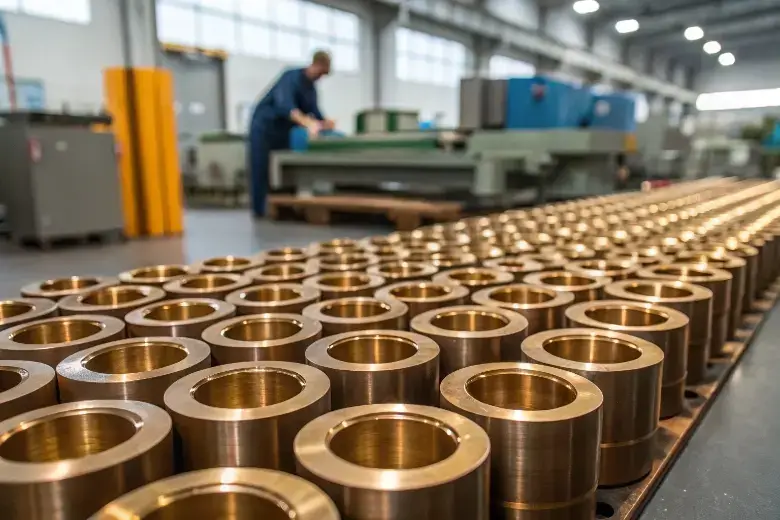
ASTM B271

Brass vs Bronze Bushing: Differences, Properties and Best Applications
Interpretation of Bushing Knowledge

Brass vs Bronze Bushing: Differences, Properties and Best Applications

Copper-based alloys remain the predominant material family for plain bearing and bushing applications across industrial sectors. Within this category, brass and bronze represent the two primary classifications, yet their metallurgical distinctions translate to markedly different performance envelopes in service. This analysis examines the compositional, mechanical, and tribological parameters that differentiate these material classes, providing engineers and procurement specialists with the technical framework necessary for informed alloy selection. The comparative data presented herein addresses the operational considerations of load capacity, wear resistance, lubrication requirements, and cost-effectiveness that define application-specific material decisions.
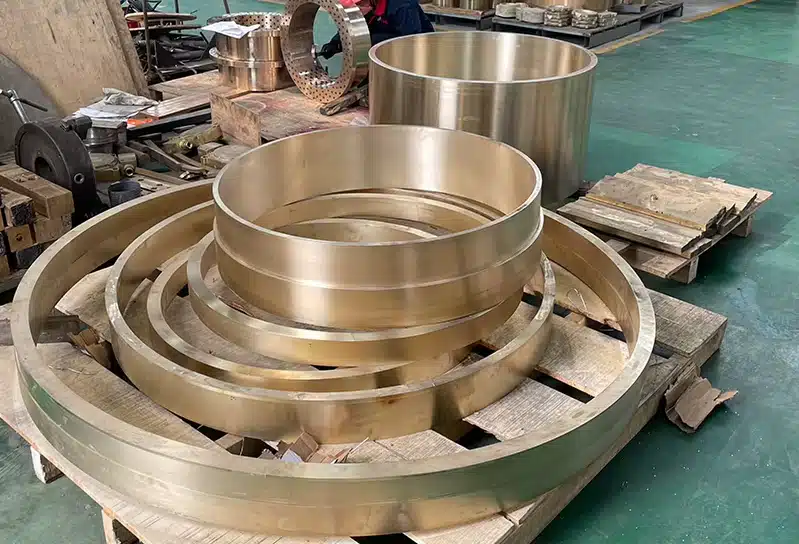
Centrifugal Cast Bronze Bushing: Copper-Alloy Metallurgy, Dense Casting Structure, Precision Machining, and Reliable Supply
Interpretation of Bushing Knowledge

Centrifugal Cast Bronze Bushing: Copper-Alloy Metallurgy, Dense Casting Structure, Precision Machining, and Reliable Supply

A centrifugal cast bronze bushing is a copper-alloy plain bearing made in a rotating mould, where molten bronze is distributed against the mould wall before solidification. The process is used for sleeves, flanged bushes, large bearing bushes, worm-shaft bushes, crusher parts, marine components, pumps, valves and high-load wear parts. A reliable bushing depends on alloy grade, melt cleanliness, pouring temperature, rotation speed, cooling, segregation control, machining allowance, shaft finish, lubrication design, fit and inspection. ASTM B271/B271M establishes requirements for copper-base alloy centrifugal castings.

Scroll to Top