bronze bearing

Brass vs Bronze Bushing: Differences, Properties and Best Applications
Interpretation of Bushing Knowledge

Brass vs Bronze Bushing: Differences, Properties and Best Applications

Copper-based alloys remain the predominant material family for plain bearing and bushing applications across industrial sectors. Within this category, brass and bronze represent the two primary classifications, yet their metallurgical distinctions translate to markedly different performance envelopes in service. This analysis examines the compositional, mechanical, and tribological parameters that differentiate these material classes, providing engineers and procurement specialists with the technical framework necessary for informed alloy selection. The comparative data presented herein addresses the operational considerations of load capacity, wear resistance, lubrication requirements, and cost-effectiveness that define application-specific material decisions.
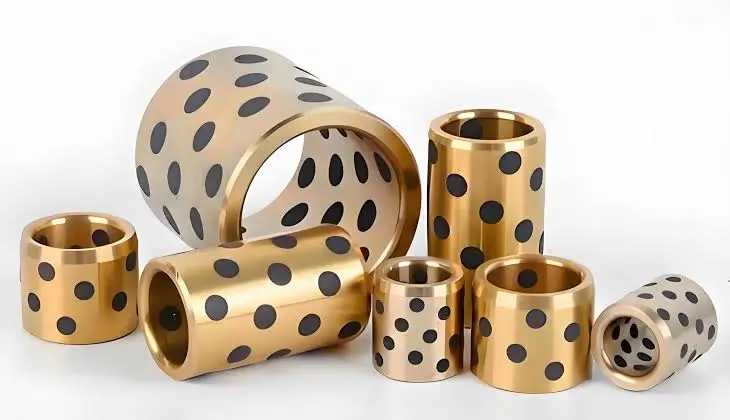
Self-Lubricating Bushings: The Maintenance-Free Solution for Demanding Industrial Applications
Interpretation of Bushing Knowledge

Sleeve Bearing Metallurgy: Material Architectures, Performance Optimization, and Application Engineering

Sleeve bearings, also known as plain bearings, journal bearings, bushings, or sliding bearings, represent one of the most fundamental and widely applied mechanical components in engineering history. Unlike rolling element bearings that utilize balls or rollers to separate moving parts, sleeve bearings employ a sliding action between two conforming surfaces to facilitate linear or rotational movement while reducing friction, absorbing vibration, and supporting loads. The metallurgical composition, material architecture, and manufacturing processes of sleeve bearings directly determine their performance characteristics, service life, and application suitability.

Lead in Bronze: The Self-Lubricating Metallurgical Solution for High-Performance Bearings and Bushings
Interpretation of Bushing Knowledge

Lead in Bronze: The Self-Lubricating Metallurgical Solution for High-Performance Bearings and Bushings

In the domain of plain bearing engineering, few material innovations have demonstrated the enduring practicality of leaded bronze alloys. The incorporation of lead into bronze matrices represents a deliberate metallurgical strategy—one that transforms a copper-tin base into a self-lubricating, anti-seizing, and highly embeddable engineering material. Leaded bronze bushings and bearings have become foundational components across heavy machinery, automotive systems, marine equipment, and industrial transmissions, precisely because the lead phase within the alloy delivers functional advantages that no single alternative material can fully replicate

MYWAY Bronze & Brass: The Ultimate Guide to Copper Alloys & High-Performance Bushings
Bronze Bushing

Beyond the Shaft: Bronze Bushing Uses in Modern Machinery

If you work with rotating shafts, pivot points, or sliding mechanisms, you rely on bronze bushings—even if you don’t see them. These cylindrical components are the unsung heroes of the mechanical world, quietly reducing friction, absorbing shock, and preventing metal-to-metal contact that would otherwise destroy your equipment.

Scroll to Top