PTFE composite bushing

Self-Lubricating Bushings: Material Systems, Tribology, and Reliable Design for Dry-Running Motion
Interpretation of Bushing Knowledge

Self-Lubricating Bushings: Material Systems, Tribology, and Reliable Design for Dry-Running Motion

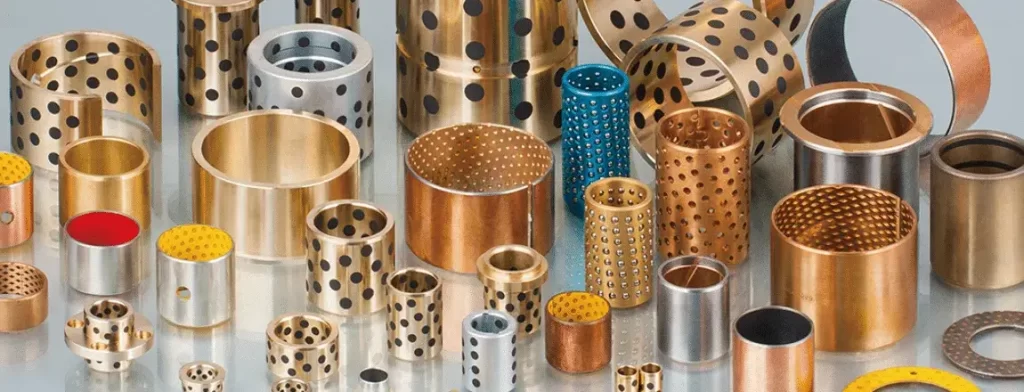
A self-lubricating bushing is a plain bearing designed to reduce friction and wear without a conventional external grease or oil line during normal service. It does not mean that every design is chemically identical, maintenance-free in every environment, or suitable for every load and speed. The term includes oil-impregnated sintered bronze bushings, steel-backed PTFE composite bearings, POM-lined bushes, graphite-plugged bronze bushes, solid-lubricant-dispersed bearings, engineered polymer bushes, and some fabric-lined spherical plain bearings. Each system stores, transfers, or presents lubricant differently.
Good selection starts with the motion and environment: radial or axial load, oscillation or rotation, speed, PV duty, temperature, shock, contamination, mating shaft hardness and finish, housing stiffness, clearance, corrosion, installation method, and service-life target.
Oilless Bushing Metallurgy: Solid Lubricants, Bronze, and Composite Layers Under Load
Interpretation of Bushing Knowledge

Oilless Bushing Metallurgy: Solid Lubricants, Bronze, and Composite Layers Under Load

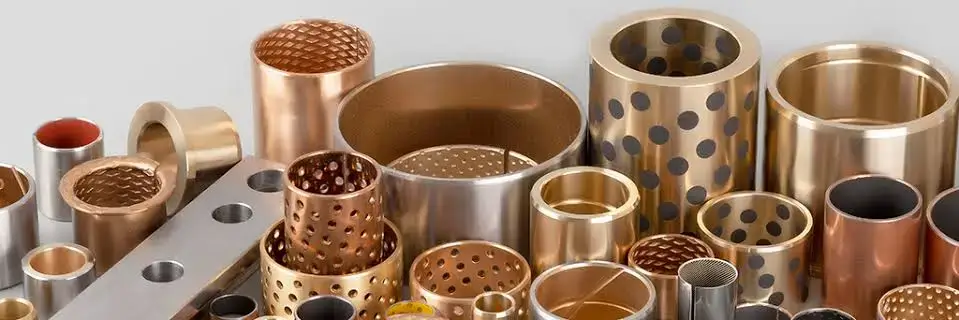
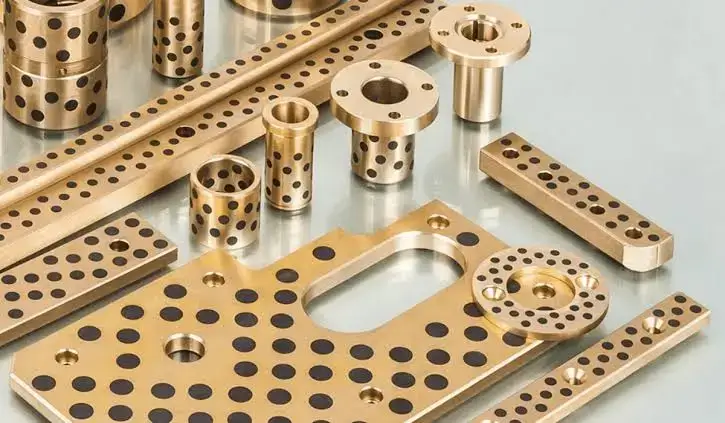
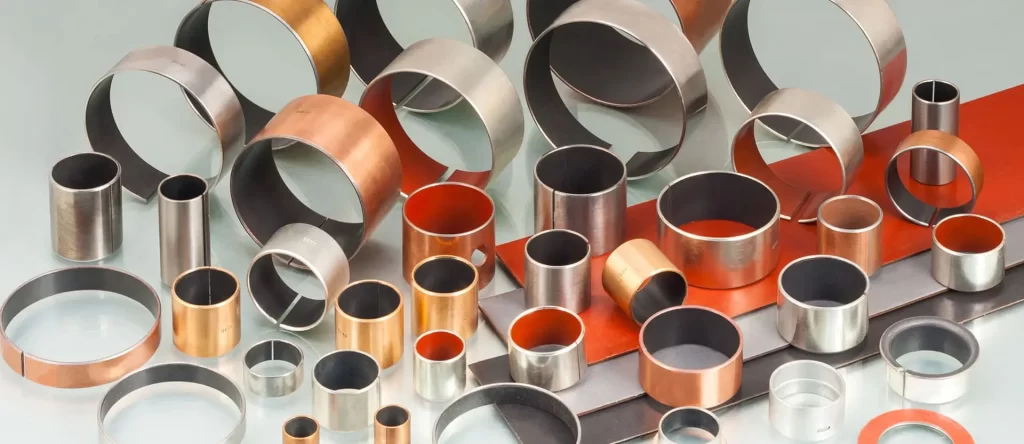
The phrase “oilless bushing” is useful in search and procurement, but it can conceal important engineering differences. Some self-lubricating bushings rely on graphite plugs embedded in cast bronze. Others use a steel-backed, porous bronze interlayer with a PTFE-based sliding surface. A third category is a sintered bronze bearing whose connected porosity stores oil released during service. Each system reduces or eliminates routine external oiling in a defined operating window; none removes the need to control pressure, speed, heat, shaft finish, alignment, and contamination. The metallurgy determines how the bearing carries load, transfers lubricant, and survives wear.

Oil‑Free Bushings – Core Performance, Applications, and the MYWAY Solution
Interpretation of Bushing Knowledge

Beyond Conventional Constraints: The DU Bushing Advantage in High-Stress Rotating Systems

Industrial rotating assemblies have long been constrained by a fundamental dilemma: achieving low friction without compromising load capacity. Traditional plain bearings require continuous lubrication, while self-lubricating alternatives often sacrifice strength for convenience. The DU bushing—a metal-polymer composite plain bearing—has emerged as the definitive solution that reconciles these opposing requirements. Unlike conventional bronze bushings that depend on external lubricants, DU-type composite bushings integrate a PTFE-based sliding layer with a porous bronze interlayer and steel backing, creating a self-lubricating system that maintains structural rigidity under extreme loads.

MYWAY Copper Alloy Bearings & Self-Lubricating Bronze Bushings
Interpretation of Bushing Knowledge

MYWAY Copper Alloy Bearings & Self-Lubricating Bronze Bushings

In modern heavy industries like metallurgical steel plants, rolling mills, mining equipment, and marine engineering, the demand for durable, high-performance bearing components has never been higher. Copper alloy bearings and bronze bushings stand out as critical parts that withstand extreme loads, high temperatures, and harsh working conditions—while minimizing downtime and maintenance costs. Among leading manufacturers, MYWAY has emerged as a trusted provider of precision-engineered copper bearings, self-lubricating bronze bushings, and custom metallurgical components, delivering reliable solutions for the most challenging industrial applications.

Steel Backed Bushings: The Complete Guide to Self-Lubricating Bearing Technology
Interpretation of Bushing Knowledge

Steel Backed Bushings: The Complete Guide to Self-Lubricating Bearing Technology

Introduction: The Unsung Heroes of Modern Machinery

Walk through any manufacturing plant, construction site, or automotive assembly line, and you’ll witness thousands of moving parts working in perfect synchronization. But hidden within these machines—inside gearboxes, suspension joints, hydraulic cylinders, and conveyor systems—lies a component so reliable that most engineers never think twice about it: the steel backed bushing.

Beyond Corrosion: Stainless Steel Bushings and the Self-Lubricating Revolution
Interpretation of Bushing Knowledge

Beyond Corrosion: Stainless Steel Bushings and the Self-Lubricating Revolution

In the demanding world of industrial machinery, a single point of failure can lead to costly downtime, safety hazards, and compromised productivity. Components operating in wet, corrosive, or high-load environments face relentless challenges. Among these critical components, the humble bushing—a sleeve bearing that reduces friction, wear, and vibration between moving parts—plays a pivotal role.

Scroll to Top