Rolling Mill Bearing

Chock Bushing: Heavy-Duty Metallurgy, Roll-Neck Support, Lubrication Control, and Mill Reliability
Interpretation of Bushing Knowledge

Chock Bushing: Heavy-Duty Metallurgy, Roll-Neck Support, Lubrication Control, and Mill Reliability

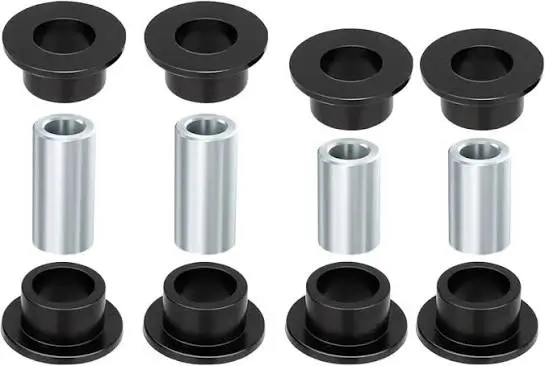
A chock bushing is a heavy-duty plain-bearing component fitted in a mill chock or bearing housing to support, guide, or locate a roll neck, shaft, pivot, or related rotating member. In rolling mills, strip mills, plate mills, bar mills, coilers, presses, and process equipment, the bushing must tolerate high radial force, shock, vibration, heat, cooling water, oxide scale, lubricant contamination, and demanding maintenance schedules. A technically correct chock-bushing specification combines copper-alloy metallurgy, backing or split-bush construction, bore geometry, fit, lubrication, shaft condition, inspection, and replacement strategy.
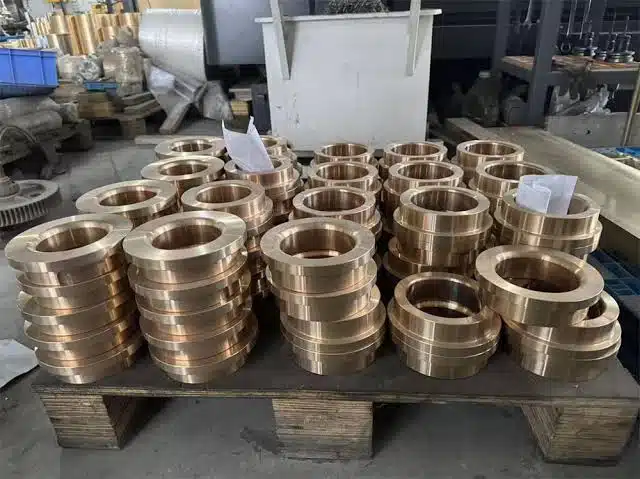
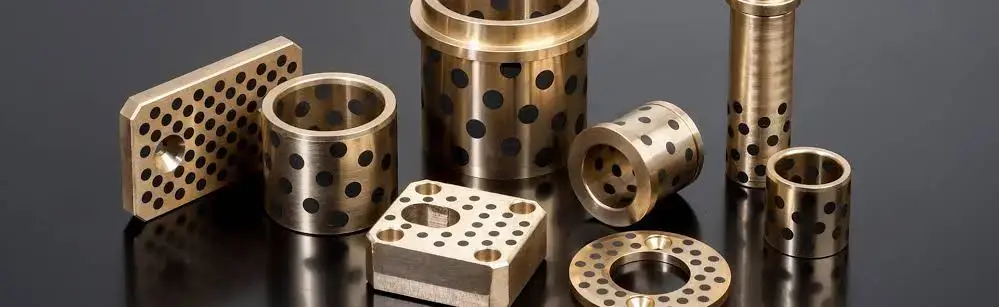
Centrifugal Cast Bronze Bushing: Copper-Alloy Metallurgy, Dense Casting Structure, Precision Machining, and Reliable Supply
Interpretation of Bushing Knowledge

Rolling Mill Bushing: Bronze Metallurgy, Heavy-Load Bearing Design, Lubrication, and Reliable Mill Availability

A rolling mill bushing is a heavy-duty plain-bearing component that supports or guides roll necks, screw-down systems, chocks, coiler mandrels, pivots, and related mill mechanisms. It operates under high radial load, shock, vibration, heat, cooling water, scale, grease or oil, and frequent maintenance pressure. Bronze, aluminum bronze, manganese bronze, leaded bearing bronze, steel-backed bimetal, graphite-plugged bronze and composite materials can be appropriate, but material selection must match roll force, speed, temperature, lubrication, shaft condition, fit, and inspection requirements.

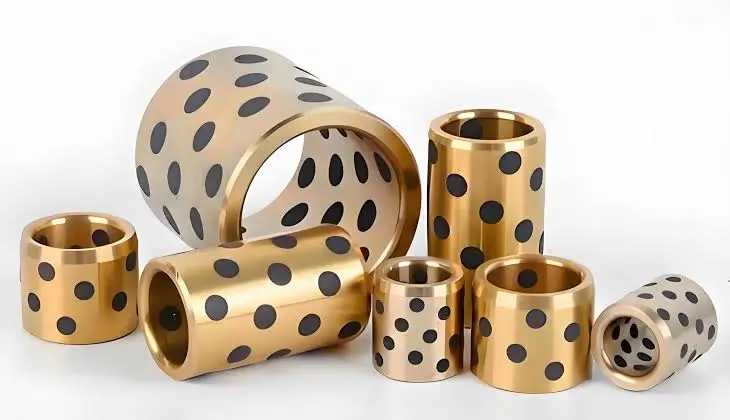
Graphite Plugged Bronze Bushings: Metallurgy, Solid-Lubricant Transfer, and Heavy-Duty Sliding Performance
Interpretation of Bushing Knowledge

Split Bearing Bushes: Metallurgy, Shell Geometry, Lubrication Film, and Serviceable Heavy-Machinery Design

A split bearing bush, also called a split plain bearing, split sleeve bearing, bearing shell, split journal bearing, or split bearing bush, is made from two or more fitted shell halves that surround a rotating shaft or journal. The split form allows the bearing to be installed, inspected, scraped, replaced, or adjusted without removing a large shaft or dismantling an entire machine. It is common in turbines, generators, compressors, engines, gearboxes, rolling-mill drives, pumps, marine machinery, and large industrial transmissions.
The split line is only one part of the design. Reliable operation depends on the shell backing, babbitt or bronze sliding layer, oil holes, grooves, reliefs, crush, housing fit, journal surface, radial and axial clearance, alignment, oil-film formation, load direction, temperature, contamination, and assembly procedure.

MYWAY Metal Bushing: High-Performance Wear Solutions for Heavy-Duty Machinery
Interpretation of Bushing Knowledge

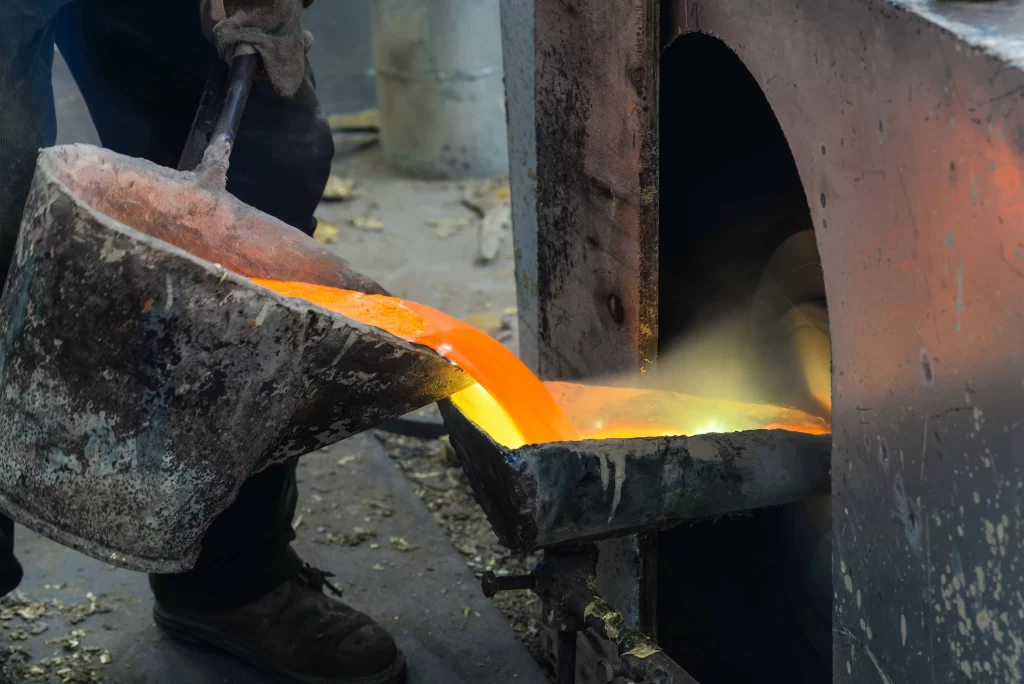
Thermal Metallurgy in Motion: The Critical Role of Alloy Melting Behavior in Bushing Performance and Reliability

In the demanding environments of heavy industry, the melting characteristics of metallic alloys serve as the fundamental determinant of component longevity. While operational temperatures never intentionally approach the melting threshold, the margin between standard operating conditions and the solidus point of an alloy defines the safety buffer against thermal degradation, friction-induced heat spikes, and catastrophic failure. This principle carries particular significance in the metallurgy sector, where rolling mills, casting equipment, and extrusion presses subject bearings and bushings to extreme loads, elevated temperatures, and continuous operation.

Lead in Bronze: The Self-Lubricating Metallurgical Solution for High-Performance Bearings and Bushings
Interpretation of Bushing Knowledge

Lead in Bronze: The Self-Lubricating Metallurgical Solution for High-Performance Bearings and Bushings

In the domain of plain bearing engineering, few material innovations have demonstrated the enduring practicality of leaded bronze alloys. The incorporation of lead into bronze matrices represents a deliberate metallurgical strategy—one that transforms a copper-tin base into a self-lubricating, anti-seizing, and highly embeddable engineering material. Leaded bronze bushings and bearings have become foundational components across heavy machinery, automotive systems, marine equipment, and industrial transmissions, precisely because the lead phase within the alloy delivers functional advantages that no single alternative material can fully replicate

Scroll to Top