

rolling mill equipment

Wear Plates: Material Performance, Metallurgical Working Conditions & Matched Wear Protection Solutions
Interpretation of Bushing Knowledge

Metallurgical Equipment Reliability: The Critical Role of Shear Machine Bushings in High-Impact Steel Processing

Shear machines constitute essential capital equipment in metallurgical processing lines, performing precision cutting operations on hot-rolled blooms, slabs, and billets under extreme operational conditions. The bushing—a cylindrical bearing component—serves as the critical interface between moving shear components, directly influencing equipment reliability, production uptime, and maintenance costs. These components function in environments characterized by high impact loads, elevated temperatures reaching 300°C, abrasive particulate contamination, and frequent start-stop cycling. The selection, application, and maintenance of shear machine bushings represent key determinants of operational efficiency in steel mills and metal processing facilities worldwide.
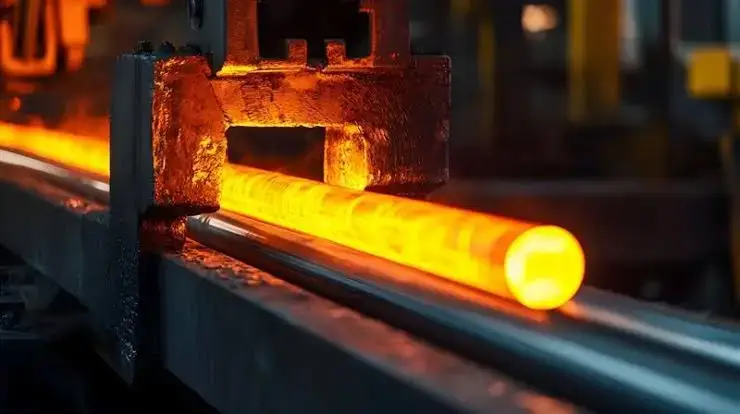
Rolling Mills Steel Metallurgy: How Deformation, Temperature, and Cooling Define Steel Performance
Interpretation of Bushing Knowledge

Rolling Mills Steel Metallurgy: How Deformation, Temperature, and Cooling Define Steel Performance

Steel rolling is commonly described as thickness reduction, but its metallurgical effect is more consequential. Reheating, descaling, roughing, finishing, coiling, cold reduction, annealing, and temper rolling determine grain size, texture, residual stress, surface condition, flatness, strength, formability, and downstream consistency. A coil with the correct nominal thickness can still be unsuitable if its microstructure, crown, edge condition, or mechanical-property variation is not controlled. For customers buying hot rolled steel coil, cold rolled steel sheet, plate, strip, bar, or rolling-mill equipment, the valuable discussion begins with process capability rather than with gauge alone.

Scroll to Top