Solid Lubricant Bearing

Continuous Casting Machine Bushing Solutions: Engineering Guide for Steel Mills
Interpretation of Bushing Knowledge

Continuous Casting Machine Bushing Solutions: Engineering Guide for Steel Mills

In modern metallurgical operations, the continuous casting machine represents the critical interface between liquid steel refining and solid product forming. Within this sophisticated system, bushings function as indispensable tribological components that directly influence equipment reliability, product quality, and operational economy. This comprehensive technical resource examines bushing technologies deployed across continuous casting applications—from mold oscillation mechanisms to strand guide roller assemblies—providing engineers and procurement professionals with actionable intelligence for component selection and lifecycle optimization.
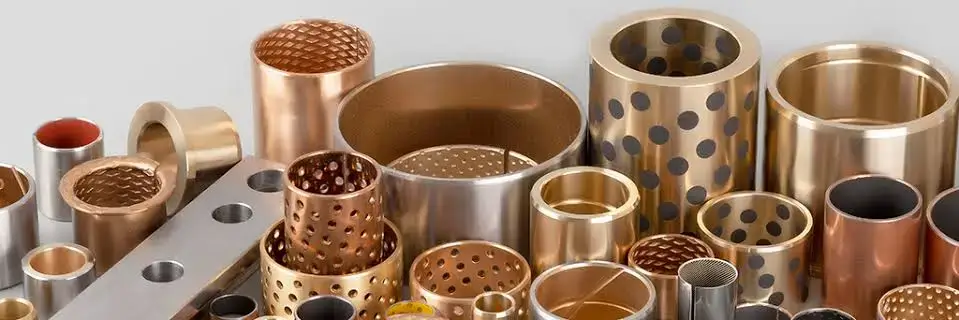
Self-Lubricating Bushings: The Maintenance-Free Solution for Demanding Industrial Applications
Interpretation of Bushing Knowledge

Self-Lubricating Bushing: Bearing Metallurgy, Solid Lubricants, PV Control, and Reliable Industrial Selection

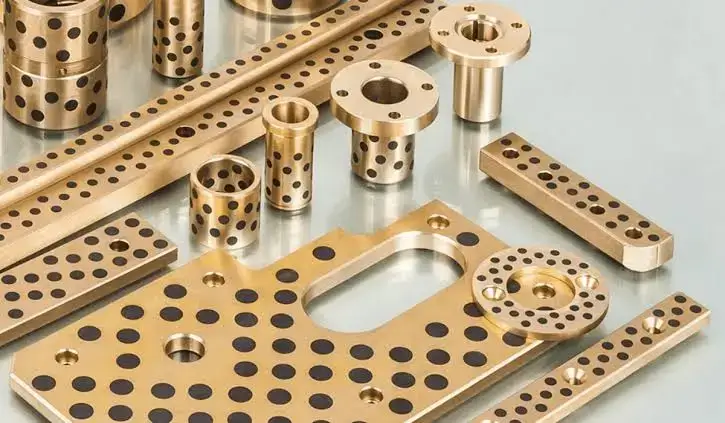
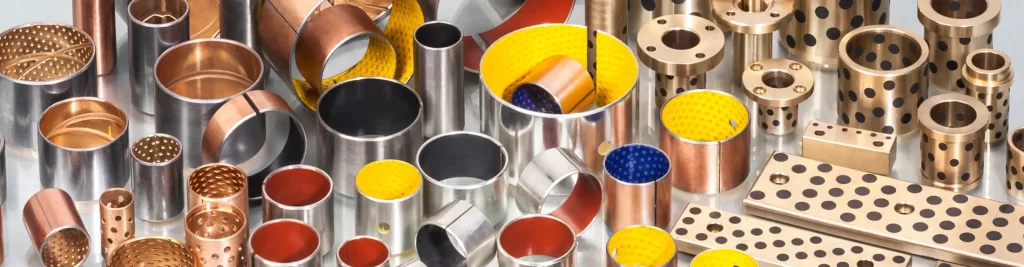
A self-lubricating bushing is a plain bearing designed to reduce friction and wear without continuous external grease or oil supply. The term covers several different material systems: oil-impregnated sintered bronze, steel-backed metal-polymer composites, cast bronze with graphite inserts, solid-lubricant-dispersed metal, engineered polymer, and fiber-reinforced composite bearings. These products do not have identical operating limits. The correct choice requires load, sliding speed, PV factor, temperature, oscillation, counterface, contamination, water or chemical exposure, fit, clearance and expected maintenance interval.

Self-Lubricating Bushings: Material Systems, Tribology, and Reliable Design for Dry-Running Motion
Interpretation of Bushing Knowledge

Self-Lubricating Bushings: Material Systems, Tribology, and Reliable Design for Dry-Running Motion

A self-lubricating bushing is a plain bearing designed to reduce friction and wear without a conventional external grease or oil line during normal service. It does not mean that every design is chemically identical, maintenance-free in every environment, or suitable for every load and speed. The term includes oil-impregnated sintered bronze bushings, steel-backed PTFE composite bearings, POM-lined bushes, graphite-plugged bronze bushes, solid-lubricant-dispersed bearings, engineered polymer bushes, and some fabric-lined spherical plain bearings. Each system stores, transfers, or presents lubricant differently.
Good selection starts with the motion and environment: radial or axial load, oscillation or rotation, speed, PV duty, temperature, shock, contamination, mating shaft hardness and finish, housing stiffness, clearance, corrosion, installation method, and service-life target.

Oilless Bushing Metallurgy: Solid Lubricants, Bronze, and Composite Layers Under Load
Interpretation of Bushing Knowledge

Oilless Bushing Metallurgy: Solid Lubricants, Bronze, and Composite Layers Under Load

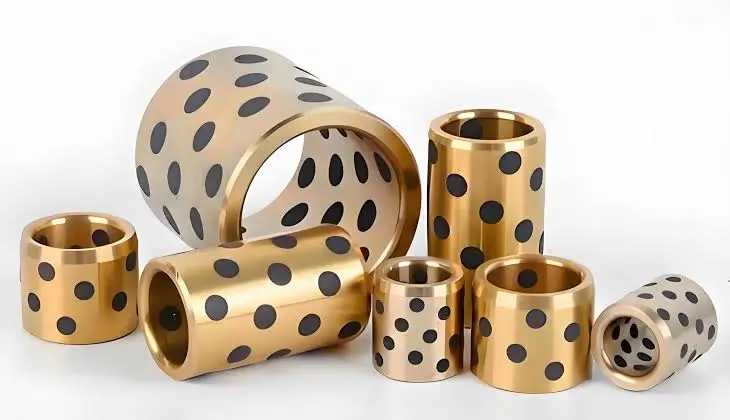
The phrase “oilless bushing” is useful in search and procurement, but it can conceal important engineering differences. Some self-lubricating bushings rely on graphite plugs embedded in cast bronze. Others use a steel-backed, porous bronze interlayer with a PTFE-based sliding surface. A third category is a sintered bronze bearing whose connected porosity stores oil released during service. Each system reduces or eliminates routine external oiling in a defined operating window; none removes the need to control pressure, speed, heat, shaft finish, alignment, and contamination. The metallurgy determines how the bearing carries load, transfers lubricant, and survives wear.

Lead in Bronze: The Self-Lubricating Metallurgical Solution for High-Performance Bearings and Bushings
Interpretation of Bushing Knowledge

Lead in Bronze: The Self-Lubricating Metallurgical Solution for High-Performance Bearings and Bushings

In the domain of plain bearing engineering, few material innovations have demonstrated the enduring practicality of leaded bronze alloys. The incorporation of lead into bronze matrices represents a deliberate metallurgical strategy—one that transforms a copper-tin base into a self-lubricating, anti-seizing, and highly embeddable engineering material. Leaded bronze bushings and bearings have become foundational components across heavy machinery, automotive systems, marine equipment, and industrial transmissions, precisely because the lead phase within the alloy delivers functional advantages that no single alternative material can fully replicate

Scroll to Top