
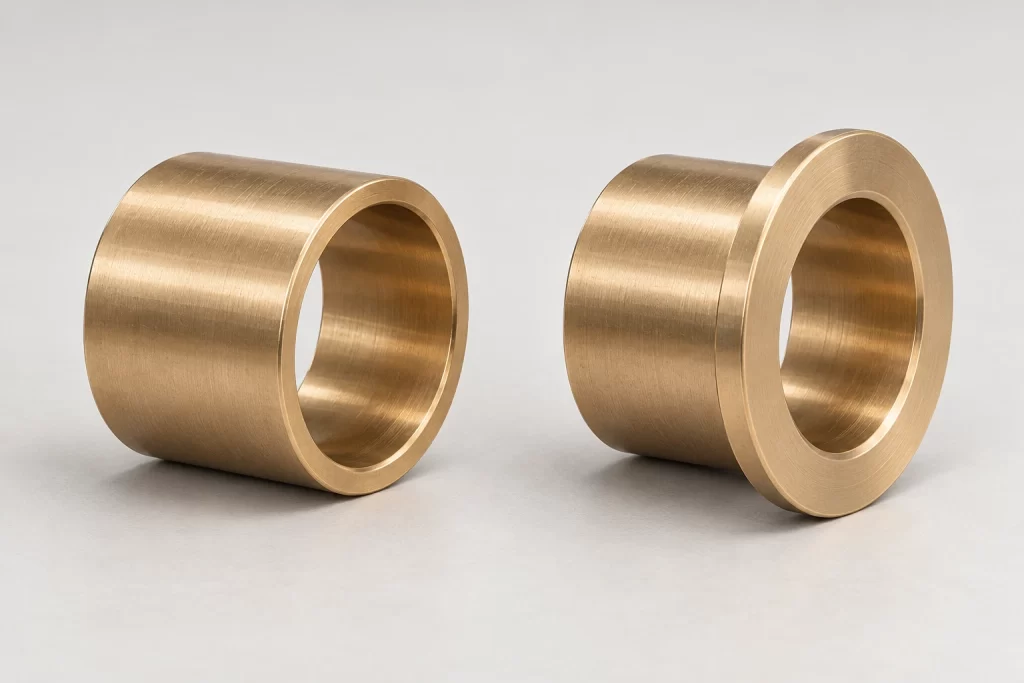
straight bushings

Flanged vs. Straight Bushings: Look at the Side of the Joint
Interpretation of Bushing Knowledge

Flanged vs. Straight Bushings: Look at the Side of the Joint

The bore is usually where a bushing enquiry starts. The enquiry might give you an ID, an OD and a length, with nothing showing either end of the housing. Enough to find a sleeve of the right size, perhaps. I’d still be reluctant to choose between a plain sleeve and a flanged one from that information.
Perhaps nothing is touching there. Perhaps the side of a moving arm is rubbing on a bracket. Or perhaps a washer already takes care of that contact. I would want to see that detail before recommending either shape.
For this comparison, let’s keep the whole joint in view.
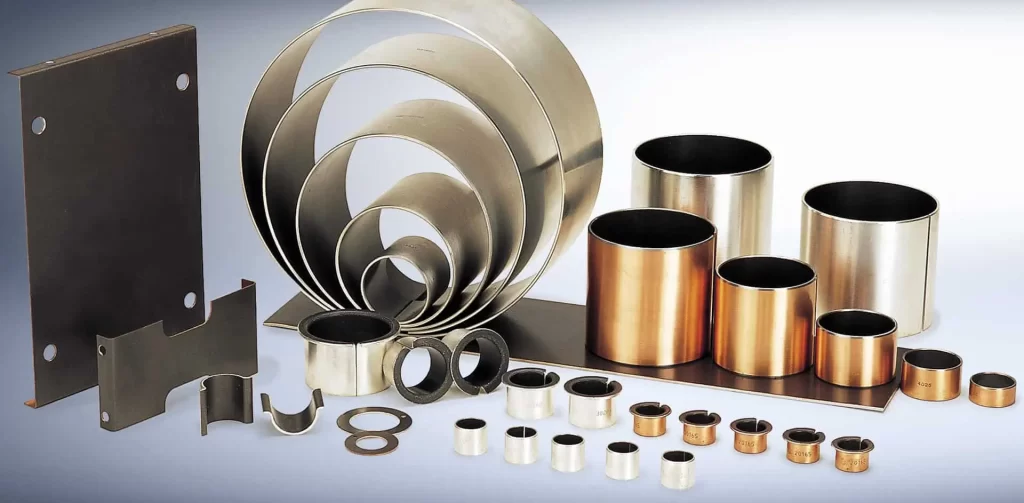
Sleeve Bushing: The Definitive Technical and Application Resource for Industrial Drive Systems
Interpretation of Bushing Knowledge

Low Carbon Steel Bushings: Metallurgical Foundations and Performance Optimization for Heavy-Duty Applications

Low carbon steel bushings represent a fundamental component category within mechanical power transmission and motion control systems. Defined by their carbon content typically below 0.30% by weight, these cylindrical sleeves serve as sacrificial wear surfaces that protect rotating shafts and housing bores from direct metal-to-metal contact. The metallurgical characteristics of low carbon steel—including its ferritic-pearlitic microstructure, case-hardening responsiveness, and cost-effectiveness—make it an indispensable engineering material across construction equipment, agricultural machinery, automotive suspensions, and hydraulic systems.

Scroll to Top