
Recent Posts
Engineered to Endure: Durable, Self-Lubricating Metal Bushings
In the demanding world of machinery—from massive construction sites to precise automated production lines—downtime is the enemy. The constant cycle of wear, friction, and the never-ending need for lubrication in traditional components can grind productivity to a halt. Engineers face a critical challenge: finding a bearing solution that offers exceptional durability, operates maintenance-free in harsh environments, and delivers long-term reliability under significant load.
This is where advanced self-lubricating metal bushings step in as a transformative solution. More than just a simple sleeve, a modern bushing is a sophisticated component engineered to be the silent, dependable workhorse within your assembly. By combining the strength of a metal backing with the low-friction magic of materials like PTFE (Polytetrafluoroethylene), these bushings solve the age-old problems of friction and wear without the constant need for grease.
This guide will navigate you through the critical technology behind these components, their varied types, and how to select the right one for your application. Ultimately, we’ll show you why the MYWAY Bushing is engineered not just to meet your specifications, but to exceed your expectations for performance and value.
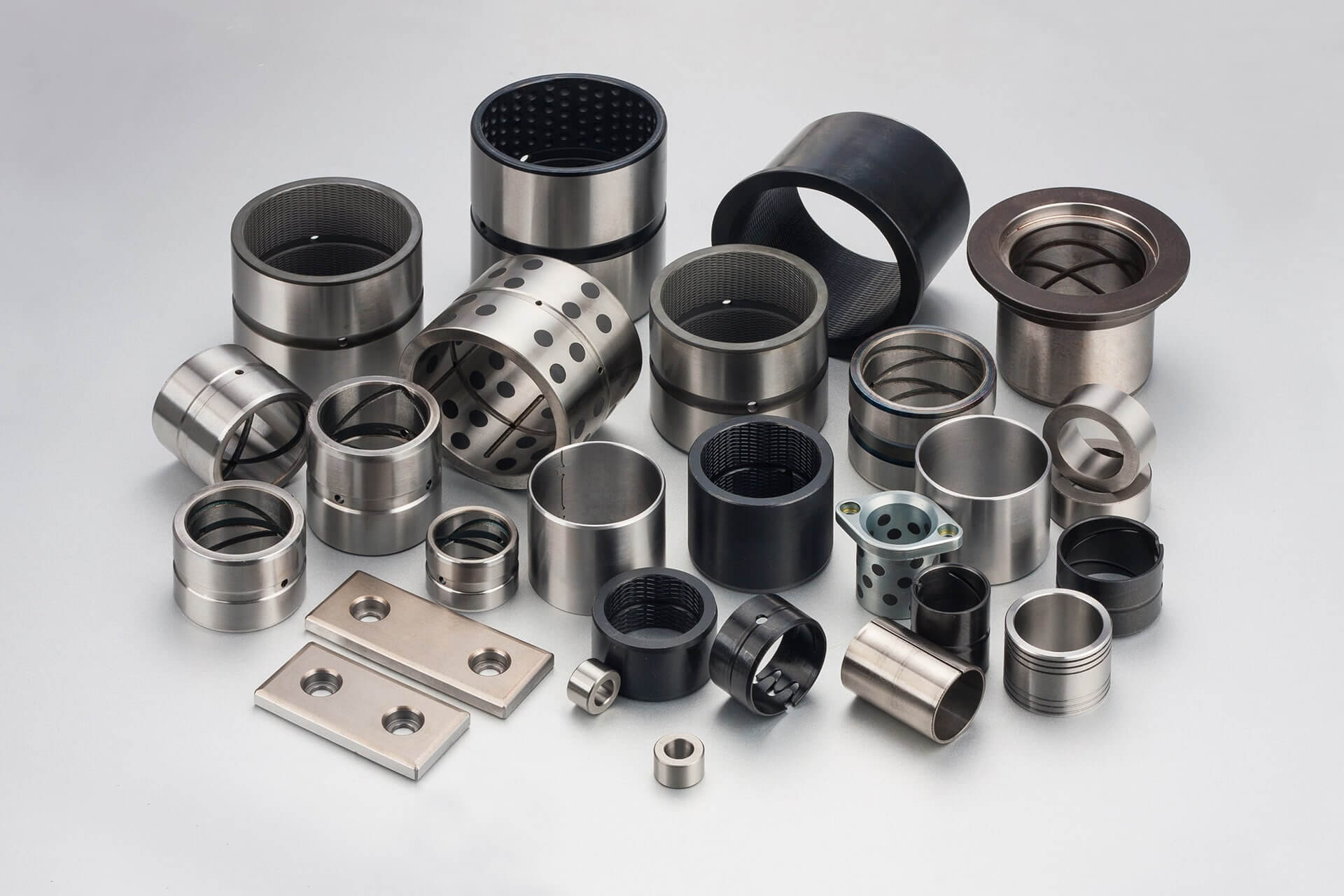
Table of Contents
1. The Core Technology: How Self-Lubricating Bushings Work
At their heart, self-lubricating bushings are designed to create a low-friction interface between two moving parts without relying on external liquid lubricants. The primary mechanism involves leaching chemistries within the bearing material that, when set in motion, develop a protective lubricating film directly on the running surfaces. This technology is ideal for permanent or difficult-to-access installations—think bridge supports, hydroelectric turbines, or systems within clean rooms where regular greasing is impractical or undesirable.
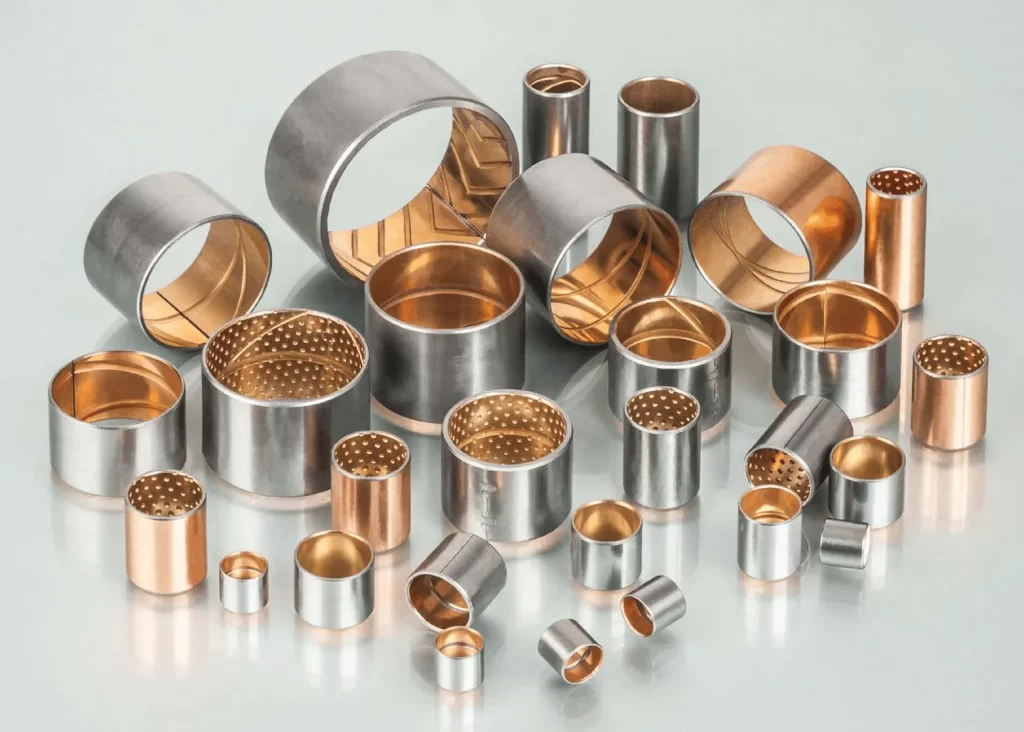
The most common and effective construction for achieving this is a multi-layer, composite structure. Typically, it consists of:
A Steel Backing: Provides high structural strength, dimensional stability, and excellent load-carrying capacity.
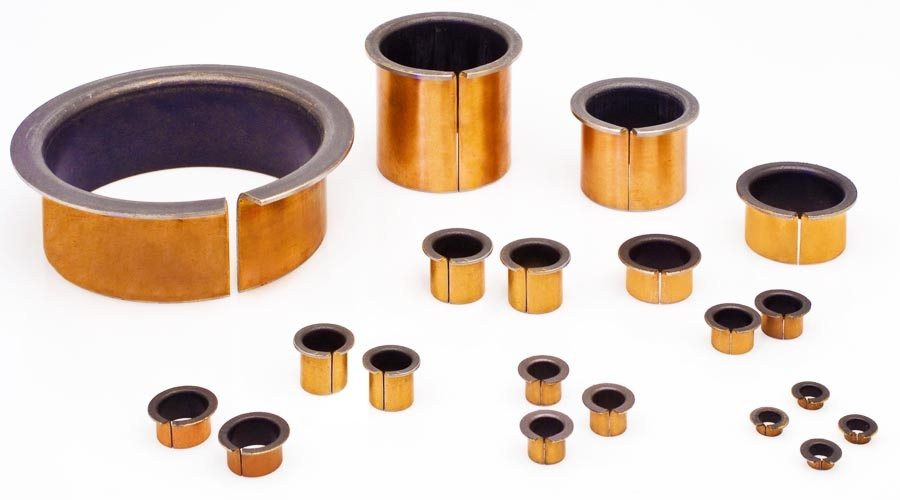
A Porous Bronze Interlayer: This sintered (powdered and fused) layer is bonded to the steel. It acts as a reservoir and a robust anchor for the top layer.
A PTFE-Based Sliding Liner: A thin, impregnated layer of PTFE and other fillers (like lead or other polymers in some variants) provides an exceptionally low coefficient of friction. As the bushing operates, a microscopic transfer film of this material coats the mating shaft, ensuring smooth, long-lasting performance.
2. Choosing the Right Bushing: Types, Materials, and Applications
Not all bushings are created equal. The optimal choice depends on your specific load, motion, speed, and environmental conditions. Below is a breakdown to guide your selection.
By Structure & Function:
| Type | Key Features | Ideal Applications |
|---|---|---|
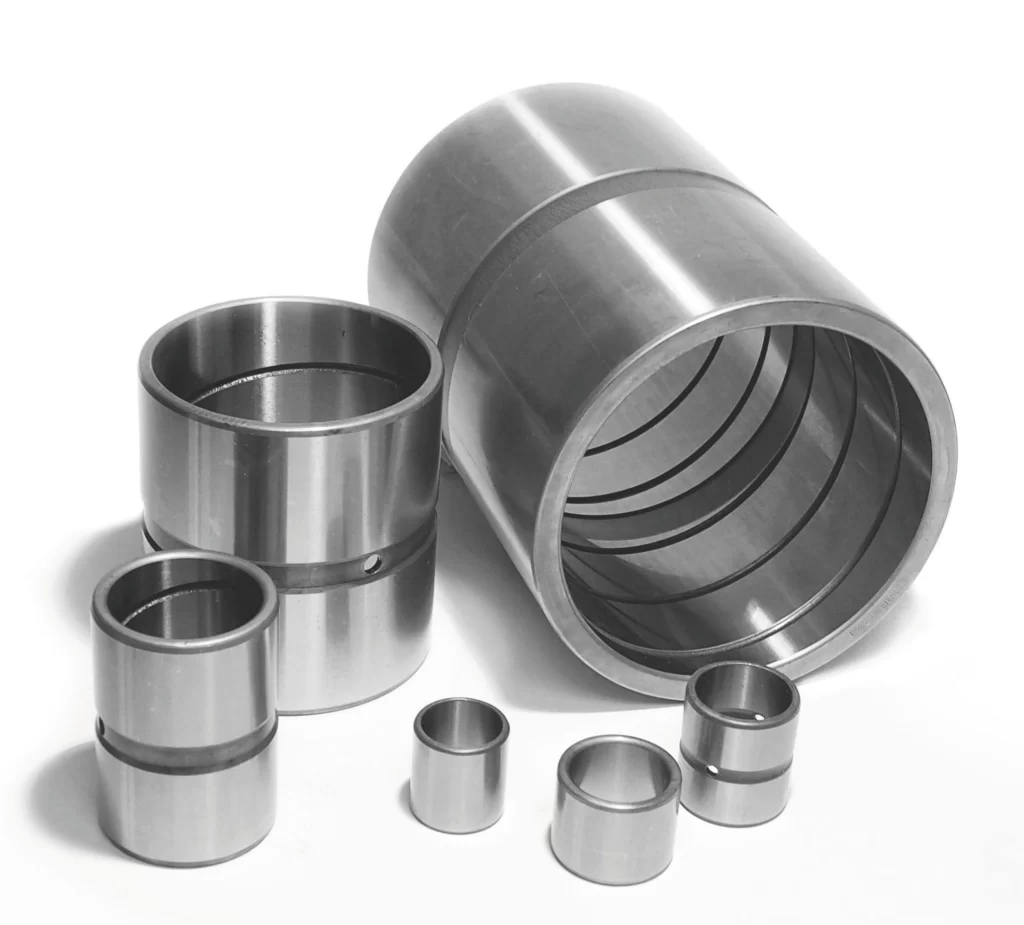
| Plain / Cylindrical Bushings | Simple sleeve design, cost-effective, versatile. | General machinery, agricultural equipment, linkages with radial loads. |
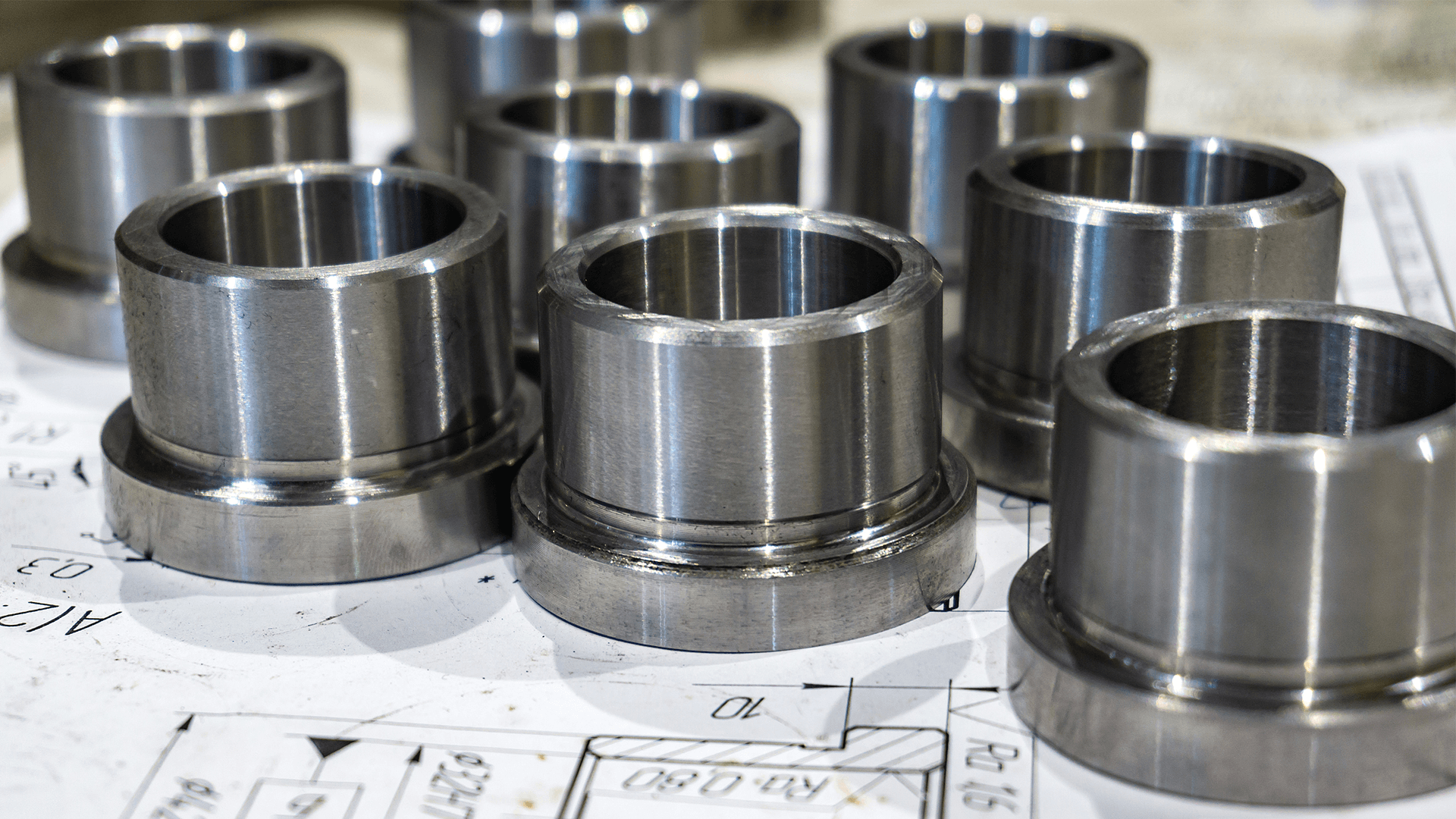
| Flanged Bushings | Feature a radial collar to handle both radial and axial (thrust) loads in one direction. | Demolition equipment, pumps, gearboxes where axial positioning is critical. |
| Grooved Bushings | Internal grooves or patterns (spiral, grid) to distribute grease evenly (if used) or hold solid lubricant. | Applications where some initial or supplemental lubrication is beneficial for extreme conditions. |
By Material & Technology:
The choice of material directly dictates performance in specific operating windows.
Metal-Polymer Composites (PTFE Lined): The industry standard for high-performance self-lubrication. They offer a very low coefficient of friction, good contamination resistance, and excellent performance under high loads at low to moderate speeds. They are fully self-lubricating and maintenance-free.
Bronze-Based with Solid Lubricant Inlays: Here, solid lubricants like graphite or molybdenum disulfide (MoS₂) are embedded into a bronze or copper-alloy matrix. As the bushing wears, these lubricants are exposed. They excel in very high-load, low-speed, or oscillating movements and can withstand higher temperatures than polymer-based types.
Sintered Metal Powders: Bushings made via powder metallurgy (sintering) can be manufactured from iron, bronze, or stainless steel powders. Their porous structure can be oil-impregnated for “maintenance-free” life (until the oil reservoir is depleted) or designed to work with solid lubricants. They are highly customizable and cost-effective for high volumes.
Key Selection Factors:
Load & Pressure: Can the bushing material withstand the static and dynamic forces without deforming?
Speed (PV Value): The product of bearing pressure (P) and sliding velocity (V) must be within the bushing material’s limits to prevent overheating and rapid wear.
Motion Type: Continuous rotation, oscillation, or intermittent movement? Oscillation is often the most demanding.
Environment: Exposure to water, chemicals, dust, or extreme temperatures (from cryogenic to over +280°C for some types) will narrow down material choices dramatically.
Shaft Material & Hardness: A proper pairing is essential to prevent shaft wear.
3. Industry Spotlight: Where Advanced Bushings Are Critical
Automotive & Transportation: In suspension joints, pedal boxes, and gear linkages, they provide quiet operation and zero maintenance over the vehicle’s lifetime.
Construction & Heavy Equipment: Excavators, loaders, and cranes rely on massive, durable bushings in pivot points to withstand shock loads, dirt, and contamination without failing.
Agricultural Machinery: From tractor linkages to combine harvesters, bushings must endure vibration, outdoor exposure, and high loads with minimal upkeep.
Material Handling & Automation: In packaging machines, conveyor systems, and robotic arms, they ensure smooth, precise, and clean operation without grease contaminating products.
Renewable Energy & Infrastructure: In wind turbine pitch controls, hydraulic systems for solar trackers, and bridge bearings, longevity and reliability in inaccessible locations are paramount.
4. Introducing the MYWAY Bushing: Engineered for Your Challenge
Understanding these complex requirements is one thing; consistently delivering a component that masters them is another. This is the philosophy behind MYWAY Self-Lubricating Metal Bushings. We don’t just manufacture bushings; we engineer performance solutions.
What Sets MYWAY Apart?
Proprietary Composite Engineering: Our PTFE-based lining is a result of extensive R&D. We utilize advanced manufacturing techniques, akin to those studied to improve consistency, to ensure a homogeneous, void-free sliding layer. This results in stable wear performance, higher peel strength, and reduced operational variability.
Unmatched Strength & Durability: We start with high-quality carbon or alloy steel backing, providing a robust foundation. Our sintering process creates a bronze interlayer with optimal porosity for perfect PTFE adhesion, ensuring the lining stays in place for the long haul, even under impact loads and continuous stress.
Customization as Standard: Your application is unique. We offer full dimensional customization in both metric and imperial sizes. Beyond standard cylindrical shapes, we produce flanged, shouldered, and grooved variants to your exact prints. Whether you need a 10mm bushing for a delicate mechanism or a 300mm giant for heavy industry, MYWAY delivers.
Built for Harsh Realities: MYWAY bushings are designed to operate reliably across a wide temperature range and are inherently corrosion-resistant. The self-lubricating nature makes them impervious to dust and washdowns, perfect for food processing, pharmaceutical, and marine applications.
5. Ready to Eliminate Downtime? Partner with MYWAY.
Choosing a bushing is a critical engineering decision. It’s not just about a part that fits; it’s about selecting a component that guarantees reliability, reduces your total cost of ownership, and keeps your equipment running smoothly for years.
Don’t compromise on the core components that define your machine’s uptime. Let MYWAY be your engineering partner.
Contact us today for a free, no-obligation quote and expert application review. Request your catalog and sample kit to test the MYWAY difference firsthand.
Frequently Asked Questions (FAQ)
Q: When should I choose a self-lubricating bushing over a traditional ball bearing or a bronze oilite bushing?
A: Choose self-lubricating when: maintenance is impossible/undesirable (sealed-for-life design), the environment is dirty or wet (no grease to trap grime), loads are high and speeds are low (ideal for sliding surfaces), or you require very quiet, stick-slip-free motion.
Q: Are self-lubricating bushings suitable for high-speed applications?
A: They have speed limitations defined by their PV rating. While not typically for very high-speed continuous rotation like a spindle, they perform excellently in high-speed oscillating or reciprocating motions common in many industrial machines.
Q: Can I use a self-lubricating bushing on an unhardened shaft?
A: It is strongly recommended to use a hardened and ground shaft (typically HRC 50+). The bushing is designed to be the sacrificial wear component. A soft shaft will wear prematurely, leading to excessive clearance and failure.
Q: Do you offer custom material compositions?
A: Absolutely. While our standard metal-polymer composite suits 80% of applications, we work with specialized materials including various grades of stainless steel (e.g., 304, 316) for severe corrosion, and can tailor filler materials in the PTFE layer for specific friction, wear, or temperature needs.
Q: What is your typical lead time for custom bushings?
A: We pride ourselves on agile manufacturing. For prototype quantities, lead times can be as short as 2-3 weeks. For production volumes, we provide firm schedules based on order complexity and work with you to meet your project timeline.
100000+ Types of Bushings – Contact Us for Details