
Recent Posts
Key Elements in Bronze: How Alloying Elements Shape Its Properties & Uses
Introduction
Bronze stands as one of humanity’s oldest and most versatile metal alloys, with a history spanning over 5,000 years. From ancient Bronze Age tools and sculptures to modern industrial components like bearings, bushings, and marine hardware, this copper-based alloy delivers unmatched durability, corrosion resistance, and mechanical performance. But what exactly makes bronze so adaptable? The answer lies in its chemical composition—specifically, the mix of core and alloying elements that tailor its traits for every application.
Table of Contents
1.What Is Bronze
Core Elements in Bronze: The Foundation of All Alloys
1. Copper (Cu): The Base Metal (80–95% of Bronze)
- Excellent thermal & electrical conductivity: Ideal for heat exchangers, electrical components, and wiring.
- Natural corrosion resistance: Forms a protective copper oxide layer that slows oxidation (unlike iron, which rusts completely).
- High ductility & malleability: Easy to cast, machine, and shape into complex parts—from delicate sculptures to precision bushings.
- Reddish-brown hue: Gives bronze its iconic metallic finish, valued in art and architecture.
2. Tin (Sn): The Traditional Hardener (5–15% of Classic Bronze)
- Boosts hardness & tensile strength: Pure copper is soft (HB ~40); adding 10% tin increases hardness to HB 150–200, making bronze resistant to dents and deformation.
- Improves wear resistance: Tin strengthens the copper matrix, reducing friction and abrasion—critical for bearings, bushings, gears, and valve components.
- Enhances corrosion resistance: Tin reinforces copper’s natural oxide layer, making bronze resistant to freshwater and saltwater corrosion (a reason it dominates marine applications).
- Increases castability: Lowers the melting point of copper, making it easier to pour into molds for intricate parts.
2.Common Alloying Elements in Modern Bronze: Tailoring Properties for Industry
While copper and tin form the base, modern bronze alloys rely on secondary elements to optimize performance for specific jobs. Below are the most common alloying elements, their typical percentages, and how they transform bronze’s properties:
1. Aluminum (Al): The Corrosion & Strength Booster (4–15%)
Aluminum replaces tin in aluminum bronze (one of the strongest bronze alloys), with 4–15% aluminum + copper (± iron/nickel). Key impacts:
Extreme corrosion resistance: Forms a tough aluminum oxide layer that outperforms tin bronze in saltwater, chemicals, and high-temperature environments (perfect for ship propellers, valves, and offshore hardware).
Steel-like strength: High aluminum bronze (10–14% Al) matches the tensile strength of medium-carbon steel (700–1,200 MPa) while remaining lighter.
Good heat conductivity: Ideal for heat exchangers and engine parts that need to dissipate heat.
2. Phosphorus (P): The Precision & Wear Enhancer (0.01–0.35%)
Phosphorus is added to phosphor bronze (88–95% Cu + 0.5–11% Sn + 0.01–0.35% P) in small but powerful doses. Benefits:
Superior wear & fatigue resistance: Phosphorus hardens the alloy’s surface, making it perfect for high-precision bearings, springs, electrical contacts, and guitar strings.
Improves cast quality: Acts as a deoxidizer, removing impurities from molten bronze to reduce porosity and defects.
High elasticity: Phosphor bronze springs retain their shape after repeated stress—critical for automotive and aerospace components.
3. Silicon (Si): The Castability & Corrosion Protector (1–5%)
Silicon bronze (88–95% Cu + 1–5% Si + ± zinc/iron) balances strength, corrosion resistance, and workability. Key traits:
Excellent castability & weldability: Silicon improves molten bronze fluidity, enabling complex, detailed castings (sculptures, architectural cladding, fasteners).
Self-lubricating properties: Reduces friction in sliding parts like bushings and bearings.
Resists oxidation & saltwater corrosion: A top choice for marine hardware, outdoor sculptures, and industrial fasteners.
4. Nickel (Ni): The Toughness & High-Temperature Stabilizer (5–20%)
Nickel is a star element in nickel bronze (cupronickel: 60–85% Cu + 5–20% Ni + ± iron/manganese), valued for extreme durability. Impacts:
Unmatched toughness: Nickel refines bronze’s grain structure, making it resistant to impact and cracking—even at subzero temperatures.
High-temperature strength: Maintains hardness and stability at 200–400°C, ideal for engine components, furnace parts, and aerospace hardware.
Superior corrosion resistance: Outperforms most bronzes in saltwater, acids, and alkaline environments (used in ship hulls, heat exchangers, and chemical processing equipment)
5. Lead (Pb): The Machinability & Lubricity Agent (2–25%)
Lead is added to leaded bronze (70–85% Cu + 2–12% Sn + 2–25% Pb) for one primary reason: ease of machining. Key benefits:
Excellent machinability: Lead acts as a lubricant during cutting, reducing tool wear and enabling tight tolerances for mass-produced parts.
Self-lubricating properties: Lead particles form a low-friction layer, making leaded bronze ideal for plain bearings, bushings, and gears that operate without constant lubrication.
Cost-effective: Lead is cheaper than tin, lowering production costs for industrial components.
6. Zinc (Zn): The Fluidity & Cost Reducer (2–25%)
Zinc is a common additive in tin-zinc bronze (gunmetal: 88% Cu + 10% Sn + 2% Zn) and architectural bronze. Roles:
Improves fluidity: Zinc lowers the melting point of bronze, making it easier to cast into complex shapes.
Reduces cost: Cheaper than tin, zinc is often used to replace partial tin in commercial bronzes.
Bright golden hue: High zinc content gives bronze a brass-like color, popular for decorative hardware and architectural details.
7. Manganese (Mn): The Strength & Shock Resistor (1–5%)
Manganese is a key element in manganese bronze (high-strength bronze: 80–90% Cu + 5–15% Al + 1–5% Mn), designed for heavy-duty applications. Benefits:
Extreme tensile strength: Manganese boosts strength to 800–1,000 MPa, making it ideal for gears, worm wheels, and heavy-duty bushings.
Shock & wear resistance: Withstands high impact and friction, perfect for construction and mining equipment.
Corrosion resistance: Enhances aluminum bronze’s ability to resist saltwater and industrial chemicals.
3. Common Bronze Alloy Types & Their Element Compositions
| Alloy Type | Key Elements (Typical %) | Core Properties | Top Applications |
|---|---|---|---|
| Tin Bronze (Classic) | Cu (88–90%), Sn (10–12%) | Hard, wear-resistant, corrosion-resistant | Bearings, bushings, gears, sculptures |
| Aluminum Bronze | Cu (85–95%), Al (5–15%), Fe (1–6%) | High strength, saltwater corrosion resistance | Marine propellers, valves, pump components |
| Phosphor Bronze | Cu (88–95%), Sn (0.5–11%), P (0.01–0.35%) | Precision, wear resistance, elasticity | Springs, electrical contacts, guitar strings |
| Silicon Bronze | Cu (88–95%), Si (1–5%), Zn (≤5%) | Castable, corrosion-resistant, self-lubricating | Sculptures, architectural cladding, fasteners |
| Nickel Bronze (Cupronickel) | Cu (60–85%), Ni (5–20%), Fe (≤4%) | Tough, high-temperature stable, corrosion-resistant | Ship hulls, heat exchangers, aerospace parts |
| Leaded Bronze | Cu (70–85%), Sn (2–12%), Pb (2–25%) | Machinable, self-lubricating | Plain bearings, bushings, mass-produced gears |
| Manganese Bronze | Cu (80–90%), Al (5–15%), Mn (1–5%) | High strength, shock-resistant | Heavy-duty gears, mining equipment, bushings |
4. How Bronze Elements Impact Key Industrial Properties
- Hardness & Strength: Tin, aluminum, phosphorus, manganese (higher percentages = harder/stronger)
- Corrosion Resistance: Copper, tin, aluminum, nickel, silicon (aluminum/nickel best for saltwater)
- Wear Resistance: Tin, phosphorus, lead, manganese (lead = self-lubricating; phosphorus = precision wear resistance)
- Castability: Zinc, silicon, tin (improve molten fluidity for complex molds)
- Machinability: Lead (reduces tool wear for mass production)
- Electrical/Thermal Conductivity: Copper (highest conductivity; tin/aluminum reduce it slightly)
- Non-Sparking/Non-Magnetic: Copper, tin, silicon (critical for explosive environments like oil/gas)
5. Why Bronze Elements Matter for Industrial Components Like Bushings
- Long wear life: Tin/phosphorus/manganese resist friction and abrasion, reducing replacement frequency.
- Corrosion protection: Aluminum/nickel/silicon prevent rust and degradation in humid, marine, or chemical environments.
- Self-lubrication: Lead/silicon eliminate the need for frequent grease/oiling, ideal for hard-to-reach components.
- Precision tolerance: Phosphorus/lead enable tight machining tolerances for smooth, noise-free operation.
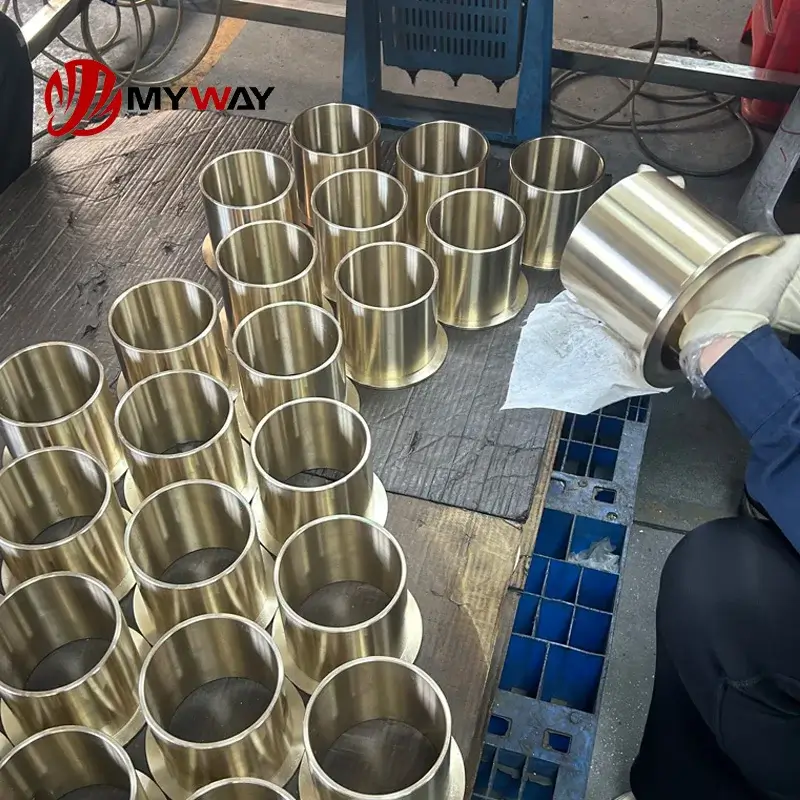
6. MYWAY Bronze Bushings: Engineered with the Right Elements for Maximum Performance
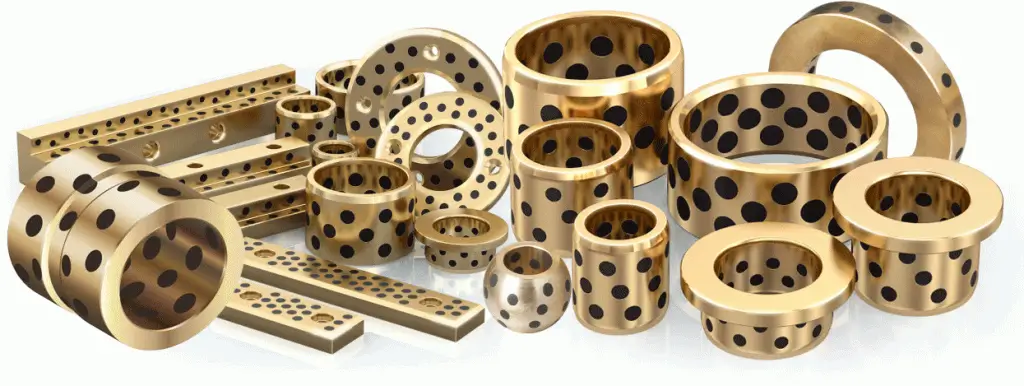
 Premium Element Mix for Every Application
- Tin-Phosphor Bronze Bushings: 89% Cu + 10% Sn + 0.1% P → Perfect for high-precision, low-noise applications (automotive, electrical motors).
- Leaded Bronze Bushings: 80% Cu + 10% Sn + 10% Pb → Self-lubricating, easy to machine, ideal for heavy-load, low-speed machinery (construction, agriculture).
- Aluminum Bronze Bushings: 85% Cu + 12% Al + 3% Fe → Extreme corrosion resistance and strength for marine, offshore, and chemical processing equipment.
- Silicon Bronze Bushings: 91% Cu + 3% Si + 4% Zn + 2% Fe → Excellent castability and corrosion resistance for architectural, marine, and general industrial use.
Key Benefits of MYWAY Bronze Bushings
- Superior durability: Balanced tin/aluminum/manganese elements resist wear, deformation, and corrosion—extending service life by 30–50% vs. low-quality alternatives.
- Self-lubricating performance: Lead/silicon additives reduce friction and eliminate frequent maintenance, saving time and costs.
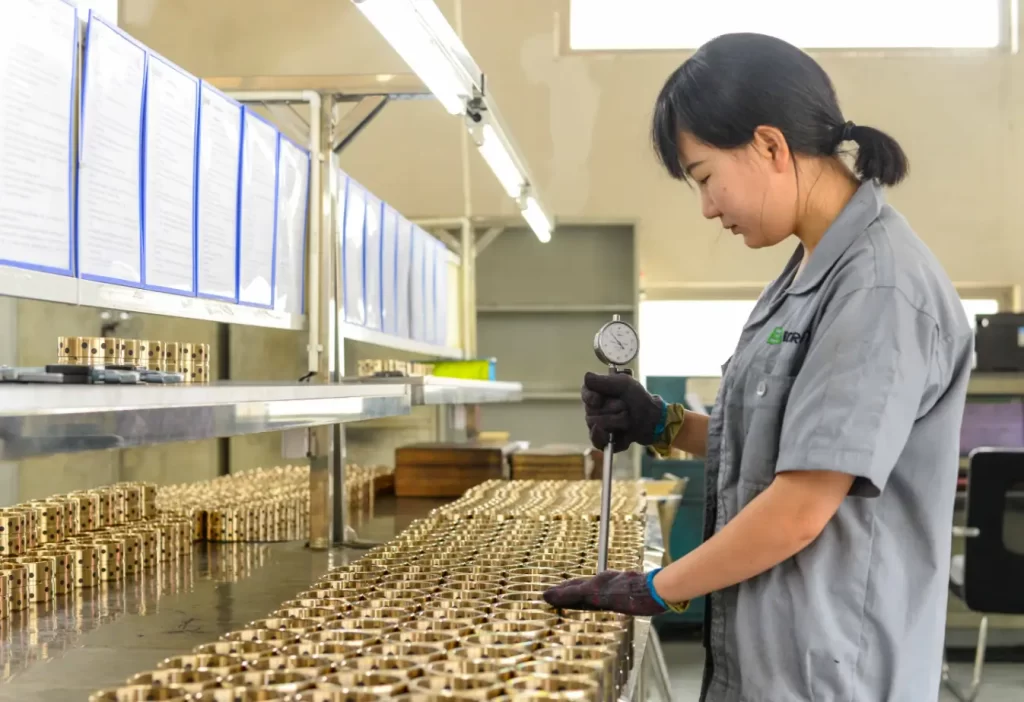
- Precision engineering: Tight element control ensures consistent hardness, dimensional stability, and noise-free operation.
- Custom alloy solutions: We tailor element compositions to your specific application (load, speed, environment)—no one-size-fits-all.
- Cost-effective: Optimized element mixes balance performance and price, delivering maximum value for industrial budgets.
Industries We Serve
- Automotive (transmission, engine, suspension parts)
- Marine (ship propellers, pumps, valves)
- Construction (excavators, cranes, loaders)
- Agriculture (tractors, harvesters, irrigation equipment)
- Aerospace (precision bearings, control components)
- Electrical motors (high-speed, low-noise bushings)
- Oil & gas (non-sparking, corrosion-resistant parts)
7. FAQ: Common Questions About Elements in Bronze
Q1: What is the main element in bronze?
Q2: Is bronze stronger than steel?
Q3: What element makes bronze corrosion-resistant?
Q4: What’s the difference between phosphor bronze and leaded bronze?
Q5: Can bronze be used in saltwater?
Q6: What element makes bronze non-sparking?
Q7: How do I choose the right bronze alloy for my bushing application?
- High precision/low noise → phosphor bronze
- Heavy load/self-lubrication → leaded bronze
- Saltwater/chemical exposure → aluminum/nickel bronze
- Outdoor/architectural use → silicon bronze
Q8: Are MYWAY bronze bushings customizable?
Q9: How long do MYWAY bronze bushings last?
Q10: How do I request a quote for MYWAY bronze bushings?
8.Conclusion: Elements Make Bronze—And MYWAY Makes It Perfect
100000+ Types of Bushings – Contact Us for Details