
Recent Posts
Casting Bush: Cast Bronze & Brass Bushings for Industrial Applications
Introduction
In the world of industrial machinery, there’s a quiet workhorse that keeps countless machines running smoothly—casting bush. You might not notice it at first glance, but this small, cylindrical component plays a critical role in reducing friction, supporting heavy loads, and extending the service life of everything from tiny precision instruments to massive industrial equipment. Made primarily through centrifugal casting with copper-based alloys like bronze and brass, casting bushes (also known as cast bronze bushings, centrifugal casting bushes, or plain casting bearings) are versatile, durable, and essential for nearly every industry. This blog will break down everything you need to know about casting bushes—from how they’re made and what materials they use, to where they’re applied and why they’re superior to other bearing solutions. We’ll also share insights on choosing the right casting bush for your needs and introduce a reliable supplier, MYWAY, to help you get the best performance for your equipment.
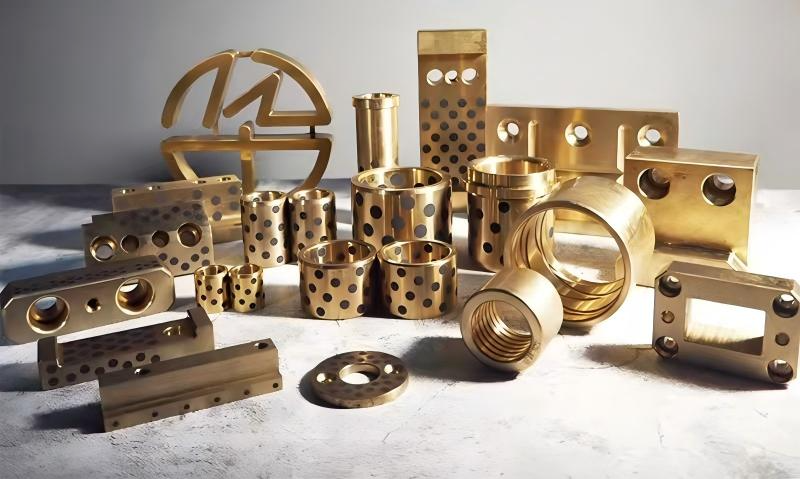
Table of Contents
1. What Is a Casting Bush?
Let’s start with the basics: a casting bush is a type of plain bearing, meaning it has no moving parts like balls or rollers (unlike ball bearings or roller bearings). Instead, it relies on the inherent properties of its material and careful design to reduce friction between two moving surfaces—typically a rotating shaft and a fixed housing. Casting bushes are made by melting metal (usually bronze, brass, or other copper alloys) and pouring the molten metal into a mold, then machining it to precise dimensions to fit specific applications.
One of the key things that sets casting bushes apart is their versatility in size and design. They can be as small as 2 millimeters in inner diameter (perfect for precision medical devices or small motors) or as large as 1.2 meters (used in heavy machinery like rolling mills or marine propulsion systems). This range makes them suitable for everything from delicate electronics to rugged industrial equipment.
You’ll also hear casting bushes referred to by many different names in the industry—these are all synonyms, and understanding them will help you navigate suppliers and specifications: centrifugal casting bush, cast bronze bushing, brass casting bushing, grooved bronze bush, self-lubricating casting bush, oil-impregnated bronze bush, centrifugal casting wear plate, bronze slide pad, and thrust washer bearing. While the names might vary, the core function remains the same: to reduce friction, support loads, and protect equipment from wear.
2. How Are Casting Bushes Made? The Centrifugal Casting Advantage
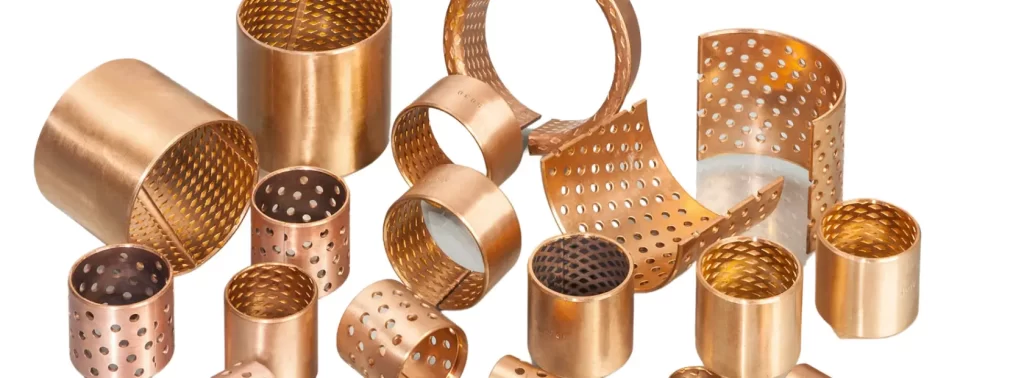
Not all casting bushes are created equal— the manufacturing process has a huge impact on their quality, durability, and performance. While there are several methods for casting bushes (like sand casting or investment casting), the gold standard for high-performance industrial applications is centrifugal casting. Let’s take a deep dive into how centrifugal casting works and why it’s superior to other methods.
The Centrifugal Casting Process
Centrifugal casting is a specialized process that uses centrifugal force to create dense, high-quality metal components. Here’s a step-by-step breakdown of how it works for casting bushes
1. Alloy Preparation: First, the raw materials (copper-based alloys like bronze or brass) are carefully measured and mixed according to precise formulas. The alloy composition is critical—different alloys have different properties, so the mix is tailored to the intended application (e.g., high corrosion resistance for marine use, high strength for heavy loads).
2. Melting: The alloy is melted in a high-temperature furnace (typically around 1100–1300°C, depending on the alloy) until it becomes a smooth, homogeneous liquid. During this process, impurities are removed to ensure the final product is pure and free of defects.
3. Mold Preparation: A cylindrical mold (usually made of steel or cast iron) is preheated to a specific temperature to prevent the molten metal from cooling too quickly and causing cracks. The mold is then mounted on a spinning machine that can rotate at high speeds (up to 3000 RPM).
4. Pouring & Centrifugal Force: The molten metal is poured into the rotating mold. As the mold spins, centrifugal force pushes the metal outward against the mold wall, forcing any remaining impurities, gas bubbles, or slag toward the inner diameter of the casting. This ensures the outer layer (which is the part that comes into contact with the housing) is dense and free of defects.
5. Cooling & Solidification: The mold continues to spin as the metal cools and solidifies. The spinning ensures the metal forms a uniform, cylindrical shape with consistent thickness. The rapid cooling (aided by the mold’s temperature control) creates a fine-grained, dense structure that is much stronger than metal cast using other methods.
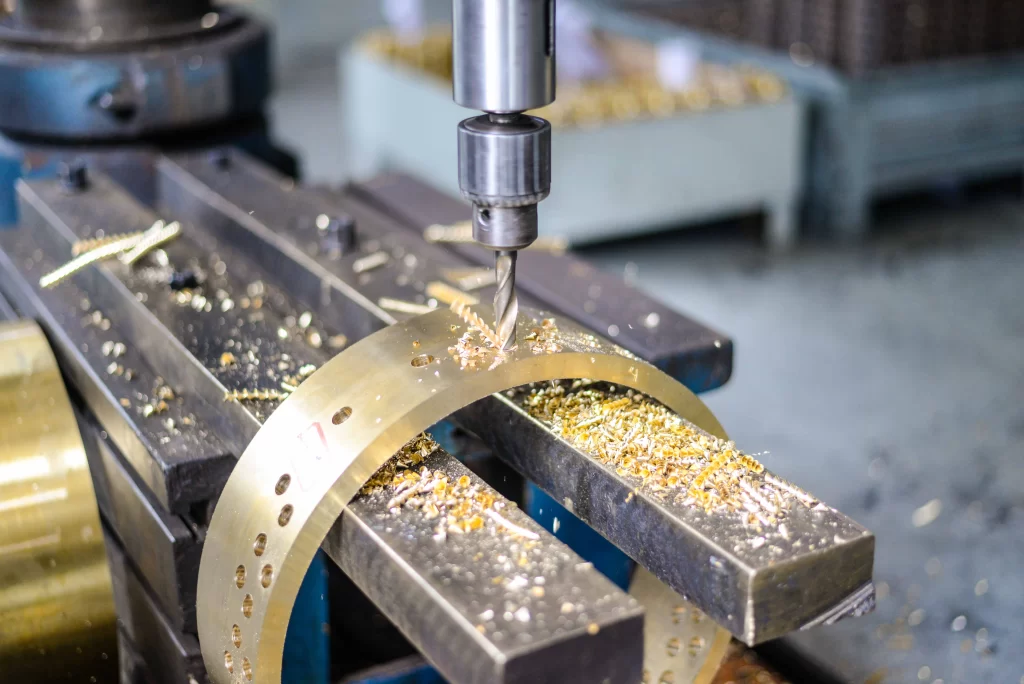
6. Machining & Finishing: Once the metal has fully solidified, the mold is removed, and the raw casting is machined to precise dimensions. This includes turning the inner and outer diameters, adding grooves (for lubrication), and polishing the surface to reduce friction. The finished casting bush is then inspected for quality (using tools like X-rays or ultrasonic testing) to ensure it meets industry standards.
Why Centrifugal Casting Beats Other Methods
You might be wondering: why not use simpler, cheaper methods like sand casting? While sand casting is less expensive upfront, it produces casting bushes with significant flaws that make them unsuitable for high-performance industrial applications. Here’s how centrifugal casting compares to sand casting and other methods:
– Denser Structure: Centrifugal casting creates a density of 99.5% or higher, compared to 97–98% for sand casting. This density means the metal is stronger, more wear-resistant, and less likely to crack under load.
– No Porosity: The centrifugal force pushes gas bubbles and impurities to the inner diameter, where they are removed during machining. This eliminates porosity (tiny holes) that can weaken the bush and cause premature failure.
– Better Dimensional Accuracy: Centrifugal casting produces bushes with tight tolerances (±0.01mm), which means they fit perfectly into the housing and shaft without the need for extra machining. Sand casting, on the other hand, often results in uneven thickness and poor fit.
– Consistent Quality: Every batch of centrifugal cast bushes is identical, thanks to the controlled process. Sand casting is prone to variations in quality, which can lead to inconsistent performance across your equipment.
– Longer Service Life: Because centrifugal cast bushes are denser, stronger, and free of defects, they last 2–5 times longer than sand-cast bushes in heavy-duty applications. This reduces replacement costs and equipment downtime.
3. Casting Bush Materials: Choosing the Right Alloy for Your Application
The performance of a casting bush depends largely on the alloy it’s made from. Different copper-based alloys have different properties, so choosing the right one is critical to ensuring your bush performs well in your specific application. Let’s break down the most common alloys used for casting bushes, their properties, and where they’re best used. We’ll also cover industry standard grades to help you communicate with suppliers effectively.
1. Tin Bronze Alloys (CuSn Series)
Tin bronze is one of the most widely used alloys for casting bushes, thanks to its excellent wear resistance, good machinability, and moderate load capacity. It’s made by combining copper with tin, and sometimes small amounts of lead or zinc to enhance specific properties.
Common tin bronze grades and their applications:
– C93200 (SAE 660 / CuSn7Zn4Pb7): Often called the “workhorse” of bronze alloys, C93200 is versatile and affordable. It has good wear resistance, moderate strength, and excellent machinability. It’s ideal for general industrial applications like pumps, valves, reducers, and low-to-medium speed machinery. This is the most commonly used grade for standard casting bushes.
– C90500 (CuSn10): With a higher tin content, C90500 is harder and more wear-resistant than C93200. It’s designed for heavy-load, low-speed applications like rolling mills, mining equipment, and gearboxes where wear is a major concern.
– C52400 (CuSn12): This high-tin bronze has excellent corrosion resistance and strength. It’s commonly used in marine applications (like ship propeller bushes) and chemical processing machinery, where it’s exposed to saltwater or corrosive chemicals.
– CuSn11P: A phosphorus bronze alloy, CuSn11P has high strength and good electrical conductivity. It’s used in applications where both wear resistance and electrical performance are important, like electrical machinery and precision instruments.
2. Aluminum Bronze Alloys (CuAl Series)
Aluminum bronze is known for its high strength, excellent wear resistance, and superior corrosion resistance—making it ideal for heavy-duty and harsh environments. It’s made by combining copper with aluminum, and often small amounts of iron or nickel to boost strength and durability.
Common aluminum bronze grades and their applications:
– C95400 (CuAl10Fe): This is a popular aluminum bronze grade for heavy-duty applications. It has high strength, good wear resistance, and moderate corrosion resistance. It’s used in construction machinery (like excavators and cranes), mining equipment, and hydraulic cylinders.
– C95500 (CuAl10Fe5Ni5): Also known as nickel aluminum bronze, C95500 is one of the strongest bronze alloys available. It has ultra-high strength (up to 700MPa), excellent heat resistance, and superior corrosion resistance. It’s perfect for extreme environments like offshore drilling, aerospace, and heavy mining machinery.
– C95800 (CuAl10Ni3Fe2): This grade is specifically designed for marine applications. It has excellent corrosion resistance to saltwater, making it ideal for ship stern tube bushes, rudder bearings, and offshore platform equipment.
– CuAl11Fe6Ni6: A high-strength aluminum bronze with exceptional impact resistance. It’s used in heavy machinery that experiences frequent shock loads, like crushers and forging presses.
3. Brass & Manganese Bronze Alloys
Brass alloys (copper-zinc) are more affordable than bronze and offer good corrosion resistance for moderate applications. Manganese bronze (a type of brass with added manganese) is stronger and more wear-resistant, making it suitable for heavy loads.
Common brass and manganese bronze grades and their applications:
– CuZn33Pb / CuZn37Pb: Leaded brass alloys with good machinability and moderate corrosion resistance. They’re used in general machinery, automotive components, and low-load applications where cost is a concern.
– C86300 / C86200 (Manganese Bronze): High-strength manganese brass with excellent wear resistance and shock absorption. It’s used in construction machinery, gear components, and valve stems.
– C85700 / C85400: Leaded brass alloys with good self-lubricating properties. They’re ideal for low-speed, high-load applications like rolling mills and heavy-duty bearings.
4. European & International Standard Grades
In addition to the American standard grades (like C93200, C95500), there are also European standard grades that are widely used in global markets. These include UE12, B555, RG7, B1010, B101, BS1400 AB2, and various CC grades (like CC495K, CC762S, CC480K). These grades are equivalent to the American standard grades but may have slight variations in composition to meet European industry requirements.
How to Choose the Right Alloy
When choosing an alloy for your casting bush, consider these key factors:
– Load Capacity: How much weight will the bush need to support? For heavy loads, choose aluminum bronze (C95400, C95500) or manganese bronze (C86300). For moderate loads, tin bronze (C93200) or brass (CuZn33Pb) is sufficient.
– Environment: Will the bush be exposed to corrosion (saltwater, chemicals), high temperatures, or dust? For marine or chemical environments, choose C95800 (aluminum bronze) or C52400 (tin bronze). For high temperatures, aluminum bronze is better than tin bronze.
– Speed: Is the application low-speed or high-speed? For low-speed, heavy-load applications, tin bronze or aluminum bronze is ideal. For higher speeds, consider self-lubricating alloys (like oil-impregnated tin bronze) to reduce friction.
– Machinability: Do you need the bush to be easily machined for custom dimensions? Tin bronze (C93200) and brass are more machinable than aluminum bronze.
4. Types of Casting Bushes: Designs for Every Application
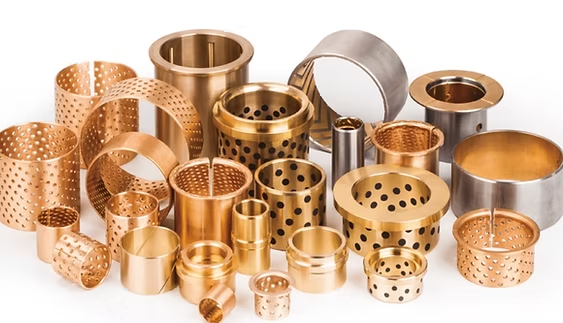
Casting bushes come in a variety of designs to fit different installation methods, load conditions, and maintenance needs. The right design can improve performance, reduce maintenance, and extend the service life of your equipment. Let’s explore the most common types of casting bushes and where they’re used.
1. Straight Sleeve Casting Bush
The straight sleeve is the most basic and common type of casting bush. It has a simple cylindrical shape with no flanges or grooves, making it easy to install and versatile. It’s designed to fit into a housing with a shaft rotating inside, and it primarily supports radial loads (weight perpendicular to the shaft).
Applications: Pumps, compressors, fans, reducers, general machinery, and any application where a simple, reliable bearing is needed. This is the go-to choice for standard, low-to-medium load applications.
2. Flanged Casting Bush
A flanged casting bush has an integral flange (a raised edge) on one end. The flange acts as a stop, preventing the bush from sliding into the housing and supporting axial loads (forward/backward pressure) in addition to radial loads. This design eliminates the need for additional retaining rings or fasteners, making installation easier.
Applications: Gearboxes, hydraulic components, automotive parts, and equipment where axial movement is a concern. The flange ensures the bush stays in place even under vibration or axial thrust.
3. Grooved Casting Bush
Grooved casting bushes have one or more grooves cut into the inner diameter. These grooves are designed to store lubricating grease or oil, creating a continuous oil film between the bush and the shaft. This reduces friction, wear, and heat, and extends the service life of the bush.
There are several types of grooves: spiral grooves (for rotating shafts), straight grooves (for sliding shafts), and annular grooves (for uniform lubrication). The number and size of the grooves can be customized based on the application’s speed and load.
Applications: Pumps, valves, gearboxes, and any application where continuous lubrication is needed but frequent greasing is impractical.
4. Split Casting Bush
A split casting bush is cut into two halves (or more) along its length. This design allows the bush to be installed or replaced without disassembling the entire machine—you simply split the bush, place it around the shaft, and reassemble it. This saves time and labor, especially for large or hard-to-reach equipment.
Applications: Large machinery (like rolling mills and mining equipment), gearboxes, and any equipment where disassembling the shaft is difficult or time-consuming
5. Self-Lubricating Casting Bush
Self-lubricating casting bushes are designed to operate without additional lubrication. They are typically made of oil-impregnated bronze (bronze that has been soaked in lubricating oil during manufacturing) or have graphite plugs embedded in the inner surface. The oil or graphite is released slowly during operation, creating a low-friction surface.
These bushes are ideal for applications where lubrication is difficult (e.g., hard-to-reach areas), high-temperature environments (where oil would break down), or dusty environments (where grease would attract dirt).
Applications: High-temperature machinery, precision instruments, medical equipment, solar trackers, and outdoor equipment.
6. Centrifugal Cast Wear Plate & Bronze Slide Pad
While not technically “bushes,” these are related components made using the same centrifugal casting process. Wear plates are flat or curved plates designed to protect surfaces from linear sliding friction. Bronze slide pads are small, flat components used in guide rails, frames, and other sliding mechanisms.
Applications: Conveyor systems, sliding gates, machine tool guide rails, and any equipment with linear sliding motion.
7. Bronze Thrust Washer
Thrust washers are flat, disc-shaped casting bushes designed specifically to support axial loads (thrust). They are placed between two rotating or sliding surfaces to prevent axial movement and reduce friction.
Applications: Gearboxes, turbines, rotating assemblies, and any equipment where axial thrust is a major concern.
6. Size Range: From Micro to Mega
One of the biggest advantages of casting bushes is their wide size range—they can be made to fit almost any application, from tiny precision instruments to massive industrial machinery. Let’s break down the size categories and their typical applications:
1. Miniature (Millimeter-Sized) Casting Bushes
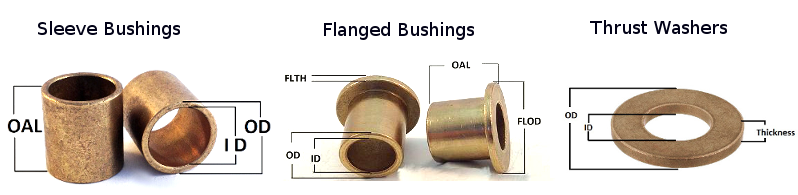
Miniature casting bushes have an inner diameter (ID) of 2mm to 20mm. They are small, lightweight, and designed for precision applications where space is limited. These bushes are often made of high-precision tin bronze or self-lubricating alloys to ensure smooth, accurate movement.
Applications: Precision instruments (like medical devices and measuring tools), small motors, micro-transmission components, solar tracker bearings (for adjusting the angle of solar panels), and electronics.
2. Regular (Centimeter-Sized) Casting Bushes
Regular casting bushes have an ID of 20mm to 100mm. This is the most common size range, used in a wide variety of general industrial applications. They balance performance, cost, and versatility, making them suitable for most standard machinery.
Applications: Pumps, valves, compressors, reducers, gearboxes, automotive components, and general industrial machinery.
3. Large (Meter-Sized) Casting Bushes
Large casting bushes have an ID of 100mm to 1200mm (or larger, for custom applications). These are heavy-duty bushes made of high-strength aluminum bronze or manganese bronze, designed to support massive loads and withstand harsh conditions.
Applications: Rolling mills (for steel production), mining equipment (like crushers and conveyors), marine propulsion systems (ship stern tubes), large hydraulic machinery, and metallurgical equipment.
Custom Sizes & Units
Most suppliers (including MYWAY) offer custom sizes to fit unique applications. This includes non-standard inner/outer diameters, lengths, and special shapes (like flanges or grooves). Casting bushes are available in both metric (millimeters) and imperial (inches) units, so you can choose the unit that best fits your equipment.
When ordering custom casting bushes, it’s important to provide detailed specifications: inner diameter, outer diameter, length, material, design (flanged, grooved, etc.), and application details (load, speed, environment). This ensures the bush is tailored to your exact needs.
7. Where Are Casting Bushes Used? Expanded Industrial Applications
Casting bushes are ubiquitous in industrial applications—they’re used in almost every industry where there’s moving parts, friction, or load-bearing. Let’s explore the key industries and specific applications in detail, so you can see how casting bushes play a role in your field.
1. General Industrial Machinery
This is the largest market for casting bushes, covering a wide range of equipment used in factories and manufacturing plants. Casting bushes are used in: – Pumps and compressors: To support rotating shafts and reduce friction in water, air, and fluid handling systems. – Fans and blowers: To ensure smooth rotation of fan blades and reduce noise. – Reducers and gearboxes: To support gears and shafts, and absorb shock from gear meshing. – Machine tools (lathes, mills, drills): To ensure precise movement of cutting tools and workpieces. – Conveyor systems: To support conveyor rollers and reduce friction in material handling. – Packaging and textile machinery: To ensure smooth, consistent operation of moving parts.
2. Construction & Engineering Machinery
Construction machinery operates in harsh, dusty environments with heavy loads and frequent shock—making casting bushes the perfect choice. Applications include: – Excavators: In the boom, arm, and bucket linkages, to support heavy loads and withstand pivoting movement. – Loaders and bulldozers: In the hydraulic cylinders and steering systems, to handle heavy thrust and vibration. – Cranes: In the jib, hoist, and trolley systems, to support massive loads and ensure smooth movement. – Aerial work platforms: In the lifting mechanism, to ensure stable, safe operation at height. – Concrete mixers: In the rotating drum and drive system, to handle heavy loads and abrasive materials.
3. Mining & Quarry Equipment
Mining equipment operates in extreme conditions—high loads, dust, vibration, and abrasive materials. Casting bushes are used in: – Crushers (jaw crushers, cone crushers): In the eccentric shaft and toggle plate, to support heavy impact loads. – Vibrating screens: In the screen frame and drive system, to handle vibration and heavy loads. – Mine conveyors: In the roller bearings and idlers, to support long-distance material transport. – Drilling rigs: In the drill bit and drive system, to withstand high torque and vibration. – Underground mining machinery: In the shearer and continuous miner, to operate in narrow, dusty spaces.
4. Marine & Offshore Engineering
Marine environments are corrosive (saltwater, humidity) and require durable, corrosion-resistant components. Casting bushes are used in: – Ship propulsion systems: Stern tube bushes and propeller shaft bushes, to support the ship’s propeller and withstand saltwater corrosion. – Rudder systems: Rudder bearings, to allow smooth rotation of the rudder. – Offshore platforms: Winches, hoists, and drilling equipment, to operate in harsh offshore conditions. – Seawater pumps and valves: To handle saltwater and prevent corrosion. – Marine hydraulic systems: In cylinders and actuators, to support heavy loads and withstand corrosion.
5. Oil & Gas Industry
The oil and gas industry operates in extreme conditions—high pressure, high temperature, and corrosive chemicals. Casting bushes are used in: – Downhole drilling tools: In the drill string and bit, to withstand high torque, pressure, and abrasive drilling fluids. – Oilfield pumping units: In the crankshaft and connecting rod, to support heavy loads and continuous operation. – Pipeline valves: In the valve stem and actuator, to ensure tight sealing and smooth operation. – Refinery equipment: In pumps, compressors, and heat exchangers, to handle high temperatures and corrosive chemicals. – Chemical processing: In reaction kettles and mixers, to withstand corrosive media.
6. Power Generation & New Energy
Power generation equipment requires reliable, long-lasting components to ensure continuous operation. Casting bushes are used in: – Hydraulic turbine generators: In the turbine shaft and bearing housing, to support the massive turbine and generator. – Wind turbines: In the yaw and pitch systems, to adjust the turbine’s angle and ensure smooth rotation. – Solar trackers: In the rotating mechanism, to adjust the angle of solar panels for maximum sunlight absorption. – Thermal power plants: In pumps, steam turbines, and auxiliary equipment, to handle high temperatures and pressure. – Nuclear power plants: In safety systems and auxiliary equipment, to ensure reliability in critical applications.
7. Steel & Metallurgical Industry
Steel production involves high temperatures, heavy loads, and abrasive materials—casting bushes are essential for this industry. Applications include: – Hot rolling mills: In the work rolls and backup rolls, to withstand high temperatures and heavy loads. – Cold rolling mills: In the rolls and tension systems, to ensure precise thickness control. – Continuous casting machines: In the mold and guide rolls, to handle molten steel and high temperatures. – Forging presses: In the ram and frame, to support massive forging loads. – Steelmaking equipment: In the ladle and tundish, to handle high temperatures and molten steel.
8. Railway & Transportation
Railway and transportation equipment requires reliable components to withstand vibration, heavy loads, and long service life. Casting bushes are used in: – Railway vehicles: Axle box bushes, to support the train’s axle and reduce friction. – Urban rail transit (subways, light rail): In the bogie and suspension systems, to ensure smooth, safe operation. – Heavy trucks: Chassis and suspension bushes, to support the truck’s weight and absorb road vibration. – Agricultural vehicles: Tractors and harvesters, to handle off-road conditions and heavy loads.
9. Aerospace & High-End Equipment
Aerospace applications require high-precision, high-reliability components. Casting bushes are used in: – Aircraft landing gear: In the landing gear struts and linkages, to support the aircraft’s weight during takeoff and landing. – Aircraft engines: In auxiliary systems, to ensure smooth operation at high temperatures. – Precision instruments: In navigation and control systems, to ensure accurate movement. – Defense equipment: In military vehicles and weapons systems, to withstand harsh conditions and ensure reliability.
10. Agricultural & Forestry Machinery
Agricultural and forestry machinery operates in outdoor, dusty, and muddy environments. Casting bushes are used in: – Tractors: In the transmission and suspension systems, to handle heavy loads and off-road conditions. – Harvesters: In the cutting and conveying systems, to withstand abrasive crop materials. – Planters and sprayers: In the rotating and moving parts, to ensure consistent operation. – Forestry equipment: In cutting and logging machinery, to handle rough terrain and heavy loads.
100000+ Types of Bushings – Contact Us for Details