
Recent Posts
Sleeve Bushing: The Definitive Technical and Application Resource for Industrial Drive Systems
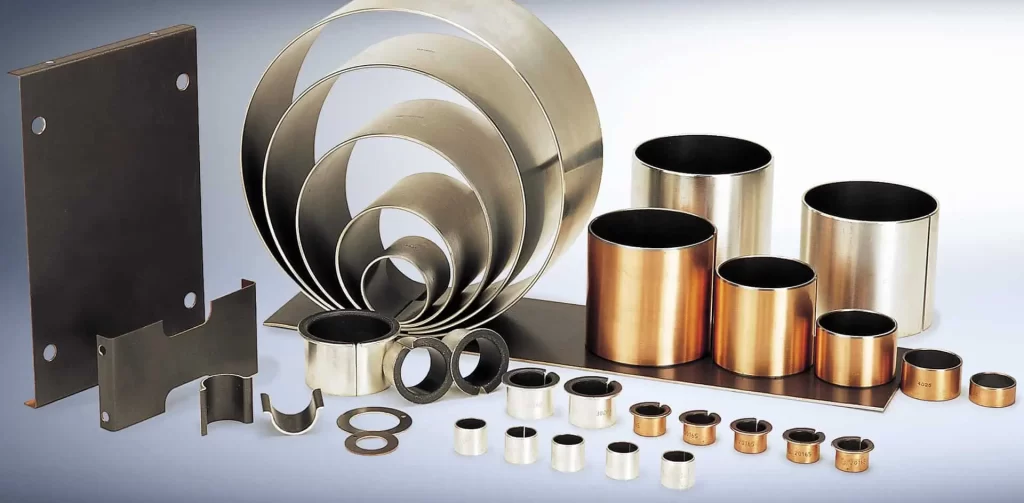
Table of Contents
1. Sleeve Bushing Fundamentals and Core Functions
A sleeve bushing, often referred to as a plain bearing, sliding bearing, or journal bearing, represents a cylindrical component designed to provide bearing surfaces for rotating or sliding shafts within mechanical systems . Unlike rolling element bearings that utilize balls or rollers to facilitate movement, the sleeve bushing operates on the principle of sliding friction . This foundational distinction underscores its unique capabilities in managing heavy loads, accommodating shock conditions, and offering a cost-effective solution for numerous industrial applications. The primary purpose of a sleeve bushing is to mitigate friction, diminish wear, and ensure accurate alignment between moving parts, thereby protecting the more expensive components of a machine, such as the shaft or housing . By incorporating a sleeve bushing, engineers design a sacrificial component that absorbs friction and wear, extending the operational lifespan of the entire drive system.
2. Design and Construction of Sleeve Bushings
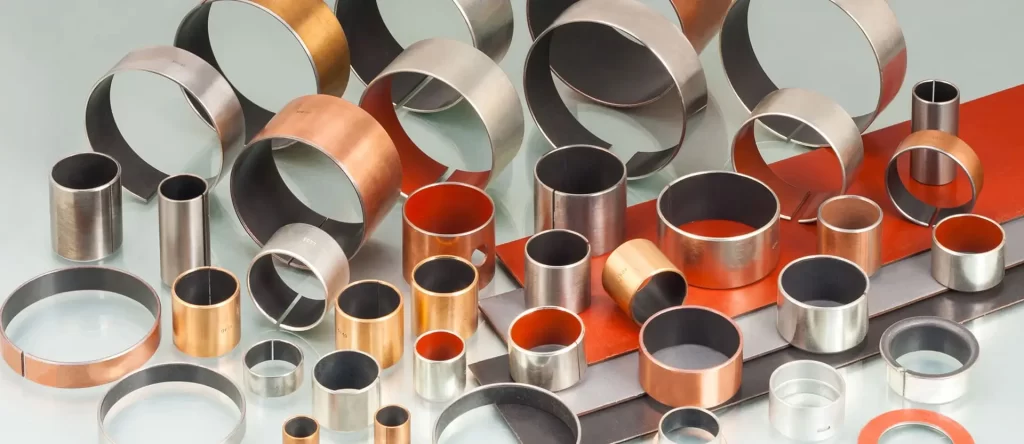
The construction of a sleeve bushing is characterized by its simplicity and robustness. Typically, it is a single-component, cylindrical sleeve that is pressed into a housing or bore . This design provides a substantial contact area between the bushing and the shaft, which is critical for distributing loads evenly . The materials used in sleeve bushing construction are diverse, selected based on the specific operational demands of the application. Common materials include metallic options like bronze, brass, steel (often with a babbitt layer for embeddability), and bi-metal combinations . Non-metallic materials such as engineered plastics and advanced composites are also prevalent, offering advantages in weight reduction, corrosion resistance, and self-lubricating properties . The design may include features such as oil grooves or reservoirs to facilitate effective lubrication, ensuring a continuous lubricating film between the shaft and the bushing to minimize friction and prevent seizing.
3. Critical Functionalities in Mechanical Systems
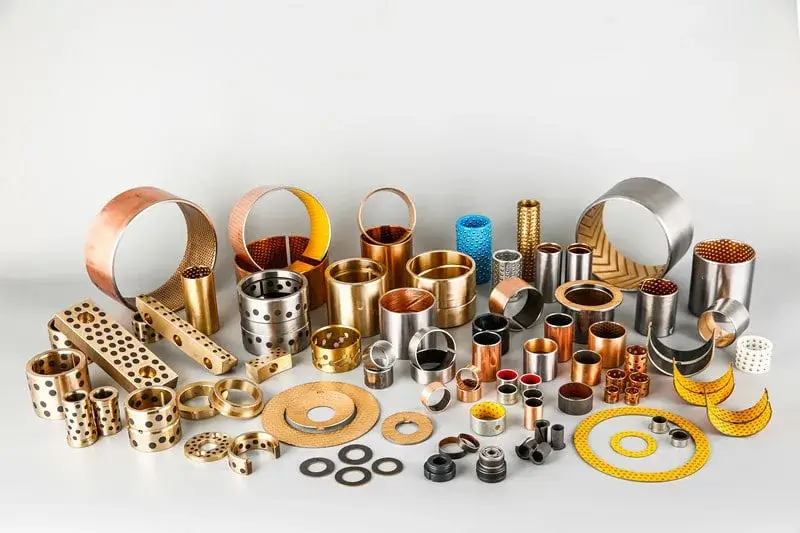
The integration of a sleeve bushing into a drive system provides a spectrum of critical functionalities that ensure operational integrity. A primary function is load distribution; the large contact area of the sleeve bushing supports high radial and axial loads, making it ideal for heavy-duty applications . Furthermore, they function as shock absorbers, dampening vibrations and oscillations that can damage other components . The ability of a sleeve bushing to tolerate minor shaft misalignment is another significant advantage, preventing catastrophic failure in systems where perfect alignment is difficult to maintain . Lastly, as a protective element, the sleeve bushing acts as a replaceable wear surface, saving the more costly shaft or housing from damage and providing a method to restore equipment to its original specifications without the need for complete part replacement .
4. Diverse Applications Across Industries
Sleeve bushings are indispensable components found in a vast array of industrial sectors . In the automotive industry, they are extensively used in engines (connecting rods, crankshafts), transmissions, suspension systems, and braking systems . The railway sector relies heavily on sleeve bushings for critical applications such as bogies, brakes, and various interior and exterior mechanisms . In heavy equipment and mining, they are essential in hydraulic pumps, excavators, and crushers, where they withstand extreme loads and contaminants. Beyond these, sleeve bushings are prevalent in agricultural machinery, marine equipment, aerospace components, and industrial machinery like turbines, generators, and conveyor systems . Their versatility ensures that they are a standard component wherever rotational or linear motion requires support and protection.
5. Self-Lubricating Technologies and Maintenance
Modern advancements in sleeve bushing technology have significantly reduced maintenance demands through the development of self-lubricating bushings. These advanced bushings are often manufactured from composite materials or oil-impregnated metals that contain built-in lubricants . As the bushing operates, the lubricant is released to form a thin film between the moving surfaces, reducing friction and wear without the need for external grease or oil. This capability is especially beneficial in applications where maintenance access is challenging, where contamination from lubricants must be avoided (e.g., in food processing and textile industries), or in environments where continuous operation is required . This maintenance-free operation not only reduces labor costs but also minimizes equipment downtime, enhancing overall productivity and reliability.
6. Performance Advantages Over Rolling Bearings
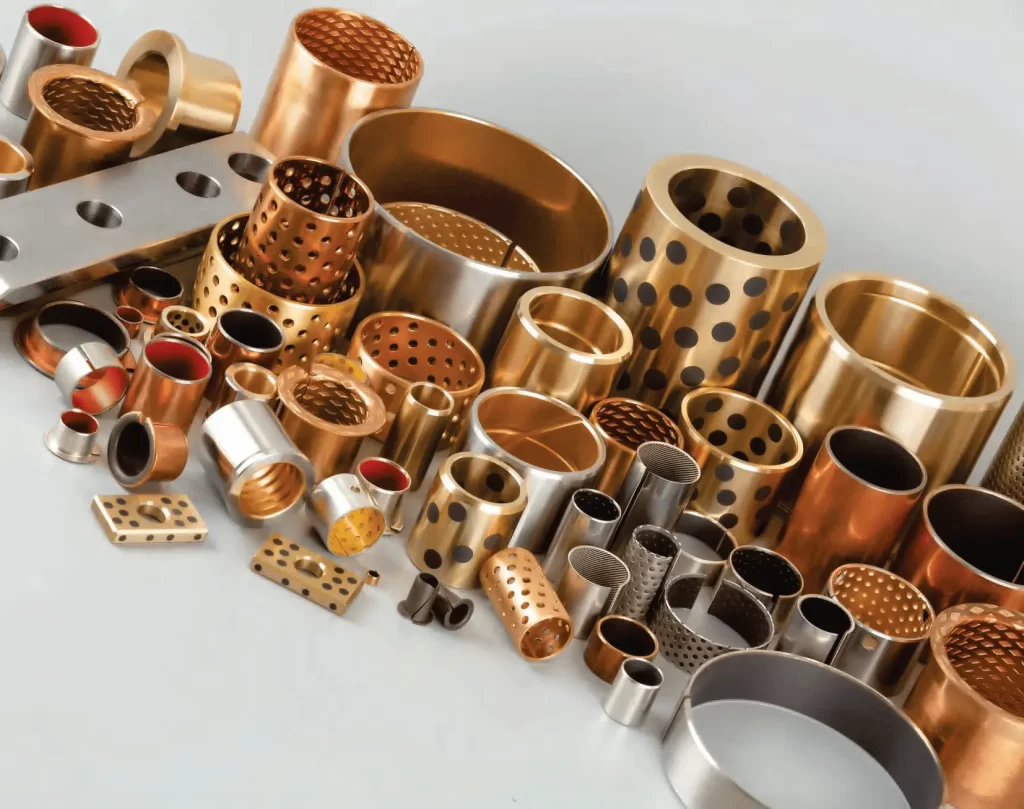
Choosing a sleeve bushing over a rolling bearing provides distinct performance and economic advantages for many applications. Bushings are fundamentally more cost-effective, being 25% to 400% less expensive than comparable bearings, with associated tooling costs also significantly lower . In terms of design, they are typically more compact and lightweight, which helps reduce component inertia and overall system weight . Their ability to handle high shock loads and tolerate misalignment without suffering from brinelling or race damage makes them more robust in challenging environments . Furthermore, because they operate with sliding motion, sleeve bushings are generally quieter than rolling bearings, making them suitable for noise-sensitive equipment . These performance characteristics make the sleeve bushing a preferred engineering choice for many designers.
7. Application-Specific Variants of Sleeve Bushings
The broad utility of the sleeve bushing is reflected in its numerous application-specific variants. Wrapped steel bushings, fabricated from spring steel strips, offer high load capacities and inherent elasticity that protects shafts under heavy impact . Composite bushings, made from advanced polymer and fiber materials, provide exceptional wear resistance, corrosion protection, and are often ideal for self-lubricating applications . Plastic bushings are a cost-effective, lightweight solution for light-load applications, offering immunity to rust and quiet operation . Specialized variants like flanged sleeve bushings combine radial and thrust bearing functions, while guide pin bushings are designed for precision alignment in automotive brake calipers . This wide range of designs ensures that a sleeve bushing can be engineered to meet the specific demands of virtually any mechanical application.
8. Practical Installation and Replacement Protocols
Proper installation and replacement are essential for the optimal performance and longevity of a sleeve bushing. The most common method is a press-fit, where the bushing is pressed into a precisely machined housing bore. For certain applications, an interference fit is created by heating the housing to expand it or cooling the bushing to contract it, allowing for easy insertion and a tight grip upon temperature equalization . Before installing a new bushing, it is imperative to thoroughly clean the housing and inspect for any burrs or damage . The bushing must be correctly oriented, often ensuring that oil holes or grooves align with lubrication channels. Post-installation checks include verifying the inside diameter and ensuring that the shaft rotates freely with the correct clearance. Adhering to these protocols extends the service life of the bushing and the machine it protects.
9. Material Science and Innovation
The evolution of sleeve bushing performance is driven by continuous innovation in material science. The market is shifting towards advanced metal-polymer composites and lead-free materials in response to environmental regulations and the demand for higher performance . These new materials offer enhanced tribological properties, including lower coefficients of friction, better wear resistance, and the ability to operate under extreme temperatures and in dry-running conditions . Innovations in engineered plastics and fiber-reinforced composites are creating bushings that are lighter, stronger, and more versatile than traditional metallic options . For demanding applications, specialty materials like PTFE-lined and solid-lubricant bushings are becoming increasingly prevalent, providing solutions that eliminate lubrication points and reduce maintenance in complex systems
FAQ
Q: What are the primary benefits of using a sleeve bushing?
A: Sleeve bushings are cost-effective, compact, lightweight, and excellent at handling high loads, shock loads, and shaft misalignment. They operate quietly and can be designed for maintenance-free operation through self-lubrication.
Q: Where are sleeve bushings typically found in industrial applications?
A: They are found in a wide variety of applications, including automotive engines and transmissions, railway bogies, heavy machinery like excavators and pumps, and in general industrial equipment such as turbines and compressors.
Q: How do sleeve bushings differ from rolling bearings?
A: A sleeve bushing is a single, cylindrical component that operates via sliding friction, making it suited for heavy, slow-moving loads. A rolling bearing has multiple components (balls or rollers and races) that operate via rolling friction, which is ideal for high-speed, lighter load applications .
Q: What materials are commonly used for sleeve bushings?
A: Common materials include metallic options like bronze, steel, and bi-metal alloys, as well as non-metallic choices such as engineered plastics, fiber-reinforced composites, and self-lubricating polymers .
Q: What is a self-lubricating sleeve bushing?
A: A self-lubricating bushing is manufactured with built-in lubricants (like graphite, PTFE, or oil-impregnated into the material) that are released during operation, creating a lubricating film and eliminating the need for regular external lubrication.
100000+ Types of Bushings – Contact Us for Details