
Recent Posts
Low Friction Sliding Material Bushings: Engineering Principles for Operational Excellence
Introduction
The relationship between mating mechanical surfaces fundamentally determines the efficiency, reliability, and longevity of industrial equipment. Among the various solutions developed to manage this interface, low friction sliding material bushings have emerged as a sophisticated response to the persistent challenges of energy loss, thermal generation, and progressive wear. These components serve as the critical interface between rotating or oscillating shafts and their housings, providing a controlled sliding surface that minimizes resistance while maintaining precise alignment. The evolution of bushing technology has moved far beyond simple metal sleeves, incorporating advanced material science to deliver solutions that operate effectively under extreme conditions, in contaminated environments, and with minimal maintenance intervention. This examination explores the technical foundations, material classifications, and operational considerations that define modern low friction sliding bushings, with particular attention to the practical factors that influence selection and performance in real-world applications.
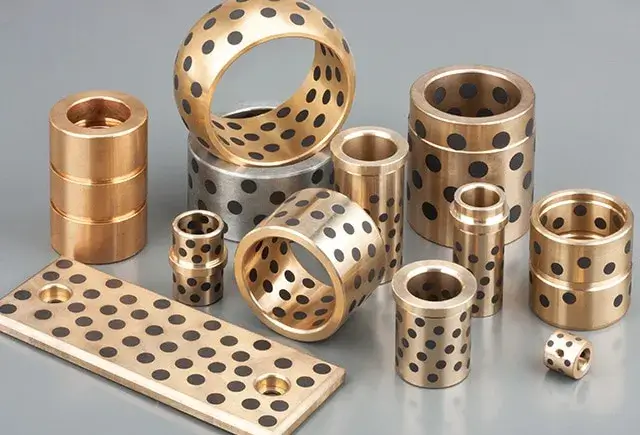
Table of Contents
1. Foundational Principles of Low Friction Sliding Bushings
The operating principle of a sliding bushing differs fundamentally from that of rolling element bearings. Rather than employing balls or rollers to separate moving surfaces, the bushing relies on a low-friction interface between its inner diameter and the rotating shaft. The efficacy of this interface depends upon the material properties of the bushing itself—specifically its ability to maintain a low coefficient of friction under varying loads, speeds, and temperatures. Advanced bushing materials achieve this through several mechanisms: the incorporation of solid lubricants within the material matrix, the formation of transfer films that coat the mating shaft surface, and the optimization of surface chemistry to reduce adhesion between contacting asperities. These mechanisms work synergistically to ensure that the bushing performs reliably across a wide operational envelope, from intermittent oscillatory motion to continuous high-speed rotation.
2. Classification and Material Selection Criteria
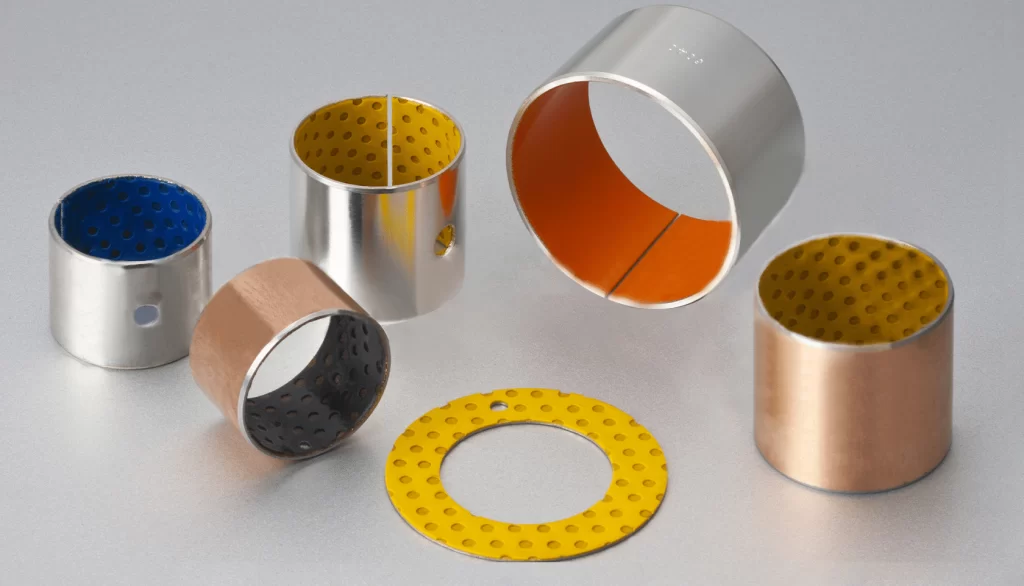
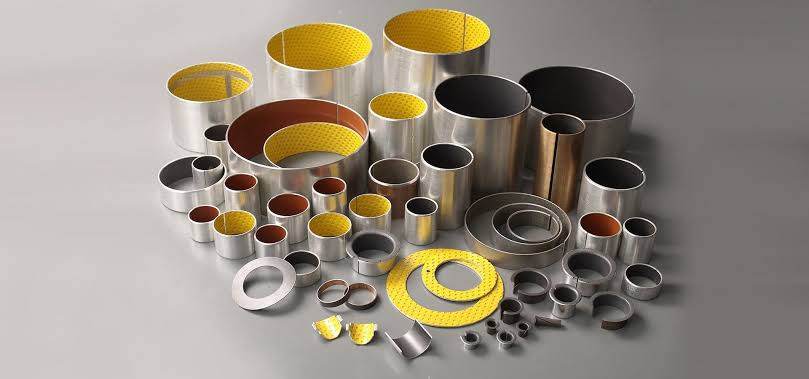
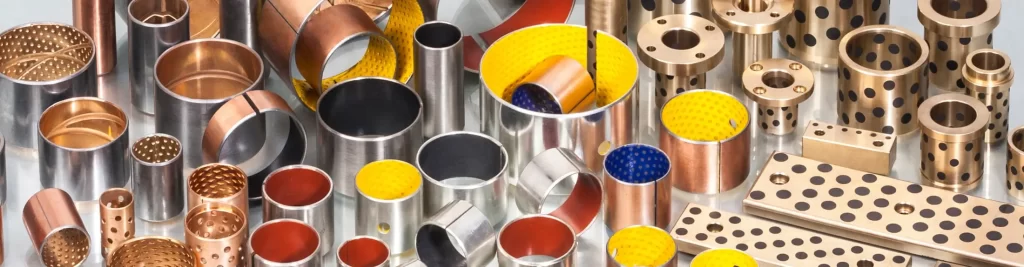
The selection of an appropriate bushing material represents one of the most consequential decisions in the mechanical design process. Material families available for low friction sliding bushings encompass a broad spectrum of compositions, each with distinct performance characteristics. Bronze-based bushings, particularly those with embedded graphite or other solid lubricants, offer exceptional load-bearing capacity and dimensional stability under heavy loads. Engineering polymers such as polyoxymethylene (POM), polytetrafluoroethylene (PTFE), and ultra-high molecular weight polyethylene (UHMW) provide very low friction coefficients for lighter-load applications while offering excellent chemical resistance. Metal-polymer composite constructions combine a steel backing with a porous bronze interlayer and a PTFE-based wear surface, delivering high load capacity with minimal friction. The selection process must weigh multiple factors, including load magnitude and direction, operating speed, temperature range, environmental exposure, shaft surface characteristics, and cost constraints.
3. Self-Lubricating Mechanisms and Transfer Film Formation
A defining characteristic of advanced low friction sliding bushings is their self-lubricating capability. Unlike conventional bearings that depend on externally applied grease or oil films, self-lubricating bushings contain solid lubricants integrated directly into the material composition. These lubricants—commonly graphite, PTFE, or molybdenum disulfide—are distributed throughout the bushing structure in microscopic domains. During operation, as the shaft rotates against the bushing surface, these lubricant particles are gradually exposed and transferred to the shaft surface, creating a thin, low-shear film that separates the two bodies. This transfer film is continuously replenished as wear progresses, ensuring consistent friction performance throughout the component’s service life. The self-sustaining nature of this mechanism eliminates the need for external lubrication systems and makes these bushings particularly suitable for applications where maintenance access is limited or where lubricant contamination poses a risk to product quality.
4. Load Capacity and PV Considerations
The operational limits of low friction sliding bushings are typically characterized by the PV factor—the product of specific bearing load (pressure) and sliding velocity. This parameter represents the thermal equilibrium point of the bushing under given operating conditions. As load or speed increases, frictional heating within the bushing material rises proportionally. The material’s ability to dissipate this heat to the surrounding environment ultimately determines the maximum sustainable PV value. It is essential to recognize that the PV limit is not a fixed material constant but depends significantly on ambient temperature, housing thermal conductivity, and cooling provisions. At elevated ambient temperatures, the allowable PV decreases substantially, often requiring derating of the bushing for applications in hot environments. For oscillating or intermittent motion, engineers typically apply a safety factor to account for the additional thermal stresses associated with stop-start operation.
5. Shaft Surface Preparation and Tribological Compatibility
The interface between bushing and shaft constitutes a tribological system in which both components contribute to overall performance. Shaft surface roughness plays a critical role in determining friction and wear outcomes. Contrary to intuitive expectations, excessively smooth shaft surfaces are not always optimal for self-lubricating bushings. For materials that rely on transfer film formation, a shaft roughness in the range of 0.2 to 0.4 micrometers Ra provides the necessary texture for the lubricant film to adhere effectively. Surfaces that are too smooth fail to anchor the transfer film, resulting in higher friction and the potential for stick-slip behavior. Conversely, excessively rough surfaces act abrasively, accelerating wear of the bushing liner. Shaft hardness is similarly important, with recommended values typically in the range of HRC 45 to 50 for steel shafts to resist scoring and maintain dimensional stability over extended service intervals.
6. Environmental Resistance and Chemical Compatibility
Industrial environments frequently expose sliding bushings to aggressive substances, temperature extremes, and contaminants that can compromise performance. The material selection process must therefore consider chemical compatibility and environmental resistance alongside mechanical properties. Bronze bushings offer good corrosion resistance in marine and humid environments, particularly when alloyed with tin, aluminum, or nickel. Polymer materials exhibit excellent resistance to a wide range of chemicals, making them suitable for use in processing industries where cleaning agents or process fluids contact the bearing surfaces. For applications requiring compliance with food safety regulations, FDA-approved materials such as certain UHMW and PTFE grades provide the necessary assurance of safe incidental contact with food products. The dry-running characteristic of self-lubricating bushings also eliminates concerns about lubricant leaching or contamination, a critical advantage in pharmaceutical, food, and beverage applications.
7. Installation Engineering and Clearance Management
The performance of a low friction sliding bushing depends not only on material selection but also on proper installation practice. Press-fitting bushings into housings inevitably reduces the inner diameter due to radial compression. This bore closure effect must be anticipated during the design phase to ensure adequate clearance between bushing and shaft. For a typical 50mm diameter PTFE-lined bushing, the inner diameter can shrink by 0.05 to 0.08 millimeters upon installation into a standard H7 tolerance housing. If this reduction is not accounted for, the resulting interference fit may cause the shaft to seize, particularly once thermal expansion is considered. Engineers must calculate the final installed clearance based on the housing bore tolerance, bushing wall thickness, material modulus, and expected operating temperatures. Appropriate shaft tolerances, typically g6 or f7, should be specified to maintain functional clearance across the full temperature range.
8. Operational Benefits and Lifecycle Economics
The economic advantages of low friction sliding bushings extend well beyond the initial purchase price. The elimination of external lubrication systems removes the associated hardware costs—oil holes, grease fittings, distribution lines, and pumps—as well as the ongoing expense of lubricant procurement and application. Maintenance labor requirements decrease substantially when scheduled lubrication can be reduced or eliminated entirely. The lower friction coefficients achieved by advanced bushing materials translate directly to reduced energy consumption, particularly in high-speed or continuous operation applications. Extended service intervals and reduced replacement frequency further lower the total cost of ownership. While the unit cost of self-lubricating bushings may be comparable to or slightly higher than conventional alternatives, the lifecycle economics invariably favor the low friction solution when maintenance labor, energy costs, and downtime are considered in the analysis.
9. Application Diversity Across Industrial Sectors
Low friction sliding bushings find application across a remarkably diverse range of industrial sectors, each with distinct performance requirements. In automotive engineering, these components appear in powertrain systems, suspension linkages, steering mechanisms, and various interior and closure systems where low friction contributes to comfort and efficiency. Construction and mining equipment rely on heavy-duty bushings for pivot joints, hydraulic cylinder mounts, and track components, where the ability to operate reliably in dirty conditions is paramount. Agricultural machinery utilizes sliding bushings in tillage implements, harvesters, and planting equipment, where resistance to debris and dust is essential. Industrial material handling systems—conveyors, packaging lines, and sorting equipment—benefit from the maintenance-free operation and cleanliness of dry-running bushings. Marine applications require corrosion-resistant bronze bushing solutions for propulsion systems, steering gear, and deck machinery. The widespread adoption across these diverse sectors attests to the versatility and reliability of modern low friction sliding bushing technology.
Frequently Asked Questions
Q1: What materials are commonly used for low friction sliding bushings?
Common materials include bronze with graphite or PTFE, engineering polymers such as POM, PTFE, nylon, UHMW, and metal-polymer composites combining a steel or bronze backing with a PTFE wear surface.
Q2: How is the coefficient of friction determined for a bushing?
The coefficient is measured through tribological testing under controlled load, speed, temperature, and lubrication conditions. Values typically range from 0.03 to 0.12 for self-lubricating materials.
Q3: Can low friction bushings operate without any lubrication?
Yes. Self-lubricating bushings contain solid lubricants integrated into the material that are released during operation, eliminating external lubrication requirements for most applications.
Q4: What is the purpose of a transfer film in sliding bushings?
The transfer film is a thin layer of lubricant material that coats the shaft surface, providing a low-shear interface that reduces friction and wear between the sliding surfaces.
Q5: How does operating temperature affect bushing performance?
Elevated temperatures reduce the allowable PV rating, may soften polymer materials, and can affect the viscosity or effectiveness of solid lubricants. Derating is typically required above 80°C for many materials.
Q6: What shaft material is recommended for use with bronze bushings?
Hardened steel shafts with a hardness of HRC 45-50 and surface roughness of 0.2-0.4 µm Ra are recommended for optimal compatibility with bronze bushings.
Q7: How should bushings be installed to avoid damage?
Use appropriate press-fitting equipment, ensure housing bores are clean and dimensioned correctly, and avoid cocking during insertion. Account for bore closure in clearance calculations.
Q8: What factors influence the service life of a sliding bushing?
Load magnitude, operating speed, temperature, environmental conditions, shaft surface quality, contamination, and alignment all significantly influence service life.
Q9: Are there FDA-approved low friction bushing materials?
Yes. Certain UHMW, PTFE, and specialty polymer grades are FDA-compliant for use in food processing and pharmaceutical equipment.
Q10: What distinguishes a bushing from a plain bearing?
The terms are often used interchangeably, though “bushing” typically refers specifically to the replaceable cylindrical liner component, while “plain bearing” may encompass the broader assembly.
Q11: What is the recommended shaft roughness for polymer bushings?
A shaft roughness of 0.2 to 0.4 µm Ra is generally recommended for polymer bushings to balance transfer film retention and wear prevention.
Q12: Can self-lubricating bushings be used in high-vibration applications?
Yes. The absence of rolling elements makes sliding bushings inherently resistant to vibration damage and fretting corrosion.
Q13: What is bore closure and why is it significant?
Bore closure is the reduction in bushing inner diameter caused by radial compression during press-fit installation. It affects operational clearance and must be calculated to prevent seizure.
Q14: How do self-lubricating bushings perform in dirty environments?
They typically outperform lubricated bearings in contaminated conditions because dry operation prevents dust and grit adhesion that forms abrasive pastes.
Q15: What maintenance is required for self-lubricating bushings?
Periodic inspection of wear, clearance, and noise is recommended, but no regular relubrication is required under normal operating conditions.
Q16: Which bushing material offers the highest load capacity?
Bronze-based bushings with graphite or PTFE generally offer the highest load capacity among self-lubricating bushing materials.
Q17: Are plastic bushings cost-effective compared to bronze?
For appropriate load ranges, plastic bushings are significantly more cost-effective due to injection molding production, lighter weight, and reduced machining requirements.
Q18: What causes stick-slip in sliding bushings?
Stick-slip occurs when static friction exceeds dynamic friction, typically due to insufficient transfer film, excessive shaft roughness, or incompatible material pairing.
Q19: Can sliding bushings accommodate misalignment?
Sliding bushings tolerate moderate misalignment better than rolling bearings, though excessive misalignment accelerates localized wear and should be avoided.
Q20: Where are MYWAY bushings applied in industry?
MYWAY bushings serve applications across construction, agriculture, automotive, conveyor systems, and material handling where reliability and reduced maintenance are essential.
100000+ Types of Bushings – Contact Us for Details