
Recent Posts
Professional Bushing Manufacturer: MYWAY Full Range of Bushing Products – Technical Advantages and In-Depth Application Analysis
Introduction
Bushings (also referred to as plain bearings, sleeve bearings, journal bearings, or sliding bearings) serve as fundamental tribological components in modern industrial equipment, with their performance directly determining operational reliability, efficiency, and service life. From automotive chassis and construction machinery pivot points to hydraulic systems, industrial robot joints, wind turbine assemblies, and food processing equipment, proper bushing selection can significantly reduce frictional power losses, minimize maintenance frequency, extend overhaul intervals, and generate substantial long-term economic value for end users. Zhejiang MYWAY Co., Ltd. is a professional bushing manufacturer with over 20 years of industry expertise, integrating material formulation development, casting and sintering, precision machining, quality inspection, and global sales service into a unified operational framework. The company’s product portfolio encompasses self-lubricating composite bushings, bimetal bushings, graphite-plugged copper bushings, bronze rolled bushings, steel-based bushings, powder metallurgy bushings, and engineering plastic bushings, with full support for non-standard custom development based on customer-specific operating conditions. This article provides a systematic and comprehensive overview of MYWAY’s core product technical parameters, manufacturing process characteristics, applicable operating conditions, and typical industry applications, serving as a practical reference resource for procurement engineers, design professionals, and equipment maintenance managers.
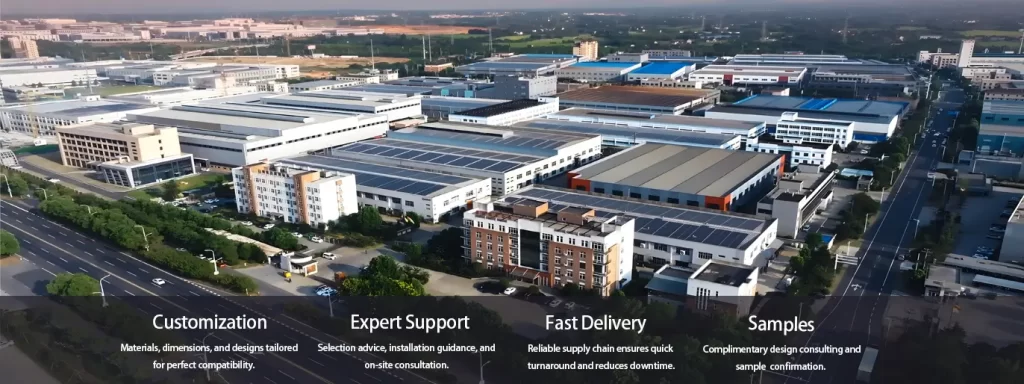
Table of Contents
1. Company Profile and Manufacturing Capabilities: 20 Years of Dedicated Expertise as a National High-Tech Enterprise
Zhejiang MYWAY Co., Ltd. was established in 2005 with its headquarters located in Zhejiang Province, China. The manufacturing facility is situated in Guangde City, Anhui Province, occupying over 35,000 square meters of floor space, complemented by a foreign trade operations and technical support center in Hangzhou, forming an efficient integrated “R&D–Manufacturing–Sales–Service” operational system. The company currently employs approximately 400 personnel, with engineering and technical staff accounting for over 12% of the workforce, the majority holding professional backgrounds in metallic materials, mechanical engineering, and automation, possessing full-process in-house development capabilities spanning from material modification to finished product delivery.
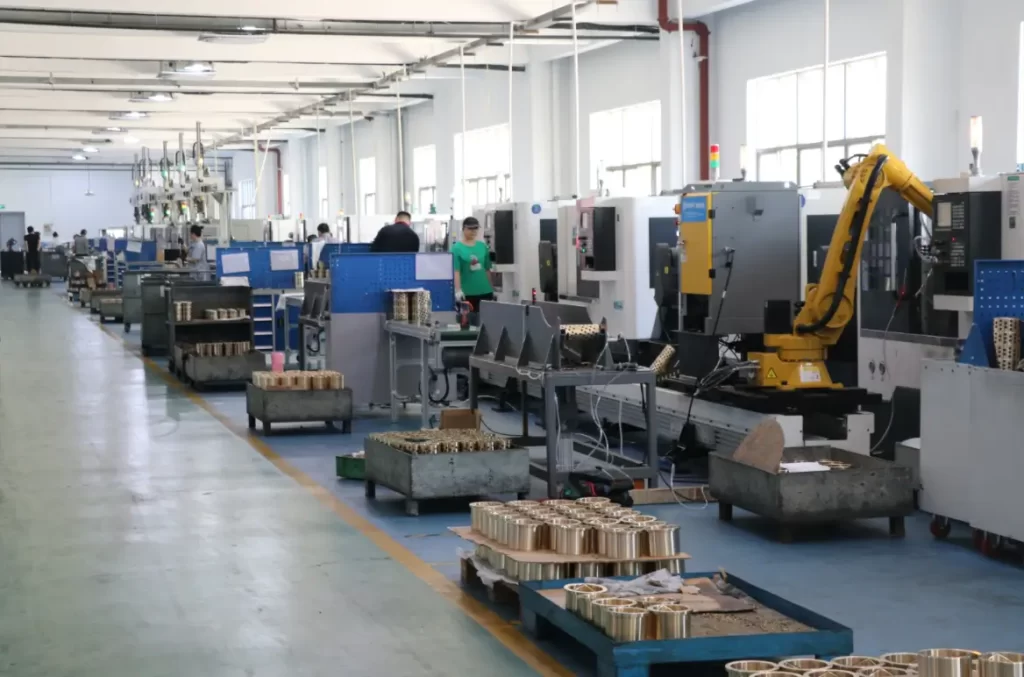
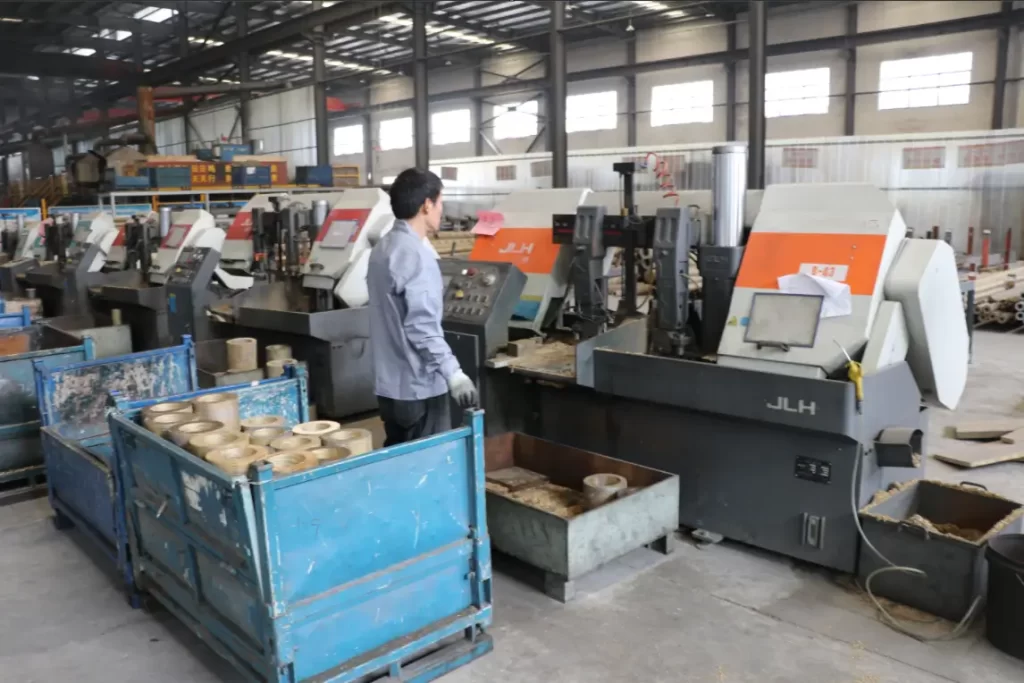
In terms of manufacturing equipment, the company is equipped with 5 horizontal continuous casting furnaces, 2 medium-frequency induction melting furnaces, and 9 centrifugal casting machines, capable of simultaneously meeting mass production requirements for copper alloy rods, tubes, strips, and custom-shaped castings. Annual production capacity reaches 20,000 tons of copper alloy profiles and 5,000 tons of centrifugal cast products, positioning MYWAY among the industry leaders in China regarding production scale. For precision machining, the company operates dozens of high-precision CNC lathes, CNC milling machines, machining centers, and specialized bushing forming equipment, enabling stable batch processing of bushings with inner diameters ranging from 3 mm to over 500 mm and lengths from 3 mm to over 300 mm.
Regarding quality system certifications, MYWAY has successfully obtained ISO 9001:2015 Quality Management System certification, IATF 16949:2016 Automotive Quality Management System certification, and ISO 14001:2015 Environmental Management System certification, demonstrating that the company’s product quality control, supply chain management, and environmental protection practices meet internationally recognized high standards. The company has established a fully traceable quality inspection system covering the entire chain from incoming raw materials to finished goods dispatch, equipped with over 30 sets of advanced testing instruments including German-imported optical emission spectrometers, electronic universal tensile testing machines, digital Rockwell/Brinell hardness testers, metallographic microscopy analysis systems, coordinate measuring machines (CMM), profilometers, roughness testers, and pneumatic gauges. This ensures that the chemical composition, mechanical properties, microstructural integrity, dimensional tolerances, and surface quality of every batch conform to drawing specifications and customer requirements.
Owing to consistent quality and competitive pricing, MYWAY’s products have been exported to over 40 countries and regions including Germany, Italy, France, the United Kingdom, the United States, Canada, Japan, South Korea, Australia, and Brazil, establishing long-term stable supply relationships with multiple Fortune 500 industrial enterprises and accumulating a strong brand reputation in overseas markets. The company maintains finished goods inventory of 500 to 600 tons across a 1,900-square-meter warehouse facility, enabling rapid response to customer emergency order requirements, with standard catalog items capable of shipment within 48 hours.
2. Self-Lubricating Composite Bushing Series (SF-1 / DU Type): Three-Layer Composite Structure Enabling Oil-Free or Minimal-Oil Operation
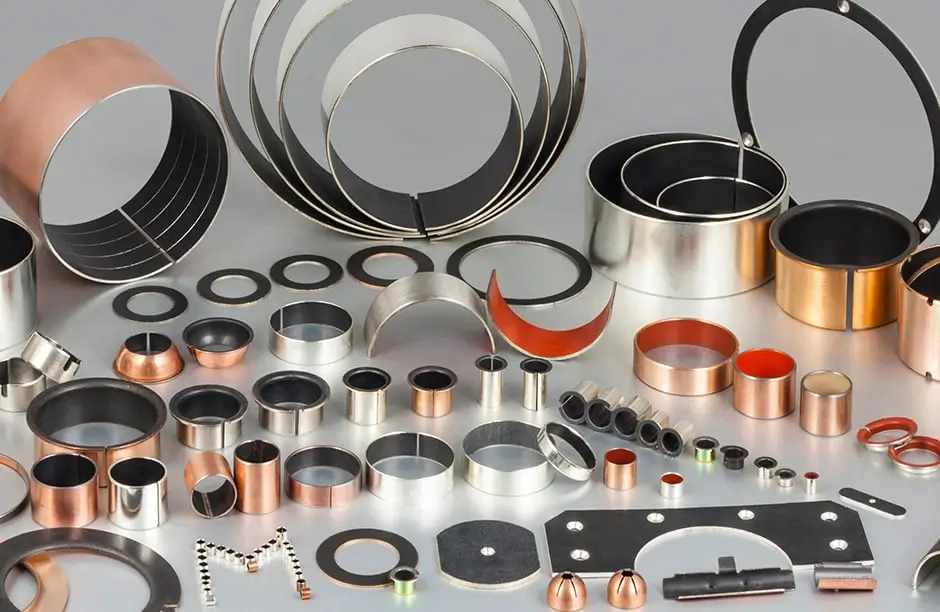
The self-lubricating composite bushing represents one of MYWAY’s most technologically sophisticated and widely applied core product categories, internationally designated as SF-1 type (also commonly referred to as DU bushings). This series employs a unique “three-layer composite” structural design, with each layer fulfilling a distinct engineering function: the base layer consists of low-carbon steel or copper alloy backing, typically ranging from 0.7 mm to 2.3 mm in thickness, providing the bushing’s compressive strength and structural rigidity to prevent plastic deformation or out-of-roundness during press-fit installation into housing bores; the intermediate layer comprises spherical bronze powder formed through high-temperature sintering into a porous skeletal structure, approximately 0.20 mm to 0.30 mm in thickness. This layer not only substantially enhances the bond strength between the PTFE top layer and the steel backing to prevent delamination under shear forces, but the bronze powder skeleton also exhibits excellent thermal conductivity, rapidly transferring frictional heat to the housing for dissipation, preventing localized temperature rise that could lead to material softening and failure. The top layer consists of a uniformly blended mixture of modified polytetrafluoroethylene (PTFE) and lead-based fillers, with a thickness of only 0.01 mm to 0.03 mm, featuring an extremely low coefficient of friction and favorable affinity for the mating shaft surface.
During actual operation, the PTFE mixture on the bushing’s inner surface gradually transfers onto the microscopic grooves of the mating shaft, forming a continuous, stable, and ultra-thin transfer film. This transfer film transforms the direct metal-to-metal contact between the shaft and bushing into low-shear sliding between PTFE surfaces, reducing the coefficient of friction to an extremely low range of 0.03 to 0.20, maintaining stability throughout the service life without the sharp friction increase observed in conventional metal bushings as lubricant depletes. The bronze powder layer additionally fulfills load-bearing and thermal conduction functions, enabling SF-1 bushings to withstand static loads up to approximately 49 N/mm² and PV values (product of pressure and velocity) ranging from 2.1 to 5.0 N/mm²·m/s without external oil supply or with only minimal initial grease application, with an operating temperature range spanning -200°C to +250°C.
These self-lubricating bushings are particularly well-suited for the following typical operating conditions: enclosed structures where regular grease replenishment is impossible, environments requiring cleanliness and contamination-free operation (such as food, pharmaceutical, and electronics industries), heavy-load low-speed oscillating or intermittent motion applications, and scenarios involving shock loading. MYWAY offers multiple structural configurations including straight sleeves, flanged types, rolled-collar types, and headed types, with support for non-standard designs incorporating oil grooves, oil holes, locating pins, and other detailed features to accommodate diverse assembly space constraints and lubrication method requirements.
3. Bimetal Bushing Series: Steel Backing Combined with Sintered Copper Alloy Layer for Strength and Wear Resistance
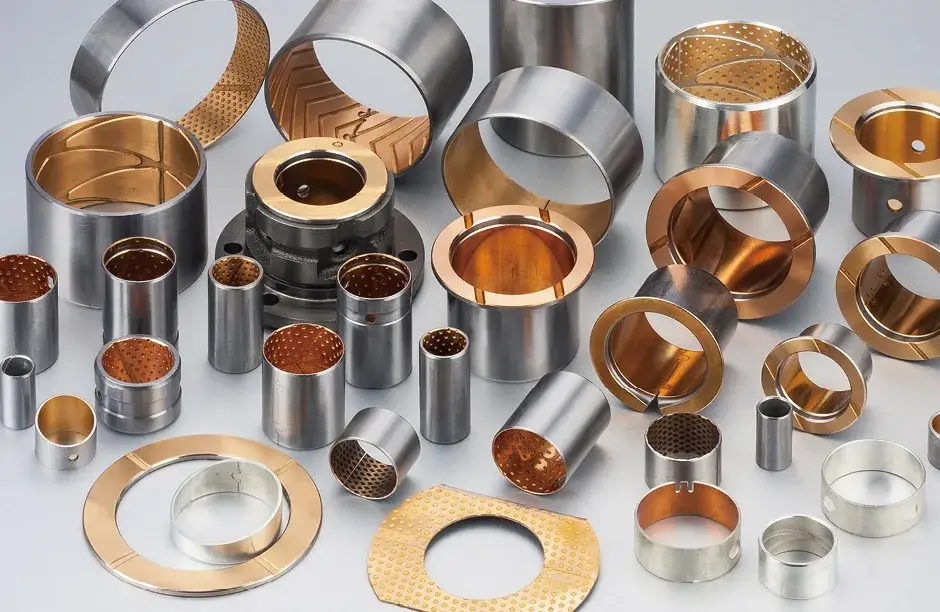
The bimetal bushing is MYWAY’s primary product series designed for medium to high-load operating conditions. Its structural configuration features ordinary carbon steel or low-alloy steel strip as the structural backing, with a copper alloy layer firmly bonded to the inner surface through high-temperature sintering to serve as the sliding working layer. The copper alloy layer typically employs tin bronze (CuSn8 or CuSn10P), a material known for excellent anti-seizure properties, conformability, and embeddability, capable of accommodating certain degrees of shaft misalignment and hard particle contamination while demonstrating superior wear life under boundary lubrication conditions. The steel backing typically accounts for over 70% of the total wall thickness, imparting compressive yield strength and impact toughness far exceeding those of pure copper bushings, with static load capacity exceeding 150 N/mm² and dynamic load limits around 120 N/mm². This makes them suitable for heavy machinery applications including excavators, wheel loaders, hydraulic supports, and forging equipment requiring high-strength pivot bearings.
MYWAY employs fully automated continuous sintering furnace lines to manufacture bimetal bushing strip material, with critical process parameters—including sintering temperature, furnace atmosphere, and strip travel speed—controlled through closed-loop PLC systems, ensuring uniform copper layer thickness, porosity, and bond strength across production. The thickness tolerance of the formed strip material can be consistently maintained within ±0.01 mm, with inner diameter roundness and cylindricity strictly controlled. For thin-wall bushings with inner diameters below 50 mm, the company has dedicated multiple fully automated rolling production lines capable of completing material feeding, pre-bending, rolling, sizing, and cut-off operations on a single machine in a continuous sequence. Combined with tungsten steel precision forming dies, these lines achieve stable high-volume output exceeding 10,000 pieces per shift, with exceptional product consistency that eliminates the need for individual fitting prior to housing installation.
In terms of lubrication methods, bimetal bushings are typically designed for oil or grease lubrication systems. Based on actual operating conditions, customers may specify axial oil grooves, spiral oil grooves, or radial oil holes machined into the bushing inner wall to facilitate lubricant delivery from the housing oil passages to the friction interface. For applications with space constraints or where complex oil routing is not feasible, MYWAY can also apply solid lubricant coatings (such as MoS₂ or graphite) to the bimetal bushing inner surface, providing emergency running capability under start-up or oil-starved conditions. These bushings are widely applied in cylinder bores of hydraulic pumps and motors, connecting rod small-end bushings, transmission gear bushings, air compressor crosshead bushings, and various articulation points in construction machinery.
4. Graphite-Plugged Copper Bushings: Pre-Embedded Graphite Lubrication Points for Truly Maintenance-Free Operation
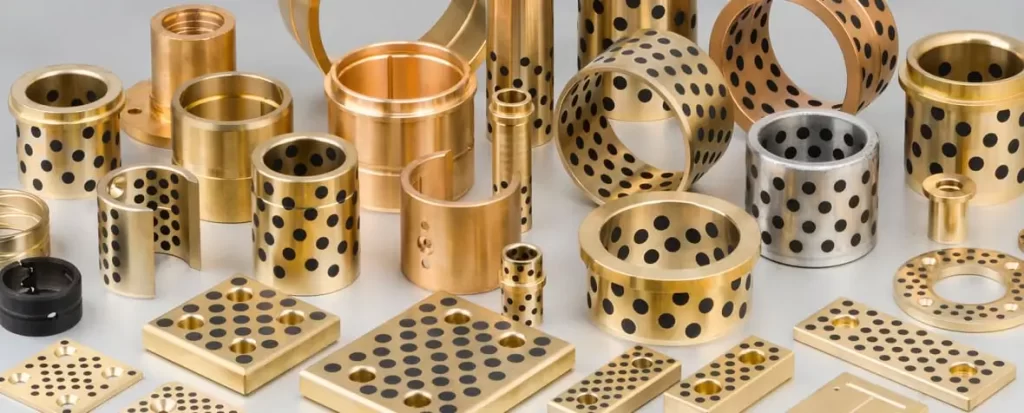
Graphite-plugged copper bushings (also known as solid-lubricant-embedded bearings) represent a specialized product category developed by MYWAY specifically for ultra-heavy-load, ultra-low-speed applications where hydrodynamic oil films cannot be established and maintenance access is extremely difficult. The base material utilizes high-strength tin bronze (CuSn8P) or aluminum bronze (CuAl10Fe3), cast into thick-wall blanks through centrifugal or sand casting processes, then rough-machined and finish-machined to final dimensions. On the friction working surface of the bushing, diamond-shaped, circular, or rectangular cavities are mechanically machined in a grid pattern with predetermined density and arrangement, into which high-purity artificial graphite or a graphite-metal powder mixture is pressed under high pressure as solid lubricant, forming uniformly distributed lubrication points across the entire sliding surface.
During equipment operation, as the shaft rotates or oscillates within the bushing bore, frictional heat and mechanical extrusion action cause graphite particles to gradually release from the cavities and spread across the shaft-bushing contact interface, forming a solid lubricant film with low shear strength. This graphite film effectively separates the metallic substrates of the friction pair, preventing cold welding, adhesive wear, and severe scoring, maintaining stable service life for thousands or even tens of thousands of hours even in the complete absence of external grease replenishment. Graphite lubricant exhibits significantly higher thermal stability than mineral oils, maintaining lubrication function across a broad temperature range of -80°C to +300°C without volatilization at high temperatures or solidification at low temperatures, making it particularly suitable for extreme thermal environments including baking equipment, furnace door mechanisms, high-temperature fan bearing housings, and freeze dryers.
Regarding standard compliance, MYWAY’s graphite-plugged bushings are designed and manufactured in strict accordance with DIN 1494 and ISO 3547 international standards, ensuring dimensional series and tolerance grades are fully interchangeable with mainstream international brands. These bushings offer distinct advantages in food processing and packaging machinery, as graphite lubricant does not drip or splash like grease, eliminating product contamination risks and meeting food-grade safety and hygiene requirements. In medical equipment and pharmaceutical machinery, the maintenance-free characteristic eliminates contamination risks associated with periodic greasing procedures. In wind turbine main shaft bearings and yaw bearings, where tower-top access is difficult and maintenance costs are extremely high, graphite-plugged bushings significantly reduce lifecycle operation and maintenance expenditures. MYWAY can also incorporate auxiliary components such as molybdenum disulfide or PTFE powder into the graphite formulation upon customer request, further reducing the coefficient of friction or enhancing corrosion resistance.
5. Bronze Rolled Bushings and Wrapped Bushings: Thin-Wall Lightweight Design Saving Radial Installation Space
Bronze rolled bushings (also referred to as wrapped bushings or wall bushings) constitute a major product category developed by MYWAY utilizing metal sheet plastic forming technology. Their defining characteristic is reduced wall thickness, occupying significantly less radial space than cast or forged bushings, making them highly suitable for equipment with compact installation envelopes and stringent weight limitations. These bushings typically feature a multilayer or bilayer structure—a copper alloy layer combined with a steel backing layer (or a single-layer all-copper configuration)—produced through composite rolling processes, then finished through wrapping, sizing, and chamfering operations. Based on different application requirements, bronze rolled bushings can be configured as oil-lubricated types—with lubrication oil grooves, pockets, or holes machined into the copper alloy surface for hydrodynamic or mixed lubrication via external oil supply systems—or as self-lubricating types—with PTFE, graphite, or other solid lubricants applied or rolled into the sliding surface for oil-free or minimal-oil operation.
Flanged wrapped bushings represent a distinctive advantageous product offered by MYWAY, with the flange and sleeve portions integrally formed from the same strip material through a single rolling process, requiring no welding or riveting. The transition radius between flange and sleeve exhibits no stress concentration or material discontinuity defects, enabling simultaneous radial and axial load support, making them highly suitable for industrial robot joints, small gearboxes, and servo motor output shaft support applications. The flange also serves as an axial positioning reference, simplifying assembly depth control during press-fit installation and improving assembly efficiency.
For large-diameter bushing supply, MYWAY possesses flexible production organization capabilities. For non-standard large-diameter wrapped bushings exceeding 150 mm, where conventional die-wrapping methods often become economically prohibitive due to high tooling costs, MYWAY can employ CNC plate rolling machines for single-piece or small-batch custom production, eliminating high tooling expenses for customers while significantly reducing delivery lead times. The material combination options for rolled bushings are extensive—copper layers may utilize tin bronze, phosphor bronze, aluminum bronze, or zinc-copper alloys, backing layers may utilize low-carbon steel or stainless steel, and surface finishes may include tin plating, silver plating, or copper plating to accommodate various corrosive environments and electrical conductivity requirements.
6. Steel-Based Bushings and Powder Metallurgy Bushings: Complementary Solutions for High Load Capacity and High Cost-Effectiveness
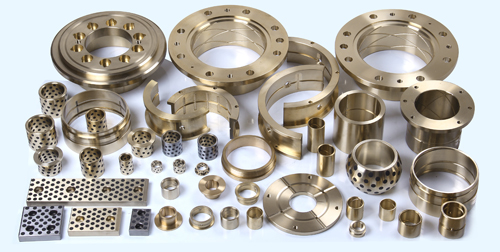
Steel-based bushings represent MYWAY’s pure-metal bushing offering for extreme heavy-load and complex stress conditions, with material grades encompassing high-quality carbon structural steels (such as 20# and 45#), alloy structural steels (such as 40Cr and 42CrMo), and austenitic stainless steels (such as 304 and 316L). Compared to copper alloy bushings, steel-based bushings offer yield strength and compressive strength several times higher, with static load capacity reaching up to 250 N/mm² or more, and lower material costs for large dimensions. They are particularly suitable for support rollers in heavy mining machinery, large slewing bearings, metallurgical mill housing window liners, and marine stern tube bearings where loads are extremely high. The machining process primarily involves turning, boring, and grinding operations, with inner bore surfaces typically required to achieve roughness values below Ra 0.8 μm, and assembly grease applied prior to installation to minimize dry friction during start-up. To enhance corrosion resistance, MYWAY can apply surface treatments including zinc plating, nickel plating, chrome plating, black oxide, or phosphating, enabling bushings to maintain extended service life in humid, salt-spray, or mildly acidic environments.
Powder metallurgy bushings (also known as oil-impregnated bearings or sintered metal bushings) represent a highly cost-effective solution offered by MYWAY. The manufacturing process involves: uniformly mixing bronze powder, iron powder, or bronze-iron composite powder with appropriate binders, pressing into green compacts on specialized presses, then subjecting the compacts to high-temperature sintering in controlled-atmosphere furnaces, during which metal particles undergo diffusion bonding to form a porous skeleton with controlled porosity. Following sintering, the compacts are immersed in lubricating oil (typically mineral oil or synthetic oil) under vacuum or heating conditions to fully impregnate the pores. Final sizing or minimal machining achieves the finished dimensions. During operation, relative motion between the shaft and bushing generates heat, causing oil in the pores to expand and migrate to the sliding surface, forming a lubricating film. When equipment stops, oil is drawn back into the pores through capillary action as temperature decreases, achieving a self-priming and self-supplying lubrication effect.
Powder metallurgy bushings typically offer load capacity ranging from 20 to 60 N/mm², suitable for moderate loads and low to medium speeds in operating conditions, including domestic washing machine motor bearings, power tool rotor supports, office equipment (printers and copiers) fuser rollers, automotive wiper motors, and seat adjustment mechanisms. The primary advantages are low cost, suitability for high-volume automated production, exceptional inner diameter consistency eliminating selective assembly requirements. MYWAY offers powder metallurgy bushing materials including bronze-based (copper content above 80%), iron-based (lower cost), and copper-iron composite-based (balancing performance and cost), with oil content controllable within 18% to 25% volume fraction, and lubricating oil viscosity grades selectable per customer specifications.
7. Non-Standard Customization Capabilities and Tooling Inventory: Flexible Response to Diverse Customer Requirements
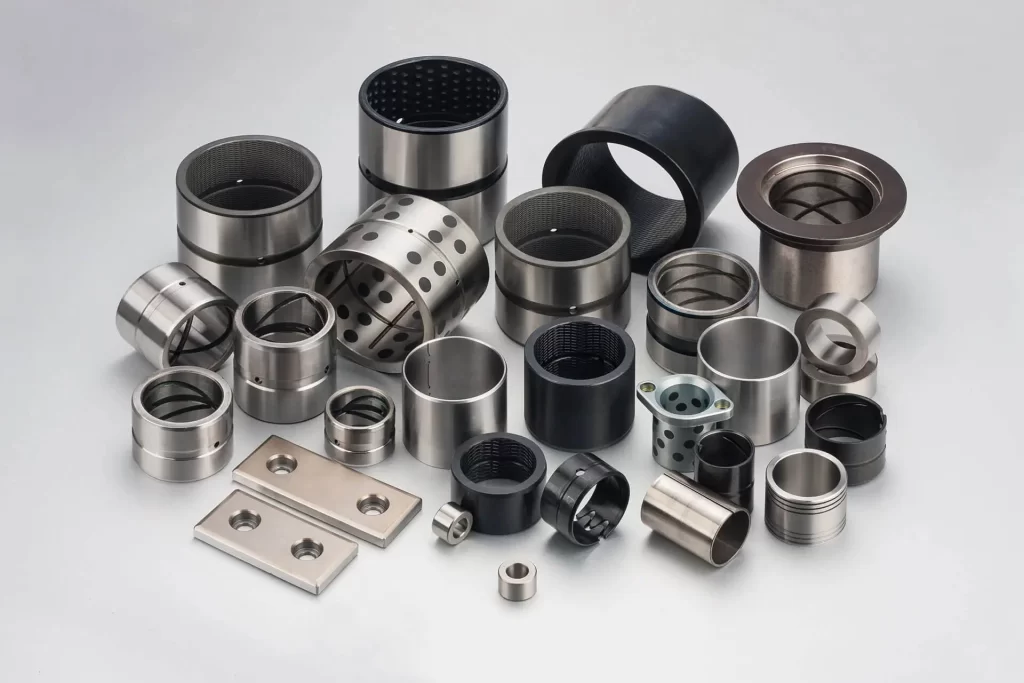
Bushing applications vary widely, and standard catalog specifications often fail to fully address actual site requirements. MYWAY fully recognizes this reality and has established non-standard customization capabilities as a core service advantage. The technical team can recommend the most suitable material grades, structural configurations, and tolerance fits based on a comprehensive analysis of customer-provided parameters including installation space dimensions, shaft diameter and housing bore size, operational load spectrum, operating temperature range, lubrication method, mating shaft material and hardness, expected service life, and budget constraints. In terms of dimensional specifications, the company can accommodate micro-bushing orders with inner diameters as small as 3 mm, while also possessing the process capability to manufacture large bushings exceeding 500 mm inner diameter, with length ranges spanning from a few millimeters to over 300 mm. Regarding materials, customers may flexibly select from the above-mentioned copper alloys, steel-based materials, stainless steels, composite self-lubricating materials, PTFE, POM, polyimide, and other options, or rely on engineer recommendations.
MYWAY has accumulated over 2,000 sets of precision bushing forming dies covering most internationally standard specifications, meaning customers requiring existing standard sizes can proceed directly to production without additional tooling development costs. For entirely new non-standard dimensions, the R&D team typically conducts a design review with the customer, finalizes sample drawings and process routes, then utilizes the company’s rapid tooling capabilities to complete die manufacturing and sample delivery within a relatively short timeframe. After samples pass customer on-site verification testing, mass production can be rapidly initiated. Notably, for certain collaborative projects—particularly those involving new product co-development in early-stage R&D phases—MYWAY generally waives or partially reduces tooling charges, reflecting the company’s commitment to long-term win-win partnerships with customers.
In terms of delivery responsiveness, leveraging in-house profile casting capabilities, ample strip material inventory, and the 1,900-square-meter finished goods warehouse, MYWAY can achieve 48-hour shipment for standard catalog items, 7 to 15 working days for simple non-standard custom orders, and mutually agreed delivery schedules for complex custom products. Overall lead times significantly undercut industry averages.
8. Application Fields and Industry Coverage: Full-Scenario Adaptability from Automotive Chassis to Wind Power Generation
MYWAY’s bushing products, with their comprehensive product matrix and flexible material combinations, have penetrated numerous pillar industries of the national economy. The following sections provide a detailed breakdown of typical applications across these industries:
(1) Automotive Industry
The automotive sector represents MYWAY’s largest end-user market. In conventional internal combustion engine vehicles, bushing products are widely applied in connecting rod small ends, rocker arm shafts, throttle shafts, starters, alternators, air conditioning compressors, water pumps, steering gear boxes, brake pedal pivot shafts, clutch release forks, suspension control arm bushings, stabilizer bar bushings, and shock absorber top mounts. In new energy vehicles, with rapid development of electric drive assemblies and chassis steer-by-wire technologies, demand for low-friction, lightweight, and electrically insulating polymer bushings and composite bushings continues to rise. MYWAY’s SF-1 series self-lubricating bushings have achieved volume production applications across multiple mainstream new energy vehicle manufacturers’ models, effectively reducing friction losses in electric drive systems and improving vehicle range.
(2) Construction Machinery and Mining Equipment
Excavators, wheel loaders, bulldozers, motor graders, rollers, drilling rigs, and dump trucks operate in extremely harsh environments characterized by high impact loads, heavy dust contamination, and maintenance difficulties. MYWAY’s bimetal bushings, graphite-plugged bushings, and large steel-based bushings represent the mainstream choice for working equipment articulation points, track idlers and carrier rollers, boom cylinder and stick cylinder mounts, and slewing ring bearing races. Their impact resistance and contamination tolerance have been validated through extended real-world operation at multiple large-scale domestic and international mining sites and infrastructure projects.
(3) Agricultural Equipment
Tractors, combine harvesters, rice transplanters, balers, and feed grinders operate outdoors year-round, exposed to mud, sand, plant juices, and other contaminants. During peak farming seasons, extended continuous operation makes downtime for maintenance economically damaging. MYWAY’s maintenance-free graphite-plugged bushings and fully sealed bushings, developed specifically for agricultural equipment, effectively resist contaminant ingress, ensuring reliable continuous operation throughout planting and harvesting seasons.
(4) Fluid Power and Industrial Hydraulics
Hydraulic pumps, hydraulic motors, hydraulic cylinders, pneumatic cylinders, and various valves constitute indispensable power transmission components in industrial and engineering applications. Bushings in such equipment primarily serve piston support, swing cylinder pivot pins, spool guides, and connecting rod bearings. Given that hydraulic fluid cleanliness frequently falls short of ideal levels, bushings must possess sufficient embeddability to accommodate fine hard particles without seizing or severe scoring. MYWAY’s tin bronze bimetal bushings and rolled bushings, with their excellent conformability and anti-seizure properties, perform exceptionally well in these applications.
(5) Industrial Automation and Robotics
Industrial robot joint requirements focus on low friction torque, high positioning accuracy, extended service life, and maintenance-free characteristics. MYWAY’s precision wrapped bushings and SF-1 composite bushings are widely applied in SCARA robots, six-axis articulated robots, and collaborative robots across various rotating and oscillating axes. Their stable low-friction characteristics help reduce servo motor drive torque requirements and improve trajectory repeatability.
(6) New Energy and Clean Energy
In solar thermal power tracking drive systems, wind turbine pitch bearings, and yaw bearings, MYWAY’s graphite-plugged copper bushings have become ideal choices due to their elimination of regular grease replenishment, excellent anti-aging performance, and strong adaptability to extreme temperature differentials. Additionally, in biomass power generation feed mechanisms and waste incinerator grate drive systems, high-temperature-resistant and corrosion-resistant nickel-based alloy bushings and ceramic-coated bushings have also found engineering applications.
(7) Metallurgy, Mining, and Cement
Steel rolling mills, continuous casting machines, sintering machines, conveyor rollers, ball mills, crushers, and rotary kilns impose extremely high requirements on bushing strength, heat resistance, and impact toughness. MYWAY has specially optimized aluminum bronze bushing and high-nickel-chromium alloy bushing material formulations for these conditions, maintaining acceptable wear rates even under high-temperature red steel heat radiation and iron oxide dust environments.
(8) Food, Pharmaceutical, and Packaging Machinery
In these industries requiring the highest cleanliness and hygiene standards, MYWAY offers FDA and USDA-compliant PTFE-based composite bushings and self-lubricating stainless steel bushings. These products contain no toxic heavy metal components, and their friction surfaces do not generate harmful debris under dry-running conditions. They have achieved volume usage at multiple major domestic dairy, beverage, and pharmaceutical filling, sealing, and labeling equipment installations.
9. MYWAY's Quality Assurance System and After-Sales Service Commitment
MYWAY consistently regards product quality as the foundation of corporate survival and long-term growth, establishing a comprehensive quality assurance system covering the entire product lifecycle. The system begins with incoming raw material control—upon arrival, every batch of copper ingots, steel strip, tin granules, PTFE powder, graphite, and other key raw materials undergoes sampling and analysis by the quality department per established inspection procedures. Copper alloy materials require optical emission spectrometer analysis to verify major and trace element contents conform to specified grade standards, mechanical property specimens undergo tensile and hardness testing, and only upon full compliance may materials be released for production.
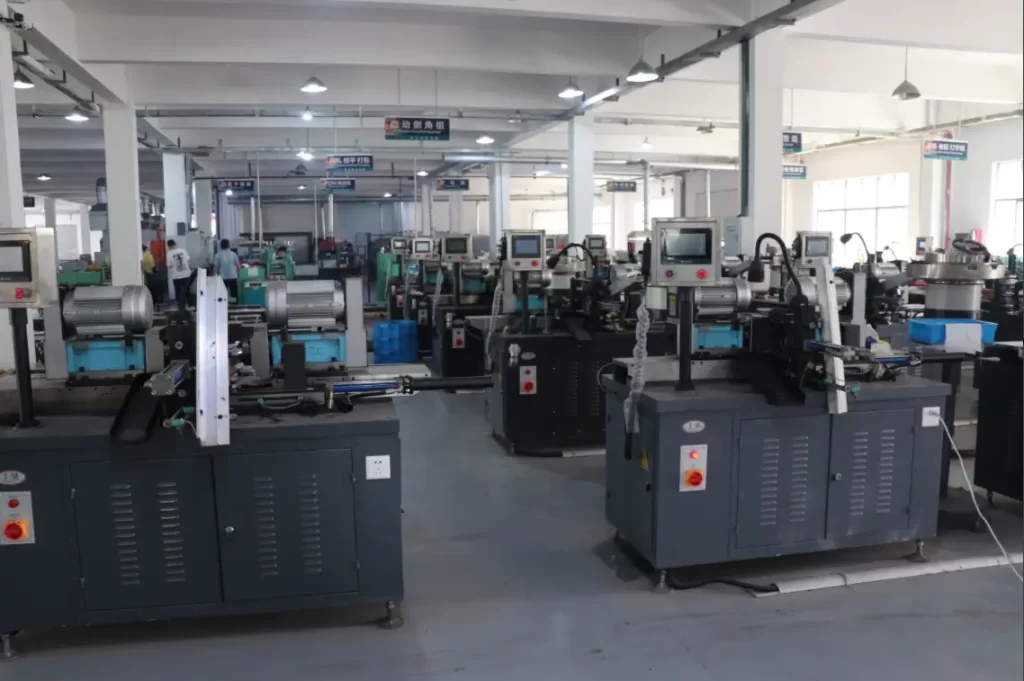
In-process quality control is implemented through control points at distinct process stages. In casting operations, thermocouples continuously monitor melting and pouring temperatures, with rapid spectral analysis enabling composition adjustments to ensure batch-to-grade stability. In sintering operations, continuous furnace temperature curves, dew points, and protective atmosphere flow rates are recorded and archived by host computer systems, ensuring sintered layer porosity and bond strength remain consistently controlled. In machining operations, operators perform self-inspection and peer-inspection based on process cards and inspection instructions, with sampling frequencies of one critical dimension check per 10 to 50 pieces, while roving inspectors conduct process audits and rechecks every 2 hours.
Finished product inspection represents the final checkpoint before shipment. MYWAY’s outgoing inspection typically includes but is not limited to: visual inspection of appearance and surface defects, inner and outer diameter dimension measurement (using digital micrometers or pneumatic gauges), length measurement, bore roundness and cylindricity inspection (using roundness testers or CMM), surface roughness measurement (using profilometers), hardness spot-checking, copper layer thickness and bond quality verification (for bimetal products), and cleanliness inspection. All inspection data is entered into the ERP system, generating electronic quality records enabling full traceability from raw material batch to finished shipment batch. In the event of product quality disputes, the affected batch range can be identified within the shortest possible timeframe.
Regarding after-sales support, MYWAY provides all global customers with a standard one-year product quality warranty. Within the warranty period, bushing failures definitively attributable to material or manufacturing process defects will be replaced free of charge or compensated through mutually agreeable arrangements. Additionally, the company’s technical application engineer team can, upon customer request, conduct on-site failure analysis, assembly process guidance, and operational parameter optimization recommendations, helping customers further extend actual bushing service life from the user end. MYWAY aims to establish long-term relationships built on trust and value with every customer through reliable products and professional services.
Frequently Asked Questions
Q1: What material systems are primarily available for MYWAY bushings?
MYWAY bushing materials cover copper alloys (including tin bronze CuSn8 and CuSn10P, phosphor bronze, aluminum bronze CuAl10Fe3 and CuAl10Ni5Fe4, silicon bronze, etc.), steel-based materials (carbon steel 20# and 45#, alloy steel 40Cr and 42CrMo, austenitic stainless steel 304 and 316L, etc.), composite self-lubricating materials (SF-1 type steel backing/bronze powder/PTFE three-layer composite), powder metallurgy materials (bronze-based, iron-based, and copper-iron composite-based), and engineering plastics (PTFE, POM, polyimide, etc.), with flexible selection based on operating conditions.
Q2: How do I select the most appropriate bushing type for my equipment?
Customers are encouraged to provide the following operating parameters to MYWAY’s engineering team: shaft diameter and load magnitude/direction, operating speed or oscillation frequency, working environment temperature range, existing or planned lubrication method, mating shaft material and hardness, equipment start-stop frequency, and expected service life. The team will then perform PV value calculations and material matching recommendations accordingly.
Q3: How long can self-lubricating bushings operate in completely oil-free conditions?
Self-lubricating bushing service life depends on integrated factors including PV value (product of pressure and velocity), ambient temperature, and mating shaft surface roughness. Within the recommended PV value range (typically 2.1 to 5.0 N/mm²·m/s for SF-1 series), MYWAY self-lubricating bushings can achieve thousands to tens of thousands of hours of maintenance-free operation. Specific life expectancy requires bench validation based on actual operating conditions.
Q4: Are MYWAY bushings dimensionally interchangeable with well-known international brands?
Yes. MYWAY bushings are designed and manufactured in strict accordance with ISO 3547, DIN 1494, DIN 1850, and other international standards, as well as common automotive OEM specifications. Outer dimensions, tolerance grades, and chamfer dimensions are fully compatible with mainstream international brands for direct replacement.
Q5: Can MYWAY supply bushings with special features such as oil grooves, oil holes, or locating pins?
Absolutely. MYWAY possesses flexible machining capabilities to produce straight grooves, spiral grooves, annular grooves, through holes, threaded holes, locating pin holes, and various additional features on bushing inner walls, accommodating different oil supply methods and anti-rotation requirements.
Q6: What is MYWAY’s minimum order quantity? Is sample support available?
MYWAY has no strict minimum order quantity restrictions for standard catalog items. Customers may order small quantities for prototype trial assemblies. The company provides fee-based sample support for potential cooperative customers, with complimentary samples negotiable for projects with clear mass production prospects following technical evaluation.
Q7: What quality certifications do MYWAY bushing products hold?
The company has obtained ISO 9001:2015, IATF 16949:2016, and ISO 14001:2015 international certifications. Products comply with RoHS and REACH environmental regulations, and FDA compliance statements are available for food machinery bushings upon request.
Q8: Does MYWAY have overseas agents or warehousing?
MYWAY products are exported to over 40 countries and regions worldwide, with authorized agents or cooperative warehousing points established in key markets including Germany, the United States, Japan, and South Korea, providing faster local supply and technical consultation for regional customers. Specific agency information can be obtained through the MYWAY official website customer service.
Q9: Will bushing inner diameter change after press-fit into housing? How is this compensated?
Yes. After press-fit installation, the bushing inner diameter will reduce due to radial compression. The magnitude of change depends on wall thickness, housing bore tolerance, and interference amount. MYWAY provides reference values for post-press-fit inner diameter change calculations. Customers may also specify the final target dimension for the finished part at the time of ordering, allowing us to adjust finishing allowances accordingly to achieve direct compliance with drawing requirements after press-fit.
Q10: What is MYWAY’s standard delivery lead time?
Standard catalog items ship within 48 hours. Simple non-standard custom orders deliver within 7 to 15 working days. Complex or large-batch custom products are subject to mutually agreed delivery schedules. Emergency orders may be expedited by contacting the sales team.
100000+ Types of Bushings – Contact Us for Details