
Recent Posts
Metallurgical Advancements and Industrial Applications of Composite Bearing Systems
Introduction
The evolution of bearing technology has witnessed a paradigm shift from monolithic metallic alloys toward engineered composite systems that synergistically integrate material properties to meet increasingly demanding operational requirements. Composite bearings, defined as multi-material engineered structures combining a bearing lining with a structurally robust backing, represent a sophisticated metallurgical solution addressing the inherent trade-off between surface compatibility and load-bearing capacity. These advanced tribological components have become indispensable across aerospace, automotive, marine, construction, mining, and energy processing sectors, driven by their exceptional corrosion resistance, self-lubricating capabilities, and significant weight reduction advantages over conventional metallic bearings. The global composite bearings market, valued at approximately USD 5.46 billion in 2025, is projected to reach USD 9.41 billion by 2032, reflecting a compound annual growth rate of 8.08%
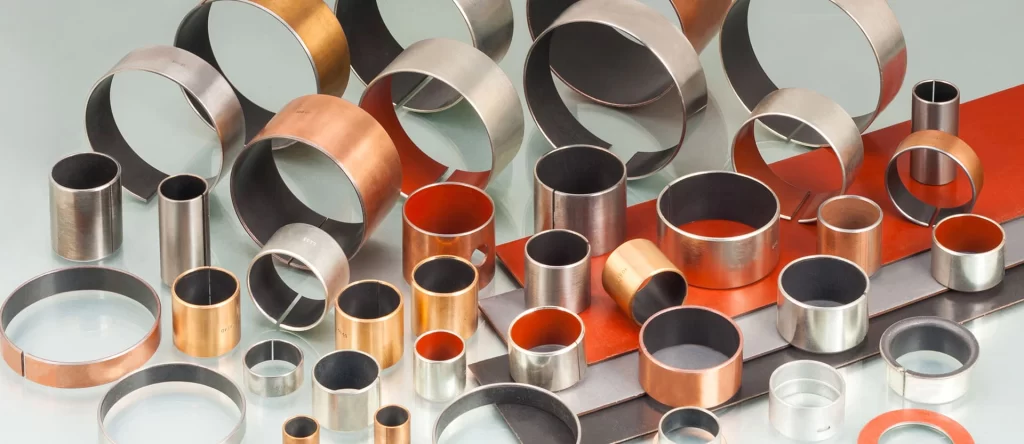
Table of Contents
1. Metallurgical Fundamentals: Constitution and Material Synergy
Composite bearings fundamentally comprise two distinct metallurgical or material layers engineered for complementary functionality. The bearing surface layer, formulated for optimal tribological performance, exhibits relatively low hardness—typically below 100° Brinell—to prevent undue wear of the mating shaft while maintaining conformability and embeddability. This lining may consist of aluminum-based alloys with controlled elemental additions, lead or tin-based Babbitt metals, or advanced polymer matrices incorporating polytetrafluoroethylene, polyetheretherketone, or phenolic resins. The structural backing or shell, conversely, provides mechanical robustness and load transmission capability, fabricated from high-strength aluminum alloys, steel, or fiber-reinforced thermoset composites.
The metallurgical bond between these layers constitutes a critical performance determinant. Autogenous union achieved through roll-bonding, forging, or casting processes ensures interfacial integrity and load transfer efficiency. Contemporary manufacturing employs precision compression molding for thermoset composites, filament winding for fiber-reinforced structures, and powder metallurgy techniques for metal-polymer hybrids. The selection of matrix materials, reinforcement architectures, and interfacial engineering strategies directly influences bearing capacity, thermal stability, and wear resistance profiles.
2. Matrix Systems: Aluminum-Based, Copper-Based, and Polymer Architectures
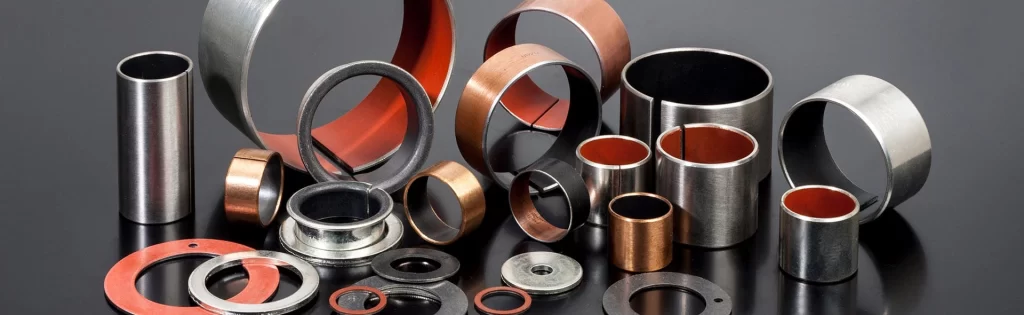
Aluminum matrix composite bearings offer exceptional strength-to-weight ratios, corrosion resistance, and thermal conductivity. Early aluminum bearing alloys containing 18–20% silicon achieved hardness values of approximately 100° Brinell but proved excessively abrasive for many shaft applications. Modern formulations incorporate copper (1–3%) for solid-solution strengthening and precipitation hardening, lead (0.1–3%) for machinability enhancement and seizure resistance, and magnesium (1–2%) for precipitation strengthening following thermal treatment. Critical alloy design considerations include maintaining compatibility (typically 25–30° Brinell for optimal shaft protection) while achieving adequate fatigue strength through balanced alloying additions.
Copper matrix composite bearings, including cast bronze, porous bronze, and steel-backed bronze variants, demonstrate maximum dynamic capacities ranging from 24–69 MPa for low-speed applications (<0.025 m/s). These systems exhibit thermal expansion rates of 14.4–28.8 ×10⁻⁶/°C and specific gravities between 7.5–8.8, significantly heavier than polymer-alternatives.
Polymer matrix composite bearings have emerged as strategic alternatives, encompassing:
PTFE composites: Reinforced with carbon fiber, glass fiber, graphite, or bronze particulate, achieving wear rate reductions up to 10 times compared to unfilled PTFE.
PEEK composites: Exhibiting load capacities approaching 95 N at 600 RPM for rolling contact applications, with stable operating characteristics after transfer film formation.
Phenolic resin composites: Fabric-reinforced thermosets demonstrating maximum dynamic capacities of 41 MPa and exceptional dimensional stability
3. Reinforcement Strategies: Fibers, Particulates, and Hybrid Architectures
Reinforcement of composite bearing matrices enhances mechanical strength, thermal stability, and tribological performance. Fiber reinforcements include:
Carbon fiber: Imparts high specific stiffness, self-lubricating properties, and superior underwater wear performance (allowable PV: 8.15 N/mm²·m/s).
Glass fiber: Provides cost-effective strengthening in filament-wound constructions with ultimate strengths reaching 531 MPa.
Aramid fibers: Contribute to impact resistance and fracture toughness.
Particulate reinforcements such as graphite, molybdenum disulfide, and PTFE powder serve dual functions as solid lubricants and structural modifiers. Graphite additions of 10–17.5 weight percent in epoxy matrices reduce winding tension, minimize surface defects, and extend wear life through synergistic lubrication mechanisms.
Hybrid composite architectures combine multiple reinforcement types to optimize property balances. The Oiles 470-02W multilayer bearing exemplifies this approach, incorporating a carbon-fiber composite sliding surface with an alternative backing material for enhanced structural integrity in underwater applications. Filament-wound bearings featuring woven PTFE/polyester liners supported by continuous fiberglass epoxy matrices exemplify aerospace-derived technology adapted for industrial applications
4. Tribological Performance and Self-Lubricating Mechanisms
The tribological superiority of composite bearings derives from their capacity to form stable transfer films on mating surfaces. PTFE-based composites establish thin, low-shear films that reduce friction coefficients while maintaining boundary lubrication under dry running conditions. Carbon-filled PTFE formulations achieve wear rates of 2.3 ×10⁻⁹ mm³/Nm, substantially superior to unfilled PTFE at 6 ×10⁻⁴ mm³/Nm.
Self-lubricating composite bearings eliminate external lubrication requirements, offering significant maintenance advantages:
Duralon filament bearings: Operate dynamically to 30,000 psi (207 MPa) without lubrication, spanning temperatures from cryogenic to 163°C continuously.
Water-lubricated composites: Carbon fiber bearings demonstrate stable performance in abrasive environments containing sand, soil, or rust particles.
Metal-polymer composites: DP11 bearings exhibit low friction across wide load, speed, and temperature ranges in dry applications.
Moisture resistance represents a critical differentiating factor. High-quality compression-molded thermoset composites exhibit water absorption of only 0.12% after 2-hour immersion, compared to injection-molded thermoplastics which may experience swelling due to void entrapment and geometric instability
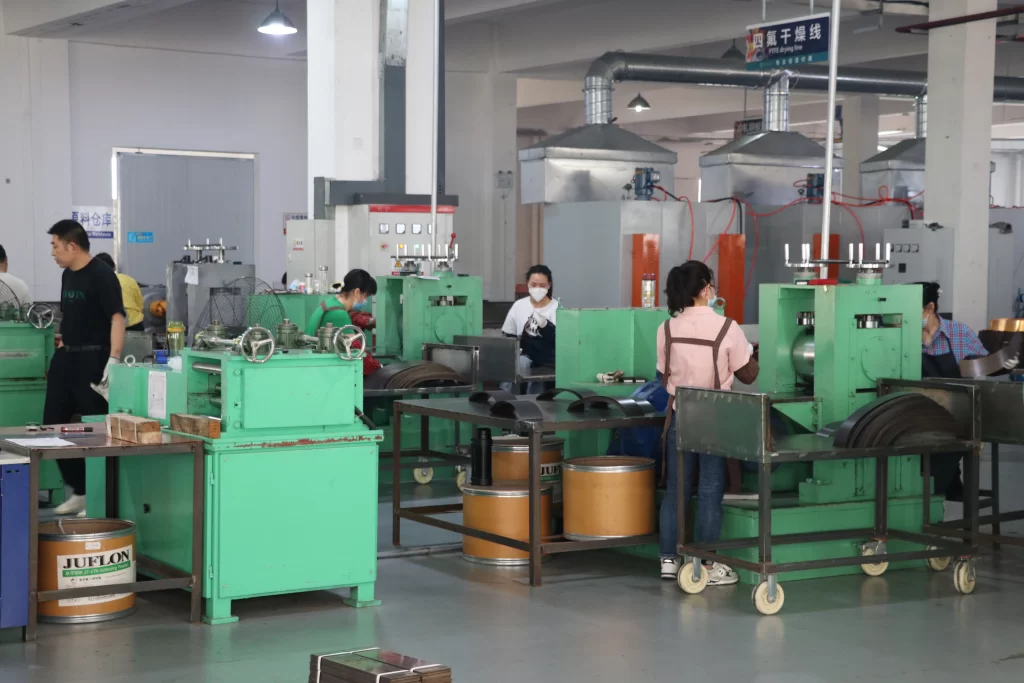
5. Manufacturing Technologies: Compression Molding, Filament Winding, and Additive Processes
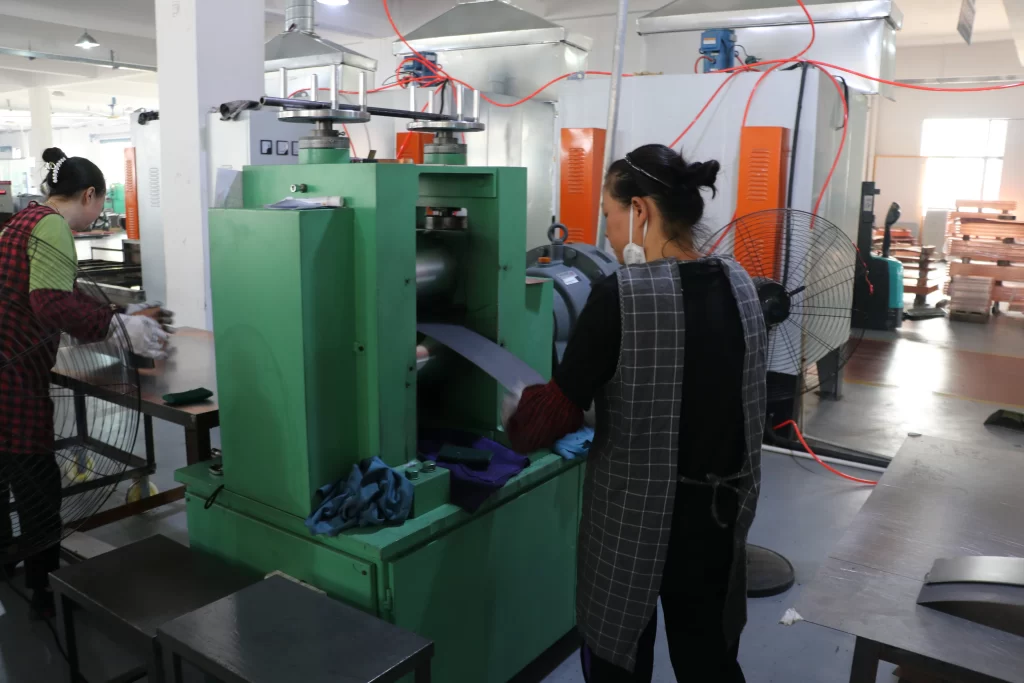
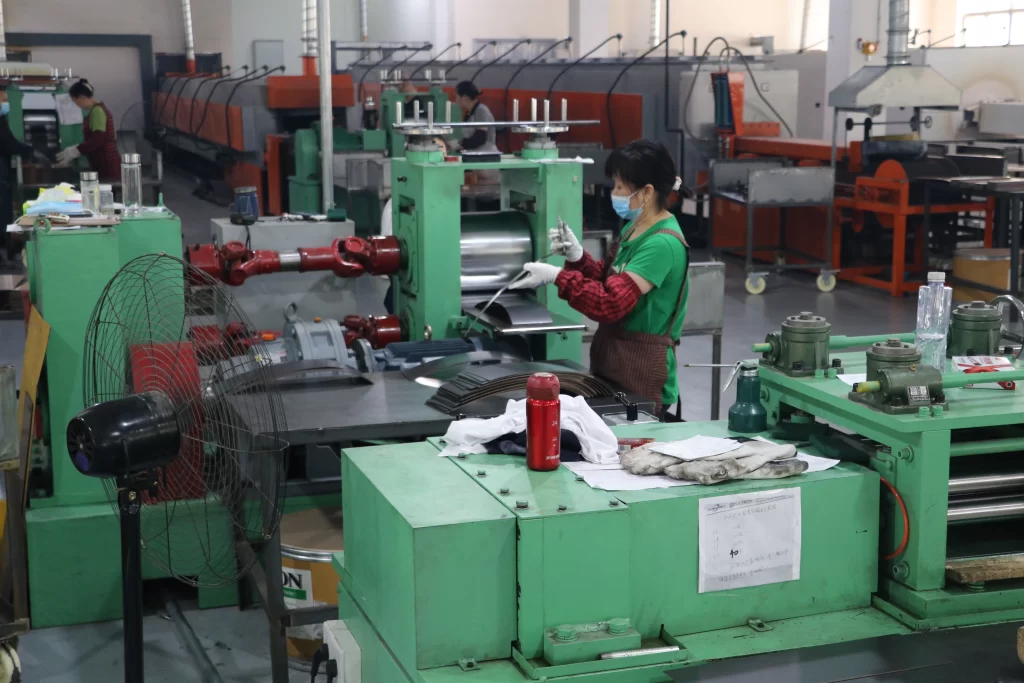
Manufacturing processes critically influence composite bearing quality, cost, and performance attributes. Compression molding for thermoset composites demands precise control of prepreg resin content, mold temperature, cooling cycles, and pressure application to prevent delamination—the predominant failure mode characterized by interlayer separation under load.
Filament winding technology produces high-strength cylindrical components through helically wound continuous fibers impregnated with thermosetting resin matrices. This technique accommodates internal diameters ranging from 3.18 mm to 660.40 mm with wall sections up to 25.40 mm.
Powder metallurgy and sintering techniques produce self-lubricating composites through impregnation of porous layers with lead, PTFE, and thermoplastic polymer blends, followed by thermal treatment to achieve interfacial bonding and compositional homogenization.
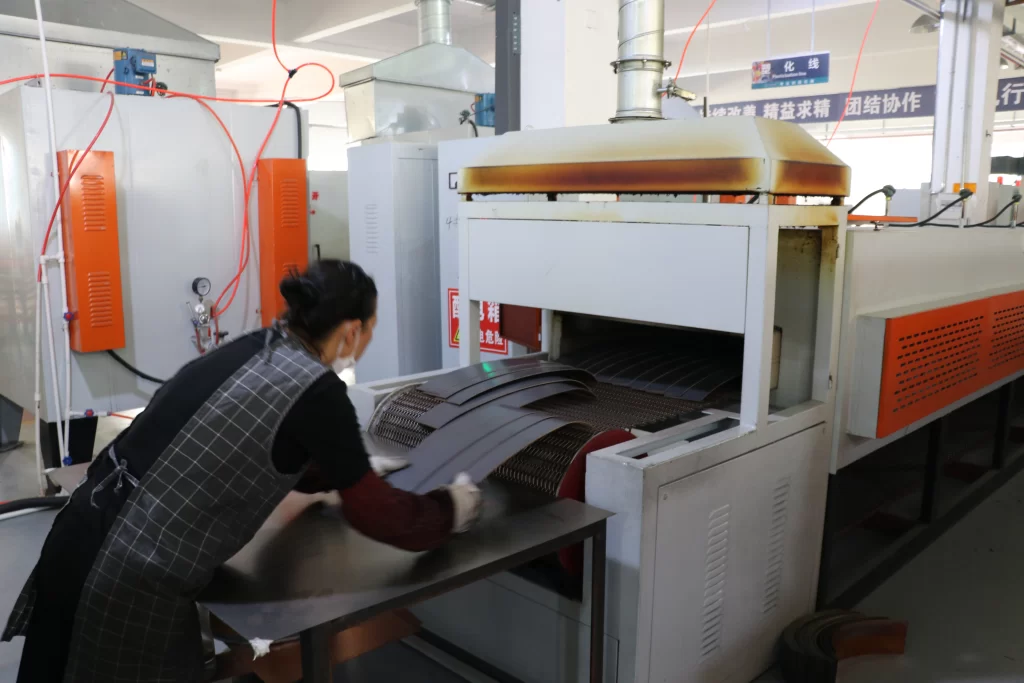
Roll-bonding and forging processes produce aluminum-based composite bearings through the superposition and metallurgical union of low-hardness bearing alloys onto structural backings, followed by dimensional finishing through machining operations
6. Application Domains and Performance Optimization
Composite bearings demonstrate versatility across diverse industrial sectors with tailored material solutions for specific operating environments
| End-Use Industry | Typical Applications | Critical Performance Requirements | Recommended Composite Type |
|---|---|---|---|
| Aerospace | Landing gear, flight controls | Light weight, high reliability, certification compliance | Fiber-reinforced thermosets, PEEK composites |
| Automotive | Suspension systems, steering components | Corrosion resistance, reduced maintenance | Metal-polymer composites, PTFE-lined bearings |
| Marine | Rudder bearings, propeller shafts | Underwater performance, abrasion resistance | Carbon fiber composites (Oiles 470-02W) |
| Construction & Mining | Hydraulic cylinders, pivot joints | High static loads, contamination resistance | Filament-wound bearings (Duralon) |
| Steel Mills | Hot rolling mill bearings | Heat tolerance, scale resistance, anti-delamination | Compression-molded thermosets |
| Energy Processing | Turbine components, valve actuators | Temperature extremes, chemical exposure | Graphite-filled PTFE composites |
Source: Compiled from multiple industry sources
Heavy equipment applications demand high static load capacity with low-speed dynamic performance. GAR-MAX and GAR-FIL composites achieve maximum dynamic capacities of 140 MPa (20,000 psi) at speeds below 0.025 m/s, substantially exceeding conventional bronze (41 MPa) and zinc-aluminum (38 MPa) alternatives. However, composite bearings exhibit rotational speed limitations, with manufacturers specifying maximum velocities for optimal performance
7. Economic and Strategic Considerations
The composite bearings market demonstrates robust growth trajectory driven by:
Maintenance cost reduction: Self-lubricating composites eliminate lubrication system requirements and reduce downtime.
Weight savings: Non-metallic composites weigh 77% less than steel and 30% less than aluminum bearings.
Corrosion resistance: Composite materials perform reliably in aggressive environments where steel bearings require external protection.
Electrification trends: Increasing demand for components optimizing efficiency and reducing parasitic losses in transportation and industrial automation.
Supply chain strategies increasingly emphasize regional sourcing to mitigate tariff impacts and ensure feedstock availability. Procurement teams are revising selection criteria to prioritize local capacity, lead time reliability, and technical support alongside landed cost considerations. Leading suppliers differentiate through material innovation, proprietary formulations extending operating windows, enhanced design support, and aftermarket predictive maintenance analytics.
8. Failure Mechanisms and Quality Assurance
Understanding failure modes enables informed material selection and quality specification. Delamination, characterized by interlayer separation, constitutes the predominant failure mode in laminated thermoset composites. Root causes include:
Dry prepreg: Insufficient resin content preventing complete layer bonding .
Molding process errors: Incorrect mold temperatures causing resin degradation or inadequate flow
Shortened cooling cycles: Ejection-induced internal stress development .
Heat-induced failure manifests as burning or charring, typically resulting from:
Inadequate cooling water pressure
Roller or stand misalignment
Excessive gauge rolling loads generating elevated contact temperatures
Wear and seizure mechanisms relate to inadequate lubrication film formation or insufficient load capacity for specific operating conditions. Quality assurance programs must verify material composition, bond integrity, dimensional accuracy, and tribological performance through standardized testing protocols
Frequently Asked Questions (FAQ)
Q1: What distinguishes composite bearings from conventional metallic bearings?
Composite bearings integrate a low-friction bearing surface with a structurally robust backing in a single engineered component, offering self-lubrication, corrosion resistance, and weight reduction advantages.
Q2: What materials constitute composite bearing structures?
Typical configurations include aluminum or steel backings with polymer-based linings (PTFE, PEEK, phenolic), fiber-reinforced thermoset shells, or multi-layer metal-polymer systems.
Q3: Do composite bearings require external lubrication?
Most composite bearings operate self-lubricated through built-in solid lubricants such as PTFE, graphite, or molybdenum disulfide, eliminating external lubrication systems.
Q4: What temperature ranges can composite bearings withstand?
Continuous service temperatures range from cryogenic to 163°C for standard filament bearings, with special resin systems extending to 232°C continuous and 260°C intermittent. PTFE composites operate to 260°C.
Q5: What load capacities do composite bearings offer?
Dynamic load capacities range from 14 MPa for reinforced PTFE to 140 MPa for advanced filament-wound composites at speeds below 0.025 m/s. Ultimate strengths reach 531 MPa.
Q6: Are composite bearings suitable for underwater applications?
Carbon-fiber composite bearings demonstrate excellent underwater performance with allowable PV values of 8.15 N/mm²·m/s, maintaining stability in abrasive water conditions.
Q7: What is delamination and why does it occur?
Delamination is interlayer separation in laminated composites, typically caused by insufficient resin content, improper mold temperature, or inadequate cooling cycles during manufacture.
Q8: How do composite bearings compare to bronze bearings?
Advanced composites achieve maximum dynamic capacities up to 140 MPa versus 41–69 MPa for cast bronze, with significantly lower weight and self-lubricating properties.
Q9: What manufacturing processes produce composite bearings?
Primary methods include compression molding, filament winding, roll-bonding, powder metallurgy, and injection molding, selected based on material system and performance requirements.
Q10: What industries most commonly utilize composite bearings?
Major end-user sectors include aerospace, automotive, marine, construction, mining, energy processing, steel production, and industrial automation.
Q11: What is the market outlook for composite bearings?
The global market is projected to grow from USD 5.46 billion (2025) to USD 9.41 billion by 2032, representing an 8.08% CAGR.
Q12: Do composite bearings absorb moisture?
High-quality compression-molded thermoset composites exhibit minimal water absorption (0.12% at 2 hours), significantly outperforming injection-molded thermoplastics.
Q13: What reinforcement materials strengthen composite bearings?
Common reinforcements include carbon fiber, glass fiber, aramid fiber, graphite powder, and bronze particulate, each providing specific property enhancements.
Q14: Can composite bearings be customized for specific applications?
Manufacturers offer extensive customization, including 16+ patents and over 4,200 special designs, optimizing bearing geometry, materials, and mounting configurations.
Q15: What advantages do composite bearings offer over steel bearings?
Benefits include 77% weight reduction, corrosion resistance, electrical insulation, self-lubrication, and elimination of seizure to mating shafts.
Q16: Are composite bearings electrically insulating?
Non-metallic composite bearings provide electrical insulation, beneficial for applications requiring galvanic isolation.
Q17: What causes premature failure in composite bearings?
Common failure mechanisms include delamination, heat-induced charring, excessive wear from abrasive contaminants, and fatigue from improper load ratings.
Q18: How are composite bearings qualified for aerospace applications?
Qualification involves rigorous testing for thermal stability, load capacity, wear resistance, and compliance with certification standards.
Q19: What is the maximum diameter available for composite bearings?
Filament-wound composite bearings are available in internal diameters from 3.18 mm to 660.40 mm.
Q20: How do composite bearings contribute to sustainability?
Self-lubricating designs reduce lubricant consumption, lightweighting improves energy efficiency, and corrosion resistance extends service life
100000+ Types of Bushings – Contact Us for Details