
Recent Posts
Leaded Bronze Bearings and Bushings: High-Performance, Self-Lubricating Solutions
When your machinery demands reliability under extreme pressure, high-speed operation, or less-than-ideal lubrication conditions, leaded bronze alloys are the go-to solution that engineers trust. For decades, these materials have quietly powered heavy equipment, automotive suspensions, marine propulsion, and industrial machinery—often outlasting the equipment they serve .
But not all leaded bronze is created equal. Whether you’re selecting a leaded tin bronze for a high-load hydraulic press or a high-leaded tin bronze alloy for a pump that runs continuously, the nuances of composition, grade, and manufacturing method can make or break your application’s lifespan.
Let’s cut through the technical noise and explore how leaded bronze works, which alloys deliver the best performance, and why custom manufacturing from MYWAY might just be the competitive advantage your next project needs.
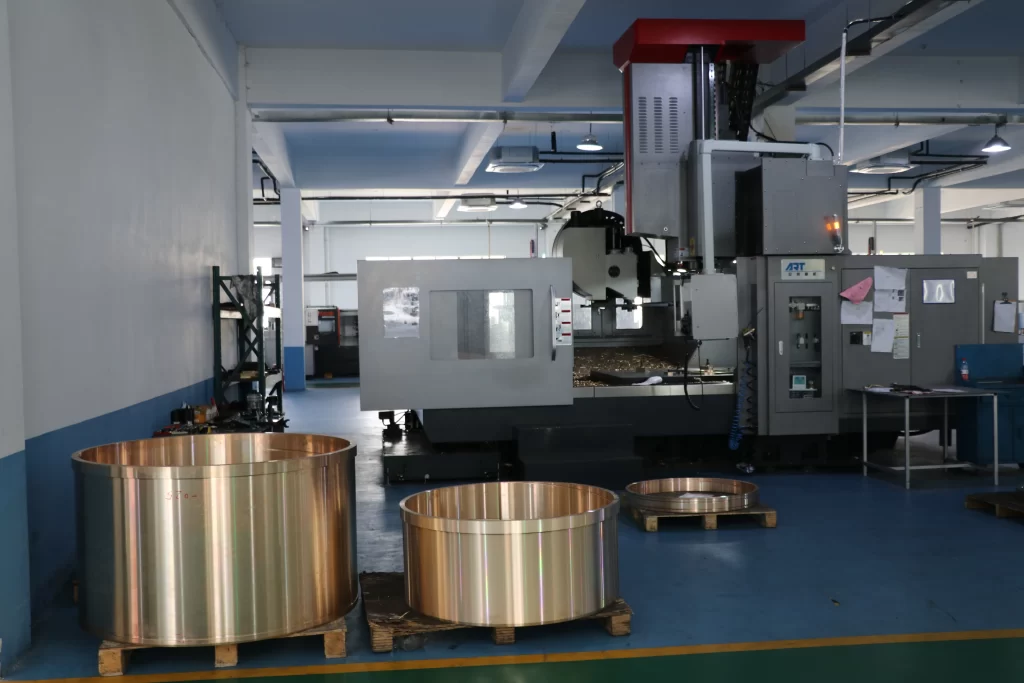
Table of Contents
1. What Exactly is Leaded Bronze? (And Why Does the Lead Matter?)
At its core, leaded bronze is a copper-based alloy where lead is intentionally added—not just as a filler, but as a functional component. Typically, these alloys contain anywhere from 5% to 25% lead, combined with tin (for strength) and sometimes zinc or nickel (for added corrosion resistance) .
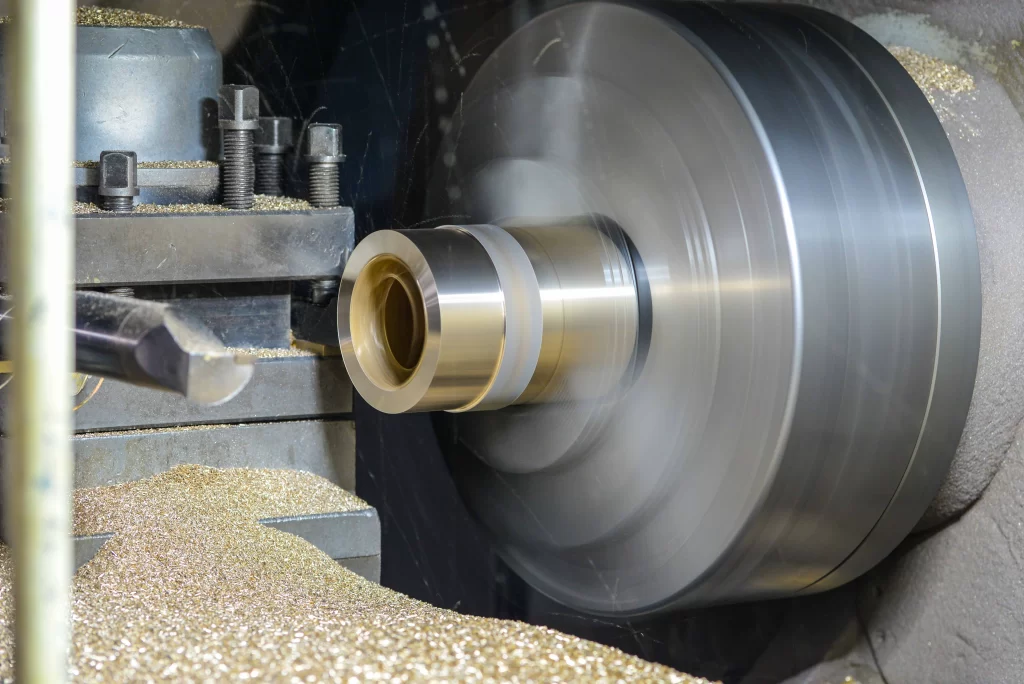
The lead doesn’t simply sit there. During operation, microscopic lead particles migrate to the bearing surface, creating a thin, sacrificial film that reduces friction even when the oil film breaks down. That’s why leaded bronze is often called a self-lubricating or anti-seizing material .
Common Leaded Bronze Families
| Alloy Family | Key Characteristics | Typical Lead Content |
|---|---|---|
| Leaded Tin Bronze | Good strength, moderate wear resistance, excellent machinability | 4% – 10% |
| High-Leaded Tin Bronze | Superior lubricity, embeddability, conformability; best for marginal lubrication | 10% – 25% |
| Leaded Gunmetal (e.g., C90500) | High strength, excellent corrosion resistance, good for heavy loads | 1.5% – 7% |
2. The Workhorses: Understanding the Most Common Leaded Bronze Grades
If you’re in the market for bearings or bushings, you’ll likely come across a handful of standard grades. Here’s how they stack up in real-world applications.
C93200 (SAE 660) – The Industry Standard
If there’s a “default” bearing bronze, this is it. C93200, also known as SAE 660, offers a balanced composition of 83% copper, 7% tin, and 7% lead . It’s a high-leaded tin bronze that provides:
Excellent machinability – easy to turn into complex shapes.
Good hardness and strength – handles medium loads and speeds with adequate lubrication.
Solid corrosion resistance – works well in seawater, pumps, and valves.
Best for: General-purpose machinery, automotive bushings, hydraulic components, and rolling mill bearings .
C93600 – The Heavy-Duty Specialist
C93600 pushes the lead content higher (around 10–12%) and often includes antimony to boost wear resistance . This grade is engineered for:
Exceptional load-carrying capacity – handles high surface pressures without failing.
Superior embeddability – can swallow small contaminants without damaging the shaft.
Anti-seizing properties – ideal when lubrication might be intermittent .
Best for: Heavy construction equipment, truck suspension parts, high-load sleeve bearings, and agricultural machinery.
C93700 (SAE 64) – The Corrosion Fighter
With excellent machining properties and medium strength, C93700 is known for its ability to withstand mildly acidic environments, such as mine water or certain industrial fluids . It’s a go-to choice when corrosion resistance is a priority alongside wear performance.
Best for: Mining equipment, pump impellers, and marine applications where acidic conditions are present.
C90500 – The High-Strength Gunmetal
Sometimes grouped with leaded bronzes, C90500 (Leaded Gunmetal) contains about 10% tin and a modest 1.5% lead. It offers superior fatigue resistance and rigidity compared to higher-lead alloys, making it suitable for components under heavy shock loads .
Best for: Heavy-duty gears, valve bodies, and machinery where strength outweighs the need for extreme self-lubrication.
3. Why Leaded Bronze Beats Other Bearing Materials
Choosing a bearing material is always a trade-off. Here’s why leaded bronze consistently comes out on top for demanding applications.
1. Self-Lubricating Properties Save Maintenance Costs
Unlike aluminum bronze or steel-on-steel bearings, leaded bronze can operate for extended periods with minimal lubrication. When the oil film gets thin, the lead layer takes over, preventing galling and scoring .
2. Embeddability Protects Expensive Shafts
In dirty environments, contaminants are inevitable. Leaded bronze is soft enough to let hard particles embed into the bearing surface rather than scratching the shaft. This single property extends shaft life dramatically .
3. Conformability Compensates for Misalignment
No assembly is perfect. Leaded bronze alloys have enough ductility to “wear in” and conform to slight shaft misalignments or surface roughness, ensuring even load distribution .
4. Corrosion Resistance in Harsh Environments
From marine saltwater to acidic industrial fluids, leaded bronze holds up. Grades like C93700 are specifically chosen for their ability to resist corrosion without sacrificing wear resistance .
5. Excellent Thermal Conductivity
Heat buildup kills bearings. Copper-based alloys naturally dissipate heat, and leaded bronze maintains that advantage, keeping operating temperatures under control .
4. How to Choose the Right Leaded Bronze for Your Application
Picking the right alloy isn’t about finding the “best” one—it’s about matching properties to your operating conditions.
| Operating Condition | Recommended Alloy | Why |
|---|---|---|
| High speed, low load, marginal lubrication | C93600, C93800 | High lead content provides excellent lubricity and heat dissipation |
| Medium speed, medium load, good lubrication | C93200 (SAE 660) | Balanced strength, wear resistance, and machinability |
| Heavy shock loads, high impact | C90500 (Gunmetal) | High tin content adds strength and fatigue resistance |
| Corrosive environment (seawater, acids) | C93700, C90500 | Superior corrosion resistance without compromising bearing properties |
| High load, low speed, dirty environment | C93600 | High lead content for embeddability and anti-seizing under heavy loads |
5. Sleeve Bearings, Bushings, and Custom Components: What’s the Difference?
In practice, “bearing” and “bushing” are often used interchangeably, but there are nuances.
Sleeve Bearings (Plain Bearings): A cylindrical component that provides a low-friction sliding surface. Leaded bronze sleeve bearings are common in electric motors, pumps, and conveyors .
Flanged Bushings: Feature a built-in flange that handles axial loads while providing radial support. Ideal for automotive suspension systems and linkage assemblies .
Thrust Washers: Flat bearings designed to handle axial loads. Often used in gearboxes and hydraulic systems .
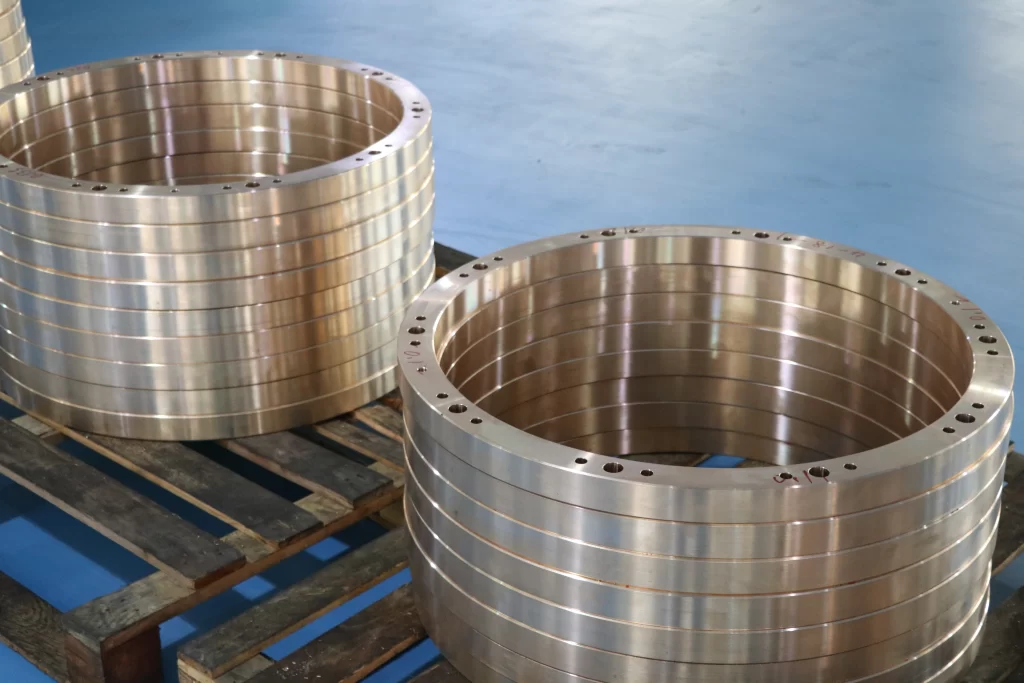
Custom Components: Beyond standard shapes, leaded bronze can be precision-machined into wear plates, slide guides, piston heads, and valve components .
6. The Manufacturing Advantage: Casting vs. Machining
Leaded bronze components are typically produced through centrifugal casting, continuous casting, or precision machining from stock.
Centrifugal Casting: Produces large-diameter, dense bushings with superior mechanical properties. Ideal for heavy-duty applications where porosity can’t be tolerated .
Continuous Casting: Delivers consistent grain structure and is cost-effective for standard sizes and high-volume orders .
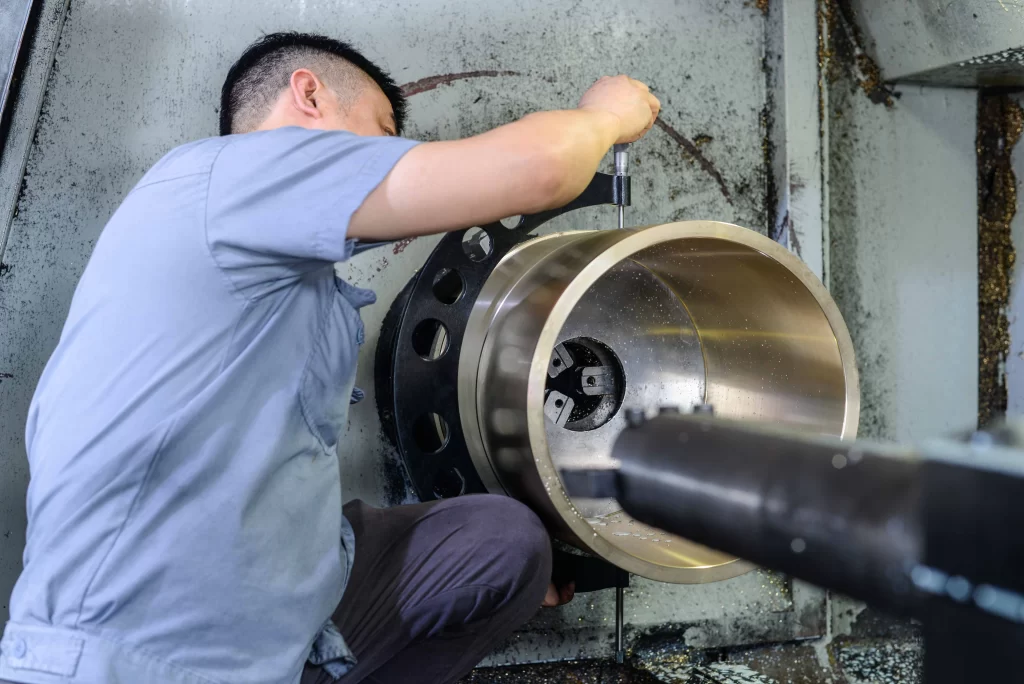
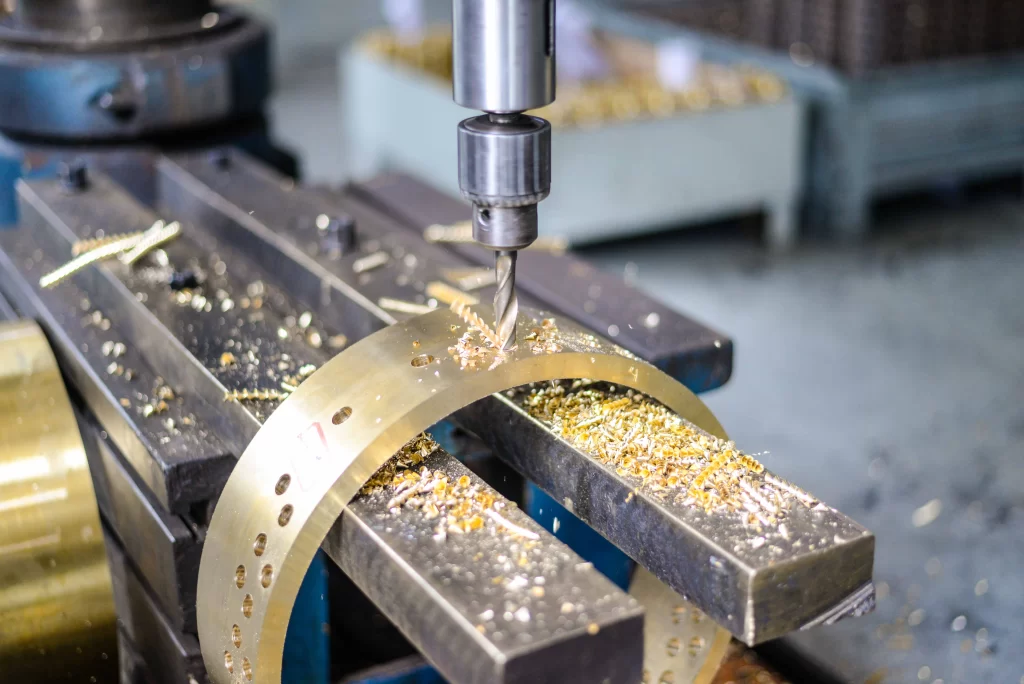
CNC Machining: For custom sizes and complex geometries, machining from cast bar stock allows tight tolerances and rapid prototyping .
At MYWAY, we leverage all three approaches to deliver components that meet your exact specifications—whether you need a single prototype or a high-volume production run.
7. Environmental Considerations and Lead-Free Alternatives
We’d be remiss not to address the elephant in the room: lead is toxic. Environmental regulations (like RoHS) have pushed industries to seek lead-free alternatives for certain applications, especially in potable water systems and consumer goods.
However, for heavy industrial, automotive, and marine applications, the unique properties of leaded bronze—particularly its self-lubricating and anti-seizing characteristics—remain unmatched. When leaded bronze is used in closed systems or non-consumptive environments, its performance advantages often outweigh environmental concerns.
For customers requiring lead-free solutions, MYWAY also offers:
Aluminum Bronze (C95400, C95500) – high strength, excellent corrosion resistance
Phosphor Bronze (PB102) – superior fatigue strength and spring properties
Manganese Bronze (C86300) – very high strength for extreme loads
Leaded Bronze Bearings and Bushings – Frequently Asked Questions (FAQ)
Q1: Do leaded bronze bearings need lubrication?
A: Yes, but they’re more forgiving than other materials. Under normal operation, an oil or grease film is recommended to minimize friction. However, if lubrication fails temporarily, the lead in the alloy provides a solid lubricant that prevents seizure .
Q2: Can I use leaded bronze bushings without hardened shafts?
A: Generally, yes. High-lead bronzes like C93600 are soft enough to work with unhardened or low-hardness shafts. However, for aluminum bronze or high-load applications, a hardened shaft (300–400 BHN) is recommended to maximize lifespan .
Q3: What’s the temperature limit for leaded bronze bearings?
A: Most leaded bronzes perform well up to 150–200°C (300–400°F) for continuous operation. Above that, strength begins to drop, and you may need to consider aluminum bronze or other high-temperature alloys .
Q4: How do I specify a custom leaded bronze bushing?
A: You’ll need to provide three key parameters:
Inner Diameter (ID) – the shaft size.
Outer Diameter (OD) – the housing bore size.
Length (L) – the overall height.
Additionally, specifying load (radial and axial) , operating speed (RPM or surface velocity) , and environmental conditions helps us recommend the optimal alloy .
Q5: What’s the difference between SAE 660 and C93200?
A: They’re the same alloy. SAE 660 is the Society of Automotive Engineers designation; C93200 is the Unified Numbering System (UNS) designation. Both refer to the same high-leaded tin bronze with excellent bearing properties .
Q6: Is leaded bronze suitable for food processing equipment?
A: No, due to lead content, leaded bronze is not recommended for direct food contact. For food-grade applications, consider aluminum bronze or FDA-compliant materials.
Q7: How long do leaded bronze bushings typically last?
A: With proper design and lubrication, leaded bronze bearings can last decades, often outliving the equipment they’re installed in . The key is matching the alloy to your operating conditions and ensuring proper installation clearance.
Why Choose MYWAY for Your Leaded Bronze Components?
At MYWAY, we don’t just sell standard parts—we engineer solutions. Whether you need a single prototype bushing or a high-volume production run, our approach is built around your application’s specific demands.
What Sets Us Apart:
Custom Alloys, Custom Sizes: Not finding what you need in a catalog? We’ll work with you to specify the exact composition and dimensions required—from small precision sleeves to large-diameter centrifugal castings .
Precision Machining: Our CNC turning and milling capabilities ensure tight tolerances and repeatable quality, even for complex geometries .
Material Expertise: Need something beyond leaded bronze? We offer a full range of bearing bronzes, including aluminum bronze, phosphor bronze, manganese bronze, and high-strength copper alloys .
Quality Assurance: Every component is backed by material certifications, dimensional inspection reports, and rigorous quality control processes.
Get Your Instant Quote
Stop settling for off-the-shelf compromises. Upload your drawing, select your material, and get a competitive quote in minutes. Let MYWAY help you build machinery that performs longer, costs less to maintain, and stands up to the toughest conditions.
Ready to upgrade your bearings and bushings? Contact us today to discuss your project, request a quote, or speak with one of our application engineers.
Final Thoughts
Leaded bronze alloys have earned their place as the backbone of heavy-duty bearing applications for good reason: they deliver a combination of strength, self-lubrication, and durability that few other materials can match. From the workhorse reliability of C93200 (SAE 660) to the extreme load capacity of C93600, there’s a leaded bronze grade tailored to almost any industrial challenge.
But material is only half the story. The other half is precision manufacturing—ensuring that your bushings and bearings are dimensionally accurate, free from defects, and built to handle the specific demands of your equipment.
That’s where MYWAY comes in. We combine decades of metallurgical expertise with modern CNC machining and casting capabilities to deliver components that don’t just meet specifications—they exceed expectations.
100000+ Types of Bushings – Contact Us for Details