
Recent Posts
Metallic Bearings: The Engineering Backbone of Modern Industry
Introduction
In the vast ecosystem of mechanical engineering, few components are as fundamental yet frequently overlooked as the metallic bearing. These precision-engineered machine elements serve as the interface between moving and stationary parts, transmitting loads while minimizing friction and wear. From the heaviest mining equipment to the most sensitive aerospace instrumentation, metallic bearings enable motion, support loads, and ensure the reliable operation of countless industrial systems.
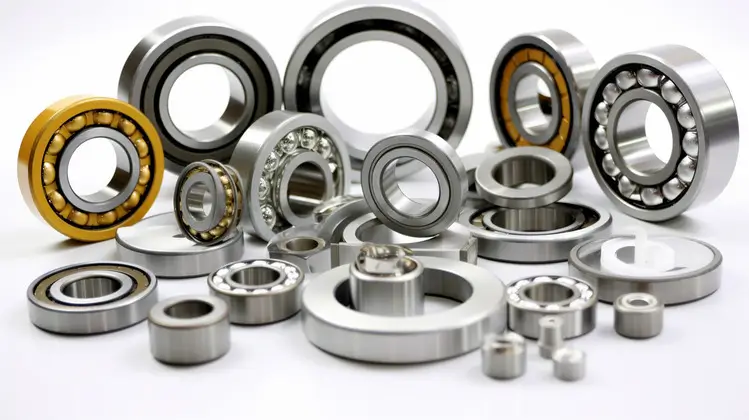
Table of Contents
1. Understanding Metallic Bearings: Function and Fundamental Principles
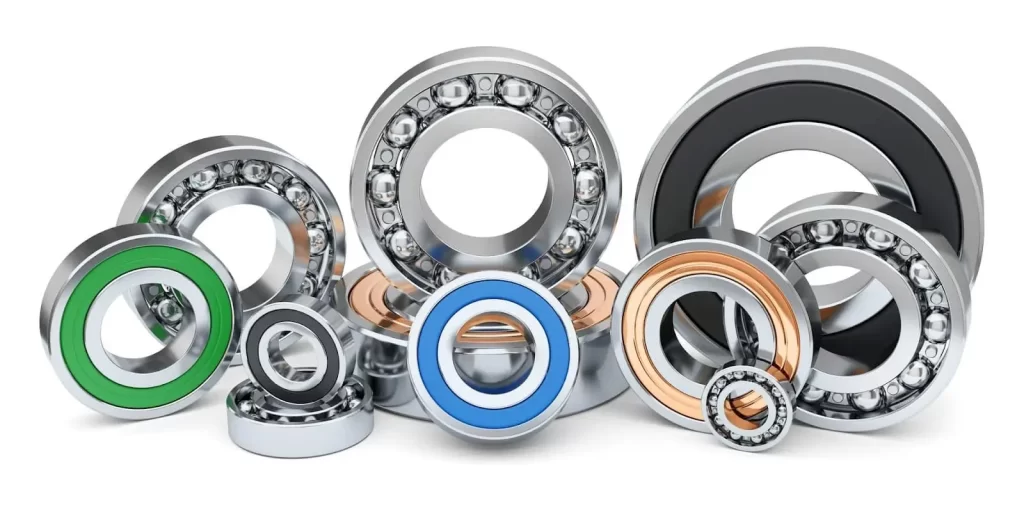
A metallic bearing is a machine element designed to transmit reaction forces from a rotating or sliding shaft to its supporting structure. Unlike rolling-element bearings that employ balls or rollers, metallic plain bearings—also referred to as sliding bearings, sleeve bearings, or journal bearings—operate through sliding contact between bearing surfaces.
The primary functions of a metallic bearing encompass:
Load Transmission: Transferring radial, axial, or combined loads from the moving shaft to the stationary housing
Friction Reduction: Minimizing resistance between moving surfaces to improve energy efficiency
Wear Protection: Preventing direct metal-to-metal contact that would lead to premature component failure
Alignment Support: Maintaining proper shaft positioning within mechanical assemblies
Shock Absorption: Dampening impact loads and vibrations that could damage surrounding components
Metallic bearings are typically classified by construction type—solid (single-metal), bimetal (two-layer), or trimetal (three-layer)—with each configuration offering distinct performance characteristics. The selection of bearing type depends on operating conditions including load magnitude, speed, temperature, lubrication availability, and expected service life.
2. The Functional Advantages of Metallic Bearings
Metallic bearings offer several distinct advantages over alternative bearing technologies, making them indispensable across diverse industrial sectors.
Superior Load Capacity
Metallic bearings excel in applications demanding high static and dynamic load capacities. Steel-backed bearings with bronze or Babbitt linings can withstand extreme pressures without deformation, making them ideal for heavy machinery, construction equipment, and industrial presses. The inherent strength of metallic materials enables these bearings to support substantial weights while maintaining dimensional stability under continuous operation.
Corrosion and Wear Resistance
Advanced metallic alloys—including bronze, brass, aluminum alloys, and specialized steel compositions—provide excellent resistance to corrosion, abrasion, and adhesive wear. Copper-based alloys, in particular, offer superior compatibility with shaft materials and demonstrate remarkable resistance to seizure even under marginal lubrication conditions. This durability translates directly into extended component life and reduced maintenance frequency.
Versatility Across Operating Conditions
Metallic bearings function reliably across extreme temperature ranges, from cryogenic environments to high-temperature industrial processes exceeding 280°C. They accommodate both high-speed rotation and low-speed oscillation, adapt to various lubrication regimes (from fully flooded to boundary lubrication), and perform effectively in contaminated environments where rolling-element bearings would fail.
Compact Design and Space Efficiency
Plain metallic bearings require less radial space than rolling-element bearings of equivalent load capacity. This compactness enables more efficient machine design, reduced housing dimensions, and lighter overall equipment weight—critical considerations in aerospace, automotive, and portable machinery applications.
3. Material Selection: The Foundation of Bearing Performance
The performance and longevity of a metallic bearing depend fundamentally on its material composition. Engineering professionals must carefully evaluate material properties against application requirements.
Steel-Backed Bearings
Low-carbon steel serves as the most common bearing-back material, providing exceptional strength, dimensional stability, and cost-effectiveness. Steel-backed designs incorporate a steel substrate that supports thinner, higher-performance bearing linings—enabling combinations of properties unattainable with single metals. This construction approach is prevalent in automotive engine bearings, industrial gearboxes, and heavy equipment applications.
Bronze and Copper-Based Alloys
Bronze bearings offer outstanding wear resistance, excellent conformability, and superior seizure protection. Cast bronze bearings—particularly those using aluminum, iron, manganese, silicon, or nickel as alloying elements—deliver high strength, good machinability, and reliable performance in high-load, low-speed applications such as trunnion bearings, gear bushings, and rolling-mill bearings. Leaded bronze alloys combine compatibility characteristics with excellent structural properties.
Bimetal and Trimetal Constructions
Multilayer bearing constructions leverage the strengths of different materials in a single component. A typical trimetal bearing features a steel backing for strength, a porous bronze interlayer for heat dissipation and lubricant retention, and a PTFE-based or Babbitt overlay for low-friction operation. This layered approach enables performance characteristics that no single material can provide, including high load capacity, excellent fatigue resistance, and maintenance-free operation
4. Metallic Bearings vs. Rolling-Element Bearings: Application Considerations
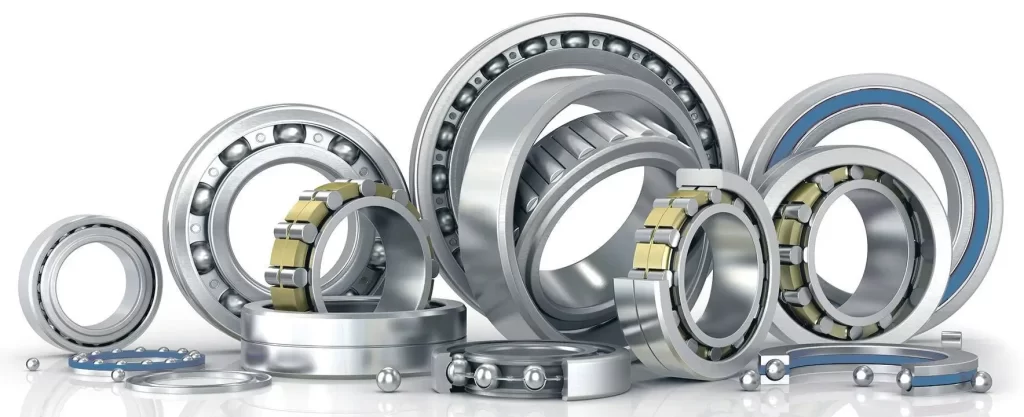
Understanding the distinction between metallic plain bearings and rolling-element bearings is essential for proper component selection.
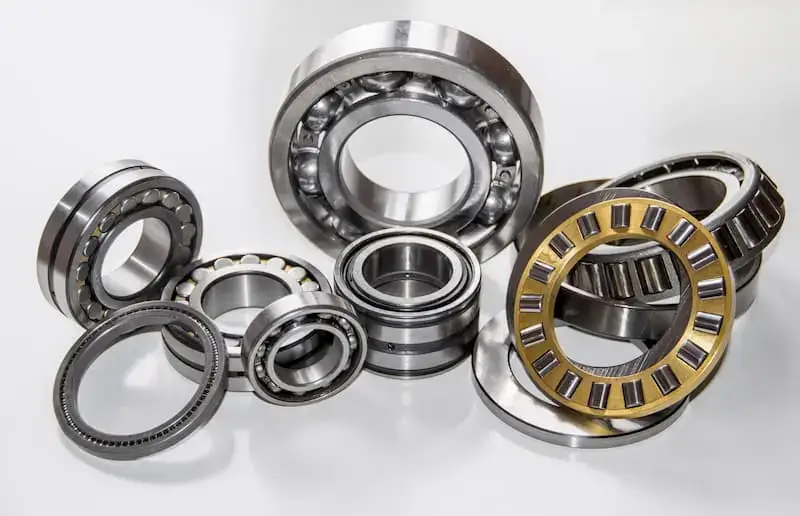
Metallic Plain Bearings (Bushings/Sleeve Bearings) operate through sliding motion between surfaces. They are:
Single-piece cylindrical components
Ideal for low-speed, heavy-load applications
Capable of withstanding substantial shock loading
Often self-lubricating or maintenance-free
More cost-effective, typically up to ten times less expensive than rolling bearings
Quieter in operation
Rolling-Element Bearings employ balls or rollers between inner and outer races. They are:
Multi-component assemblies with rolling elements, cages, and races
Better suited for high-velocity applications
Characterized by smoother operation without stick-slip behavior
Capable of tighter tolerances
Generally require more radial space
The selection between these bearing types depends on application-specific factors including operating speed, load characteristics, available space, maintenance capabilities, and budget constraints
5. Automotive Applications: Powering Mobility
The automotive industry represents one of the largest and most demanding markets for metallic bearings. These components are integral to virtually every moving assembly within a vehicle.
Engine Bearings
Internal combustion engines rely on metallic bearings for connecting rods, main journals, valve guides, and starter assemblies. Bimetal and trimetal engine bearings—featuring steel backings with aluminum-silicon or Babbitt overlays—provide the strength, fatigue resistance, and conformability necessary to withstand the extreme pressures and temperatures of combustion cycles. Advanced bearing designs offer up to 60% higher load capacity and 40% better seizure resistance compared to conventional alternatives.
Transmission and Drivetrain Components
Gearboxes, transmissions, and differential assemblies employ metallic bushings and bearings to support rotating shafts, manage gear meshing forces, and ensure precise component positioning. These applications demand bearings capable of handling both radial and axial loads while maintaining dimensional stability under variable operating conditions.
Suspension and Steering Systems
Suspension bushings, steering components, and hydraulic cylinder bearings utilize metallic plain bearings to accommodate articulation, absorb road shocks, and reduce friction in critical steering and handling systems. Heavy-duty and off-road vehicles particularly benefit from the durability and impact resistance of steel-backed bronze or composite bushings.
Electric and Hybrid Vehicles
The transition to electric mobility introduces new bearing challenges, including higher operating speeds, increased thermal loads, and the need for reduced parasitic losses. Metallic bearings engineered for EV applications address these requirements through advanced materials, optimized geometries, and low-friction coatings.
6. Aerospace Applications: Demanding Performance at Extreme Conditions
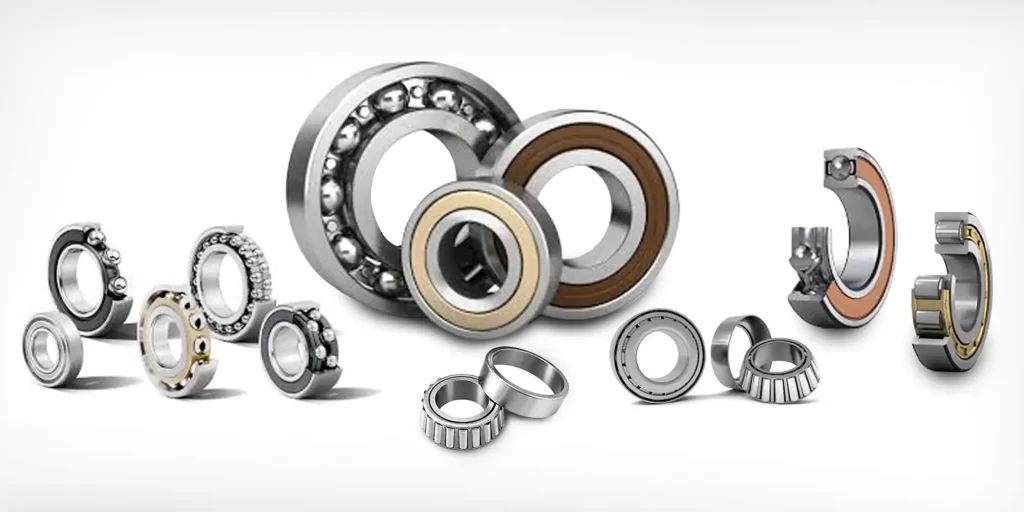
The aerospace sector imposes the most rigorous performance standards on metallic bearings, where failure is simply not an option.
Landing Gear Systems
Aircraft landing gear represents a quintessential application for metal/metal type spherical bearings. These bearings experience high impact loads during takeoff and landing when the aircraft is stationary, while extension and retraction movements occur under light load conditions. Aerospace-grade copper alloys, nickel aluminum bronze, and specialized steel compositions provide the strength, corrosion resistance, and wear resistance required for this safety-critical application.
Flight Control Systems
Aircraft controls, including wing flaps, ailerons, rudders, and elevator mechanisms, employ precision metallic bearings to ensure smooth, reliable actuation. These components must function flawlessly across extreme temperature ranges while resisting corrosion from moisture and de-icing fluids. Sealed bearing designs—originally developed for aircraft applications—now find widespread use in construction machinery and automotive systems.
Hydraulic and Pneumatic Systems
Aerospace hydraulic systems, including landing gear actuators, brake systems, and cargo door mechanisms, incorporate metallic bearings to support pistons, cylinders, and valve assemblies. The combination of high load capacity, corrosion resistance, and reliable operation under limited lubrication makes metallic bearings indispensable in these applications
7. Heavy Industry and Construction: Built for Durability
Mining, construction, and heavy manufacturing operations subject bearings to some of the most punishing conditions in the industrial world.
Mining Equipment
Mining machinery—including excavators, haul trucks, crushers, and conveyors—demands bearings capable of withstanding extreme loads, abrasive contamination, and continuous operation in harsh environments. Spherical plain bearings, heavy-duty bushings, and specialized metallic bearings support A-frames, dump cylinders, steering cylinders, equalizer track bars, and ripper blades. The ability to accommodate misalignment while maintaining load capacity is particularly critical in mining applications.
Construction Machinery
Construction equipment—including bulldozers, excavators, cranes, and loaders—relies on metallic bearings for hydraulic cylinders, pivot points, track systems, and boom assemblies. These bearings must resist impact loads, shock, and contamination while providing reliable service with minimal maintenance. Self-lubricating and maintenance-free bearing materials are increasingly specified for construction applications to reduce downtime and lower total ownership costs.
Power Generation and Maritime Applications
Wind energy gearbox bearings, brake cylinders, spindles, and maritime propulsion systems employ metallic bearings engineered for high reliability and extended service life. Marine applications demand exceptional corrosion resistance, while power generation equipment requires bearings capable of continuous operation under steady loads with minimal maintenance intervention.
8. Agricultural and General Industrial Applications
Agricultural Machinery
Farming equipment—including tillage implements, seeding and planting machinery, hay and forage systems, and harvesting equipment—operates in dusty, dirty environments where bearing contamination is inevitable. Disc harrows, rotary cutters, and conveyor systems endure especially high radial and axial loads, requiring robust metallic bearing designs. Corrosion-resistant metallic bearings with sealed or self-lubricating features ensure longevity in these challenging agricultural environments.
Pumps, Compressors, and Motors
Industrial pumps, compressors, and electric motors represent some of the most common applications for metallic plain bearings. These components require bearings that provide reliable rotation, minimal friction, and extended service life under continuous operation. Metal-polymer bushings in compressors have demonstrated efficiency increases up to 3% compared to conventional metallic bearings of the same clearance.
General Machinery and Equipment
From conveyor systems and gearboxes to hydraulic motors and braking systems, metallic bearings support the motion systems that drive industrial productivity. The wide range of available metallic materials—including bronzes, steels, aluminum alloys, and specialized composites—enables engineers to select optimal bearing solutions for virtually any application requirement
9. MYWAY Bushing Solutions: Engineering Excellence for Demanding Applications
When reliability, performance, and cost-effectiveness are paramount, MYWAY bushing solutions deliver exceptional value across the full spectrum of industrial applications.
The MYWAY Advantage
Zhejiang MYWAY Co., Ltd., established in 2005, has emerged as a national high-tech enterprise specializing in the research, development, production, and sales of bushings, bearings, and related raw materials. With over twenty years of industry experience, IATF/ISO certification serving forty-plus countries, and more than two thousand bushing molds, MYWAY brings unparalleled manufacturing capability to every customer engagement.
DU Bushings: Maintenance-Free Self-Lubricating Performance
MYWAY DU bushings represent the pinnacle of self-lubricating bearing technology. These three-layer composite sliding bearings operate without external lubrication, featuring:
Steel Backing: High strength, deformation resistance, and effective heat dissipation
Porous Bronze Interlayer: PTFE storage, enhanced wear resistance, and cooling assistance
PTFE-Based Surface: Self-lubricating operation with friction coefficients as low as 0.08 (dry) and 0.02 (lubricated)
Performance parameters include dynamic pressures up to 140 N/mm² (approximately 20,000 psi), dry running speeds up to 2.5 m/s, and operating temperatures from -200°C to +280°C. These capabilities make MYWAY DU bushings ideal for hydraulic cylinders, heavy suspension arms, construction equipment, food processing machinery, and mining vehicles.
Wrapped Steel Bushings: Resilience Under Impact
MYWAY wrapped steel bushings—manufactured from spring steel strips through rolling, through-hardening, and internal grinding—offer moderate hardness, high load capacity, and excellent wear resistance. Their inherent elasticity provides a buffering effect that protects shafts under heavy impact. A scientifically designed seam enables easier assembly and positioning while allowing full utilization of elastic properties.
Once pressed into the housing, the bushing remains securely held by its own elasticity. The internally ground bore ensures high dimensional accuracy, while self-adjustment under high friction prevents seizure and prolongs service life.
Application Versatility
MYWAY bushing solutions serve diverse industries including:
Automotive: Suspension systems, steering components, transmissions, and engine applications
Aerospace: Landing gear components, flight control systems, and hydraulic mechanisms
Mining and Construction: Excavators, haul trucks, crushers, and heavy equipment
Agriculture: Tillage equipment, harvesting machinery, and conveyor systems
Industrial Machinery: Pumps, compressors, gearboxes, and motors
Quality and Precision
MYWAY’s integrated manufacturing process—from sheet sorting through automatic rolling, punch blanking, and precision chamfering—ensures consistent quality and dimensional accuracy. Each bearing layer thickness is controlled within rigorous tolerances, with bond strengths reaching 80-100MPa compared to approximately 55MPa in conventional centrifugal casting. This commitment to precision manufacturing translates into superior performance, extended service life, and reduced total cost of ownership.
10.Frequently Asked Questions (FAQ)
Q1: What is the difference between a bearing and a bushing?
A bushing is a type of bearing—specifically, a plain bearing or sleeve bearing. While all bushings are bearings, not all bearings are bushings. Bushings are single-piece cylindrical components that operate through sliding motion, whereas rolling-element bearings employ multiple components including rolling elements (balls or rollers), cages, and races.
Q2: When should I choose a metallic plain bearing over a rolling-element bearing?
Choose metallic plain bearings for low-speed, heavy-load applications where space is limited, maintenance access is difficult, or contamination is a concern. They are also preferred when self-lubricating or maintenance-free operation is required, and when budget constraints favor more cost-effective solutions.
Q3: What materials are commonly used in metallic bearings?
Common materials include steel (particularly low-carbon steel for backings), bronze and copper-based alloys (offering excellent wear resistance and seizure protection), aluminum alloys, and specialized compositions including Babbitt metals and nickel alloys.
Q4: What does “maintenance-free” mean in the context of metallic bearings?
Maintenance-free metallic bearings incorporate solid lubricants—such as PTFE, graphite, or molybdenum disulfide—within the bearing material itself. These lubricants are self-applying and do not require periodic replenishment, eliminating the need for regular lubrication maintenance.
Q5: Can metallic bearings operate without lubrication?
Yes. Self-lubricating metallic bearings—including MYWAY DU bushings with PTFE-based surfaces—operate effectively without external lubrication. Dry-running capabilities make these bearings ideal for applications where lubricants cannot be used or would rapidly deplete.
Q6: What is a bimetal or trimetal bearing?
Bimetal bearings feature two layers—typically a steel backing with a bearing alloy overlay. Trimetal bearings add a third layer, often a porous bronze interlayer between the steel backing and a PTFE or Babbitt overlay. These multilayer constructions combine the strength of steel with the friction-reducing and wear-resistant properties of specialized bearing materials.
Q7: How do I select the right metallic bearing for my application?
Consider operating parameters including load magnitude and type (radial, axial, or combined), operating speed, temperature range, lubrication availability, environmental conditions (contamination, corrosion), space constraints, and expected service life. Consulting with bearing manufacturers—such as MYWAY—can help optimize selection for specific applications.
Q8: What industries benefit most from MYWAY bushing solutions?
MYWAY bushings serve automotive, aerospace, mining, construction, agriculture, and general industrial machinery applications. Their versatility, quality, and cost-effectiveness make them suitable for virtually any application requiring reliable, durable bearing performance.
Q9: How does MYWAY ensure bearing quality and consistency?
MYWAY employs integrated manufacturing processes with rigorous quality control at every stage—from material selection through production to final inspection. IATF/ISO certification, advanced automation, and over twenty years of industry experience ensure consistent quality across all products.
Q10: What customization options does MYWAY offer?
MYWAY provides custom and standard parts from casting to finish, with capabilities including special geometries, flanged designs, split configurations, and custom material specifications. Customer-specific requirements are accommodated through flexible manufacturing and engineering expertise.
Conclusion
Metallic bearings remain the engineering backbone of modern industry, enabling motion, transmitting loads, and ensuring reliable operation across countless applications. From the extreme demands of aerospace and mining to the precision requirements of automotive and industrial machinery, these essential components continue to evolve through advances in materials science, manufacturing technology, and application engineering.
MYWAY bushing solutions exemplify this evolution—combining over twenty years of manufacturing expertise, IATF/ISO-certified quality, and innovative product designs to deliver maintenance-free, high-performance bearing solutions for the world’s most demanding applications. Whether the requirement is for self-lubricating DU bushings, resilient wrapped steel bushings, or custom-engineered solutions, MYWAY brings the engineering excellence, manufacturing capability, and commitment to quality that modern industry demands.
Contact MYWAY today to discuss your specific bearing requirements and discover how our solutions can enhance your equipment reliability, reduce maintenance costs, and improve operational performance.
100000+ Types of Bushings – Contact Us for Details