
Recent Posts
Plain Bearings: The Engineering Foundation for Heavy-Duty Industrial Applications
Introduction
Plain bearings—also referred to as plane bearings, sleeve bearings, journal bearings, or bushings—represent one of the most fundamental and enduring mechanical components in industrial engineering. Unlike rolling-element bearings that utilize balls or rollers to separate moving parts, plain bearings operate on a simple yet highly effective principle: a smooth bearing surface supports a rotating or sliding shaft with a thin film of lubricant interposed between the two surfaces.
The plain bearing functions by reducing friction between moving machine parts while transmitting loads and ensuring smooth rotational or linear movement. This seemingly straightforward mechanism has made plain bearings indispensable across virtually every industrial sector—from automotive and aerospace to heavy machinery, agricultural equipment, marine applications, and beyond
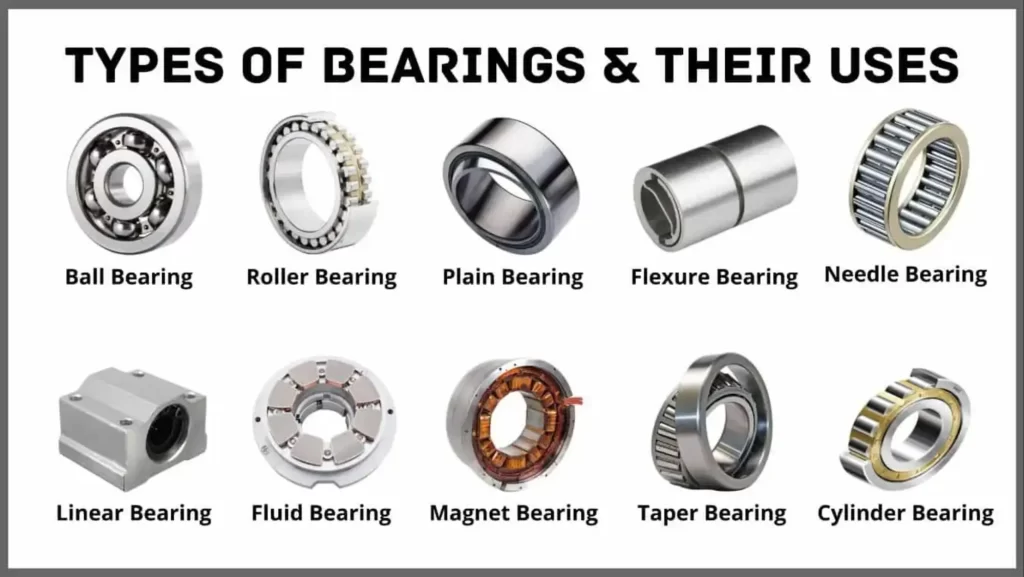
Table of Contents
1. The Fundamental Function of Plain Bearings in Mechanical Systems
Plain bearings serve a primary function: to provide a low-friction interface between a rotating shaft and its stationary housing. This function is achieved through the bearing’s cylindrical design, which envelops the shaft and creates a controlled clearance filled with lubricant. When the shaft rotates, the lubricant forms a hydrodynamic wedge that separates the two metallic surfaces, minimizing direct contact and significantly reducing friction and wear.
Beyond friction reduction, plain bearings perform several critical functions that distinguish them from other bearing types. They transmit radial and axial loads from the rotating shaft to the supporting structure, maintain precise shaft alignment, dampen vibrations and shock loads, and accommodate minor misalignments that would otherwise cause premature failure in more rigid bearing systems.
The plain bearing’s load-carrying capacity stems from its large surface contact area. Unlike rolling-element bearings that concentrate loads on small contact points, plain bearings distribute forces across their entire bearing surface. This characteristic enables plain bearings to accommodate substantially greater loads and better withstand the effects of shock loading–—a critical advantage in heavy-duty industrial applications where impact forces are prevalent.
2. Plain Bearings vs. Rolling-Element Bearings: A Comparative Analysis
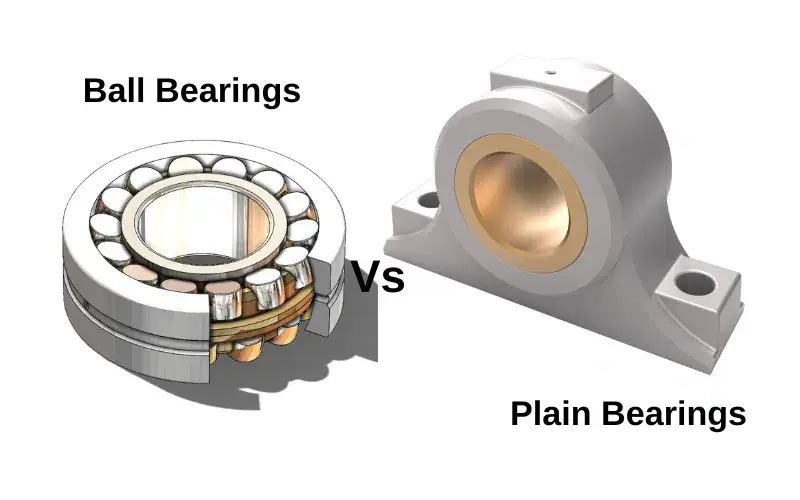
Understanding the distinctions between plain bearings and rolling-element bearings is essential for proper bearing selection. Each type offers distinct advantages that make it suitable for specific applications.
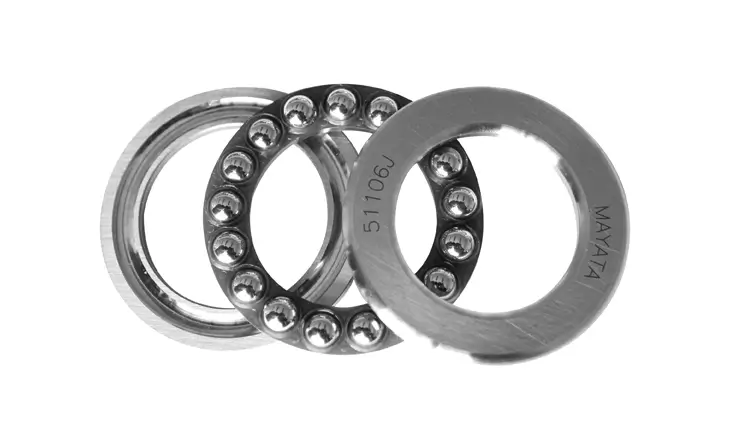
Rolling-element bearings—including ball bearings and roller bearings—employ rolling elements to separate moving parts, resulting in lower friction loss—approximately ten times lower than plain bearings. This characteristic makes rolling-element bearings preferable for high-speed applications where energy efficiency is paramount. They also offer superior rotational accuracy, making them popular in precision applications.
Plain bearings, however, excel in several areas where rolling-element bearings face limitations. Plain bearings offer higher resilience and shock resistance, with a rigid design that operates quietly and installs more easily. Their larger surface contact area enables them to accommodate greater loads. When properly applied, plain bearings save weight and space, carry more load, require less maintenance, and dampen vibration better than their rolling-element counterparts.
In stationary applications, plain bearings have the advantage of not becoming embedded and not seizing due to rusting. In vibrating or swivelling applications, plain bearings do not develop grooves—a common failure mode in rolling-element bearings. Furthermore, plain bearings’ simpler designs and one-piece construction significantly reduce maintenance requirements.
The choice between plain and rolling-element bearings ultimately depends on the specific application requirements—speed, load, operating environment, maintenance capabilities, and cost considerations all factor into the decision.
3. Automotive Applications of Plain Bearings
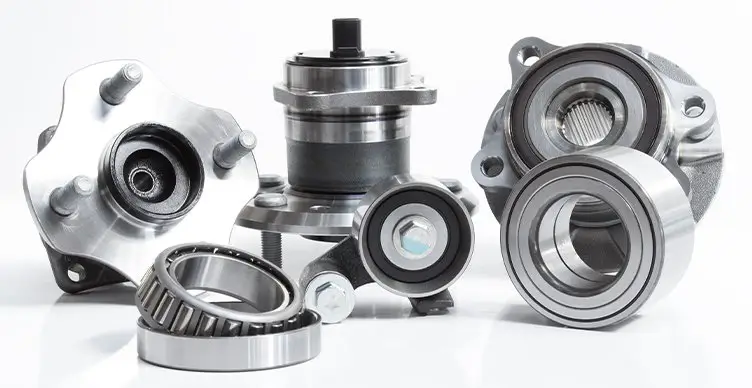
The automotive industry represents one of the largest and most demanding markets for plain bearings. Modern vehicles incorporate plain bearings in numerous critical systems where reliability, durability, and performance are non-negotiable.
Engine systems rely extensively on plain bearings. Crankshaft main bearings and connecting rod bearings operate under extreme conditions—high temperatures, heavy cyclic loads, and continuous high-speed rotation. These plain bearings must maintain precise clearances while withstanding millions of stress cycles over the vehicle’s lifetime. Camshaft bearings, balance shaft bearings, and turbocharger bearings similarly depend on plain bearing technology for reliable operation.
Beyond the engine, plain bearings find application in fuel injection pumps, power steering pumps, compressors, valve-train components, struts, shock absorbers, and transmission bearings–. Hydraulic systems throughout the vehicle—including brake systems, power steering, and suspension components—frequently employ plain bearings to manage both rotary and linear motions.
The electrification of transportation has created new opportunities for plain bearing applications. Electric vehicles require bearings for electric motor shafts, reduction gear systems, and various auxiliary components. The quiet operation and vibration-damping characteristics of plain bearings make them particularly well-suited for EV applications where noise, vibration, and harshness (NVH) are critical considerations
4. Aerospace and Aviation Plain Bearing Applications
Aerospace applications demand bearings that deliver exceptional durability and consistently superior performance despite extreme changes in temperature and air pressure. Plain bearings meet these stringent requirements across a wide range of aircraft systems.
In fixed-wing aircraft, plain bearings are installed in wing systems (flaps, spoilers, and slats), flight controls, cockpit controls, auxiliary power units, landing gear, door systems, and aircraft interiors (seats, bins, latches, and hinge points). Helicopters employ plain bearings primarily in main rotor axes and landing gear systems.
The aerospace industry values plain bearings for their high load-carrying capacity, freedom from maintenance, and resistance to fretting damage. These characteristics help achieve better fuel efficiency, extend maintenance intervals, and lower carbon emissions—all critical objectives in modern aviation.
The transition to more-electric and all-electric actuator systems in aircraft further drives plain bearing adoption. These systems can eliminate hydraulics in many applications, reducing weight, size, and cost while increasing load capacity and performance. Plain bearings play an enabling role in this technological evolution.
5. Heavy Machinery, Construction, and Mining Applications
Heavy machinery, construction equipment, and mining operations represent some of the most challenging environments for mechanical components. Plain bearings excel in these applications due to their robustness, shock resistance, and ability to operate under extreme loads.
Construction equipment—including excavators, bulldozers, loaders, and cranes—employs plain bearings in pivot points, articulation joints, hydraulic cylinder mounts, and track systems. These bearings must withstand constant exposure to dirt, dust, moisture, and significant impact forces while maintaining reliable operation.
Mining equipment presents even more extreme conditions. Plain bearings are used in A-frames, dump cylinders, front and rear struts, steering cylinders for mining trucks, equalizer track bars, lift and tilt cylinders, push blades, trunnion balls, and ripper blades for bulldozers. The ability to resist corrosion and function reliably despite dirt contamination makes plain bearings indispensable in mining applications.
Agricultural machinery similarly depends on plain bearings for reliable operation in dusty, dirty environments. Harvesters, tractors, planters, and sprayers all incorporate plain bearings in various systems where rolling-element bearings would be vulnerable to contamination and premature failure.
6. Industrial Equipment and Manufacturing Applications
The manufacturing sector relies on plain bearings across an extensive range of equipment. Machine tools—including lathes, milling machines, grinding machines, and drilling equipment—employ plain bearings for spindles, feed mechanisms, and support systems where precision and rigidity are essential.
Industrial machinery such as electrical equipment, printing machines, household appliances, and various processing equipment utilize plain bearings to guide or reduce friction in both rotary and linear applications. The simplicity and reliability of plain bearings make them ideal for applications where maintenance access may be limited or where operating conditions preclude the use of more complex bearing systems.
Hydraulic and pneumatic systems throughout industrial facilities depend on plain bearings for cylinder pivots, pump shafts, motor mounts, and linkage points. The ability to accommodate both radial and axial loads in a single compact component simplifies equipment design and reduces overall system complexity.
Packaging machinery, material handling equipment, conveyor systems, and robotics all incorporate plain bearings to achieve smooth, reliable motion with minimal maintenance requirements.
7. Marine and Offshore Plain Bearing Applications
Marine environments present unique challenges for mechanical components—constant exposure to saltwater, humidity, and corrosive conditions demands exceptional material selection and protection strategies. Plain bearings meet these challenges across numerous marine applications.
Propeller shaft bearings, rudder bearings, and stern tube bearings represent critical marine plain bearing applications. These components must operate reliably under heavy loads, continuous operation, and challenging environmental conditions while maintaining precise shaft alignment.
Offshore oil and gas equipment—including pipelines, drilling equipment, and platform machinery—employs plain bearings in applications where reliability is paramount and maintenance opportunities are limited. The resistance to fretting damage and freedom from maintenance that plain bearings offer make them particularly valuable in offshore applications.
Marine propulsion systems, deck machinery, winches, cranes, and steering systems all depend on plain bearings for reliable operation. The ability to operate effectively in submerged or splash-zone conditions further extends the utility of plain bearings in marine applications.
8. Plain Bearing Materials, Lubrication, and Selection Criteria
The performance and longevity of plain bearings depend significantly on material selection, lubrication strategy, and proper specification for the intended application.
Bearing materials must balance several properties: wear resistance, conformability, embeddability, corrosion resistance, fatigue strength, and thermal conductivity. Common plain bearing materials include bronze alloys, steel-backed bronze, aluminum alloys, babbitt metals, and various polymer composites. Each material offers distinct advantages for specific operating conditions.
Lubrication is essential for most plain bearing applications. The lubricant serves multiple functions: separating bearing surfaces to minimize friction and wear, dissipating heat generated during operation, flushing away wear debris and contaminants, and protecting against corrosion. Lubrication strategies range from oil bath and forced-feed systems to grease packing and self-lubricating bearing materials.
Self-lubricating plain bearings—incorporating solid lubricants such as graphite, molybdenum disulfide, or PTFE—eliminate the need for external lubrication systems. These bearings are particularly valuable in applications where maintenance access is limited, where contamination from lubricants is unacceptable, or where operating conditions preclude conventional lubrication.
Selection criteria for plain bearings include load magnitude and direction, operating speed, temperature range, environmental conditions, maintenance accessibility, and cost considerations. Proper selection ensures optimal performance and service life while minimizing total cost of ownership.
9. Precision Manufacturing and Quality Assurance in Plain Bearing Production
The performance of plain bearings depends critically on manufacturing precision and quality assurance. Modern plain bearing production employs advanced manufacturing technologies to achieve the dimensional accuracy, surface finish, and material properties required for demanding applications.
CNC machining enables precise control of bearing dimensions—with inner diameter tolerances as tight as ±0.01mm—ensuring proper clearance between bearing and shaft. Surface finishing processes achieve the smooth bearing surfaces necessary for proper lubrication film formation and low friction operation.
Quality assurance encompasses material certification, dimensional inspection, surface finish measurement, and functional testing. Manufacturers with comprehensive quality management systems—certified to standards such as IATF 16949 and ISO 9001—demonstrate commitment to consistent product quality.
Vertical integration—controlling the entire production process from raw material to finished product—enables consistent quality, shorter lead times, and greater flexibility in meeting customer requirements. Manufacturers with integrated production capabilities can respond more effectively to custom specifications and urgent delivery requirements.
FAQ
Q1: What is a plain bearing?
A plain bearing—also known as a plane bearing, sleeve bearing, journal bearing, or bushing—is a cylindrical component designed to reduce friction between a rotating shaft and its housing while supporting radial and axial loads.
Q2: What is the difference between a plain bearing and a rolling-element bearing?
Plain bearings use a sliding contact surface separated by a lubricant film, while rolling-element bearings use balls or rollers to separate moving parts. Plain bearings offer higher load capacity, better shock resistance, quieter operation, and simpler maintenance, whereas rolling-element bearings provide lower friction and higher speed capability.
Q3: What are the main applications of plain bearings?
Plain bearings are used across automotive (engines, transmissions, suspension), aerospace (flight controls, landing gear, wing systems), heavy machinery (construction, mining, agricultural equipment), industrial equipment (machine tools, printing presses, conveyors), and marine applications (propeller shafts, steering systems).
Q4: What materials are used for plain bearings?
Common plain bearing materials include bronze alloys, steel-backed bronze, aluminum alloys, babbitt metals, and polymer composites. Material selection depends on load, speed, temperature, and environmental conditions.
Q5: Do plain bearings require lubrication?
Most plain bearings require lubrication to separate bearing surfaces, dissipate heat, and flush away contaminants. However, self-lubricating plain bearings incorporating solid lubricants can operate without external lubrication systems.
Q6: How long do plain bearings last?
Plain bearing service life depends on load, speed, lubrication, operating conditions, and maintenance practices. With proper selection, installation, and maintenance, plain bearings can provide many years of reliable service.
Q7: How do I select the right plain bearing for my application?
Selection criteria include load magnitude and direction, operating speed, temperature range, environmental conditions, maintenance accessibility, and cost. Consulting with experienced bearing manufacturers ensures optimal selection for specific requirements.
Q8: What is MYWAY’s capability in plain bearing manufacturing?
MYWAY is a national high-tech enterprise with over 20 years of experience in bearing and bushing R&D, production, and sales. With three vertically integrated production bases totaling 35,000 m² and IATF 16949 and ISO 9001 certifications, MYWAY delivers precision plain bearings that outperform industry benchmarks
100000+ Types of Bushings – Contact Us for Details