
Recent Posts
Steel Sleeve Bearings: Reliable Sliding Components For Heavy Industrial Operations
Introduction
When it comes to reliable, cost-effective friction reduction for heavy machinery, steel sleeve bearings (also called steel bushings, plain steel bearings, or sliding steel bearings) stand as one of the most widely used components in modern industry. These cylindrical, smooth-surfaced mechanical parts are engineered to support rotating or sliding shafts, minimize wear, and deliver consistent performance in high-load, moderate-speed applications. Unlike ball bearings that rely on rolling elements, steel sleeve bearings operate on sliding friction lubricated by oil, grease, or self-lubricating films—making them quieter, more durable, and easier to maintain for harsh working conditions.
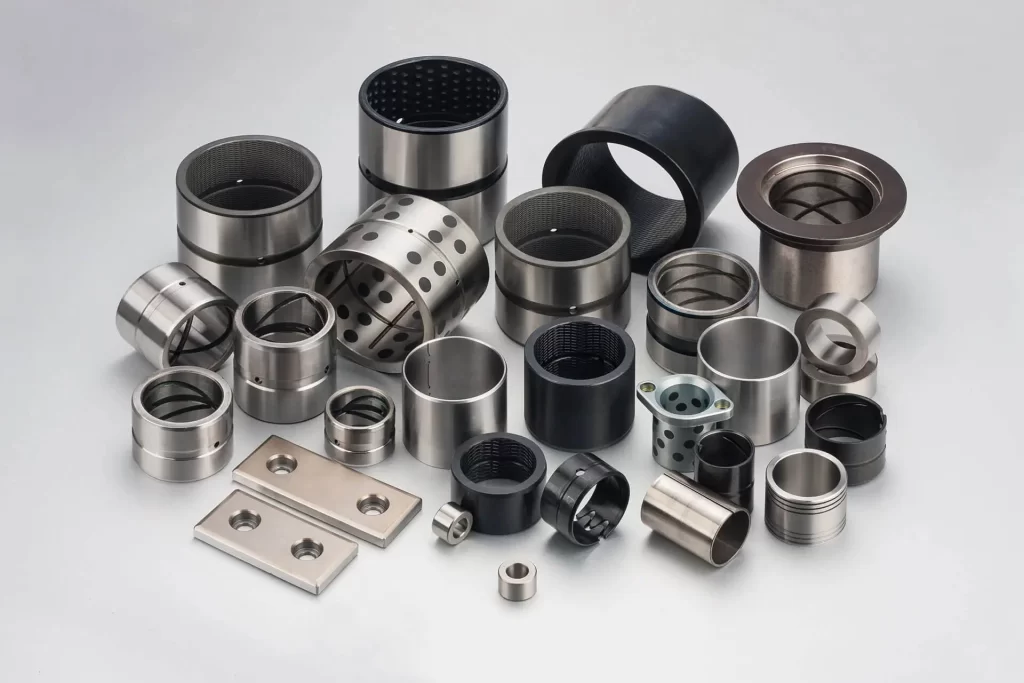
Table of Contents
1.What Are Steel Sleeve Bearings?
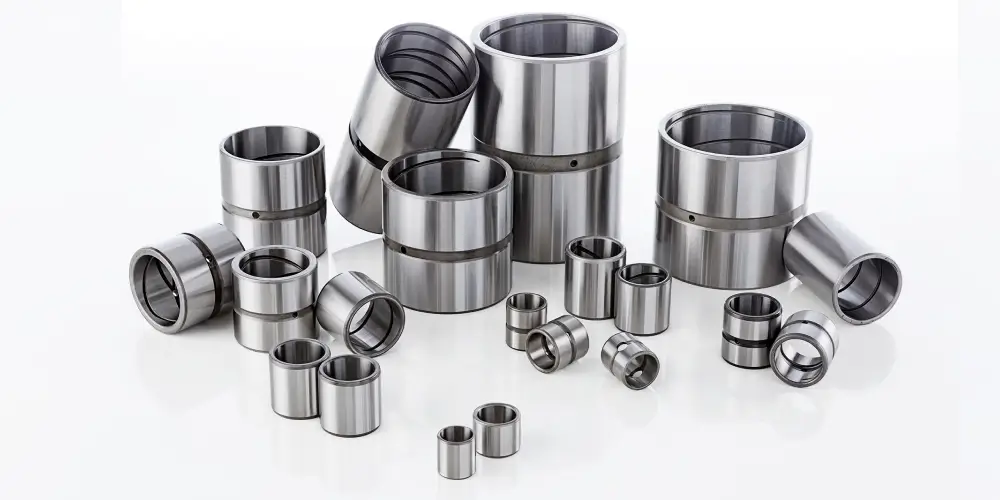
Steel sleeve bearings are cylindrical metal components designed to fit between a shaft and a housing, enabling smooth linear or rotational movement while reducing friction. They belong to the plain bearing family, which also includes bronze bushings, composite bearings, and plastic sleeve bearings—but steel variants are distinguished by their high strength, exceptional wear resistance, and ability to handle extreme loads.
Common synonyms for steel sleeve bearings include:
- Steel bushings
- Plain steel bearings
- Sliding steel bearings
- Steel journal bearings
- Steel sleeve bushings
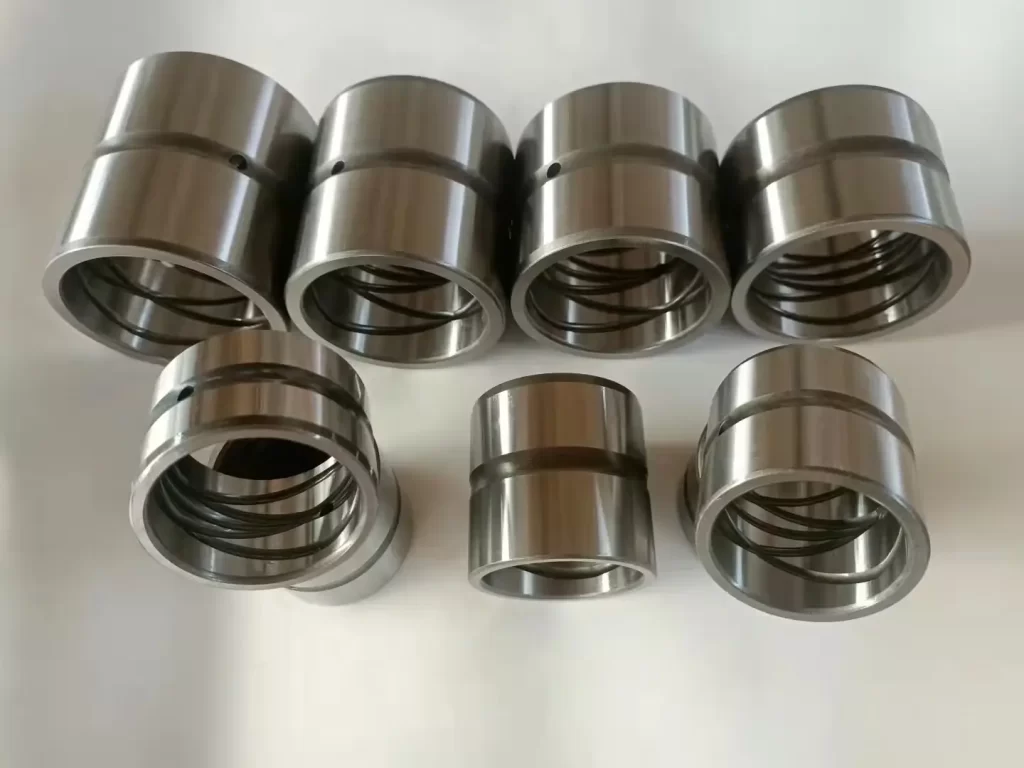
The core design of a steel sleeve bearing is simple: a seamless or split steel tube with a smooth inner diameter (ID) for shaft contact and an outer diameter (OD) that fits tightly into equipment housings. Many steel sleeve bearings feature lubrication grooves (straight, spiral, or intermittent) or oil holes to retain lubricant, ensuring consistent friction reduction and heat dissipation during operation.
2. How Do Steel Sleeve Bearings Work?
The working principle of steel sleeve bearings is based on hydrodynamic lubrication and controlled sliding friction—simple yet highly effective for heavy-duty use. Here’s a step-by-step breakdown:
- Fitting: The steel sleeve bearing is pressed into a housing, and a rotating/sliding shaft is inserted into its smooth inner bore.
- Lubrication: A thin film of lubricant (oil, grease, or solid lubricant like graphite/PTFE) is applied between the shaft and the bearing’s inner surface. This lubricant film acts as a barrier, preventing direct metal-to-metal contact.
- Sliding Motion: As the shaft rotates or slides, it glides smoothly over the lubricated steel surface. The bearing’s cylindrical shape distributes the load evenly across the contact area, avoiding localized stress or wear.
- Heat & Friction Management: The lubricant absorbs heat generated by friction and carries it away from the contact zone. Lubrication grooves in the bearing enhance this process by retaining lubricant and channeling away debris, extending service life.
Unlike ball bearings, which use rolling balls to reduce friction, steel sleeve bearings have no moving parts. This simplicity makes them quieter, more vibration-dampening, and less prone to failure in dirty or high-shock environments. They excel at high-load, low-to-moderate speed applications where ball bearings would wear out quickly or become noisy.
3. Key Materials for Steel Sleeve Bearings
The performance of steel sleeve bearings depends heavily on material selection—each steel grade offers unique properties tailored to specific loads, speeds, and environments. Below are the most common materials used in manufacturing steel sleeve bearings:
1. Hardened Carbon Steel (e.g., 45# Steel, GCr15)
- Properties: High hardness (HRC 58–65 after quenching), excellent wear resistance, good impact strength, and low cost.
- Manufacturing: Carbon steel is heated to high temperatures and rapidly cooled (quenched) to harden the surface; case-hardened variants (carburized) have a tough outer layer and a softer, shock-resistant core.
- Best For: High-load, low-speed applications (e.g., construction equipment, hydraulic cylinders, agricultural machinery) where cost-effectiveness and durability are critical.
2. Stainless Steel (e.g., 304, 316L, 420/440C)
- Properties: Superior corrosion resistance, oxidation resistance, and moderate hardness. 420/440C offers higher hardness (HRC 50–60) after heat treatment, while 316L excels in saltwater/chemical environments.
- Best For: Corrosive environments (marine equipment, chemical processing machinery, food processing lines) where rust or chemical attack would damage carbon steel bearings.
3. Alloy Steel (e.g., 42CrMo, 40Cr, Chromium-Molybdenum Steel)
- Properties: Ultra-high strength, excellent fatigue resistance, and ability to withstand extreme pressure and temperature. Alloying elements (chromium, molybdenum) enhance hardness and wear resistance beyond carbon steel.
- Best For: Heavy-duty industrial applications (mining machinery, large engines, aerospace components) with extreme loads or high operating temperatures.
4. Bimetallic Steel (Steel-Bronze Composite)
- Properties: Combines the strength of a steel outer layer with the self-lubricating properties of a bronze inner lining. The steel provides structural rigidity, while the bronze reduces friction without frequent lubrication.
- Best For: High-load, moderate-speed applications where maintenance access is limited (e.g., automotive transmissions, industrial pumps).
4. Common Types of Steel Sleeve Bearings
Steel sleeve bearings come in multiple designs to fit different installation, load, and lubrication needs. The most popular types are:
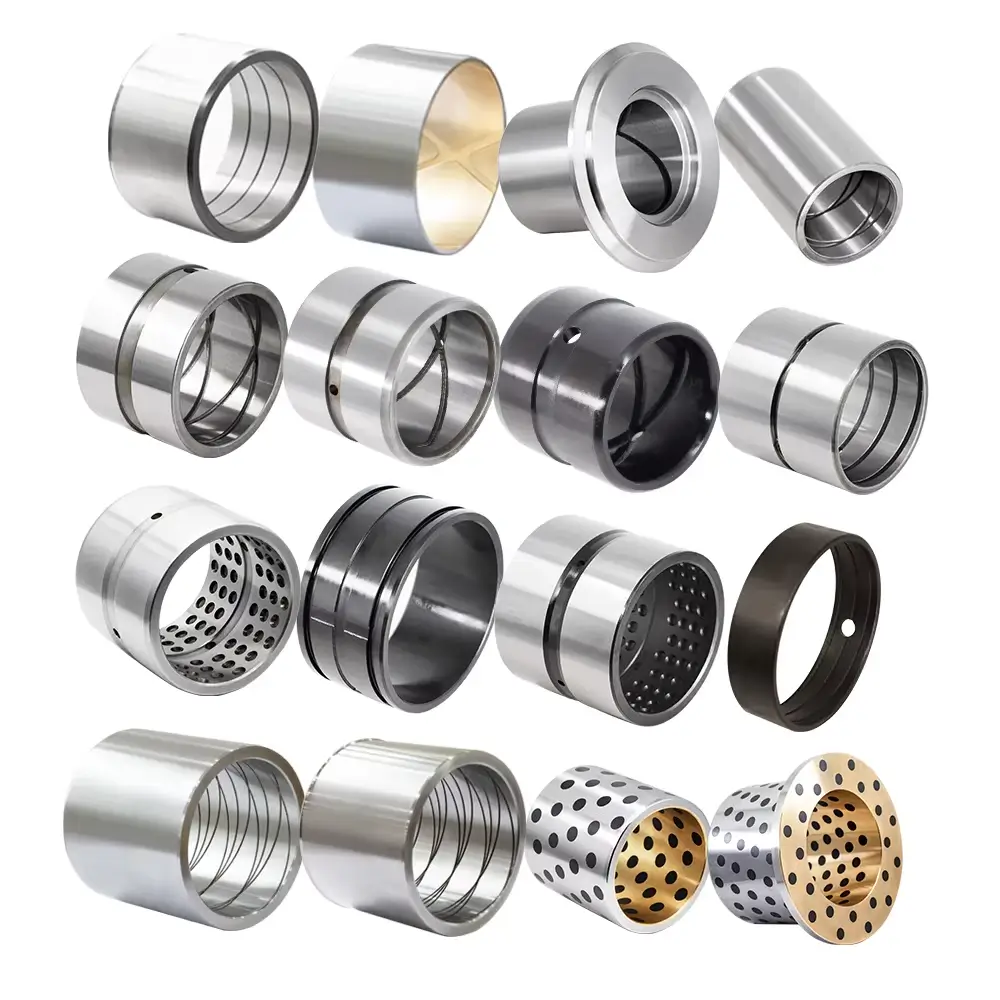
1. Plain Steel Sleeve Bearings
- Design: The simplest type—smooth, straight cylindrical steel tubes with no flanges or grooves.
- Features: Cost-effective, easy to install, and versatile. Uniform inner/outer diameter ensures tight fits in standard housings.
- Applications: General machinery, conveyor systems, and low-friction rotating parts.
2. Flanged Steel Sleeve Bearings
- Design: A straight steel sleeve with a circular flange at one or both ends. The flange acts as a stop to prevent axial movement (shifting) during operation.
- Features: No need for additional retaining rings or fasteners; easy to align in housings. Ideal for applications where axial stability is critical.
- Applications: Motors, pumps, gearboxes, and automotive components.
3. Grooved Steel Sleeve Bearings
- Design: Plain or flanged steel sleeves with precision-machined grooves (straight, spiral, or dotted) on the inner surface.
- Features: Grooves retain lubricant, distribute it evenly across the contact area, and channel away debris. Reduces friction, dissipates heat, and extends service life—critical for high-speed or heavy-load applications.
- Applications: Hydraulic systems, construction equipment, and high-cycle industrial machinery.
4. Split Steel Sleeve Bearings
- Design: Two half-cylindrical steel pieces that form a complete sleeve when assembled.
- Features: Easy to install/remove without disassembling the entire machine—perfect for tight spaces or frequent maintenance. The split design simplifies replacement and reduces downtime.
- Applications: Large engines, heavy mining machinery, and industrial presses.
5. Self-Lubricating Steel Sleeve Bearings
- Design: Steel sleeves with a solid lubricant layer (graphite, PTFE, or molybdenum disulfide) embedded in the inner surface or grooves.
- Features: Eliminates the need for regular oil/grease lubrication; ideal for hard-to-reach or high-temperature environments where liquid lubricants break down.
- Applications: Ovens, furnaces, food processing equipment, and remote industrial machinery.
5. Manufacturing Process of Steel Sleeve Bearings
High-quality steel sleeve bearings require precise manufacturing to ensure tight tolerances, smooth surfaces, and consistent performance. The standard production process includes:
- Material Selection & Cutting: Raw steel bars or sheets are cut into blanks based on required dimensions (ID, OD, length).
- Forming: Blanks are shaped into cylindrical sleeves using stamping, extrusion, or CNC turning. For split bearings, the sleeve is cut into two halves.
- Heat Treatment: Critical for hardness and durability—carbon/alloy steel sleeves undergo quenching + tempering; stainless steel may undergo nitriding or passivation.
- Precision Machining: CNC grinding and boring achieve tight tolerances (±0.01mm) for ID/OD and smooth surface finishes (Ra ≤ 0.8μm). Lubrication grooves or holes are machined at this stage.
- Surface Treatment: Optional coatings (zinc plating, black oxide, or ceramic) enhance corrosion resistance or wear resistance.
- Quality Inspection: Each bearing is tested for dimensional accuracy, hardness, surface finish, and load capacity before packaging.
6. Key Advantages of Steel Sleeve Bearings
Steel sleeve bearings outperform many other bearing types (ball, bronze, plastic) in heavy-duty applications, offering these critical benefits:
1. Exceptional Load Capacity
The large contact area between the steel sleeve and shaft distributes loads evenly, supporting heavy radial and axial loads that ball bearings cannot handle. Ideal for high-shock and vibration environments.
2. Cost-Effective
Simple design and easy manufacturing make steel sleeve bearings 30–50% cheaper than ball bearings of the same size. Their long service life also reduces replacement and maintenance costs.
3. Quiet & Smooth Operation
No rolling elements mean minimal noise and vibration—critical for noise-sensitive applications (HVAC, consumer electronics, medical equipment).
4. Durability & Long Life
Hardened steel surfaces resist wear, abrasion, and deformation. With proper lubrication, steel sleeve bearings can last 5–10 times longer than plastic bearings and outperform bronze bearings in high-load scenarios.
5. Versatility
Available in multiple materials, sizes, and designs (plain, flanged, grooved, split) to fit any application. Custom sizes and lubrication features can be engineered for unique projects.
6. Easy Maintenance
No moving parts to replace; regular lubrication (or self-lubricating design) is all that’s needed. Split designs enable quick replacement without machine disassembly.
7. Corrosion Resistance Options
Stainless steel and coated carbon steel variants perform reliably in corrosive environments (marine, chemical, food processing) where other bearings rust or degrade.
7. Top Industrial Applications of Steel Sleeve Bearings
Steel sleeve bearings are used across nearly every industry due to their versatility and durability. The most common applications include:
1. Construction Equipment
Excavators, bulldozers, cranes, and loaders rely on steel sleeve bearings for hydraulic cylinders, boom joints, and pivot points. They handle heavy loads and shock in rugged job sites.
2. Automotive Industry
Engine components (crankshafts, camshafts), transmissions, suspension systems, and steering mechanisms use steel sleeve bearings for smooth, reliable operation.
3. Agricultural Machinery
Tractors, harvesters, plows, and irrigation equipment depend on steel sleeve bearings to resist dirt, moisture, and heavy loads in farm environments.
4. Industrial Machinery
Conveyors, presses, gearboxes, and machine tools use steel sleeve bearings for low-friction rotation and linear movement. They excel in high-cycle, continuous-operation settings.
5. Marine & Offshore Equipment
Ship propellers, winches, cranes, and offshore drilling rigs use stainless steel sleeve bearings to resist saltwater corrosion and heavy marine loads.
6. Mining & Heavy Industry
Mining crushers, conveyors, and processing equipment use alloy steel sleeve bearings to withstand extreme loads, abrasion, and high temperatures.
7. Food & Beverage Processing
Stainless steel sleeve bearings (FDA-compliant) are used in mixers, conveyors, and packaging machinery—resisting corrosion from food acids and frequent washdowns.
8. How to Select the Right Steel Sleeve Bearing for Your Application
Choosing the optimal steel sleeve bearing requires evaluating 5 key factors to ensure performance and longevity:
1. Load Requirements
- High Load: Choose hardened carbon steel (GCr15) or alloy steel (42CrMo) bearings.
- Moderate Load: Plain carbon steel or bimetallic steel bearings work well.
2. Operating Speed
- Low Speed (<500 RPM): Plain or grooved carbon steel bearings (cost-effective).
- Moderate Speed (500–3000 RPM): Grooved or self-lubricating steel bearings (enhanced heat dissipation).
3. Environment Conditions
- Corrosive: Stainless steel (316L preferred) or coated carbon steel bearings.
- Dirty/Dusty: Grooved steel bearings (channel debris away from contact surfaces).
- High Temperature: Alloy steel or self-lubricating steel bearings (resist thermal degradation).
4. Installation Needs
- Axial Stability: Flanged steel sleeve bearings.
- Tight Spaces/Frequent Maintenance: Split steel sleeve bearings.
- Standard Housings: Plain steel sleeve bearings.
5. Lubrication Access
- Frequent Lubrication: Grooved steel bearings (retain lubricant longer).
- Limited Access: Self-lubricating steel bearings (no regular maintenance needed).
9.Steel Sleeve Bearings vs. Ball Bearings: Key Differences
To help you choose the right bearing type, here’s a clear comparison:
| Feature | Steel Sleeve Bearings | Ball Bearings |
|---|---|---|
| Friction Type | Sliding friction (lubricated) | Rolling friction (ball elements) |
| Load Capacity | High (heavy radial/axial loads) | Moderate (limited shock load) |
| Speed Range | Low–moderate (<3000 RPM) | High (>3000 RPM) |
| Noise Level | Quiet (no rolling elements) | Moderate (ball contact noise) |
| Cost | Lower (simple design) | Higher (precision balls/cages) |
| Maintenance | Easy (lubrication only) | Complex (replace worn balls/cages) |
| Durability | Long (wear-resistant steel) | Shorter (ball fatigue/wear) |
| Best For | Heavy machinery, low-speed, high-shock | High-speed, light–moderate load |
FAQ About Steel Sleeve Bearings
Q1: What is the difference between a steel sleeve bearing and a steel bushing?
A: They are the same component—steel sleeve bearing is the technical term, while steel bushing is the common industry name. Both refer to cylindrical steel components that reduce friction between shafts and housings.
Q2: Can steel sleeve bearings be used without lubrication?
A: Standard steel sleeve bearings require lubrication (oil/grease) to prevent metal-to-metal contact and wear. Self-lubricating steel sleeve bearings (with graphite/PTFE inserts) can operate without liquid lubrication.
Q3: What tolerances do MYWAY steel sleeve bearings offer?
A: MYWAY provides precision steel sleeve bearings with dimensional tolerances as tight as ±0.01mm and surface finishes up to Ra 0.4μm. Custom tolerances are available for high-precision applications.
Q4: Are stainless steel sleeve bearings rust-proof?
A: Stainless steel sleeve bearings (304/316L) are highly corrosion-resistant but not 100% rust-proof. They resist rust in saltwater, chemical, and humid environments better than carbon steel. For extreme corrosion, we offer ceramic-coated stainless steel bearings.
Q5: Can MYWAY make custom-sized steel sleeve bearings?
A: Yes! MYWAY specializes in custom steel sleeve bearings—we can manufacture any ID, OD, length, groove pattern, or material based on your drawings or specifications. We also offer free design consultation and sample making.
Q6: How long do steel sleeve bearings last?
A: Service life depends on load, speed, lubrication, and environment. With proper lubrication and maintenance, MYWAY steel sleeve bearings can last 5–15 years in industrial applications—far longer than plastic or bronze bearings.
Q7: What is the maximum load a steel sleeve bearing can handle?
A: Load capacity varies by material and size. Hardened GCr15 steel bearings can handle up to 200 MPa of specific pressure, while alloy steel bearings support up to 300 MPa. Contact MYWAY for load capacity calculations based on your application.
100000+ Types of Bushings – Contact Us for Details