bearing material selection

The Metallurgical Engineering of Bronze Sleeve Bearings: Alloy Selection, Load Dynamics, and Industrial Application
Interpretation of Bushing Knowledge

The Metallurgical Engineering of Bronze Sleeve Bearings: Alloy Selection, Load Dynamics, and Industrial Application

Bronze sleeve bearings, classified as plain bearings or journal bearings, constitute a foundational component within mechanical engineering, providing a critical interface for rotating or linear motion between a shaft and a housing. Functioning as bushings, these components leverage the inherent tribological advantages of copper-based alloys to reduce friction, manage heat dissipation, and absorb operational loads. The extensive utility of bronze sleeve bearings, from automotive powertrains and heavy construction equipment to precision machine tools and marine propulsion systems, is attributable to the versatile metallurgical properties of bronze. Unlike rolling element bearings that rely on point contact, sleeve bearings employ a larger surface contact area, enabling them to support significant radial loads, accommodate shock loading, and offer resistance to mechanical wear
MYWAY Bushing: Top 5 Bushing and Bearing Manufacturers in China
Interpretation of Bushing Knowledge

The Weight of Performance: Why Bronze Remains the Heavyweight Champion in Industrial Bearing Applications

In the realm of heavy-duty industrial engineering, material selection is never a trivial decision. Among the myriad options available, bronze has endured as a trusted cornerstone—not despite its density, but precisely because of it. The question “Is bronze heavy?” often arises in procurement and design discussions, yet the answer extends far beyond a simple measurement of mass. This article explores why the “heaviness” of bronze is, in fact, its greatest engineering asset. From load capacity and wear resistance to thermal management and corrosion protection, we examine the functional advantages that make bronze the material of choice for demanding bushing applications. We also introduce MYWAY Bushings as a premier solution that harnesses these inherent properties to deliver reliability, longevity, and superior total cost of ownership.

Bronze vs. Brass: A Comprehensive Technical Comparison for Industrial Bushing Applications
Interpretation of Bushing Knowledge

Bronze vs. Brass: A Comprehensive Technical Comparison for Industrial Bushing Applications

Bronze and brass represent two of the most widely utilized copper-based alloy families in industrial manufacturing. Despite their visual similarities and shared copper foundation, these materials exhibit fundamentally distinct metallurgical characteristics that dictate their suitability for specific engineering applications. For procurement engineers, maintenance managers, and design professionals engaged in bushing and bearing selection, understanding the nuanced differences between bronze and brass is not merely an academic exercise—it is a critical determinant of equipment reliability, operational longevity, and total cost of ownership.

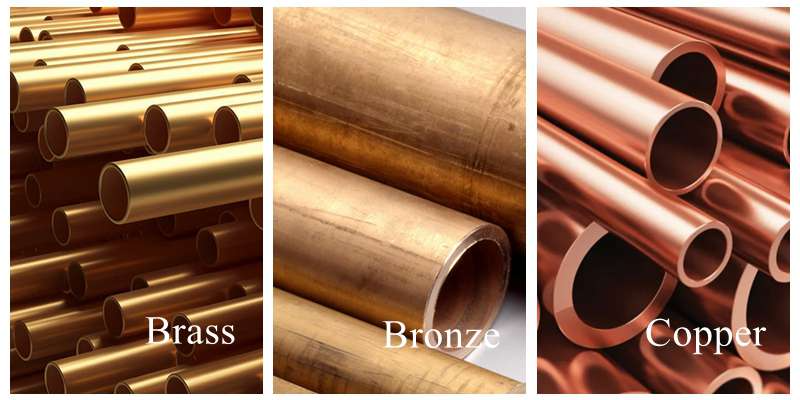
Copper vs. Brass vs. Bronze: The Ultimate Alloy Guide for Bearing Selection
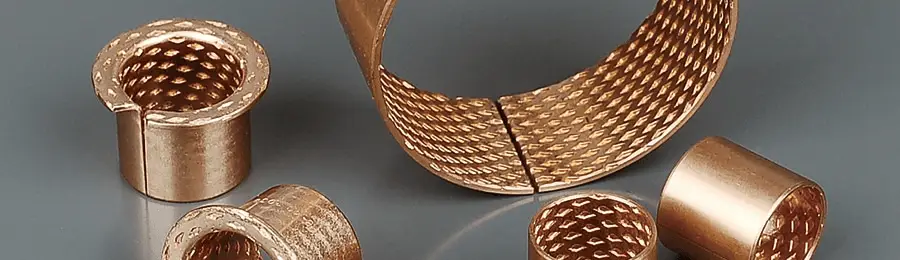
Bronze Bushing

Copper vs. Brass vs. Bronze: The Alloy Guide for Bearing Selection

In the world of bearings and bushings, material selection isn’t just a choice—it’s the foundation of performance, longevity, and cost-efficiency. Among the most trusted families of materials are the copper alloys: Copper, Brass, and Bronze. While often grouped for their reddish hues, these alloys possess distinct “personalities” that make them uniquely suited for specific challenges.

Scroll to Top