Self Lubricating Bushings

PTFE Composite Bushings and the Design Choices That Shape Bearing Life
Interpretation of Bushing Knowledge

PTFE Composite Bushings and the Design Choices That Shape Bearing Life

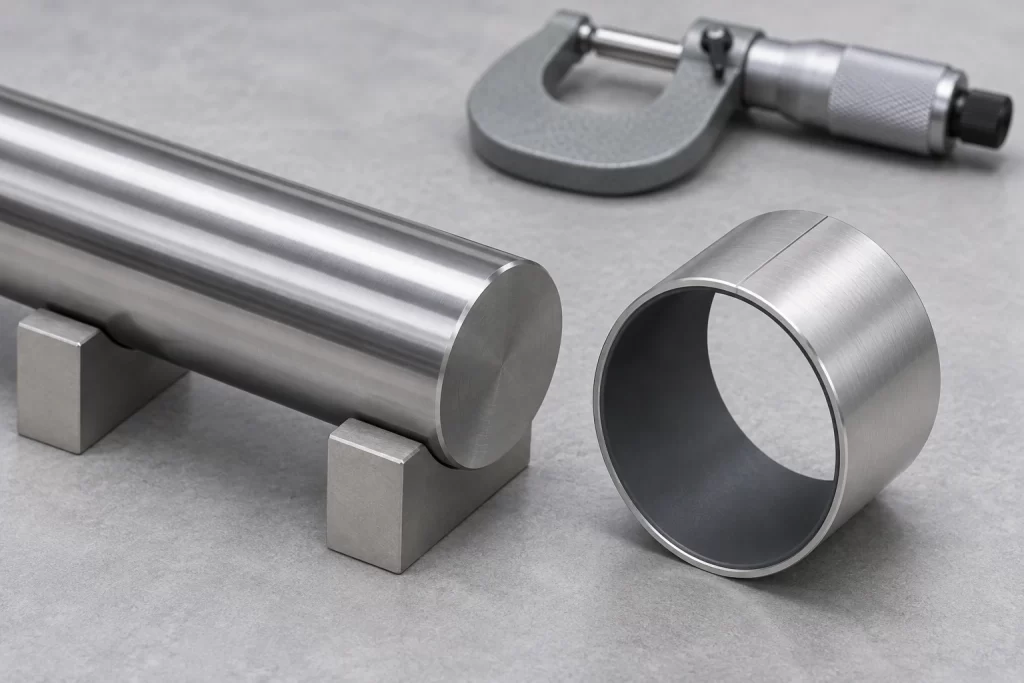
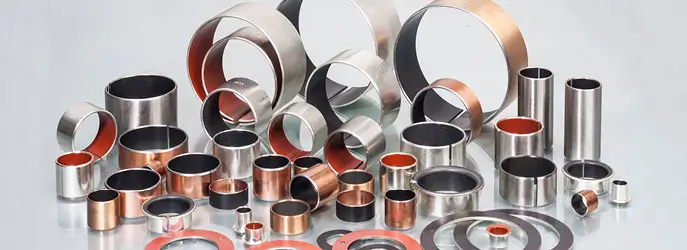
Think about the last bearing on a machine that anyone wants to grease. It may sit behind a guard, above a conveyor or inside a linkage that has to be dismantled before a grease gun can reach it. For that sort of position, a PTFE composite bushing is an attractive option. A suitable grade can run dry, and its thin wall leaves useful room for the shaft inside a small housing.
There is still some engineering to do. The sleeve does not arrive with its own finished counterface or a guarantee that the housing will stay round after assembly. Those details belong to the machine designer. They are also the details that can make two installations of the same bearing behave differently.
Suppose a new pivot feels fine when turned by hand, then gets stiff after the machine warms up. Ordering a more expensive bearing material may not address the cause. First check the fitted clearance, the temperatures of the surrounding parts and whether the housing is distorting. This article works through those decisions for metal-backed PTFE composite bushings, from the first load estimate to the questions worth answering before a production order.
How to Choose the Best Self-Lubricating Bushing Material: The Ultimate Guide for Engineers
Interpretation of Bushing Knowledge

Steel Backed Bushings for Reliable Motion and Easier Maintenance

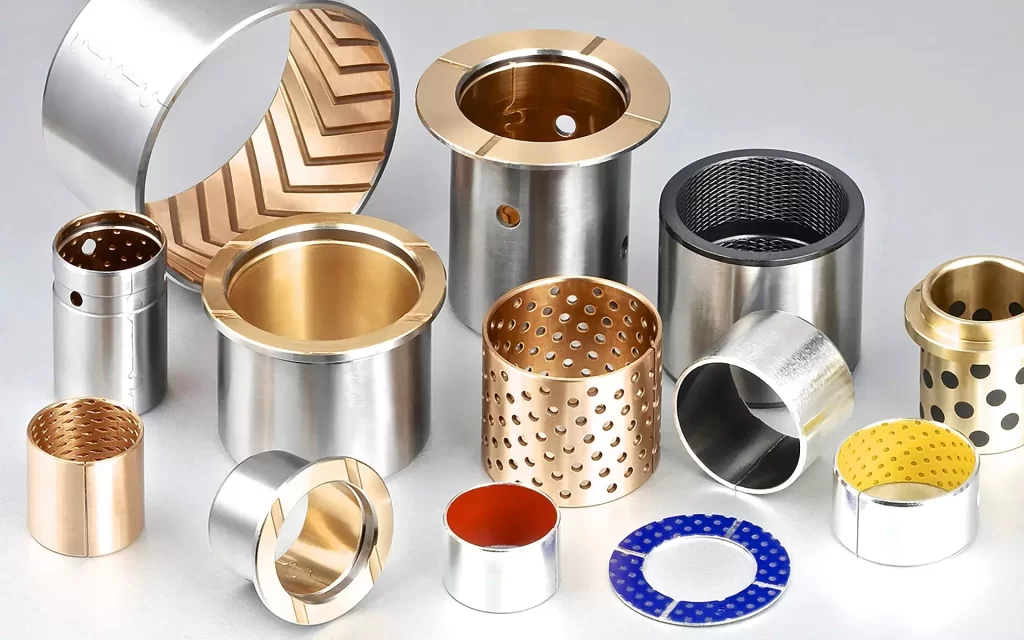
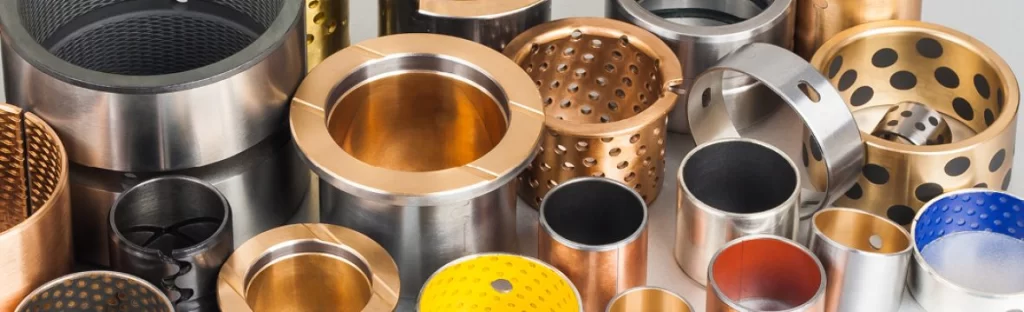
A steel-backed bushing can be a good choice for a joint that’s awkward to grease, but the words ‘steel backed’ don’t tell you whether it can run dry. You need to know what’s on the inside. PTFE composites, POM linings, and bronze bearing layers serve different purposes. This guide looks at those differences through the questions buyers actually need answered: Will the material suit the movement? What does the shaft need? How should the sleeve be fitted? It also explains what to send MYWAY when requesting a material recommendation and price, so a drawing turns into a workable specification rather than another round of emails.

Oil‑Free Bushings – Core Performance, Applications, and the MYWAY Solution
Interpretation of Bushing Knowledge

Oil‑Free Bushings – Core Performance, Applications, and the MYWAY Solution

Oil‑free bushings (also known as self‑lubricating bushings, maintenance‑free bushings, oilless bearings, or dry plain bearings) are sliding bearings that operate reliably over long periods without external oil or grease. Their core performance characteristics include: maintenance‑free operation, high load capacity (dynamic pressure up to 140 N/mm²), a wide operating temperature range (‑200 °C to +280 °C), excellent resistance to contamination and corrosion, and a very low coefficient of friction (as low as 0.08 under dry running conditions). These properties make oil‑free bushings suitable for a broad range of applications: automotive chassis and engine components, construction machinery, heavy mining equipment, food and pharmaceutical machinery, cleanroom automation, renewable energy systems (e.g. wind turbine pitch control), marine and offshore engineering, and industrial robotics. Compared with conventional oil‑ or grease‑lubricated bearings, oil‑free bushings eliminate unplanned downtime caused by lubrication failure, reduce total life‑cycle maintenance costs, and meet environmental regulations such as RoHS and REACH.

Graphite Dry Bushings: The Complete Guide to Self-Lubricating Bearing Technology
Interpretation of Bushing Knowledge

Graphite Dry Bushings: The Complete Guide to Self-Lubricating Bearing Technology

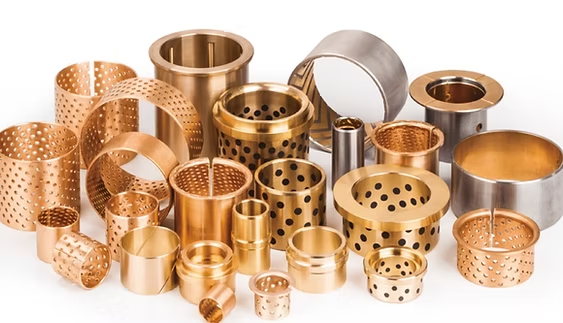
Graphite dry bushings are self-lubricating bearings that eliminate the need for external oil or grease. They combine a strong bronze or brass matrix with embedded solid graphite plugs, which continuously release lubricant during operation. This design delivers low friction, high load capacity, and excellent wear resistance across a wide temperature range. From excavators and cone crushers to hydropower turbines and agricultural machinery, graphite dry bushings provide maintenance‑free performance in dirty, high‑load, or hard‑to‑reach applications. They are a proven alternative to traditional lubricated bearings, reducing downtime and total operating costs.

Copper vs Bronze: Key Differences & Why MYWAY Bushings Are Your Best Choice
Interpretation of Bushing Knowledge

Copper vs Bronze: Key Differences & Why MYWAY Bushings Are Your Best Choice

When it comes to industrial components such as bushings, bearings, sleeves, and structural parts, copper and bronze are two of the most widely used non-ferrous metals. Many buyers and engineers often confuse them because both have a reddish color and are based on copper. However, their composition, hardness, wear resistance, load capacity, and service life are completely different. Choosing the wrong material can lead to rapid wear, frequent breakdowns, higher maintenance costs, and even equipment failure. In this article, we explain in detail the differences between copper and bronze, their suitable applications, and why MYWAY bronze bushings are the most reliable solution for heavy-duty working conditions.

Frequently Asked Questions About Bushing Material PV
Interpretation of Bushing Knowledge

Bushing Material PV: Pressure-Velocity Ratings and Bearing Performance

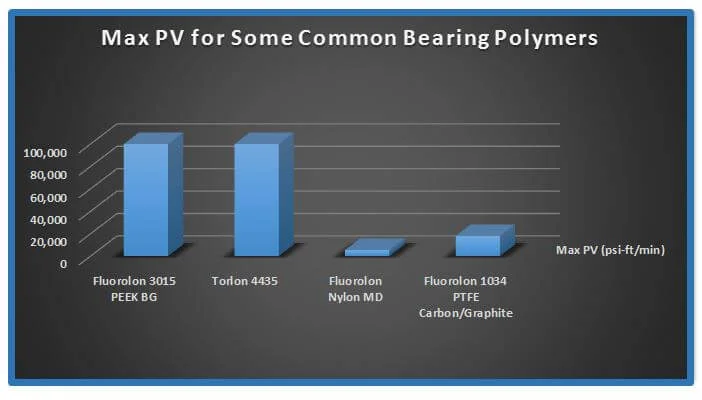
If you’ve ever wondered why some bushings fail prematurely while others run smoothly for years, the answer often lies in one critical factor: PV value. Whether you’re designing heavy machinery, automotive components, or industrial equipment, understanding the relationship between pressure and velocity in bushing materials can mean the difference between optimal performance and catastrophic failure .

Scroll to Top