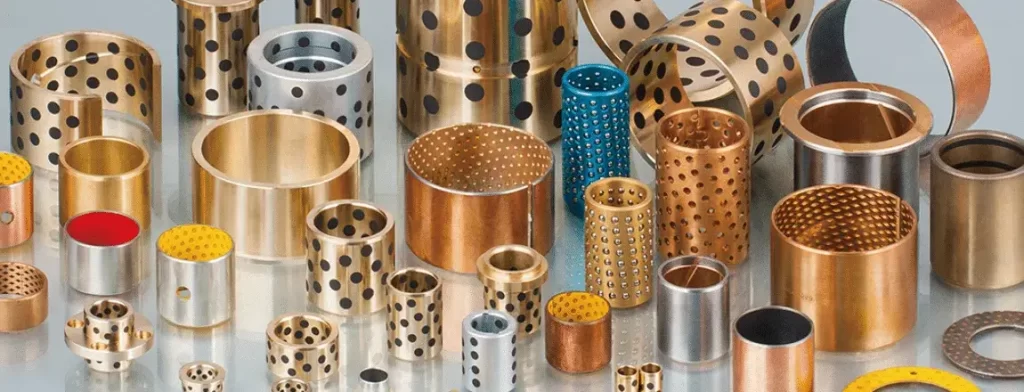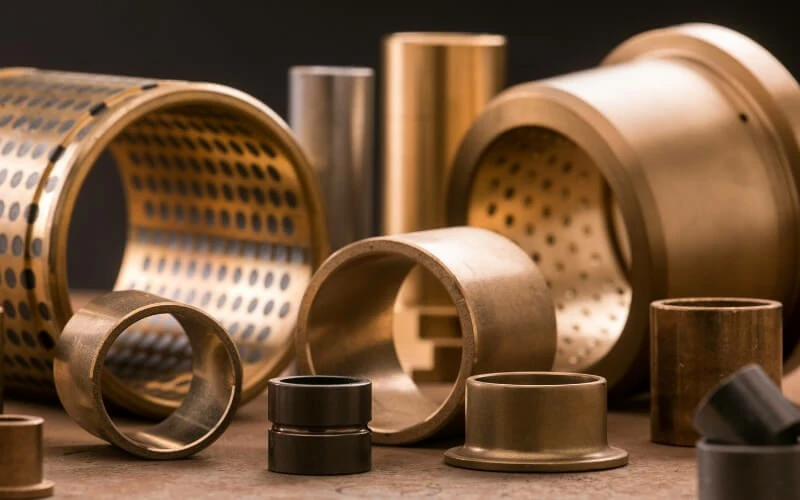
sintered bronze bushing

Bearing Bush Guide to Types Materials Applications and SelectionApplications and Selection
Interpretation of Bushing Knowledge

Bearing Bush Guide to Types Materials Applications and Selection

A bearing bush is a plain bearing that supports a moving shaft or pin on a sliding surface. The right bush has to fit the housing, provide the required running clearance and work with the lubrication available in the machine. Size is the starting point. Material and operating conditions decide whether that size will work.
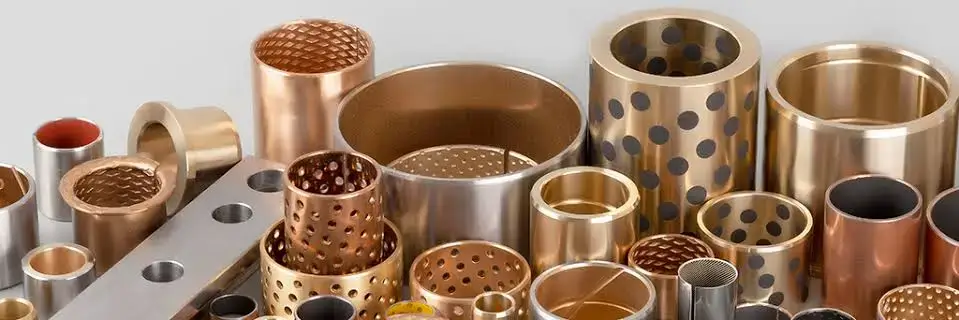
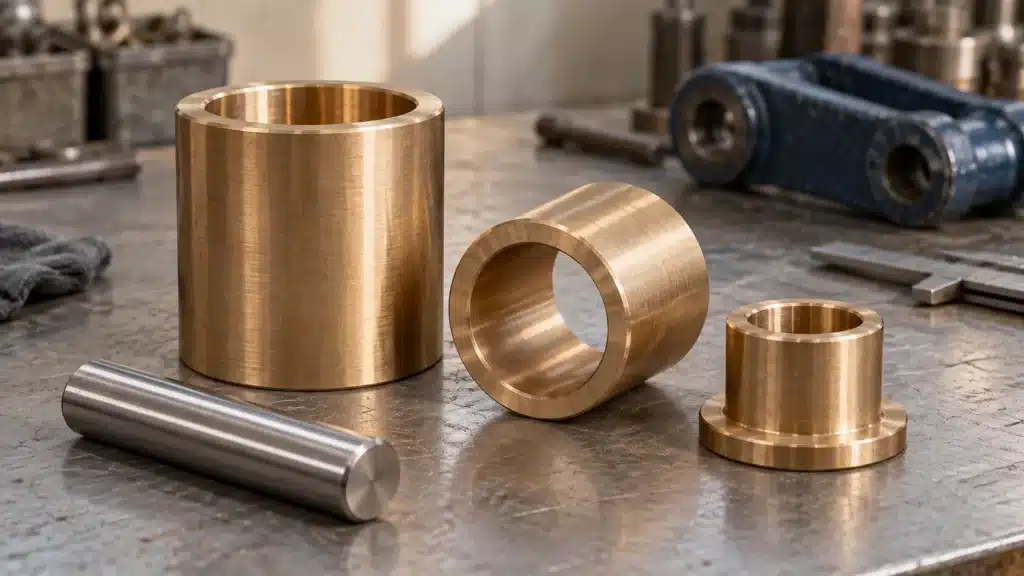
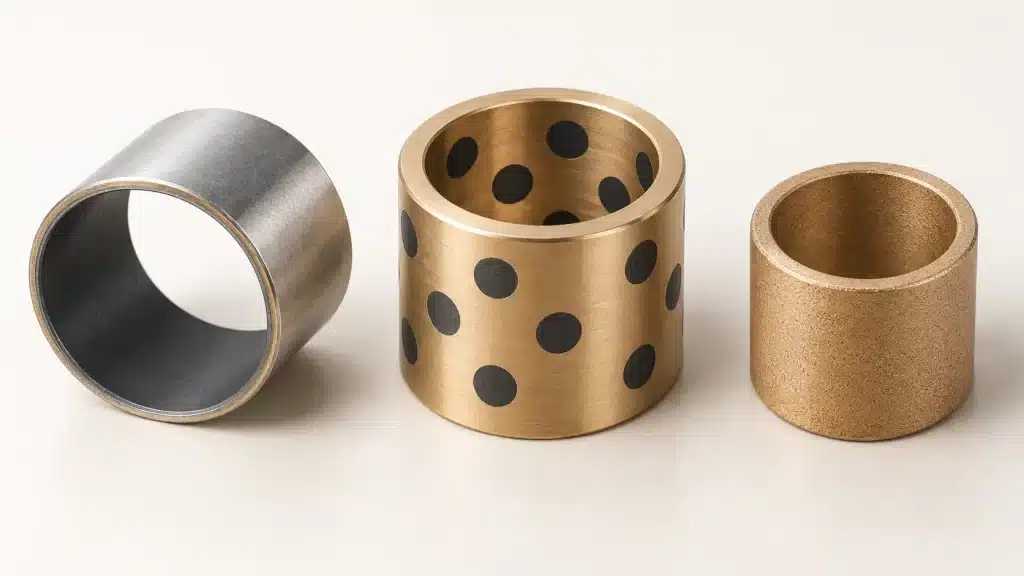
For a buyer, the difficulty is that several very different products can look like the same short metal tube. A solid bronze sleeve, an oil-impregnated bush and a graphite-plugged bush may share the same nominal dimensions. They do not necessarily share the same installation procedure, maintenance needs or working limits.
When Should You Choose a Bronze Bushing
Interpretation of Bushing Knowledge

When Should You Choose a Bronze Bushing

I’ve been in this industry for over two decades, and I still see engineers overcomplicate this. A bronze bushing is a fairly simple part. Choosing one gets more difficult when the catalog has to stand in for a proper description of the machine. ‘Heavy load’ might mean a steady load all afternoon, or a sharp impact every few seconds. Those aren’t the same enquiry.

Take lubrication. A grease fitting on the drawing looks straightforward. Put the joint behind a guard, then put another assembly in front of the guard, and servicing it becomes a different job. Or take the load: the figure during steady running may tell you very little about the impact when the machine jams.

Here are eight reasons to put bronze on the shortlist, with a few details to settle before ordering.

What “Self-Lubricating” Actually Means (And Why Half the Industry Uses the Term Wrong)
Interpretation of Bushing Knowledge

What “Self-Lubricating” Actually Means (And Why Half the Industry Uses the Term Wrong)

Let me be blunt: “self-lubricating” is one of those phrases that sounds great in a brochure and causes headaches on the factory floor. It does not mean the bushing never wears. It does not mean you can ignore load, speed, or shaft finish. What it really means is that the lubricant is already inside the material — PTFE, graphite, oil trapped in pores — and it gets released while the thing runs. This article breaks down what that looks like in real life, where self-lubricating bushings win, where they fail, and how MYWAY’s eight core bushing lines solve specific problems. If you spec bushings for a living, this is the no-BS version.

Self-Lubricating Bushings: The Maintenance-Free Solution for Demanding Industrial Applications
Interpretation of Bushing Knowledge

Self-Lubricating Bushing: Bearing Metallurgy, Solid Lubricants, PV Control, and Reliable Industrial Selection

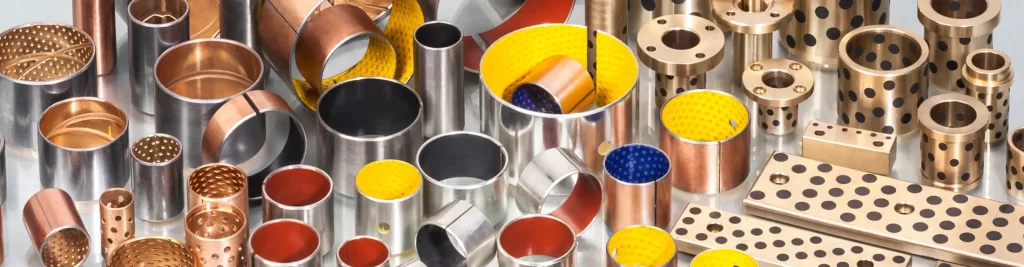
A self-lubricating bushing is a plain bearing designed to reduce friction and wear without continuous external grease or oil supply. The term covers several different material systems: oil-impregnated sintered bronze, steel-backed metal-polymer composites, cast bronze with graphite inserts, solid-lubricant-dispersed metal, engineered polymer, and fiber-reinforced composite bearings. These products do not have identical operating limits. The correct choice requires load, sliding speed, PV factor, temperature, oscillation, counterface, contamination, water or chemical exposure, fit, clearance and expected maintenance interval.

Self-Lubricating Bushings: Material Systems, Tribology, and Reliable Design for Dry-Running Motion
Interpretation of Bushing Knowledge

Self-Lubricating Bushings: Material Systems, Tribology, and Reliable Design for Dry-Running Motion

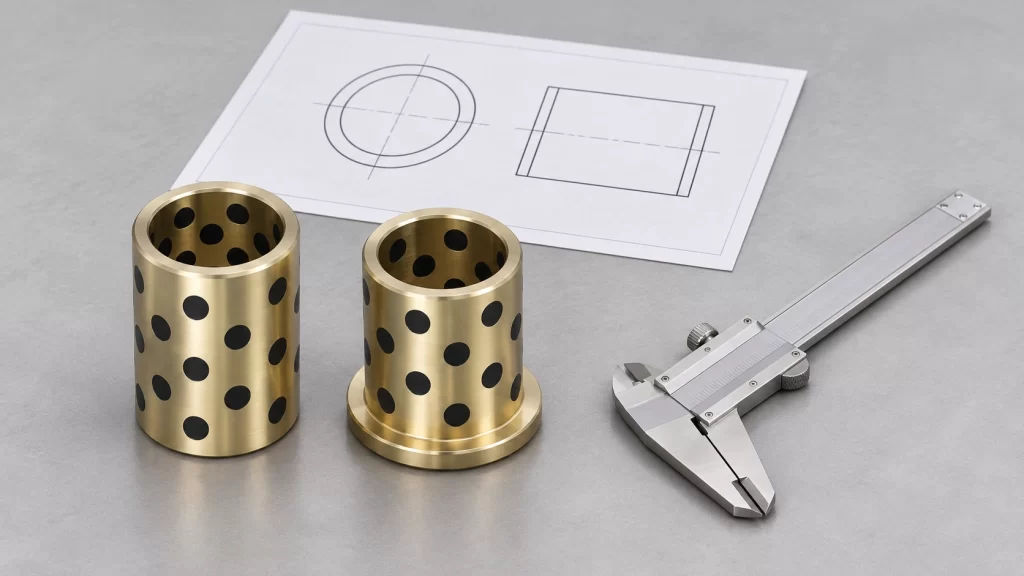
A self-lubricating bushing is a plain bearing designed to reduce friction and wear without a conventional external grease or oil line during normal service. It does not mean that every design is chemically identical, maintenance-free in every environment, or suitable for every load and speed. The term includes oil-impregnated sintered bronze bushings, steel-backed PTFE composite bearings, POM-lined bushes, graphite-plugged bronze bushes, solid-lubricant-dispersed bearings, engineered polymer bushes, and some fabric-lined spherical plain bearings. Each system stores, transfers, or presents lubricant differently.
Good selection starts with the motion and environment: radial or axial load, oscillation or rotation, speed, PV duty, temperature, shock, contamination, mating shaft hardness and finish, housing stiffness, clearance, corrosion, installation method, and service-life target.

MYWAY Bushing: Top 5 Bushing and Bearing Manufacturers in China
Interpretation of Bushing Knowledge

Steel Rolling Mill Technology: Core Equipment, Functional Applications, and High-Performance Component Solutions

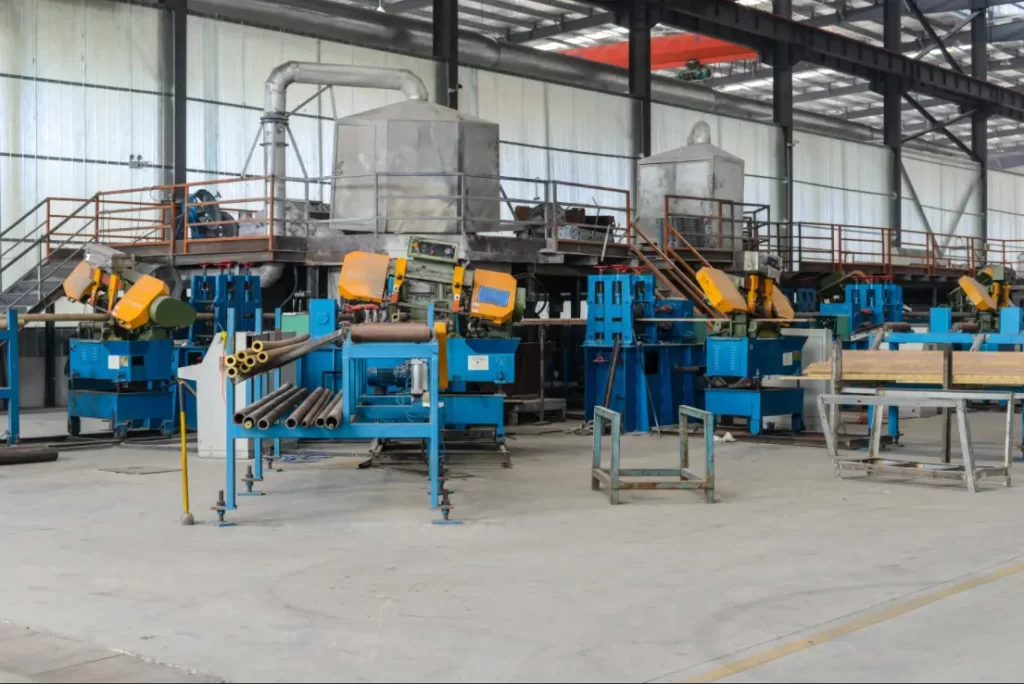
Steel rolling represents the principal forming process in modern metallurgy, where immense compressive forces transform raw steel into finished products that constitute the backbone of infrastructure, automotive manufacturing, construction, and countless industrial applications worldwide. Rolling mills—the sophisticated machinery at the heart of this process—have evolved from simple two-high configurations to complex multi-stand trains capable of producing everything from ultra-thin foils to heavy structural beams. Understanding the functional architecture, application contexts, and critical component requirements of these mills is essential for operators seeking to optimize production efficiency, product quality, and operational longevity.

Oil‑Free Bushings – Core Performance, Applications, and the MYWAY Solution
Interpretation of Bushing Knowledge

Beyond Conventional Constraints: The DU Bushing Advantage in High-Stress Rotating Systems

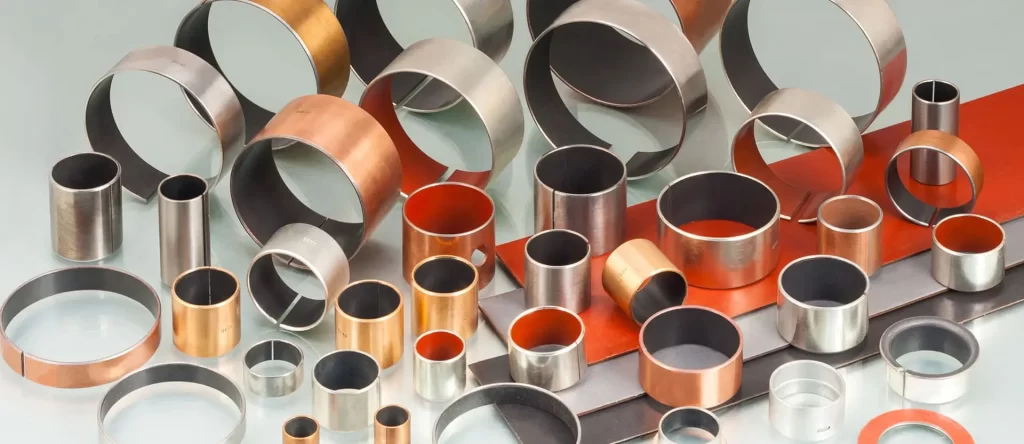
Industrial rotating assemblies have long been constrained by a fundamental dilemma: achieving low friction without compromising load capacity. Traditional plain bearings require continuous lubrication, while self-lubricating alternatives often sacrifice strength for convenience. The DU bushing—a metal-polymer composite plain bearing—has emerged as the definitive solution that reconciles these opposing requirements. Unlike conventional bronze bushings that depend on external lubricants, DU-type composite bushings integrate a PTFE-based sliding layer with a porous bronze interlayer and steel backing, creating a self-lubricating system that maintains structural rigidity under extreme loads.

MYWAY Copper Alloy Bearings & Self-Lubricating Bronze Bushings
Interpretation of Bushing Knowledge

MYWAY Copper Alloy Bearings & Self-Lubricating Bronze Bushings

In modern heavy industries like metallurgical steel plants, rolling mills, mining equipment, and marine engineering, the demand for durable, high-performance bearing components has never been higher. Copper alloy bearings and bronze bushings stand out as critical parts that withstand extreme loads, high temperatures, and harsh working conditions—while minimizing downtime and maintenance costs. Among leading manufacturers, MYWAY has emerged as a trusted provider of precision-engineered copper bearings, self-lubricating bronze bushings, and custom metallurgical components, delivering reliable solutions for the most challenging industrial applications.

Scroll to Top