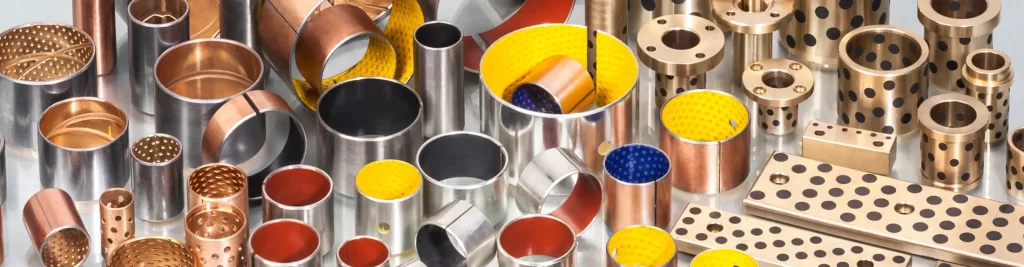
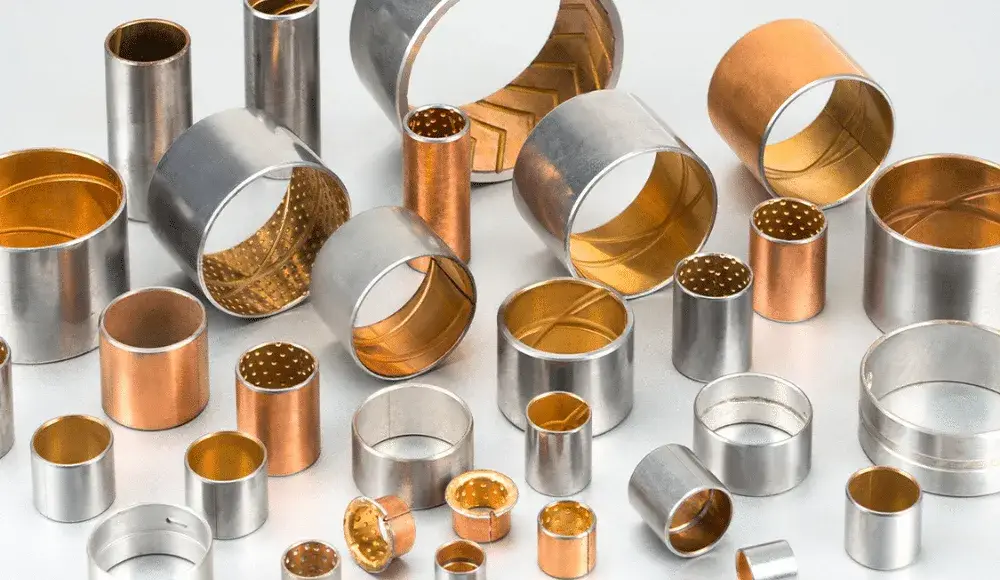
steel backed bearing

Steel-Backed Bushings: Bimetal Bearing Metallurgy, Load Support, Sliding Layers, and Global Procurement
Interpretation of Bushing Knowledge

Steel-Backed Bushings: Bimetal Bearing Metallurgy, Load Support, Sliding Layers, and Global Procurement

A steel-backed bushing is a composite plain bearing in which a steel shell supplies stiffness, press-fit strength and dimensional stability while a bronze, leaded-bronze, aluminum-tin, sintered, PTFE, POM, polymer or solid-lubricant layer provides the sliding surface. The architecture allows a thin wall, high housing interference, controlled bearing surface, and efficient use of specialized bearing material. Steel-backed bearings are used in automotive components, hydraulic equipment, construction machinery, compressors, agricultural equipment, machine tools, industrial handling, rolling-mill auxiliaries, pumps and general machinery. The correct grade depends on material stack, layer thickness, load, speed, lubrication, temperature, shaft finish, fit, corrosion and environment.
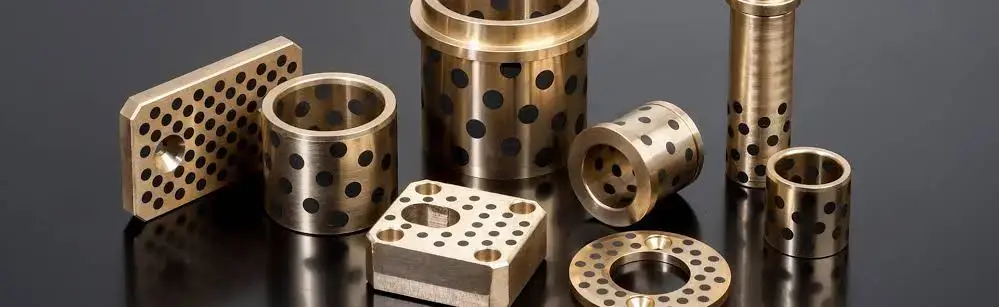
Graphite Plugged Bronze Bushings: Metallurgy, Solid-Lubricant Transfer, and Heavy-Duty Sliding Performance
Interpretation of Bushing Knowledge

Split Bearing Bushes: Metallurgy, Shell Geometry, Lubrication Film, and Serviceable Heavy-Machinery Design

A split bearing bush, also called a split plain bearing, split sleeve bearing, bearing shell, split journal bearing, or split bearing bush, is made from two or more fitted shell halves that surround a rotating shaft or journal. The split form allows the bearing to be installed, inspected, scraped, replaced, or adjusted without removing a large shaft or dismantling an entire machine. It is common in turbines, generators, compressors, engines, gearboxes, rolling-mill drives, pumps, marine machinery, and large industrial transmissions.
The split line is only one part of the design. Reliable operation depends on the shell backing, babbitt or bronze sliding layer, oil holes, grooves, reliefs, crush, housing fit, journal surface, radial and axial clearance, alignment, oil-film formation, load direction, temperature, contamination, and assembly procedure.

MYWAY Metal Bushing: High-Performance Wear Solutions for Heavy-Duty Machinery
Interpretation of Bushing Knowledge

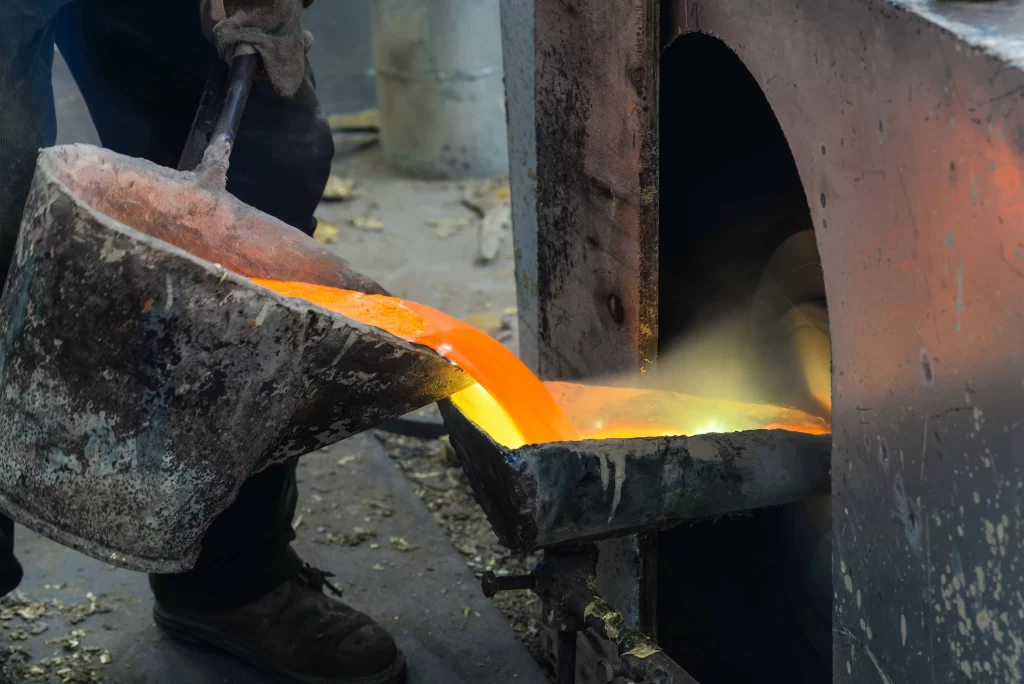
Thermal Metallurgy in Motion: The Critical Role of Alloy Melting Behavior in Bushing Performance and Reliability

In the demanding environments of heavy industry, the melting characteristics of metallic alloys serve as the fundamental determinant of component longevity. While operational temperatures never intentionally approach the melting threshold, the margin between standard operating conditions and the solidus point of an alloy defines the safety buffer against thermal degradation, friction-induced heat spikes, and catastrophic failure. This principle carries particular significance in the metallurgy sector, where rolling mills, casting equipment, and extrusion presses subject bearings and bushings to extreme loads, elevated temperatures, and continuous operation.

Self-Lubricating Bushings: The Maintenance-Free Solution for Demanding Industrial Applications
Interpretation of Bushing Knowledge

Self-Lubricating Bushings: The Maintenance-Free Solution for Demanding Industrial Applications

In the realm of mechanical engineering, friction remains the perennial adversary of efficiency, reliability, and longevity. Traditional bearing systems that depend on external lubricants—oils, greases, or other liquid formulations—introduce a host of operational challenges: scheduled maintenance interruptions, contamination risks, lubrication breakdown under extreme temperatures, and the ever-present possibility of dry-running failures when lubrication systems falter. Self-lubricating bushings represent a paradigm shift in plain bearing technology, offering engineers a path to maintenance-free operation, enhanced reliability, and significant cost reduction across a broad spectrum of industrial applications

Scroll to Top