
Recent Posts
Self-Lubricating Bushings: The Maintenance-Free Solution for Demanding Industrial Applications
Introduction
In the realm of mechanical engineering, friction remains the perennial adversary of efficiency, reliability, and longevity. Traditional bearing systems that depend on external lubricants—oils, greases, or other liquid formulations—introduce a host of operational challenges: scheduled maintenance interruptions, contamination risks, lubrication breakdown under extreme temperatures, and the ever-present possibility of dry-running failures when lubrication systems falter. Self-lubricating bushings represent a paradigm shift in plain bearing technology, offering engineers a path to maintenance-free operation, enhanced reliability, and significant cost reduction across a broad spectrum of industrial applications
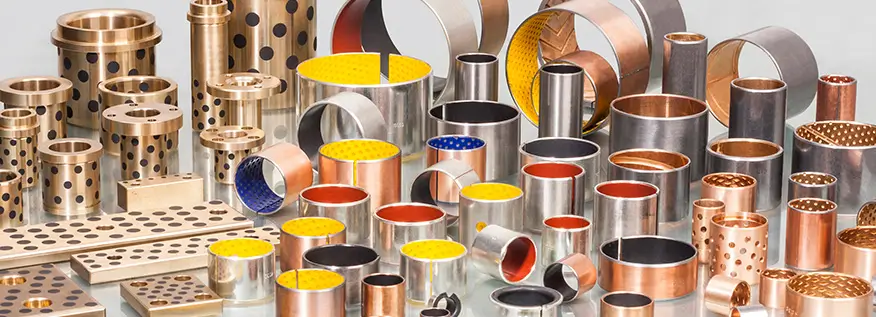
Table of Contents
1. Core Technology and Operating Principles
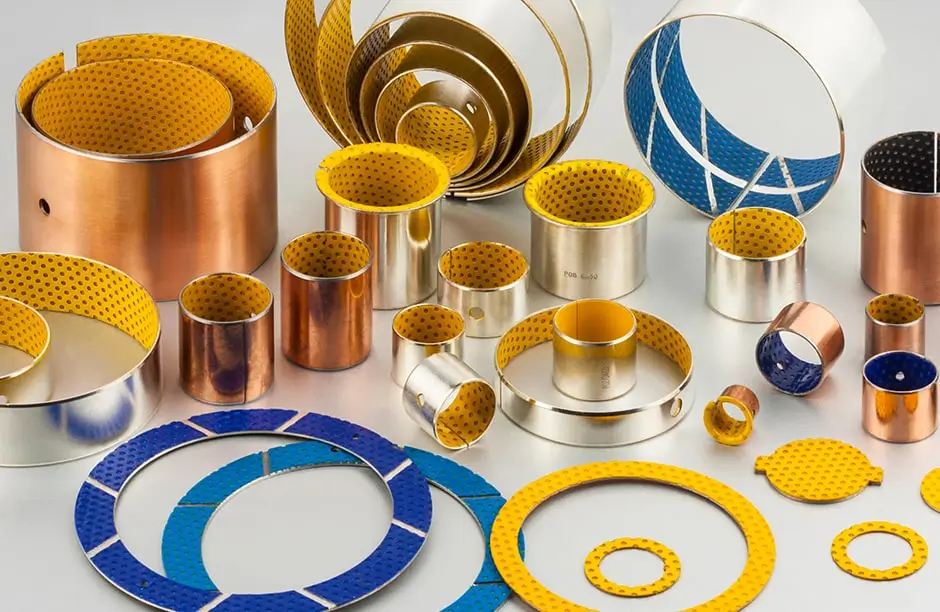
Self-lubricating bushings operate on a fundamentally different principle than conventionally lubricated bearings. Rather than depending on an external supply of oil or grease that must be periodically replenished, self-lubricating bushings incorporate solid lubricants directly into their material structure.
The most prevalent and effective construction employs a multi-layer composite architecture:
Steel Backing: Provides high structural strength, dimensional stability, and excellent load-carrying capacity. This foundation ensures the bushing maintains its geometry under significant mechanical stress.
Porous Bronze Interlayer: This sintered layer is metallurgically bonded to the steel backing. It functions as a reservoir and robust anchor for the top layer, enhancing wear resistance and facilitating heat dissipation.
PTFE-Based Sliding Liner: A thin, impregnated layer of PTFE (Polytetrafluoroethylene) and other fillers provides an exceptionally low coefficient of friction. As the bushing operates, microscopic quantities of this material transfer to the mating shaft, creating a durable, low-friction film that ensures smooth, long-lasting performance.
This design enables the bushing to achieve friction coefficients as low as 0.08 in dry operation, decreasing to 0.02 when supplemental lubrication is applied. The technology is ideally suited for permanent installations or difficult-to-access locations—bridge supports, hydroelectric turbines, clean room systems, and other applications where regular greasing is impractical or undesirable
2. Maintenance-Free Operation and Cost Reduction
The elimination of routine lubrication maintenance represents perhaps the most compelling advantage of self-lucibrating bushings. Traditional bearing systems demand scheduled greasing, oil changes, and ongoing monitoring—activities that consume labor hours, incur material costs, and require production stoppages.
Self-lubricating bushings entirely eliminate these requirements. The internal solid lubricant system ensures consistent performance throughout the component’s service life without any external intervention. This maintenance-free characteristic delivers tangible economic benefits:
Reduced Labor Costs: Eliminating the need for maintenance personnel to access and lubricate bearings
Eliminated Lubricant Expenses: No ongoing expenditure on oils, greases, or lubrication equipment
Minimized Production Downtime: No scheduled stoppages for lubrication-related maintenance
Reduced Inventory: No need to stock lubricants or lubrication supplies
For operations with hundreds or thousands of bearing points, the cumulative savings are substantial. The maintenance-free design also eliminates the risk of human error in lubrication schedules—a common cause of premature bearing failure in conventionally lubricated systems
3. Exceptional Temperature Range and Thermal Stability
Self-lubricating bushings demonstrate remarkable performance across extreme temperature conditions, a capability that conventional lubricated bearings cannot match. Liquid lubricants degrade, oxidize, or become viscous outside their optimal temperature ranges, leading to lubrication failure and catastrophic bearing damage.
MYWAY DU bushings, for instance, operate reliably across a temperature spectrum from -200°C to +280°C. This extraordinary range encompasses:
Cryogenic Environments: Liquid nitrogen applications and cold storage systems
High-Temperature Industrial Settings: Engine compartments, furnace equipment, and heat-intensive manufacturing processes
Outdoor Applications: Equipment exposed to seasonal temperature extremes
The solid lubricant system remains functional across this entire temperature envelope, with no degradation, evaporation, or viscosity changes to compromise performance. This thermal stability makes self-lubricating bushings the preferred choice for applications ranging from aerospace components to steel mill equipment
4. High Load Capacity and Superior Wear Resistance
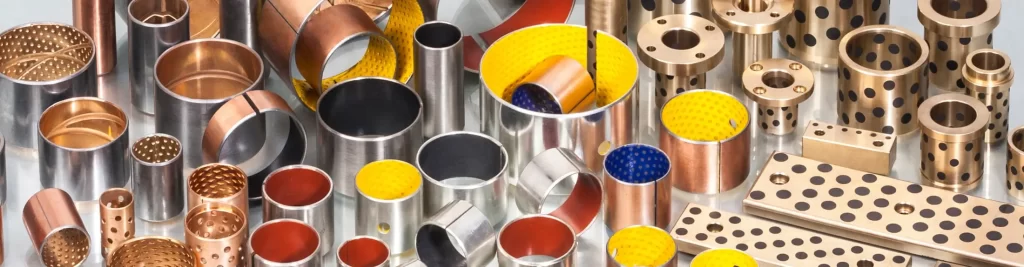
Despite their maintenance-free operation, self-lubricating bushings deliver exceptional load-bearing capabilities that rival or exceed those of conventionally lubricated alternatives. The steel backing provides structural integrity, while the bronze interlayer and PTFE liner work in concert to distribute loads and minimize wear.
MYWAY DU bushings achieve dynamic pressure ratings up to 140 N/mm² (approximately 20,000 psi)—sufficient for hydraulic cylinders, heavy suspension arms, and construction equipment. The PV value (pressure × velocity), a critical engineering metric for bearing selection, reaches 1.8 N/mm²·m/s for continuous operation, with short-term peaks up to 3.6 N/mm²·m/s.
The wear resistance of self-lubricating bushings stems from the progressive transfer film mechanism. As the bushing operates, the PTFE-based liner continuously deposits a protective layer on the mating shaft, preventing metal-to-metal contact and substantially reducing wear rates. This self-renewing lubrication system ensures consistent performance throughout the component’s service life
5. Versatility Across Motion Types and Operating Conditions
Self-lubricating bushings accommodate diverse motion profiles, making them suitable for a wide array of mechanical systems:
Rotary Motion: The low friction coefficient and thermal stability enable smooth rotation across a broad speed range. MYWAY DU bushings achieve speeds up to 2.5 m/s in dry operation and 5 m/s with minimal supplemental lubrication.
Oscillating Motion: The solid lubricant system performs reliably under往复运动, where conventional lubrication systems often fail to maintain adequate film thickness.
Linear Motion: The consistent low friction of the PTFE liner makes self-lubricating bushings ideal for linear sliding applications.
Multi-Directional Movement: The even dispersion of solid lubricant within the bearing matrix ensures high performance even with very small motions or complex movement patterns.
This versatility allows a single bushing type to serve multiple functions within a machine, simplifying inventory and reducing design complexity
6. Contamination Resistance and Environmental Suitability
In many industrial environments, contamination poses a serious threat to bearing performance. Dust, dirt, moisture, and chemical agents can compromise conventional lubricants, leading to accelerated wear and premature failure. Self-lubricating bushings offer inherent resistance to these challenges.
The absence of exposed lubricant eliminates the primary mechanism by which contaminants degrade bearing performance. Without grease or oil to attract and retain particles, self-lubricating bushings maintain their low-friction characteristics even in:
Dusty Construction Sites: Earthmoving equipment, excavators, and loaders
Food Processing Facilities: Where lubricant contamination of products is unacceptable
Marine Environments: Where corrosion resistance is essential
Clean Rooms: Where airborne particulates from lubricants cannot be tolerated
MYWAY bushings are engineered with inherent corrosion resistance, further enhancing their suitability for harsh operating conditions. The sealed design of many self-lubricating bushing configurations prevents debris ingress, protecting the bearing-shaft interface from abrasive particles
7. Industry-Specific Applications
Self-lubricating bushings find application across virtually every industrial sector, each with its own unique performance requirements and operating challenges.
Automotive Industry: Suspension systems, steering mechanisms, brake systems, shock absorbers, and hydraulic pumps rely on self-lubricating bushings for maintenance-free, reliable operation. The extreme temperature range and contamination resistance make them ideal for under-hood applications.
Construction and Heavy Equipment: Excavators, loaders, bulldozers, and demolition equipment demand bearings that withstand high loads, shock loads, and abrasive environments. MYWAY self-lubricating bushings are engineered to endure frequent lifts and shocks in these demanding applications.
Industrial Machinery: Injection molding equipment, die wear plates, industrial robots, and automation systems benefit from the consistent low friction and maintenance-free operation of self-lubricating bushings.
Agricultural Equipment: Off-highway vehicles, harvesters, and tillage equipment operate in dirty, dusty conditions where conventional lubrication systems quickly fail.
Aerospace: Aircraft engines, landing gear, and flight control systems require bearings that perform reliably across extreme temperature ranges without maintenance access.
Food and Beverage Processing: Equipment in these facilities must operate without lubricant contamination risks, making dry-running self-lubricating bushings the only viable choice.
Marine and Offshore: Propeller shafts, valve guides, and deck equipment benefit from the corrosion resistance and maintenance-free characteristics of self-lubricating bronze bushings.
Steel and Metallurgy: Roller guides, continuous casting machines, and conveyer systems operate in high-temperature, high-contamination environments where self-lubricating bushings excel
8. MYWAY Product Portfolio: Engineered for Excellence
MYWAY offers a comprehensive range of self-lubricating bushing solutions, each engineered to meet specific application requirements with precision and reliability.
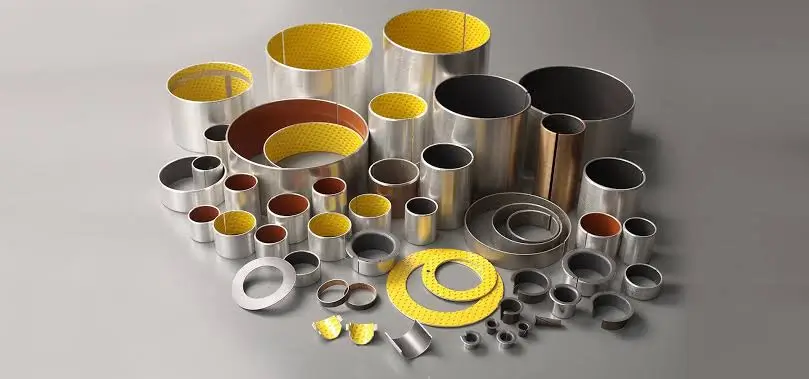
DU/SF-1 Steel-Backed Self-Lubricating Bushings: The flagship product line features steel backing, porous bronze interlayer, and PTFE-based sliding surface. Available in white, red, and black PTFE formulations to suit different performance requirements. These bushings deliver exceptional load capacity, temperature range, and wear resistance.
DU/SF-1S Stainless Steel-Backed Bushings: For applications requiring enhanced corrosion resistance, the stainless steel-backed variant provides superior protection in marine, chemical, and food processing environments.
DU/SF-1B Bronze-Matrix Bushings: These bushings utilize a bronze matrix instead of steel backing, offering enhanced thermal conductivity and compatibility with specific housing materials.
DU/SF-1A Aluminum-Based Bushings: Lightweight aluminum-backed bushings for applications where weight reduction is a priority.
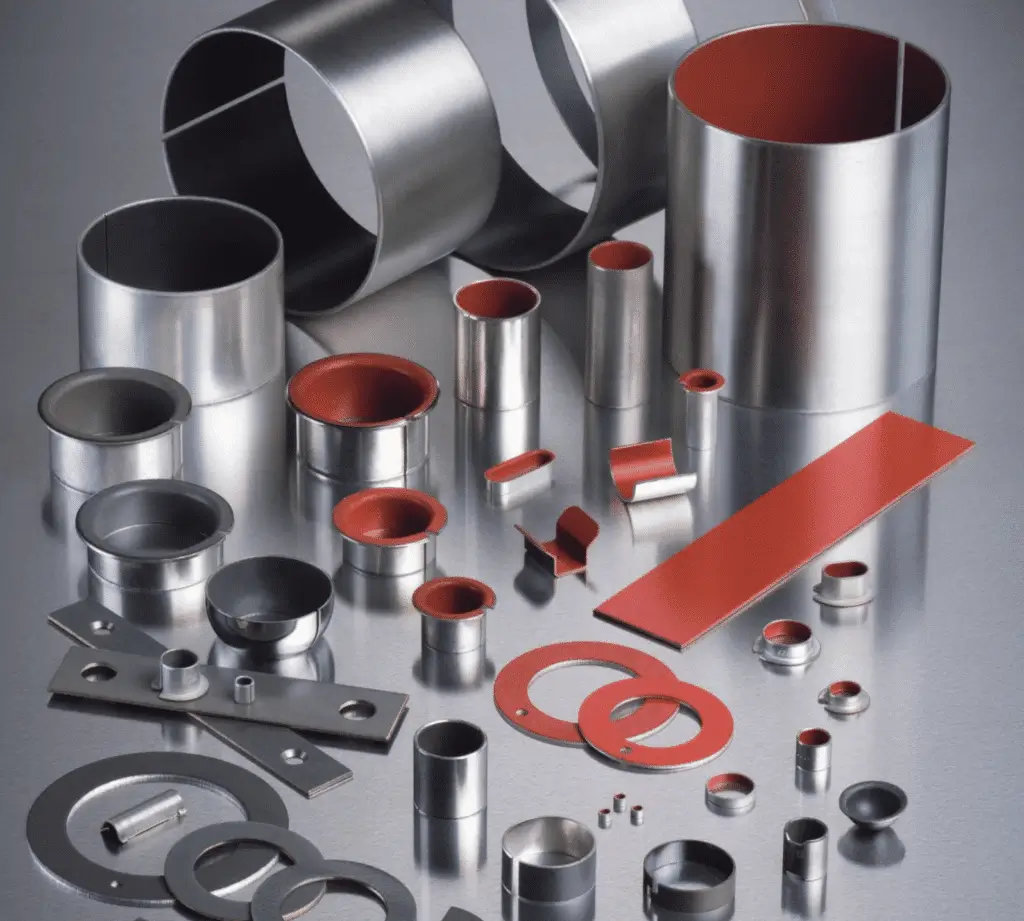
Geometric Variations: MYWAY manufactures self-lubricating bushings in multiple configurations to accommodate diverse assembly requirements:
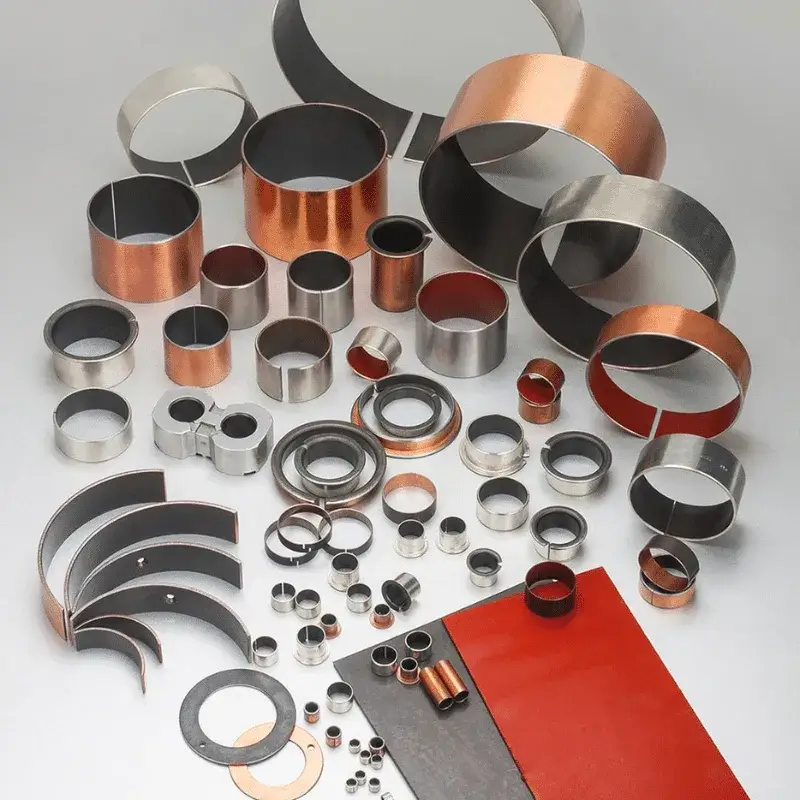
Plain cylindrical bushings for radial loads
Flanged bushings for combined radial and axial loads
Thrust washers for pure axial load applications
Wear plates and slide blocks for linear motion
Special-shaped bushings for custom applications
Bronze Bushings: For applications requiring the traditional benefits of bronze—high strength, excellent wear resistance, superior machinability—MYWAY offers a comprehensive range of copper alloy bushings.
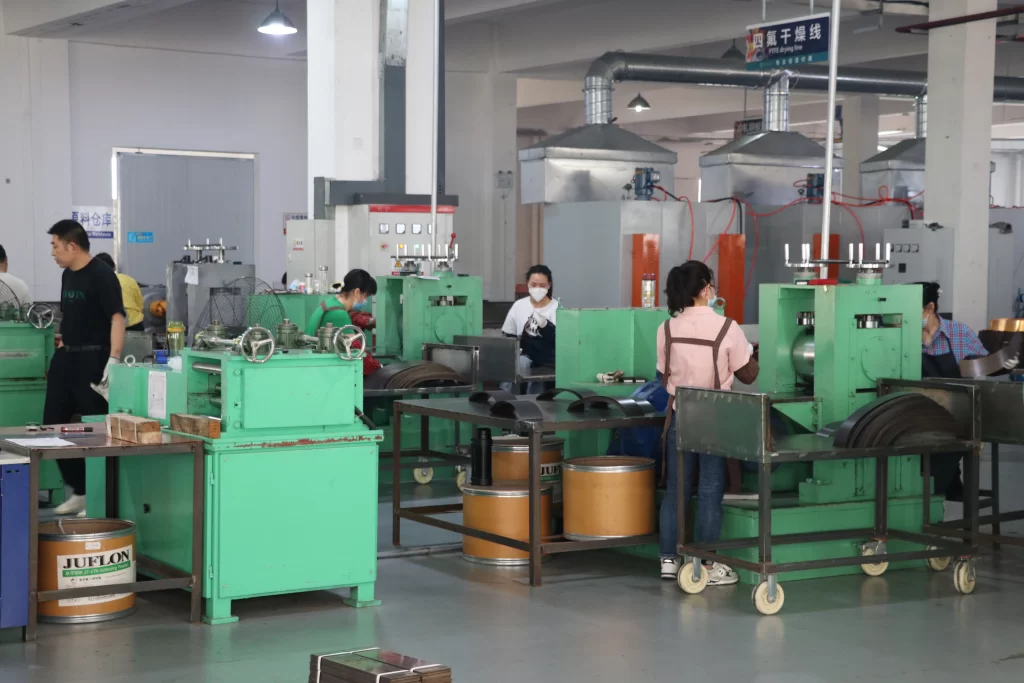
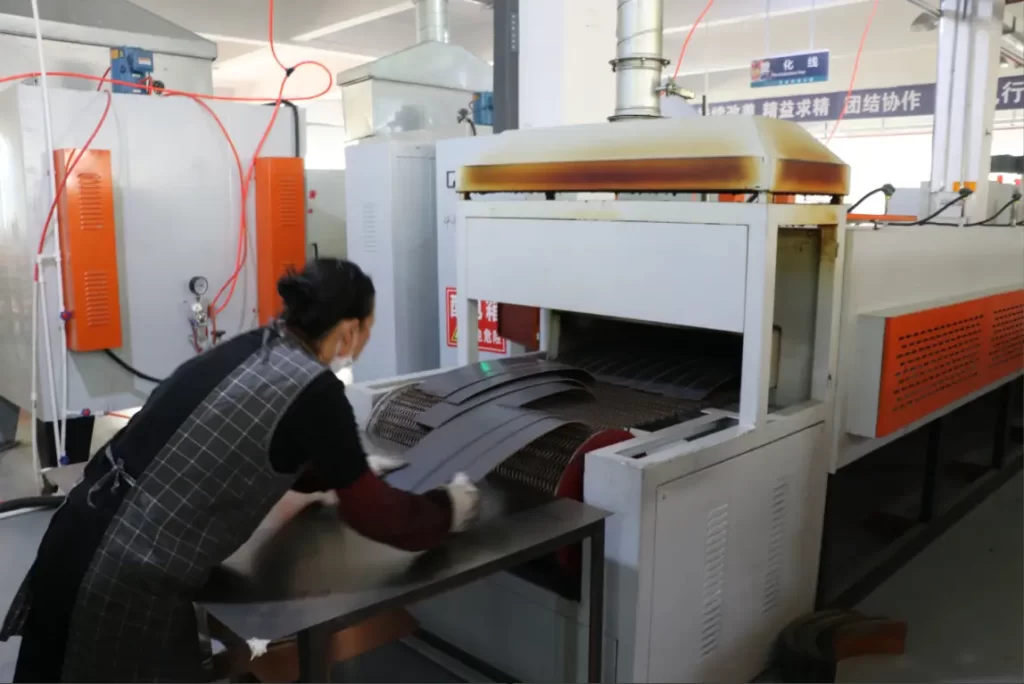
MYWAY’s vertically integrated manufacturing ensures quality control at every stage: in-house material casting, sintering, and CNC finishing deliver precision plain bearings that outperform industry benchmarks. With over 20 years of experience and IATF 16949 certification, MYWAY brings automotive-grade quality standards to every product
9. Selection Guide: Choosing the Right Self-Lubricating Bushing
Selecting the optimal self-lubricating bushing requires careful consideration of several key parameters:
Load Requirements: Evaluate both static and dynamic loads. MYWAY DU bushings handle dynamic pressures up to 140 N/mm². For higher loads, consider bronze or steel-backed variants.
Speed Conditions: Determine maximum sliding speed. DU bushings operate at 2.5 m/s dry and 5 m/s with lubrication. For higher speeds, consider oil-impregnated sintered bronze bushings.
Temperature Environment: Match the bushing’s temperature range to operating conditions. MYWAY DU bushings cover -200°C to +280°C.
Motion Type: Identify whether the application involves rotary, oscillating, linear, or multi-directional movement.
Environmental Factors: Consider contamination exposure, moisture, chemical agents, and cleanliness requirements.
Geometric Constraints: Determine whether a plain cylindrical, flanged, split, or custom configuration is required.
Cost Considerations: While self-lubricating bushings may have higher initial costs than conventional alternatives, the total cost of ownership—including eliminated maintenance, reduced downtime, and extended service life—typically favors the self-lubricating solution.
MYWAY’s engineering team provides application-specific guidance to ensure optimal selection, drawing on decades of experience across diverse industries
Frequently Asked Questions
Q1: What is a self-lubricating bushing?
A self-lubricating bushing is a plain bearing that operates without external lubrication. It incorporates solid lubricants—typically PTFE, graphite, or molybdenum disulfide—within its material structure. These lubricants are progressively released during operation, forming a protective transfer film on the mating surface that ensures low friction and wear without maintenance.
Q2: What is the difference between self-lubricating and maintenance-free bushings?
The terms are often used interchangeably. A truly self-lubricating bushing contains an internal lubrication system that does not break down and remains part of the bearing’s makeup for its entire life without outside maintenance. Maintenance-free bushings achieve the same result—no required maintenance—through self-lubricating design.
Q3: How long do self-lubricating bushings last?
Service life depends on operating conditions—load, speed, temperature, and environment. The progressive transfer film mechanism ensures consistent lubrication throughout the bushing’s life, with wear rates typically far lower than conventionally lubricated alternatives. MYWAY’s engineering-grade materials and precision manufacturing maximize service life across demanding applications.
Q4: Can self-lubricating bushings be used with supplemental lubrication?
Yes. While designed for dry operation, self-lubricating bushings can accept supplemental oil or grease to enhance performance. Adding lubrication increases speed capacity (up to 5 m/s for DU bushings) and reduces friction coefficient further (to as low as 0.02).
Q5: What materials are used in self-lubricating bushings?
The most common construction is a three-layer composite: steel backing for strength, porous bronze interlayer for wear resistance and lubricant retention, and PTFE-based sliding liner for low friction. Other materials include bronze matrix, aluminum backing, stainless steel backing, and various solid lubricant formulations.
Q6: Where are self-lubricating bushings typically used?
Applications span virtually every industry: automotive suspension and steering, construction equipment, industrial machinery, agricultural equipment, aerospace components, food processing equipment, marine systems, and steel mill equipment.
Q7: Are self-lubricating bushings suitable for high-load applications?
Yes. MYWAY DU bushings handle dynamic pressures up to 140 N/mm² (20,000 psi), making them suitable for hydraulic cylinders, heavy equipment, and demanding industrial applications. Bronze and steel-backed variants offer even higher load capacities.
Q8: How do self-lubricating bushings perform in extreme temperatures?
Exceptionally well. MYWAY DU bushings operate from -200°C to +280°C, far exceeding the capabilities of conventional lubricated bearings. The solid lubricant system does not degrade, evaporate, or change viscosity across this range.
Q9: What is the PV value and why does it matter?
PV value (pressure × velocity) is the critical engineering metric for bearing selection. It defines the operating limits beyond which excessive wear or failure occurs. MYWAY DU bushings achieve 1.8 N/mm²·m/s continuous, with short-term peaks to 3.6 N/mm²·m/s.
Q10: Why choose MYWAY self-lubricating bushings?
MYWAY brings over 20 years of engineering expertise, IATF 16949 and ISO 9001 certifications, vertically integrated manufacturing (35,000 m² across three facilities), and in-house material casting, sintering, and CNC finishing. This ensures consistent quality, precision tolerances, and performance that exceeds industry benchmarks
100000+ Types of Bushings – Contact Us for Details