
Recent Posts
Water-Resistant Journal Bearings: Engineered for Zero-Swell Stability in Submerged Environments
Introduction
Water-resistant journal bearings represent a critical engineering solution for rotating equipment operating in wet, submerged, or high-humidity environments. Unlike conventional metallic bearings that rely on oil or grease lubrication, these specialized components leverage advanced polymer composites, bronze alloys, and self-lubricating technologies to maintain dimensional stability and low friction coefficients while fully immersed in fresh water, saltwater, or chemically aggressive fluids. Standard bushings frequently fail in underwater applications because they absorb moisture and expand, seizing the shaft within hours of operation . The engineering challenge lies in developing bearing materials that remain dimensionally “dead-steady” regardless of immersion time, while simultaneously providing superior wear resistance and friction control.
Table of Contents
MYWAY brings over twenty years of precision manufacturing expertise to the water-resistant journal bearing market, delivering ISO/IATF-certified solutions that outperform standard alternatives across every critical performance category. Our comprehensive product portfolio encompasses both advanced polymer composites and high-performance bronze alloys, ensuring optimal material selection for any application requirement.
Superior Dimensional Stability: MYWAY’s engineered polymer bearings feature proprietary non-hygroscopic formulations achieving swell rates below 0.01% after extended immersion, virtually eliminating the risk of hydro-lock and ensuring consistent running clearance throughout the bearing service life .
Advanced Self-Lubricating Technology: MYWAY sintered bronze bearings incorporate graphite and PTFE inserts, eliminating the need for external lubrication while reducing maintenance requirements by over 60%. Our PTFE bronze bushings combine cast bronze strength with PTFE’s ultra-low friction coefficient, offering exceptional wear resistance and corrosion protection in marine and offshore applications .
Comprehensive Corrosion Protection: MYWAY bronze alloys, particularly aluminum bronze with 3-5% nickel content, offer corrosion resistance 1.5 times greater than traditional bronze, handling seawater, acid, and alkali environments with exceptional reliability .
Custom Engineering Capability: MYWAY delivers both standard dimensions and custom-engineered solutions, with in-house CNC machining, 3D modeling support, and rapid prototyping capabilities. Our engineering team assists with material selection, clearance optimization, and application-specific design modifications.
Global Supply Chain Reliability: With supply to over 40 countries and decades of experience in demanding applications across marine, industrial, and heavy machinery sectors, MYWAY provides the reliability and technical support required for critical rotating equipment.
1. The Critical Problem of Hydro-Lock and Dimensional Stability
When a bearing operates in a submerged environment, the fluid serves dual roles as both lubricant and potential threat. Traditional nylon, rubber, and many reinforced plastics are hygroscopic—they actively pull water into their molecular structure, causing the bearing to expand inward and effectively “strangle” the shaft. This phenomenon, known as hydro-lock, represents one of the primary failure mechanisms for underwater journal bearings .
The dimensional stability of water-resistant journal bearings depends on the material’s non-hygroscopic characteristics. Advanced polymer matrices engineered with proprietary formulations achieve swell rates below 0.01% even after 500 hours of continuous immersion, virtually eliminating the risk of seizure . By contrast, standard engineering plastics can exhibit swell rates of 1.5% or higher, which translates into catastrophic clearance reduction in precision rotating assemblies.
For marine and industrial applications involving propeller shafts, rudder stocks, and pump impellers, maintaining the correct running clearance proves essential for establishing the hydrodynamic wedge necessary for fluid film lubrication. Even minor swelling disrupts this delicate balance, leading to increased friction, accelerated wear, and eventual equipment failure.
2. Material Science Foundations for Submerged Bearing Performance
The evolution of water-resistant journal bearings has produced several distinct material categories, each offering specific advantages for particular operating conditions. Polymer matrix composites represent the leading edge of this technology, combining non-hygroscopic resins with reinforcing fibers and solid lubricants .
Composite materials for journal bearings typically incorporate thermoplastics such as PTFE (polytetrafluoroethylene), PEEK (polyether-ether-ketone), POM (polyoxymethylene), and PA66 (polyamide) reinforced with chopped carbon or glass fibers. Thermoset systems—including epoxy, polyester, and phenolic resins—offer exceptional mechanical properties and chemical resistance when properly formulated .
Research has demonstrated that incorporating nanomaterials such as tungsten carbide (WC) particles significantly enhances both wear resistance and friction coefficient in composite journal bearings. Studies show that optimal formulations using 4% chopped carbon fiber, 4% chopped glass fiber, and 1.5% nano-WC achieve friction coefficient values as low as 0.12 at high loading conditions, with wear resistance improvements exceeding 83%
3. Self-Lubricating Mechanisms in Water Environments
The most sophisticated water-resistant journal bearings incorporate solid lubricants homogeneously distributed throughout the bearing matrix. These internal lubricants—typically PTFE or graphite compounds—transfer to the shaft surface upon rotation, creating a continuous low-friction boundary layer even when external water lubrication is insufficient .
This self-lubricating characteristic proves essential during equipment start-up and shutdown phases. Pumps rarely start perfectly primed, and rudders must occasionally operate out of water, creating critical “dry start-up” conditions where the hydrodynamic water film does not yet exist. Standard rubber or conventional plastic bearings running dry melt and seize within seconds. Self-lubricating polymer bearings, by contrast, maintain their integrity and protect the mating shaft during these vulnerable periods .
In boundary lubrication conditions—common in marine rudder stocks operating at extremely high loads with very low rotational speeds—the microscopic slip-plane created by solid lubricants ensures smooth, judder-free movement even under maximum steering torque. This represents a significant advantage over conventional metallic bearings that rely entirely on external lubrication systems
4. Abrasive Particle Management in Contaminated Water
Real-world underwater operating conditions rarely involve clean water. Most water-lubricated journal bearings function in rivers, coastal waters, or industrial slurries containing sand, silt, and abrasive contaminants. When sand enters a bronze bushing, it acts as abrasive media, rapidly destroying the expensive stainless steel shaft journal .
Advanced polymer bearings address this challenge through elastic memory characteristics. When an abrasive particle enters the bearing interface, the polymer surface temporarily yields, allowing the particle to roll through the clearance space rather than becoming embedded and scoring the shaft. The water flow then flushes the particle out of the bearing, preventing cumulative damage .
This elastic memory mechanism represents a significant departure from rigid metallic bearings, where hard particles become trapped and cause continuous abrasion. The water-lubricated rubber bearing design pioneered by Duramax Marine operates on similar principles, with grooved nitrile rubber surfaces that channel water and suspended particles across the shaft, flushing away grit and prolonging bearing life
5. Bronze and Alloy Solutions for Extreme Marine Environments
While polymer composites offer excellent performance in many applications, bronze alloys remain the material of choice for extreme load conditions, high-temperature operation, and applications where mechanical strength takes precedence. Bronze particularly excels in marine environments due to its natural resistance to saltwater corrosion and dezincification .
Aluminum bronze (C95400 with 3–5% nickel) and phosphor bronze offer corrosion resistance approximately 1.5 times greater than traditional bronze alloys, handling loads up to 250 N/mm² and temperatures reaching 800°C. These materials perform flawlessly in seawater, acid, and alkali environments, making them ideal for heavy marine equipment, excavators, and high-wear industrial machinery .
Sintered bronze bearings with graphite or PTFE inserts combine the strength of bronze with self-lubricating technology, eliminating the need for external lubrication and reducing maintenance requirements by over 60%. For metal-hulled vessels, non-metallic composite shells prove essential to eliminate the risk of electrolysis and galvanic corrosion between the bearing and the hull or strut .
6. Hydrodynamic Performance and Friction Reduction
Water-lubricated journal bearings operate on hydrodynamic principles where the rotating shaft draws water into the clearance space, creating a pressurized wedge that supports the shaft load. Advanced polymer bearings exhibit consistently low coefficient of friction—often below 0.05—once this hydrodynamic state is achieved .
The friction performance of composite journal bearings varies with operating conditions, load, and speed. Research shows that polymer matrix composites with optimized fiber reinforcement achieve friction coefficients ranging from 0.08 to 0.12 across various loading conditions, representing significant improvements over traditional materials .
Power consumption reduction represents a primary benefit of optimized water-resistant journal bearings. Lower friction coefficients translate directly into reduced energy consumption for industrial pumps and smoother rudder feedback for marine vessels. This efficiency advantage, combined with the elimination of oil lubrication systems, makes water-lubricated journal bearings increasingly attractive for modern, environmentally conscious equipment designs
7. Applications Across Marine and Industrial Sectors
Marine Propulsion Systems: Water-lubricated stern tube bearings support propeller shafts in commercial shipping, naval vessels, and recreational craft. These bearings eliminate the potential for oil contamination, a critical consideration given increasingly stringent environmental regulations. The absence of oil also simplifies maintenance and reduces the risk of catastrophic failure due to lubrication system failure .
Rudder Stocks and Steering Systems: Marine rudder bearings operate under high static loads with low rotational speeds, conditions that severely challenge conventional bearing technologies. Self-lubricating polymer bearings maintain smooth, responsive steering even under maximum steering torque, improving vessel maneuverability and safety .
Industrial Pumps and Fluid Handling: Centrifugal pumps, deep well pumps, and hydraulic turbines frequently employ water-lubricated journal bearings. These applications benefit from the low friction, corrosion resistance, and maintenance-free operation of advanced polymer or bronze bearings .
Hydropower and Renewable Energy: Water-lubricated bearings play essential roles in hydropower turbines and emerging marine renewable energy systems, where reliability and environmental compatibility are paramount. The use of water as the lubricant eliminates oil pollution risks in sensitive aquatic environments
8. Design Considerations and Engineering Best Practices
Selecting the appropriate water-resistant journal bearing requires careful consideration of operating conditions, load characteristics, speed, and environmental factors. Engineers must evaluate the potential for galvanic corrosion, particularly in saltwater environments, and select materials that eliminate electrochemical incompatibility with the shaft and housing.
Running clearance represents perhaps the most critical design parameter. Initial clearance must account for both thermal expansion and potential water absorption, ensuring the bearing maintains the optimal hydrodynamic window throughout its operating range. For bearings exceeding 200mm diameter, specialists recommend “cold-soak” tolerance testing to validate clearance stability .
Installation practices significantly impact bearing life. Petroleum-based lubricants should never be used during installation, as they react with nitrile rubber bearings causing swelling and seizure against the shaft. Only water or mild water-soluble soap should be used for assembly of rubber and polymer bearings
9. The MYWAY Advantage in Water-Resistant Bearing Solutions
MYWAY brings over twenty years of precision manufacturing expertise to the water-resistant journal bearing market, delivering ISO/IATF-certified solutions that outperform standard alternatives across every critical performance category. Our comprehensive product portfolio encompasses both advanced polymer composites and high-performance bronze alloys, ensuring optimal material selection for any application requirement.
Superior Dimensional Stability: MYWAY’s engineered polymer bearings feature proprietary non-hygroscopic formulations achieving swell rates below 0.01% after extended immersion, virtually eliminating the risk of hydro-lock and ensuring consistent running clearance throughout the bearing service life .
Advanced Self-Lubricating Technology: MYWAY sintered bronze bearings incorporate graphite and PTFE inserts, eliminating the need for external lubrication while reducing maintenance requirements by over 60%. Our PTFE bronze bushings combine cast bronze strength with PTFE’s ultra-low friction coefficient, offering exceptional wear resistance and corrosion protection in marine and offshore applications .
Comprehensive Corrosion Protection: MYWAY bronze alloys, particularly aluminum bronze with 3-5% nickel content, offer corrosion resistance 1.5 times greater than traditional bronze, handling seawater, acid, and alkali environments with exceptional reliability .
Custom Engineering Capability: MYWAY delivers both standard dimensions and custom-engineered solutions, with in-house CNC machining, 3D modeling support, and rapid prototyping capabilities. Our engineering team assists with material selection, clearance optimization, and application-specific design modifications.
Global Supply Chain Reliability: With supply to over 40 countries and decades of experience in demanding applications across marine, industrial, and heavy machinery sectors, MYWAY provides the reliability and technical support required for critical rotating equipment.
Frequently Asked Questions
Q1: What is the typical swell rate for water-resistant journal bearings?
Premium water-resistant journal bearings from MYWAY achieve swell rates below 0.01% after 500 hours of continuous immersion in fresh water or saltwater, virtually eliminating the risk of hydro-lock and ensuring consistent running clearance.
Q2: Can water-resistant journal bearings operate without external lubrication?
Yes. MYWAY’s self-lubricating bearings incorporate solid lubricants such as PTFE or graphite throughout the bearing matrix. These internal lubricants transfer to the shaft surface upon rotation, creating a continuous low-friction boundary layer that protects during dry start-ups and boundary lubrication conditions.
Q3: Are MYWAY bearings suitable for sandy or contaminated water environments?
Absolutely. The elastic memory characteristics of our engineered polymer bearings allow abrasive particles to temporarily depress into the bearing surface rather than becoming embedded and scoring the shaft. The water flow then flushes the particles through and out of the bearing, preventing cumulative abrasive damage.
Q4: What materials does MYWAY offer for water-resistant journal bearings?
MYWAY offers both advanced polymer composites and high-performance bronze alloys including aluminum bronze, phosphor bronze, and sintered bronze with PTFE or graphite inserts. Our selection ensures optimal material choice for any load, speed, or environmental condition.
Q5: How do MYWAY bronze bearings compare to standard bronze in marine environments?
MYWAY aluminum bronze bearings contain 3-5% nickel, offering corrosion resistance approximately 1.5 times greater than traditional bronze. They handle loads up to 250 N/mm², resist temperatures up to 800°C, and perform flawlessly in seawater, acid, and alkali environments.
Q6: What applications are MYWAY water-resistant journal bearings designed for?
MYWAY bearings serve marine propulsion systems, rudder stocks, industrial pumps, hydropower turbines, offshore platforms, heavy machinery, and various fluid handling applications where water exposure or submersion presents operational challenges.
Q7: Does MYWAY provide custom bearing dimensions?
Yes. MYWAY maintains an extensive inventory of standard dimensions while offering complete custom machining capabilities. Our engineering team provides immediate 3D modeling support and rapid prototyping for specialized high-pressure pump environments or custom rudder specifications.
Contact MYWAY Today for Water-Resistant Bearing Solutions
Whether your application demands the corrosion resistance of premium bronze alloys or the zero-swell stability of advanced polymer composites, MYWAY delivers engineering excellence backed by decades of manufacturing experience. Our technical team stands ready to assist with material selection, clearance optimization, and custom design solutions for your most demanding underwater applications.
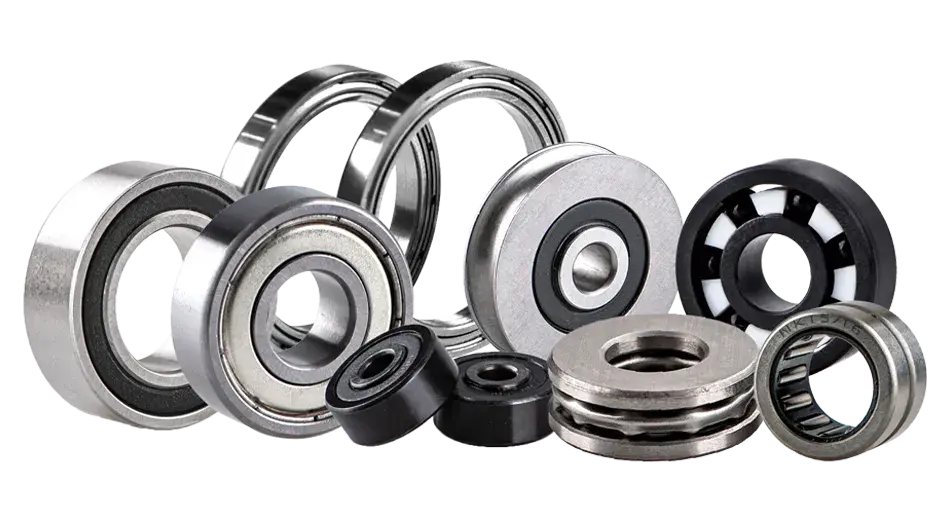
100000+ Types of Bushings – Contact Us for Details