
Recent Posts
Metallurgical Lubrication Strategies: A Technical Comparison of Oil and Grease Systems for Heavy Machinery and Metal Processing
Introduction
Within ferrous and non-ferrous metalworking, the selection between oil and grease is more than a maintenance preference—it is a metallurgical decision impacting tool life, surface integrity, and operational economics. The tribological interface between tool steel and workpiece, whether in rolling contact bearings or high-speed machining, demands lubricants engineered for specific pressure-velocity-temperature regimes. This analysis examines the physical and chemical distinctions between oil and grease systems, drawing upon industrial application data and laboratory findings to establish selection criteria for demanding metallurgical environments.
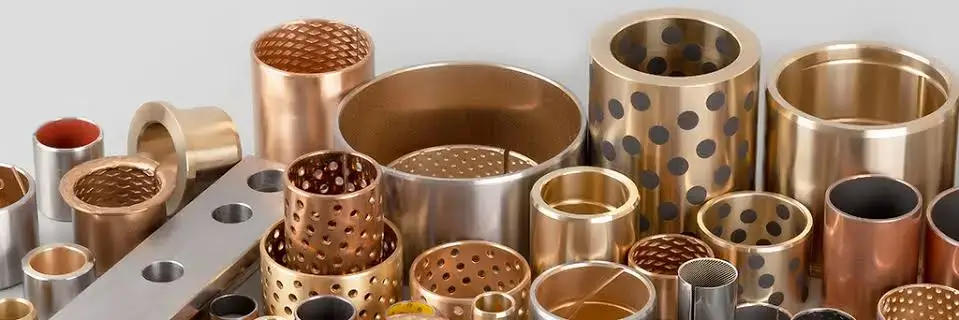
Table of Contents
1. Physical State and Rheological Distinction
The foundational difference between oil and grease lies in physical constitution. Oil is a Newtonian fluid with viscosity dependent on temperature; grease is a semi-solid dispersion comprising approximately 80% base oil, a thickener (typically lithium, calcium, or polyurea compounds), and performance additives. The thickener functions as a sponge, retaining the lubricating fluid and releasing it under shear stress.
Grease consistency is classified by NLGI (National Lubricating Grease Institute) grades ranging from 000 (semi-fluid) to 6 (block hardness). Metallurgical applications commonly employ NLGI Grades 1 through 3. This structure imparts “stay-put” performance—grease remains in open bearings or vertical orientations where oil would drain.
| Property | Oil | Grease |
|---|---|---|
| Physical State | Liquid | Semi-solid |
| Base Composition | 100% base oil + additives | 80% base oil + thickener + additives |
| NLGI Range | N/A | 000 to 6 (semi-fluid to block) |
| Flow Behavior | Newtonian | Non-Newtonian, shear-thinning |
| Sealing Capability | Minimal | High |
2. Tribological Performance Under Contact Stress
Laboratory rolling contact fatigue (RCF) tests on AISI 52100 bearing steel balls reveal quantifiable differences in lubricant efficacy. Under contact stresses ranging from 6.74 GPa to 8.89 GPa, synthetic polyglycol (PG220) oil produced an elastohydrodynamic film thickness 65% greater than mineral oil and 10% greater than grease at equivalent conditions. Consequently, RCF life with PG220 was approximately seven times that of mineral oil and five times that of grease.
Grease, however, demonstrated superior performance in textured point contacts under starved lubrication conditions, yielding reduced friction coefficients and specific wear rates compared to oil-lubricated steel contacts. This divergence suggests oil excels in fully flooded, high-speed environments where film thickness determines fatigue life, while grease performs favorably in boundary or mixed lubrication regimes with intermittent replenishment.
3. Bearing-Specific Applications
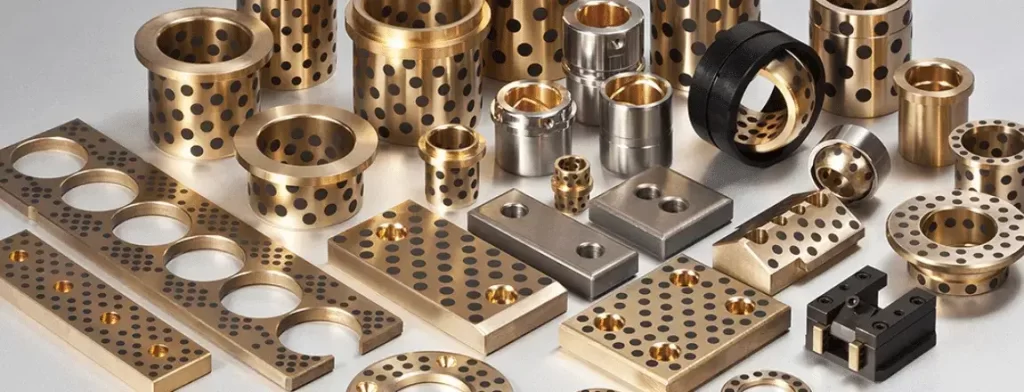
Plain bearings (babbitt or bronze) traditionally receive oil via wick or splash systems. The continuous flow flushes wear debris and dissipates heat. Conversely, rolling element bearings—ball, cylindrical roller, spherical roller—generally require grease. The metallic point contact in these bearings benefits from the thickener’s ability to maintain a sacrificial reservoir at the rolling interface.
Bearing type and speed determine relubrication intervals. Radial ball bearings follow a base frequency; cylindrical roller bearings require replenishment five times more frequently; thrust ball and roller bearings require ten times the frequency. For slide surfaces under heavy pressure and slow movement, way oils such as Vactra formulations provide specialized boundary lubrication not replicated by commodity greases
4. Environmental and Contamination Considerations
Open or partially enclosed equipment—spring hammers, rolling mills, conveyors—presents unique challenges. Grease, being tacky, readily captures airborne dust, grit, soot, and metallic fines. These abrasive particulates become permanently suspended in the grease mass, creating a lapping compound that accelerates wear. Oil, particularly low-viscosity formulations, may be applied in greater volume to flush contaminants from sliding interfaces.
For dusty metallurgical environments, NLGI 000 grade grease presents a compromise. This semi-fluid material can be pumped through standard grease guns yet exhibits sufficient fluidity to release contaminants more readily than thicker grades
5. Temperature Stability and Oxidation Resistance
Thermal degradation represents a primary lubricant failure mechanism in metal forming and processing. The recommended shelf life for properly stored industrial oils and greases is five years in original sealed containers. In-service performance, however, is dictated by oxidation stability and additive depletion.
Signs of grease deterioration include:
Excessive oil separation (beyond normal bleed)
Consistency change exceeding 25%
Color, odor, or texture alteration
High-temperature forming operations, particularly aluminum and magnesium alloy forging, demand specialty lubricants such as HFM-06 water-soluble formulations with film-forming and insulation properties at elevated temperatures
6. Application Methods and Equipment Compatibility
Grease installation requires precise volumetric control. Over-lubrication causes internal pressure buildup, seal rupture, and heat generation. Under-lubrication permits metal-to-metal contact. Bearing manufacturers specify grease quantities by weight or volume; grease guns can be calibrated accordingly.
| Application Factor | Oil | Grease |
|---|---|---|
| Application Method | Splash, circulation, drip, wick | Gun, manual pack, centralized system |
| Over-lubrication Risk | Low (excess drains or circulates) | High (pressure buildup, seal damage) |
| Reapplication Frequency | Continuous or periodic | Intermittent (scheduled intervals) |
| Equipment Cleanliness Requirement | Moderate | High (contamination ingress) |
Equipment with grease fittings and drain plugs permits purging of old product; for fittings without drains, careful shot counting and periodic relief fitting cleaning are required
7. Storage, Handling, and Compatibility
Improper storage degrades both oils and greases. Temperature cycling can induce static oil bleed from grease—a normal phenomenon when release characteristics are appropriate, but excessive bleed indicates formulation breakdown. Mineral spirits-based fluids used in stamping operations may evaporate, necessitating careful handling.
Grease incompatibility warrants particular vigilance. Mixing greases with different thickener chemistries—lithium with polyurea, calcium with sodium—can result in softening, hardening, or complete lubricant failure. Bearing damage may follow if the incompatibility is not detected promptly.
8. Selection Framework for Metallurgical Applications
The decision matrix for oil versus grease in metallurgical equipment rests on operational parameters:
Speed: High-speed bearings favor oil for heat dissipation and film formation.
Load: Heavy, slow-moving slides benefit from grease’s film retention.
Temperature: Extreme temperatures require synthetic base oils; grease thickeners degrade at elevated temperatures.
Contamination: Dirty environments favor low-viscosity oil for flushing; semi-fluid greases offer compromise.
Accessibility: Relubrication intervals determine whether grease (longer intervals) or oil (continuous or frequent replenishment) is practical.
Product Compatibility: Degreasing and downstream processes may dictate selection.
For stainless steel forming, chlorine-containing additives are sometimes specified, although environmental and health considerations increasingly drive non-chlorinated alternatives. Metalworking fluids fall into neat oils and water-mix emulsions, each influencing tool life, surface finish, and machine corrosion
FAQ: Comprehensive 608 Bearing Guide
Q1: What is the primary difference between oil and grease?
Oil is a liquid lubricant; grease is oil with a thickener, creating a semi-solid structure that remains in place under gravity.
Q2: Can I use grease in a bearing designed for oil?
No. Oil-lubricated bearings are designed for heat dissipation via circulation. Grease may cause overheating.
Q3: Which lubricant provides better film thickness?
Synthetic oils typically provide thicker elastohydrodynamic films than grease under equivalent conditions .
Q4: What NLGI grade is recommended for bearings?
NLGI Grade 1, 2, or 3, depending on bearing speed and load specifications .
Q5: Does grease attract contaminants?
Yes. Grease’s tackiness traps dust, grit, and fines, which can become abrasive .
Q6: How often should grease be reapplied?
Relubrication intervals depend on bearing type, speed, load, and contamination level .
Q7: What is “oil bleed” in grease?
A small amount of oil separation is normal and necessary for lubrication. Excessive bleed indicates deterioration .
Q8: Can I mix different greases?
Not recommended. Incompatibility between thickener types can cause lubricant failure .
Q9: What lubricant is best for dusty environments?
Semi-fluid NLGI 000 grease or low-viscosity oil with frequent flushing .
Q10: How long do lubricants last in storage?
Five years when stored properly in original sealed containers .
Q11: What causes grease consistency change?
Oxidation, thermal degradation, contamination, or shear breakdown.
Q12: Is oil better for high-speed applications?
Yes. Oil provides superior cooling and lower churning losses.
Q13: Which grease is recommended for rolling element bearings?
Lithium-complex or polyurea greases, depending on temperature and load .
Q14: What is “vanishing type” lubricant?
A metal forming fluid that evaporates after application, eliminating post-process cleaning .
Q15: How does temperature affect viscosity?
Higher temperature reduces viscosity (oil) and softens grease (consistency change) .
Q16: Are synthetic oils worth the premium?
For high stress or temperature, yes—film thickness and fatigue life improve significantly .
Q17: What is the “stay-put” performance of grease?
Grease remains on vertical surfaces and open bearings without draining.
Q18: How do I know if grease is deteriorating?
Check for excessive oil separation, consistency change, color/odor change, or texture alteration .
Q19: What is a water-mix metalworking fluid?
A coolant/lubricant diluted with water for machining operations .
Q20: Which is better for aluminum stamping—oil or grease?
Oil-based forming fluids or vanishing-type lubricants are preferred; avoid chlorine/sulfur additives to prevent staining
100000+ Types of Bushings – Contact Us for Details