
Recent Posts
Metallurgical Engineering Essentials: The Definitive Technical Resource on Heavy-Duty Machinery Bushings
Introduction
In the demanding environment of modern heavy industries—including mining, construction, material handling, and steel metallurgy—mechanical pivot joints are subjected to relentless combined stresses. High static and dynamic loads, continuous abrasive friction and harsh environmental contaminants create an extraordinarily challenging operating matrix for critical wear components. Within this context, the heavy-duty machinery bushing (commonly referred to as track bushings, excavator bucket bushings, suspension bushings, or sleeve in metallurgical equipment) plays an indispensable role as the primary load-bearing and motion-guiding interface. Unlike rolling element bearings, these plain bearings rely on sliding contact and must simultaneously provide wear resistance, impact toughness, fatigue strength, and structural stability over extended service intervals. Consequently, the manufacturing and material selection of high-performance bushings represent a highly specialized field within metallurgical engineering, requiring precise control over alloy composition, forming processes, and thermal treatments to achieve an optimal balance of surface hardness and core ductility.
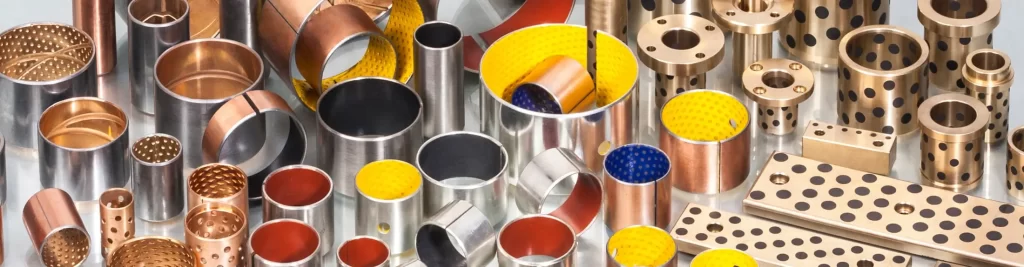
Table of Contents
1. Material Science Foundation: Alloy Selection and Metallurgical Properties
The foundation of any high-performance heavy-duty machinery bushing lies in its material composition. The selection of an appropriate alloy system directly determines the component’s load-bearing capacity, friction characteristics, and wear resistance. Modern bushing materials can be broadly classified into several distinct categories, each optimized for specific application scenarios and operational parameters.
Carbon and Alloy Steels (40Cr, 45#, 20CrMnTi): These materials represent the workhorse of the industry, offering an excellent balance of mechanical strength, toughness, and cost-effectiveness. Through appropriate heat treatment regimes, steel bushings achieve surface hardness values in the HRC 55–62 range while maintaining ductile cores with hardness ratings of HRC 25–35. This dual-phase structure allows the bushing to resist abrasive wear on its working surface while absorbing impact loads through its resilient interior, effectively preventing catastrophic fracture under sudden shock loads.
Copper-Based Alloys (Aluminum Bronze, Manganese Brass, Leaded Bronze): For applications demanding superior thermal conductivity and galling resistance, copper alloys provide distinct advantages. High-strength aluminum bronze (grades such as ZCuAl10Fe3Mn2) delivers exceptional combination of hardness, toughness, and corrosion resistance, making it particularly suitable for mining crusher applications where severe impact loads are prevalent. Special manganese brass formulations (ZCuZn38Mn2Pb2) offer high load-carrying capacity with excellent bearing properties. The inherent thermal conductivity of copper alloys facilitates rapid heat dissipation from the bearing interface, reducing the risk of thermal adhesion and extending lubricant life.
Bimetallic and Composite Materials: Advanced manufacturing technologies have enabled the production of bimetallic bushings that combine the wear resistance of copper alloys with the structural strength of steel substrates. These components, typically manufactured through casting copper alloy onto a roughened steel backing or employing powder metallurgy sintering processes, achieve bond strengths exceeding 190 MPa. The synergistic combination of materials allows for significant cost reduction compared to solid copper bushings while maintaining or exceeding performance metrics. The steel substrate provides the structural rigidity required for heavy load support, while the copper alloy friction layer delivers superior bearing and anti-seizure characteristics.
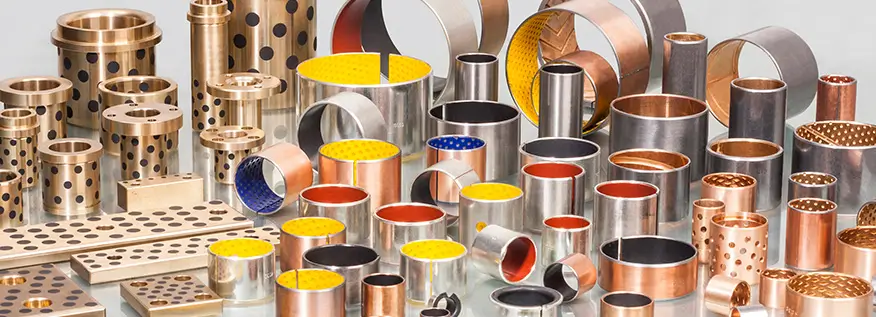
Self-Lubricating Materials (Graphite-Filled Bronze, PTFE-Impregnated Composites): In scenarios where external lubrication is impractical or maintenance access is restricted, self-lubricating bushings provide a viable solution. Solid graphite lubricants embedded within the bronze matrix release lubricating particles during sliding motion, reducing friction coefficients and minimizing wear under dry-running conditions. Similarly, metal-polymer composites incorporating PTFE layers offer exceptionally low friction coefficients suitable for oscillating and high-temperature applications, particularly in steel metallurgy environments such as continuous casting machine roller grooves.
| Material Type | Typical Hardness | Key Properties | Primary Applications |
|---|---|---|---|
| Hardened Carbon/Alloy Steel | HRC 55–62 (surface), HRC 25–35 (core) | High strength, excellent impact toughness, dual-phase structure | Excavator track bushings, heavy equipment pivot joints |
| Aluminum Bronze (ZCuAl10Fe3Mn2) | 110–170 HB | Good thermal conductivity, corrosion resistance, galling resistance | Mining crushers, high-impact applications |
| Bimetallic (Steel + Copper Alloy) | Bond strength ≥190 MPa | Combines steel strength with copper wear resistance, cost-effective | Heavy-duty truck suspensions, bulldozer track rollers |
| Graphite-Filled Bronze | 60–90 HB | Self-lubricating, maintenance-free operation, low friction | High-temperature, dusty conditions, hard-to-lubricate areas |
2. Forging vs. Casting: Manufacturing Method Selection
The manufacturing process employed to form the bushing blank significantly influences its internal structure integrity and subsequent service performance. Two primary methods dominate the heavy-duty bushing manufacturing landscape: hot forging and centrifugal casting.
Precision Hot Forging: The hot forging process involves heating steel blanks to temperatures between 1,000°C and 1,200°C, followed by deformation under thousands of tons of controlled pressure within precision dies. This technique offers several distinct metallurgical advantages over alternative methods. First, hot forging refines the internal grain structure of the steel, aligning grain flow to follow the exact contours of the bushing geometry. This grain orientation enhances fatigue resistance and impact toughness by creating a continuous, unbroken grain structure that resists crack propagation. Second, the forging process eliminates internal voids and structural porosity that could serve as crack initiation sites under cyclic loading. The elimination of such defects results in a blank with inherently superior tensile strength and mechanical reliability compared to cast equivalents. Advanced forging techniques for heavy equipment bushings employ a two-stage forging process that includes piercing the workpiece to form an initial hollow shape, followed by a secondary forging operation to achieve the final dimensions and further refine the material microstructure.
Centrifugal Casting: For copper-based alloys and large-diameter bushings, centrifugal casting offers distinct advantages. In this process, molten metal is poured into a spinning mold, with centrifugal forces distributing the material uniformly against the mold walls. This technique produces a dense, fine-grained structure with minimal porosity and inclusions, particularly beneficial for achieving uniform material properties in large components. Centrifugally cast bushings typically exhibit superior overall performance compared to sand-cast equivalents, with enhanced mechanical properties and reduced defect rates. However, the grain structure orientation differs from forged components, potentially affecting impact resistance in certain loading configurations.
Selection Criteria: The choice between forging and casting depends on multiple factors, including the bushing size, material type, loading conditions, and production volume requirements. For steel-based bushings subjected to severe impact loads and cyclic stress, hot forging generally provides superior performance due to the continuous grain flow and optimized microstructure. For large-diameter copper alloy bushings operating under steady load conditions, centrifugal casting offers a cost-effective manufacturing route with acceptable metallurgical quality. Bimetallic bushing production typically involves casting a copper alloy friction layer onto a pre-machined steel substrate, requiring precise control over bonding parameters to achieve metallurgical bond quality
3. Heat Treatment Technology for Bushing Components
The heat treatment regime applied to a forged or cast bushing determines its final mechanical properties and service performance. Modern heavy-duty bushings require carefully engineered thermal cycles to develop the optimal combination of surface hardness and core toughness.
Induction Surface Hardening: This process employs high-frequency electrical currents to generate localized heating on the precise surface layers of the bushing, elevating the temperature above the material’s critical transformation point. Following the heating cycle, the bushing undergoes rapid liquid quenching using water or polymer-based synthetic quenchants. This rapid cooling locks the surface microstructure into martensite, the hardest crystalline form of steel. Surface hardness values of HRC 55–62 are typically achieved on the working surfaces, providing exceptional wear resistance against abrasive debris and frictional loads. The localized nature of induction hardening leaves the bushing core in its original, tougher condition, maintaining impact resistance and preventing catastrophic cracking under severe shock loads.
Case Depth Optimization: A critical parameter in heat treatment design is the case depth—the thickness of the hardened surface layer. Insufficient case depth leads to rapid wear-through, resulting in premature bushing failure. Excessive case depth, conversely, increases the risk of through-hardening, compromising the core toughness required for impact absorption. Standardized specifications for engineering machinery bushings typically recommend specific case depth requirements based on component size and service conditions. The optimized case depth ensures the bushing maintains its wear resistance while providing adequate ductility for impact load absorption.
Tempering and Stress Relief: Immediately following quenching, the martensitic surface structure is wear-resistant but inherently brittle. Controlled tempering involves reheating the bushing to a precise lower temperature for a specified duration, relieving internal thermal stresses and adjusting the final hardness to meet engineering specifications. The tempering cycle also reduces the risk of stress corrosion cracking and dimensional instability that could compromise assembly tolerances. Proper tempering ensures the bushing achieves the specified surface hardness while maintaining the required core ductility for reliable field performance
4. Advanced Surface Engineering and Coating Technologies
Beyond bulk material properties and core heat treatment, surface engineering plays an increasingly important role in optimizing bushing performance. Surface treatments can enhance wear resistance, reduce friction coefficients, and improve corrosion protection without altering the fundamental mechanical properties of the substrate material.
Phosphating Treatments: Phosphating involves the chemical conversion of the bushing surface to a phosphate coating that enhances lubricant retention, improves wear resistance, and provides corrosion protection. This treatment is particularly beneficial for steel bushings operating in dusty or contaminated environments where dry conditions increase wear rates. Phosphated surfaces provide a degree of porosity that retains lubricating oil, reducing friction during startup and minimizing adhesive wear between contacting surfaces.
Graphite and PTFE Coatings: Applying solid lubricant coatings to the bushing working surfaces provides significant performance benefits under boundary lubrication conditions. Graphite coatings offer good friction reduction and seizure resistance, while PTFE (polytetrafluoroethylene) coatings provide extremely low friction coefficients suitable for high-temperature applications. These surface treatments can be combined (e.g., phosphating plus graphite coating) to achieve synergistic effects, where the phosphate layer provides adhesion and corrosion protection, and the graphite layer delivers friction reduction. PTFE coatings with molybdenum disulfide additions further enhance performance in applications requiring both low friction and high load-carrying capability.
Specialized Coatings for Metallurgical Applications: The steel metallurgy industry presents particularly challenging operating conditions for bushings, including elevated temperatures, abrasive scale, and continuous operation requirements. For such applications, specialized coatings employing amorphous ferrous alloys have been developed. These materials, applied through thermal spraying or plasma coating techniques, form extremely hard, wear-resistant surfaces with high hardness and low friction coefficients. The amorphous structure provides unique properties not achievable with conventional crystalline materials, including enhanced corrosion resistance and superior wear performance in high-temperature environments
5. Design and Lubrication Systems for Extended Service Life
The geometry and lubrication system design significantly influence bushing performance and service life. Modern engineering standards provide comprehensive guidance on bushing dimensions, tolerance specifications, and lubrication configurations to optimize component reliability.
Geometric Configuration: Bushing design parameters include inner and outer diameters, length, groove patterns, oil hole specifications, and chamfer dimensions. Standardized dimensional tolerances follow ISO and GB/T specifications, ensuring interchangeability and proper assembly clearance. The wall thickness design must balance load-carrying capacity with heat dissipation requirements, with thicker walls providing greater strength at the expense of thermal conductivity. Design guidelines typically specify dimensional tolerance limits for bushings used in engineering machinery, ensuring consistent quality and performance.
Lubrication Channel Design: Effective lubrication is essential for achieving maximum bushing service life in heavy machinery applications. Lubrication systems typically incorporate oil grooves, oil holes, and pressurized lubrication passages. The design parameters include oil groove width and depth, spacing between oil grooves, and oil hole diameters. For heavy-duty applications requiring grease lubrication, appropriately designed lubrication channels ensure proper grease distribution across the bearing surface, reducing friction and heat generation. The axial distance between oil grooves and the dimensions of inner and outer chamfers must be specified to optimize lubricant film formation and pressure distribution.
Self-Lubricating Features: For applications where external lubrication is impossible or impractical, self-lubricating bushings provide an alternative solution. These components incorporate solid lubricants embedded within the bushing material, such as graphite particles in bronze matrices or PTFE in metal-polymer composites. The solid lubricant releases continuously during operation, maintaining a low-friction interface without the need for external lubricant supply. Self-lubricating designs are particularly beneficial in dusty environments, high-temperature conditions, and equipment where maintenance access is difficult
6. Bimetallic and Composite Bushing Manufacturing
Bimetallic bushing technology combines the advantages of multiple materials to achieve performance that exceeds the capabilities of single-material designs. The manufacturing process requires precise control over material selection, bonding parameters, and subsequent processing to ensure reliable performance.
Structural Design: Bimetallic bushings typically consist of a steel outer layer providing structural strength and a copper alloy inner layer delivering bearing and wear resistance. The thickness ratio between copper alloy and steel layers is carefully optimized based on application requirements. For heavy-duty applications, design configurations with copper-to-steel thickness ratios ranging from 1:1.0 to 1:3.5 are commonly employed, providing an optimal balance between wear resistance and structural integrity. The copper alloy layer is formulated with specific alloying elements to achieve the required bearing properties, with lead addition (5–38%) improving conformability and seizure resistance, and micro-alloying with niobium and boron enhancing fatigue strength .
Manufacturing Process: The production of bimetallic bushings involves casting the copper alloy friction layer onto a prepared steel substrate. The steel substrate surface is typically roughened and cleaned to achieve metallurgical bond quality, using processes such as shot blasting to create a suitable surface profile. Surface preparation includes rigorous cleaning using alkaline solutions followed by acid pickling to remove surface contaminants and oxide layers. The steel backing may be heated to temperatures of 500–600°C before the copper alloy casting, while the copper component may be cooled to -20 to -40°C during assembly to facilitate the required interference fit. This controlled thermal expansion process ensures the bimetallic structure achieves the specified interference fit (typically H7/V6 to Z6), providing a secure connection that prevents layer separation under service loads .
Self-Tightening Effects: Advanced bimetallic bushing designs incorporate self-tightening features that enhance the interference fit during service. In these designs, the interference fit is established during assembly using thermal expansion/contraction techniques, then further enhanced through a self-tightening process involving controlled deformation of the inner copper alloy layer. This secondary processing can achieve high surface stress levels that work-harden the bearing surface, improving wear resistance while maintaining the desired geometrical accuracy. This self-tightening effect maintains the interference fit even under heavy service loads, preventing fretting and extending service life
7. Application-Specific Performance Requirements
Different heavy-duty applications impose distinct performance requirements on bushing components. Understanding these application-specific demands is essential for proper component selection and specification.
Mining and Construction Equipment: Excavators, bulldozers, loaders, and mining crushers subject bushings to some of the most severe operating conditions in industrial engineering. These applications combine high static and dynamic loads, extreme impact forces, and abrasive contamination. Bushing failures in these applications typically result from wear-induced clearance increase, impact fracture, or heat generation leading to lubrication failure. Accordingly, bushings for mining equipment require exceptional fatigue strength, impact toughness, and resistance to abrasive wear. Composite materials combining high-strength backing with specialized bearing liners have proven particularly effective in such applications, with recent innovations including micro-alloyed copper formulations achieving service cycle durability exceeding 1.5 × 10^18 cycles under low-speed, high-impact conditions.
Steel Metallurgy and Material Processing: Applications within steel processing plants present unique challenges, including elevated temperatures, abrasive scale particles, and continuous operation requirements. Bushings for continuous casting machines, rolling mills, and transfer equipment must withstand high thermal loads while maintaining dimensional stability and friction control. Self-lubricating composites incorporating PTFE or graphite have proven particularly effective in such environments, providing reliable operation with reduced maintenance requirements. Bronze-based bushings with graphite fillers offer good thermal conductivity and high-temperature capability, suitable for applications where lubricant degradation limits the performance of conventional designs.
Heavy-Duty Truck and Off-Highway Vehicle Applications: Heavy-duty transport applications require bushings capable of withstanding both static loads and dynamic impacts while providing predictable suspension and steering performance. Bimetallic bushings incorporating steel backing with sintered copper-lead alloy layers have demonstrated excellent performance in truck suspensions, balance suspensions, and track roller applications. These components offer the load-carrying capability required for heavy vehicle operation combined with the bearing properties needed for oscillating motion under high-contact pressures. The combination of steel strength and copper alloy bearing properties has proven effective in achieving extended service life in transport applications
8. Quality Assurance and Performance Verification
Ensuring consistent bushing quality requires comprehensive testing and inspection protocols throughout the manufacturing process. Standardized testing methods verify material properties, dimensional accuracy, and bond quality for bimetallic components.
Mechanical Property Testing: The primary mechanical properties verified through testing include tensile strength, yield strength, elongation, and hardness. For bimetallic bushings, bond strength between the copper alloy friction layer and steel substrate is a critical quality parameter, with specification requirements typically exceeding 190 MPa. Material composition is verified through spectrographic analysis, ensuring alloying elements are within specified ranges. For steel bushings, the effectiveness of heat treatment is confirmed through hardness testing and microscopic examination of the hardened case depth.
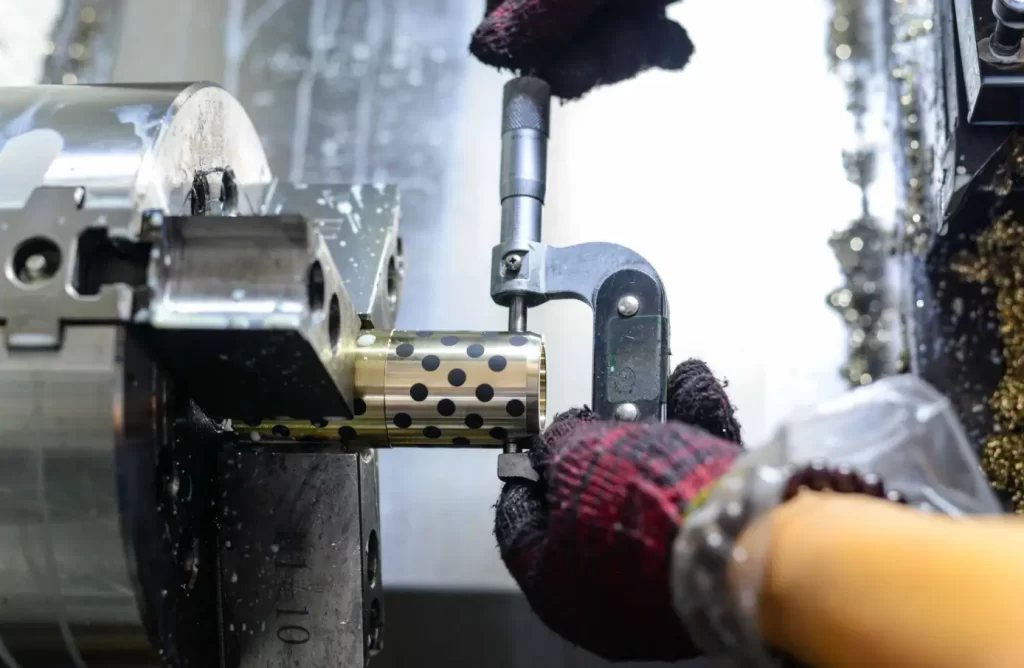
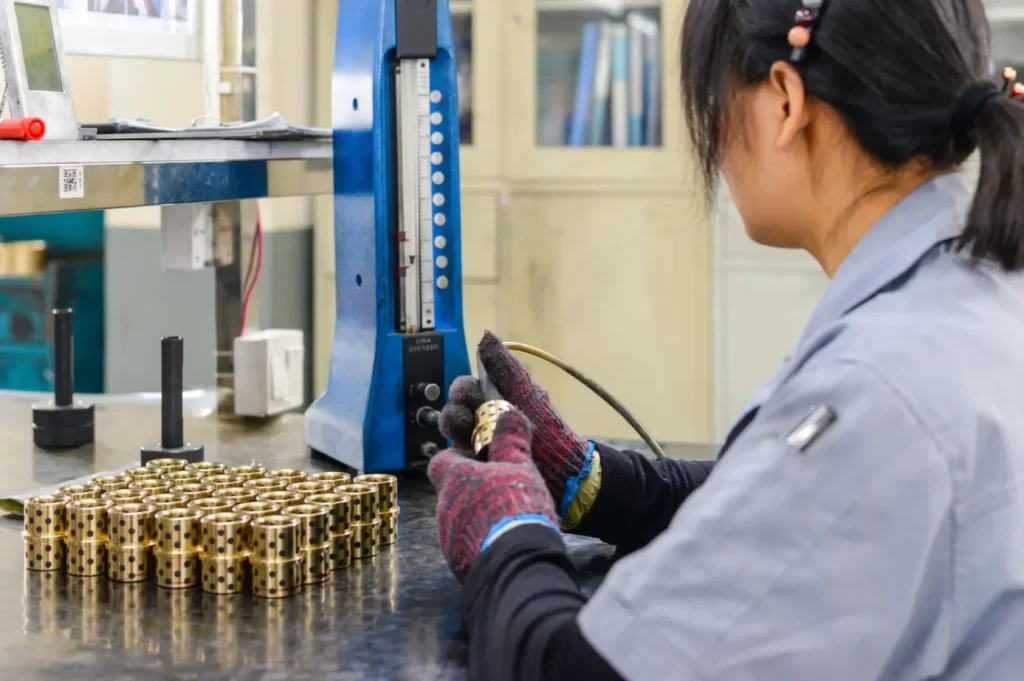
Dimensional and Tolerance Verification: Dimensional accuracy is critical for proper bushing installation and function. Critical dimensions include inner and outer diameters, length, groove dimensions, and oil hole sizes. These are verified using precision measurement equipment to ensure compliance with specification tolerances. The surface roughness of the working surface is controlled to achieve the specified finish, which influences friction behavior and lubricant film retention. For high-precision applications, surface roughness requirements may be as low as Ra 0.05 μm.
Non-Destructive Testing: Ultrasonic inspection and dye penetrant testing detect internal defects such as porosity, inclusions, and bond line irregularities that could compromise component reliability. These tests are essential for identifying manufacturing defects that might not be apparent through visual inspection but could lead to premature failure under service conditions. For safety-critical applications, 100% inspection is typically required, with each bushing verified before shipment
Frequently Asked Questions (FAQ)
Q1: What are the primary failure modes for heavy-duty machinery bushings?
The most common failure mechanisms include abrasive wear due to contamination, adhesive wear from lubrication failure, fatigue cracking under cyclic loading, and impact fracture from sudden overloads. Wear-induced clearance increase represents the predominant failure mode in most applications.
Q2: How does bushing material selection influence service life?
Material selection directly determines wear resistance, fatigue strength, impact toughness, and thermal conductivity. Optimized material selection accounts for the specific load spectrum, contamination level, and lubrication conditions of each application.
Q3: What is the significance of case depth in heat-treated steel bushings?
Case depth refers to the thickness of the hardened surface layer. Optimized case depth ensures adequate wear resistance while maintaining core ductility, typically specified based on component size and application requirements.
Q4: Are self-lubricating bushings suitable for high-temperature applications?
Yes, particularly graphite-filled bronze and PTFE-impregnated composites offer good performance at elevated temperatures, with suitability depending on the specific base material and lubricant type.
Q5: What are the advantages of bimetallic bushings compared to solid copper bushings?
Bimetallic bushings combine copper alloy wear resistance with steel structural strength at significantly reduced cost. They achieve comparable or superior performance while reducing material costs.
Q6: What surface treatments are most effective for heavy-duty bushing applications?
Phosphating provides excellent lubricant retention and corrosion protection, while graphite and PTFE coatings reduce friction under boundary lubrication conditions. Specialized ferrous alloy coatings offer high temperature capability.
Q7: How is bond quality verified in bimetallic bushings?
Bond strength is verified through mechanical testing using specimens prepared from production components, typically with bond strength requirements exceeding 190 MPa. Ultrasonic inspection detects bond line discontinuities.
Q8: What is the typical hardness range for heat-treated steel bushings?
Surface hardness typically ranges from HRC 55–62, with core hardness maintained at HRC 25–35 to preserve impact toughness.
Q9: Can bushings be manufactured from specialty alloys for corrosive environments?
Yes, copper-based alloys with enhanced corrosion resistance are available, including aluminum bronze and specific manganese brass formulations offering good corrosion resistance.
Q10: What is the role of solid lubricants in self-lubricating bushings?
Solid lubricants such as graphite and PTFE release continuously during sliding motion, creating a low-friction interface that reduces wear and prevents galling.
Q11: How does interference fit affect bimetallic bushing performance?
Interference fit maintains assembly integrity under service loads, prevents fretting, and ensures the copper alloy layer remains properly positioned. Interference levels typically range from H7/V6 to Z6.
Q12: What are the advantages of hot forging over casting for steel bushings?
Hot forging provides superior grain structure orientation, eliminates voids and defects, and offers enhanced fatigue resistance and impact toughness compared to cast equivalents.
Q13: How should bushings be lubricated in heavy-duty applications?
Heavy-duty applications typically require high-viscosity lubricants with extreme-pressure additives. Properly designed lubrication channels ensure adequate lubricant distribution across the bearing surface.
Q14: What is a self-tightening bushing?
A self-tightening design incorporates controlled deformation of the copper alloy layer during manufacture, work-hardening the bearing surface while maintaining geometric accuracy and enhancing the interference fit.
Q15: Are bronze bushings suitable for mining equipment applications?
Yes, high-strength aluminum bronze and manganese brass formulations offer excellent performance in mining applications, providing good impact resistance, wear resistance, and thermal conductivity.
Q16: What dimensional tolerances apply to standard heavy-duty bushings?
Dimensional tolerances typically follow ISO and GB/T specifications, with specific tolerance grades specified for inner and outer diameters, length, and geometric features.
Q17: How does heat treatment affect steel bushing performance?
Heat treatment develops the optimal combination of surface hardness and core toughness, with the specific regime influencing wear resistance, fatigue strength, and impact resistance.
Q18: What are the benefits of PTFE coatings on bushings?
PTFE coatings provide very low friction coefficients, reducing wear and heat generation under boundary lubrication conditions. They offer particular advantages in applications where lubricant starvation may occur.
Q19: What tests are used for bushing quality verification?
Mechanical testing verifies tensile strength, hardness, and bond strength. Dimensional inspection ensures compliance with tolerance specifications. Non-destructive testing detects internal defects.
Q20: What is the expected service life of a heavy-duty machinery bushing?
Service life varies significantly based on application conditions, with optimized material selection and manufacturing processes enabling service cycles exceeding 1.5 × 10^18 cycles for certain specialized applications
100000+ Types of Bushings – Contact Us for Details