Author name: MYWAY

MYWAY Graphite Bearings: The Self-Lubricating Solution for Extreme Environments Where Ordinary Bearings Fail
Interpretation of Bushing Knowledge

MYWAY Graphite Bearings: The Self-Lubricating Solution for Extreme Environments Where Ordinary Bearings Fail

This article explores MYWAY graphite bearings and graphite bushings as self-lubricating solutions for extreme environments where oil, grease, and conventional metal bearings fail. It explains the difference between plain carbon graphite and graphite-metal alloy materials, highlights key performance advantages such as high-temperature resistance, chemical inertness, submerged operation, and maintenance-free performance, and outlines major applications across pumps, food processing, chemicals, and high-temperature equipment. A practical specification checklist, installation guidance, and 10 FAQs help engineers select the right bearing. The article concludes by promoting MYWAY’s ISO/IATF-certified graphite bushings, custom engineering support, and global supply capability, inviting customers to request a quote.
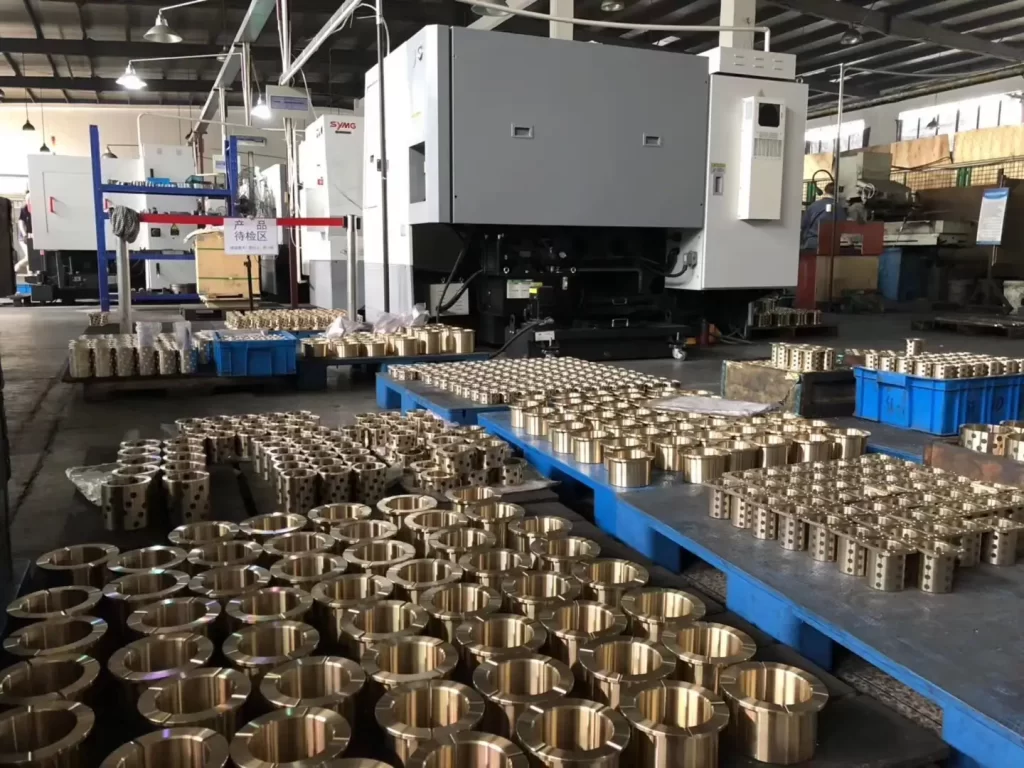
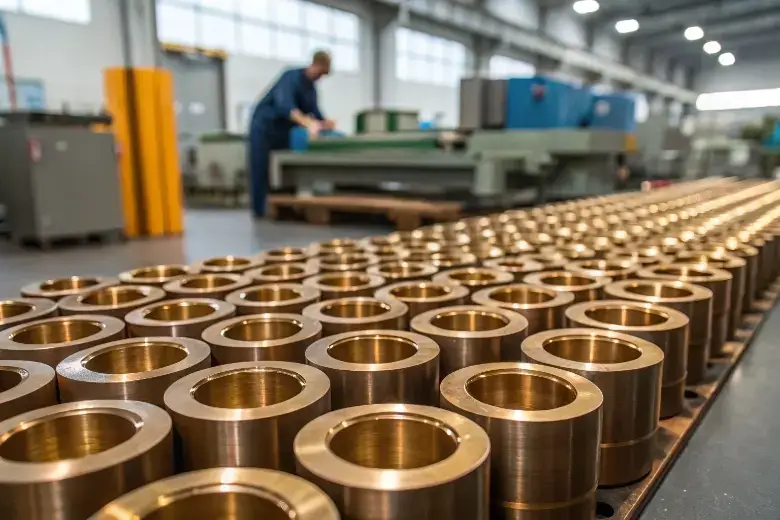
Metallurgical Principles and Advanced Manufacturing of Casting Bush Components: A Comprehensive Technical Review
Interpretation of Bushing Knowledge

Copper for Casting: Alloys, Processes, and Applications for Industrial Buyers

Copper and copper alloys represent one of the most versatile material families in modern foundry operations. With exceptional electrical and thermal conductivity, superior corrosion resistance, and excellent machinability, copper castings serve critical roles across electrical, marine, automotive, and industrial applications. Understanding the relationship between alloy selection, casting method, and final component performance enables engineers and procurement specialists to optimize both technical outcomes and production costs.

Brass vs Bronze Bushing: Differences, Properties and Best Applications
Interpretation of Bushing Knowledge

Bronze Metal Alloy: The Definitive Technical and Commercial Guide

Bronze represents one of humanity’s most transformative metallurgical achievements, marking the transition from the Stone Age to the Bronze Age around 3500 BCE. Today, this copper-tin alloy system has evolved into a sophisticated family of engineering materials with precisely controlled compositions tailored for specific industrial applications. Modern bronze alloys offer an exceptional combination of corrosion resistance, wear resistance, mechanical strength, and castability that continues to make them indispensable across marine engineering, industrial machinery, aerospace components, and infrastructure sectors. This comprehensive analysis examines bronze alloy composition, mechanical properties, commercial grades, market dynamics, and application criteria to inform procurement decisions and engineering specifications.

Metallurgical Principles and Advanced Manufacturing of Casting Bush Components: A Comprehensive Technical Review
Interpretation of Bushing Knowledge

Metallurgical Principles and Advanced Manufacturing of Casting Bush Components: A Comprehensive Technical Review

Casting bush components represent critical engineering elements in heavy machinery, mining equipment, marine propulsion systems, and high-speed rotating assemblies. These cylindrical bearing elements, produced through various casting methodologies, must withstand extreme operating conditions including high surface pressures, abrasive wear, corrosive environments, and elevated temperatures. This technical review examines the metallurgical principles governing casting bush performance, manufacturing process optimization, alloy selection criteria, and quality assurance protocols essential for engineering applications.

Metallurgical Characteristics & Industrial Application Analysis of Bronze Bushings for Sliding Bearing Systems
Interpretation of Bushing Knowledge

Metallurgical Advancements in Low Friction Washers: Material Science, Coating Technologies, and Performance Optimization

The evolution of low friction washers represents a critical intersection of tribology, materials engineering, and fastener technology. These specialized components serve as essential solutions for managing friction, thermal expansion, and wear in bolted joints across automotive, aerospace, industrial machinery, and precision equipment applications. This article examines the metallurgical principles, coating technologies, and performance characteristics that define contemporary low friction washer design and manufacturing.

Self-Lubricating Bushings: The Maintenance-Free Solution for Demanding Industrial Applications
Interpretation of Bushing Knowledge

Metallurgical Advancements and Industrial Applications of Composite Bearing Systems

The evolution of bearing technology has witnessed a paradigm shift from monolithic metallic alloys toward engineered composite systems that synergistically integrate material properties to meet increasingly demanding operational requirements. Composite bearings, defined as multi-material engineered structures combining a bearing lining with a structurally robust backing, represent a sophisticated metallurgical solution addressing the inherent trade-off between surface compatibility and load-bearing capacity . These advanced tribological components have become indispensable across aerospace, automotive, marine, construction, mining, and energy processing sectors, driven by their exceptional corrosion resistance, self-lubricating capabilities, and significant weight reduction advantages over conventional metallic bearings

Sleeve Bushing: The Definitive Technical and Application Resource for Industrial Drive Systems
Interpretation of Bushing Knowledge

Low Carbon Steel Bushings: Metallurgical Foundations and Performance Optimization for Heavy-Duty Applications

Low carbon steel bushings represent a fundamental component category within mechanical power transmission and motion control systems. Defined by their carbon content typically below 0.30% by weight, these cylindrical sleeves serve as sacrificial wear surfaces that protect rotating shafts and housing bores from direct metal-to-metal contact. The metallurgical characteristics of low carbon steel—including its ferritic-pearlitic microstructure, case-hardening responsiveness, and cost-effectiveness—make it an indispensable engineering material across construction equipment, agricultural machinery, automotive suspensions, and hydraulic systems.

Self-Lubricating Bushings: The Maintenance-Free Solution for Demanding Industrial Applications
Interpretation of Bushing Knowledge

Metallurgical Engineering Essentials: The Definitive Technical Resource on Heavy-Duty Machinery Bushings

In the demanding environment of modern heavy industries—including mining, construction, material handling, and steel metallurgy—mechanical pivot joints are subjected to relentless combined stresses. High static and dynamic loads, continuous abrasive friction, severe and harsh environmental contaminants create an extraordinarily challenging operating matrix for critical wear components. Within this context, the heavy-duty machinery bushing (commonly referred to as track bushings, excavator bucket bushings, suspension bushings, or sleeve in metallurgical equipment) plays an indispensable role as the primary load-bearing and motion-guiding interface.

Wear Plates: Material Performance, Metallurgical Working Conditions & Matched Wear Protection Solutions
Interpretation of Bushing Knowledge

Metallurgical Equipment Reliability: The Critical Role of Shear Machine Bushings in High-Impact Steel Processing

Shear machines constitute essential capital equipment in metallurgical processing lines, performing precision cutting operations on hot-rolled blooms, slabs, and billets under extreme operational conditions. The bushing—a cylindrical bearing component—serves as the critical interface between moving shear components, directly influencing equipment reliability, production uptime, and maintenance costs. These components function in environments characterized by high impact loads, elevated temperatures reaching 300°C, abrasive particulate contamination, and frequent start-stop cycling. The selection, application, and maintenance of shear machine bushings represent key determinants of operational efficiency in steel mills and metal processing facilities worldwide.

Self-Lubricating Bushings: Material Systems, Tribology, and Reliable Design for Dry-Running Motion
Interpretation of Bushing Knowledge

Metallurgical Lubrication Strategies: A Technical Comparison of Oil and Grease Systems for Heavy Machinery and Metal Processing

Within ferrous and non-ferrous metalworking, the selection between oil and grease is more than a maintenance preference—it is a metallurgical decision impacting tool life, surface integrity, and operational economics. The tribological interface between tool steel and workpiece, whether in rolling contact bearings or high-speed machining, demands lubricants engineered for specific pressure-velocity-temperature regimes. This analysis examines the physical and chemical distinctions between oil and grease systems, drawing upon industrial application data and laboratory findings to establish selection criteria for demanding metallurgical environments.

Scroll to Top