
Recent Posts
Bronze Components: The Engineering Backbone of Modern Industry
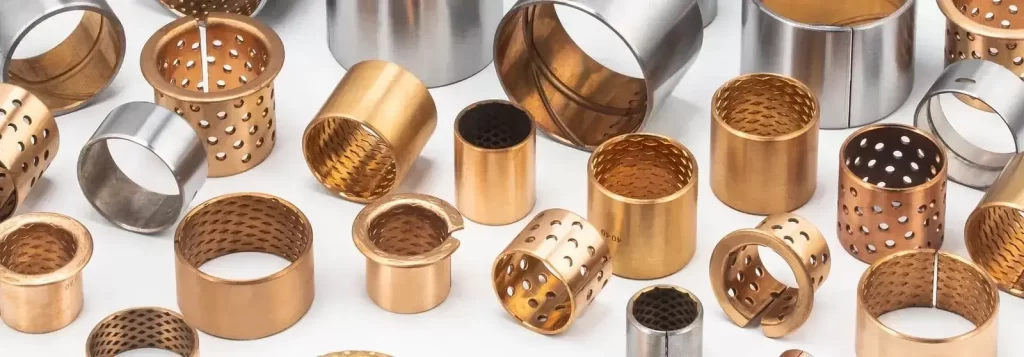
Table of Contents
1. Introduction to Bronze Components in Industrial Engineering
Bronze components represent one of the oldest and most reliable material solutions in mechanical engineering. As a copper-based alloy primarily composed of copper and tin, bronze has maintained its relevance in modern industry due to its exceptional combination of mechanical properties. Bronze components—including bronze bearings, bronze bushings, bronze sleeves, and bronze gears—continue to serve as critical elements in machinery across virtually every industrial sector. The enduring utility of bronze components stems from their outstanding wear resistance, corrosion resistance, and ability to withstand high loads under demanding operating conditions. Modern bronze alloys incorporate additional elements such as lead, nickel, phosphorus, aluminum, and manganese, each enhancing specific properties for targeted applications
2. Core Properties That Define Bronze Components
Bronze components deliver a suite of performance characteristics that distinguish them from alternative materials. Bronze bearings and bronze bushings exhibit excellent resistance to wear and corrosion, making them ideal for applications in humid environments and outdoor settings. The material demonstrates high strength and durability, maintaining its integrity even under extreme conditions. Bronze components also offer low friction coefficients and outstanding shock and impact resistance, ensuring reliable operation in heavy-duty machinery. Additionally, bronze is recyclable, positioning it as a sustainable choice for environmentally conscious engineering projects.
The machinability of bronze components represents another significant advantage. Bronze is ideal for turning, drilling, and milling operations, facilitating adaptation to specific project requirements. This combination of performance and processability makes bronze components indispensable across mechanical engineering applications
3. Bronze Bushings vs. Brass Bushings: A Critical Distinction
Understanding the difference between bronze and brass bushings is essential for proper material selection. Bronze bushings are harder and stronger compared with brass bushings, which are softer and more likely to deform or break under load. Brass is composed of copper and zinc, while bronze contains copper and tin. Bronze bushings exhibit superior wear resistance and can withstand heavy impact and corrosion. Brass bushings, while offering good machinability and moderate strength, are generally suitable for low-load and low-speed applications. Bronze excels in industrial machinery, heavy vehicle bearings, and applications requiring high strength, wear resistance, and durability. For demanding environments involving high friction and heavy loads, bronze components are the preferred engineering choice.
4. Bronze Bearings and Bushings in Aerospace Applications
Bronze components play a vital role in aerospace engineering, where reliability and performance are paramount. Aluminum bronze and manganese bronze alloys are extensively used in aircraft landing gear components, strut bearings, main pistons, and trunnion bearings. Bronze bearings in aerospace applications must withstand extreme loads while maintaining dimensional stability and corrosion resistance. Phosphor bronze components provide superior elasticity and fatigue resistance, making them suitable for dynamic applications such as flight control systems and wing flap bearings. The high strength-to-weight ratio of certain bronze alloys, particularly manganese bronze, makes them invaluable in critical aerospace components where both strength and weight considerations are significant. Bronze bushings in landing gear assemblies and aircraft components ensure smooth operation and long service life under demanding flight conditions
5. Bronze Components in Automotive and Heavy Vehicle Engineering
The automotive industry relies heavily on bronze components for critical systems. Bronze bushings and bronze bearings are commonly employed in suspension components, including sway bars, control arms, and vehicle suspension systems. High-leaded tin bronze alloys such as C93900 are particularly well-suited for automotive and truck suspension parts, offering exceptional load-carrying capacity and superior anti-seizing properties. Bronze components also serve in hydraulic systems, valve guides, valve seats, and pump parts within automotive engines. The wear resistance and durability of bronze bearings ensure long service life in heavy vehicle applications where components face continuous friction and high loads. Bronze bushings in automotive applications provide protection to mating shafts and housings while offering easier design compared to typical ball bearings
6. Bronze Components in Marine and Offshore Environments
Marine applications demand materials with exceptional corrosion resistance, and bronze components deliver precisely this capability. Aluminum bronze is particularly prominent in marine hardware, pumps, propellers, and seawater-facing components due to its superior corrosion resistance and biofouling resistance. Bronze components in marine environments resist saltwater corrosion effectively, with alloys like C63000 nickel aluminum bronze providing reliable performance in seawater-exposed applications. Bronze bushings and bearings are used in ship fittings, propeller shafting, and marine fasteners. The natural corrosion resistance of bronze components reduces maintenance requirements and extends service life in marine equipment. For offshore platforms and underwater equipment, bronze components offer the durability and reliability necessary for continuous operation in corrosive saltwater environments
7. Bronze Components in Industrial Machinery and Construction Equipment
Industrial machinery represents one of the largest application areas for bronze components. Bronze bushings and bearings are widely used in pumps, gears, hydraulic bushings, and heavy-duty sleeve bearings. Construction and agricultural equipment rely on bronze components for wear plates, high-load sleeve bearings, and hydraulic components. Bronze gears and guide components provide precision and durability in demanding industrial environments. The load-bearing capacity of bronze components makes them ideal for heavy-duty applications involving high loads and continuous operation. Bronze bushings in earth-moving equipment and mining machinery withstand abrasive conditions and high impact forces. The versatility of bronze components across mechanical engineering applications stems from their ability to perform reliably under diverse operating conditions, including high temperatures, variable loads, and limited-space installations
8. Specialized Bronze Alloys for Specific Applications
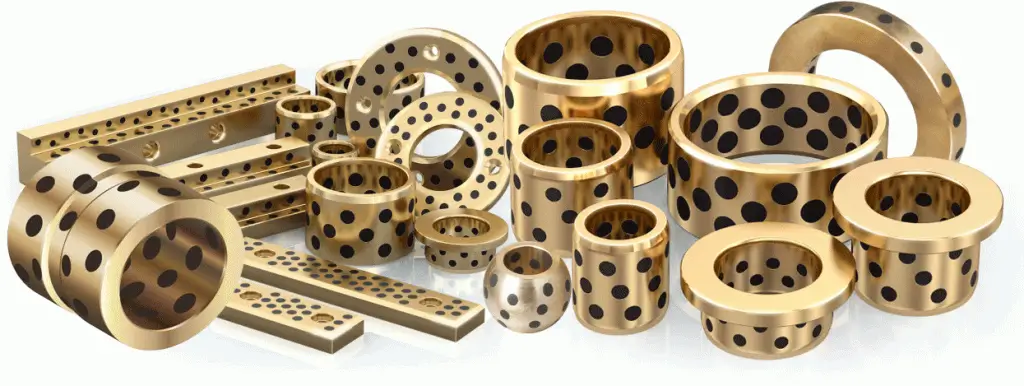
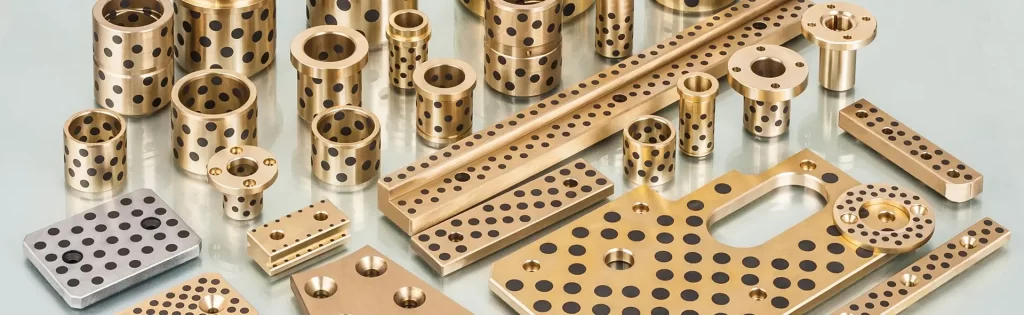
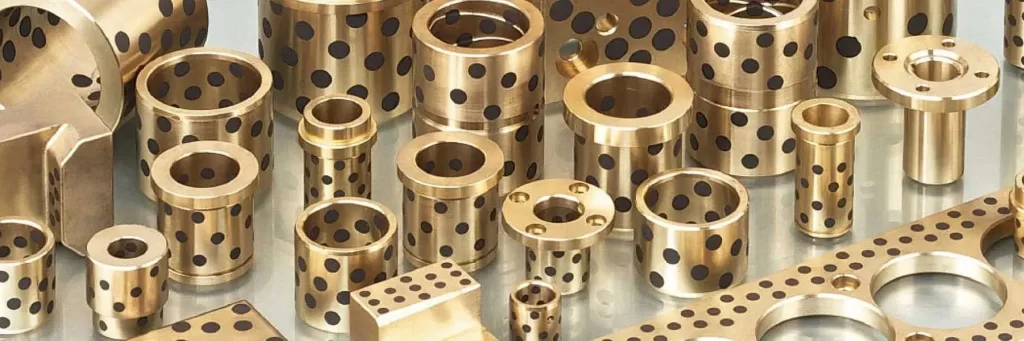
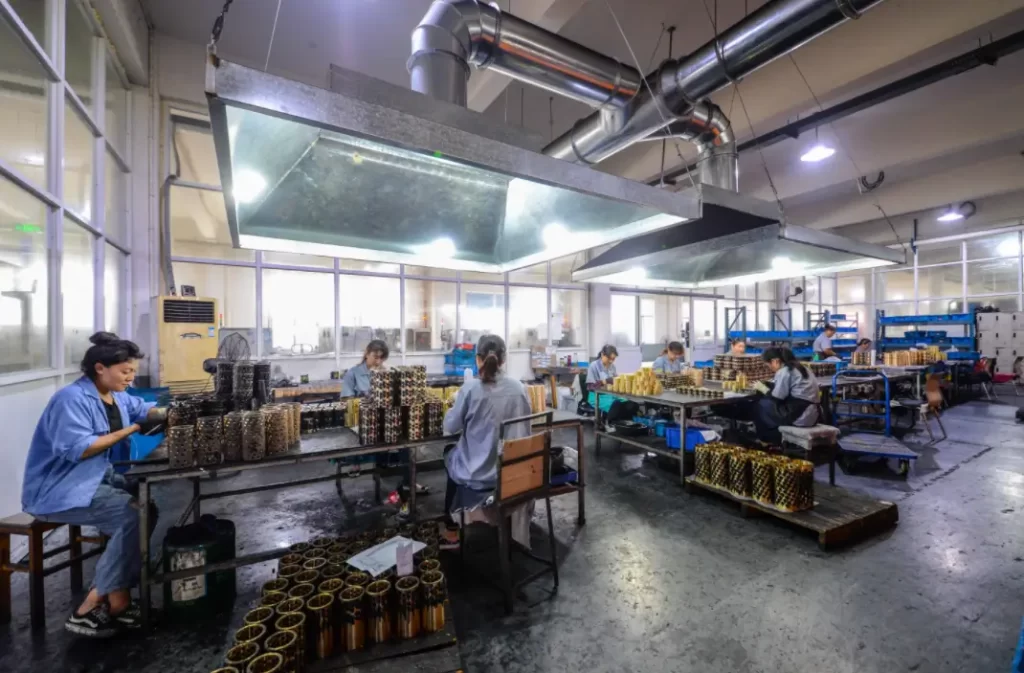
Different bronze alloys serve distinct engineering purposes. Phosphor bronze components offer superior elasticity and fatigue resistance, making them ideal for springs, fasteners, and precision instruments. Aluminum bronze components provide very high strength and outstanding corrosion resistance, particularly in seawater and chemical environments. Manganese bronze components combine superior toughness and anti-seizing properties, finding application in high-load bearings, precision gears, and hydraulic cylinder parts. Leaded tin bronze alloys such as C93900 deliver exceptional wear performance and embeddability, making them preferred for heavy-duty bearing applications. Oil-impregnated bronze bushings feature self-lubricating properties that eliminate the need for external lubrication, reducing maintenance requirements in industrial applications. Bronze components with graphite inserts provide maintenance-free operation with permanent lubrication
9. MYWAY Bronze Bushings: Precision-Engineered for Demanding Applications
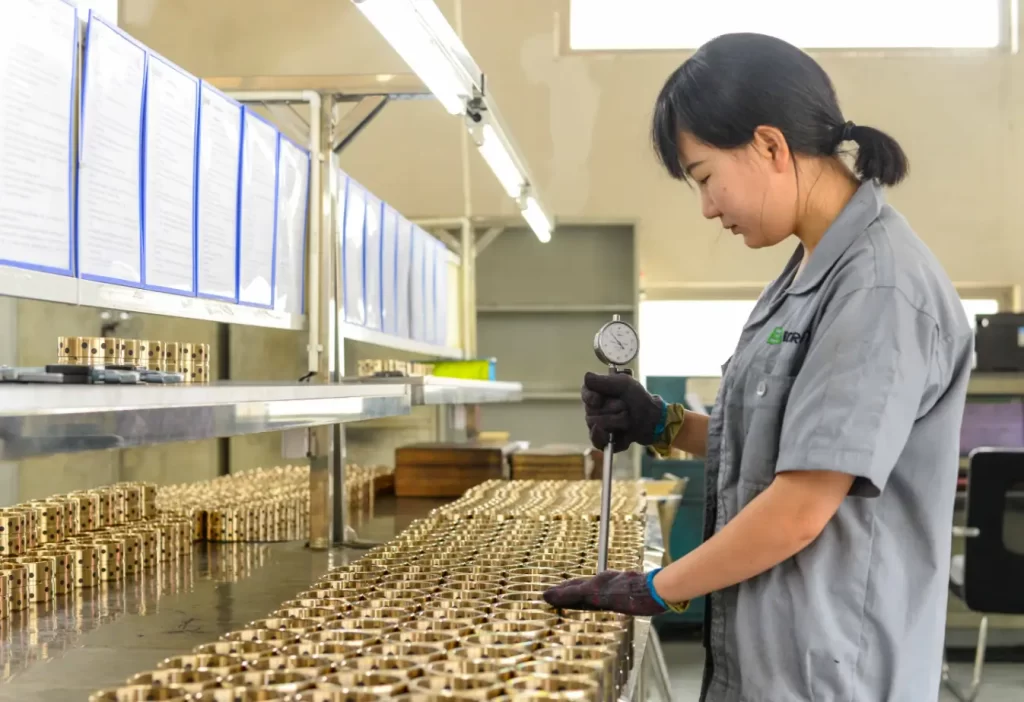
MYWAY specializes in transforming premium bronze and brass into precision-engineered bushings, bearings, and custom components trusted by global industries. MYWAY bronze bushings deliver exceptionally high strength and hardness, excellent wear and corrosion resistance, high pressure tolerance, and superior machinability. The company offers a wide range of bushing sizes—from miniature to large-scale—with custom diameters available up to 1200 mm.
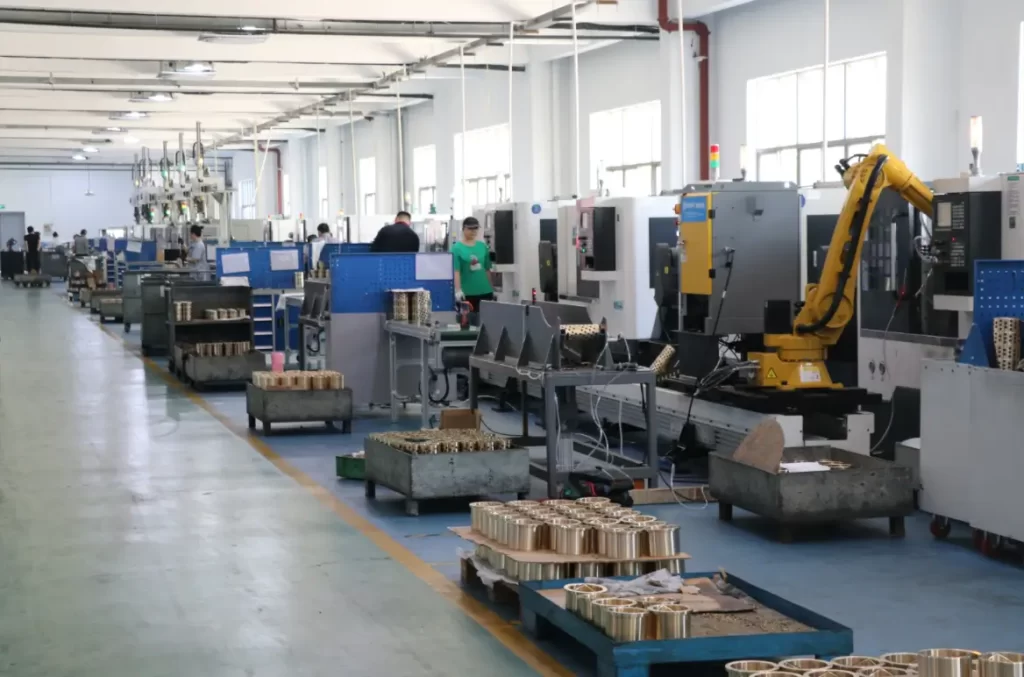
MYWAY employs advanced CNC machining processes that transform raw bronze alloy into high-performance components with exceptional dimensional accuracy and superior surface quality. This precision manufacturing ensures that MYWAY bronze bushings meet tight tolerances and deliver reliable performance in the most demanding applications. MYWAY bronze bushings are suitable for heavy-duty applications in automotive, aerospace, marine, construction, agricultural, and industrial machinery sectors. The company offers various bushing types including standard bronze bushings, self-lubricating bushings, and custom-engineered solutions. MYWAY bronze components feature resistance to mud and sand wear, high load-bearing capacity, and easy replaceability.
For engineers and procurement professionals seeking reliable bronze bushing solutions, MYWAY provides the quality, precision, and performance necessary for critical applications. The company’s commitment to excellence ensures that MYWAY bronze bushings deliver long service life and maintenance-free operation in demanding industrial environments.
Contact MYWAY today to discuss your bronze bushing requirements and discover how precision-engineered bronze components can enhance your equipment performance and reliability.
Frequently Asked Questions
Q1: Why choose bronze bushings over brass bushings?
Bronze bushings are harder, stronger, and more wear-resistant than brass bushings. Bronze offers superior durability and can withstand heavier loads and more demanding operating conditions, making it the preferred choice for industrial and heavy-duty applications.
Q2: What industries commonly use bronze components?
Bronze components are used across aerospace, automotive, marine, construction, agriculture, energy, food processing, and general industrial machinery sectors.
Q3: What is the difference between aluminum bronze and phosphor bronze?
Aluminum bronze provides higher strength and superior corrosion resistance, especially in marine environments. Phosphor bronze offers better elasticity, fatigue resistance, and electrical conductivity, making it ideal for springs and electrical components.
Q4: Are bronze bushings self-lubricating?
Certain bronze bushings, such as oil-impregnated sintered bronze and graphite-insert bronze bushings, offer self-lubricating properties that eliminate the need for external lubrication.
Q5: Can bronze bushings handle high loads?
Yes, bronze bushings are specifically designed for high-load applications. They offer exceptional load-carrying capacity and are commonly used in heavy-duty machinery and equipment.
Q6: Are bronze components corrosion-resistant?
Bronze components exhibit excellent corrosion resistance, particularly aluminum bronze alloys which perform exceptionally well in seawater and chemical environments.
Q7: What sizes of bronze bushings does MYWAY offer?
MYWAY offers a comprehensive range of bushing sizes from miniature to large-scale, with custom diameters available up to 1200 mm.
Q8: What manufacturing processes does MYWAY use for bronze bushings?
MYWAY employs advanced CNC machining processes to produce bronze bushings with exceptional dimensional accuracy, tight tolerances, and superior surface finishes
100000+ Types of Bushings – Contact Us for Details