self-lubricating bearing

Self-Lubricating Bushings in Hydraulic Cylinders: The Complete Engineering Reference for Design, Selection & Maintenance
Interpretation of Bushing Knowledge

Self-Lubricating Bushings in Hydraulic Cylinders: The Complete Engineering Reference for Design, Selection & Maintenance

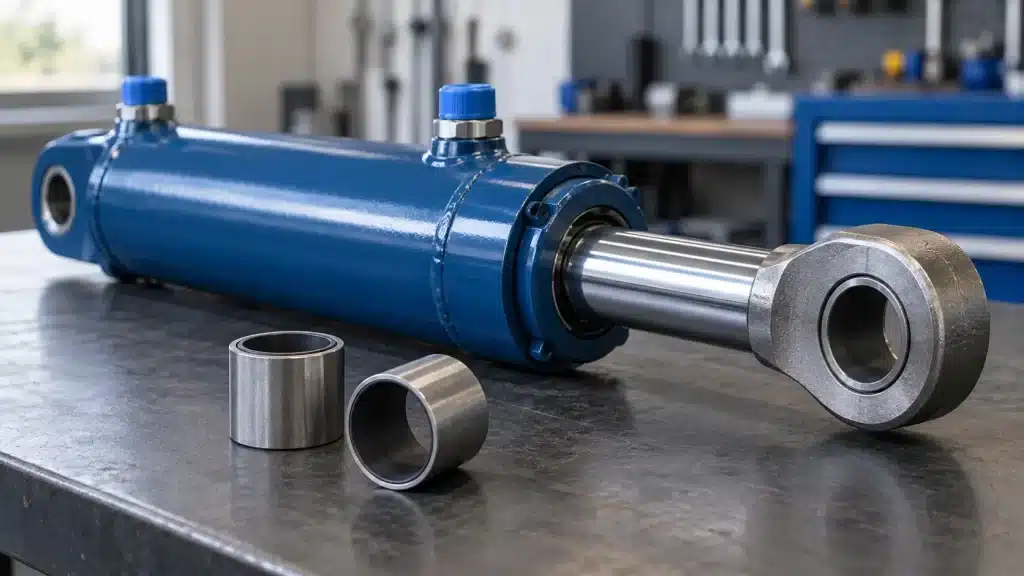
Self-lubricating bushings have become the default guiding solution in modern hydraulic cylinder design, replacing greased bronze and roller bearings in rod glands, piston guides, and pivot points. This article covers the working principles, material architectures (PTFE composite, graphite-plugged bronze, engineered polymer), performance data, selection methodology, installation best practices, and failure analysis for self-lubricating bushings in hydraulic cylinders. Drawing on published tribological research, OEM maintenance manuals, and field application data, it provides design engineers and maintenance teams with a practical decision-making framework for extending cylinder service life, reducing maintenance costs, and eliminating lubrication-related downtime. A dedicated FAQ section addresses the most common field questions, and a supplier introduction for MYWAY bushings is included at the end for procurement reference.
Continuous Casting Machine Bushing Solutions: Engineering Guide for Steel Mills
Interpretation of Bushing Knowledge

Continuous Casting Machine Bushing Solutions: Engineering Guide for Steel Mills

In modern metallurgical operations, the continuous casting machine represents the critical interface between liquid steel refining and solid product forming. Within this sophisticated system, bushings function as indispensable tribological components that directly influence equipment reliability, product quality, and operational economy. This comprehensive technical resource examines bushing technologies deployed across continuous casting applications—from mold oscillation mechanisms to strand guide roller assemblies—providing engineers and procurement professionals with actionable intelligence for component selection and lifecycle optimization.

Self-Lubricating Bushings: Material Systems, Tribology, and Reliable Design for Dry-Running Motion
Interpretation of Bushing Knowledge

Self-Lubricating Bushings: Material Systems, Tribology, and Reliable Design for Dry-Running Motion

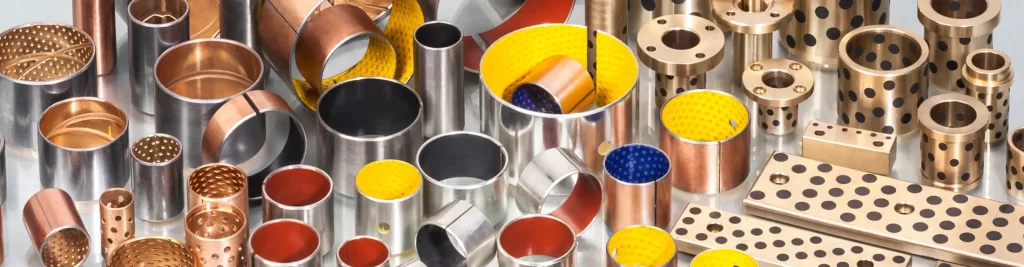
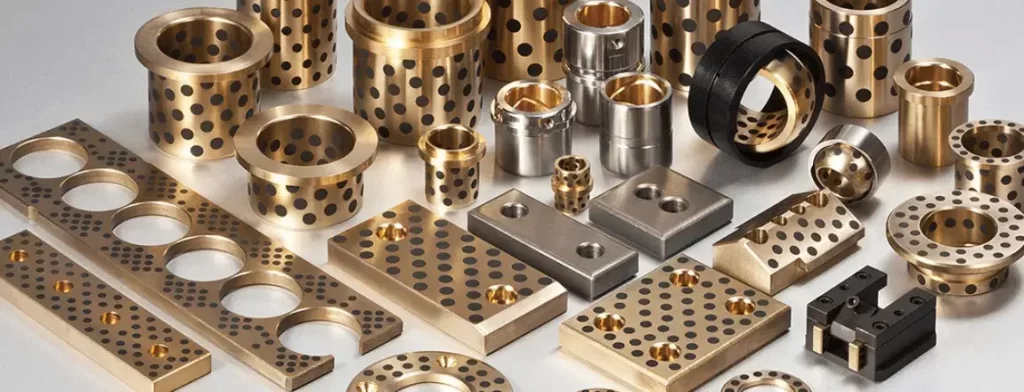
A self-lubricating bushing is a plain bearing designed to reduce friction and wear without a conventional external grease or oil line during normal service. It does not mean that every design is chemically identical, maintenance-free in every environment, or suitable for every load and speed. The term includes oil-impregnated sintered bronze bushings, steel-backed PTFE composite bearings, POM-lined bushes, graphite-plugged bronze bushes, solid-lubricant-dispersed bearings, engineered polymer bushes, and some fabric-lined spherical plain bearings. Each system stores, transfers, or presents lubricant differently.
Good selection starts with the motion and environment: radial or axial load, oscillation or rotation, speed, PV duty, temperature, shock, contamination, mating shaft hardness and finish, housing stiffness, clearance, corrosion, installation method, and service-life target.

The Metallurgical Engineering of Bronze Sleeve Bearings: Alloy Selection, Load Dynamics, and Industrial Application
Interpretation of Bushing Knowledge

The Metallurgical Engineering of Bronze Sleeve Bearings: Alloy Selection, Load Dynamics, and Industrial Application

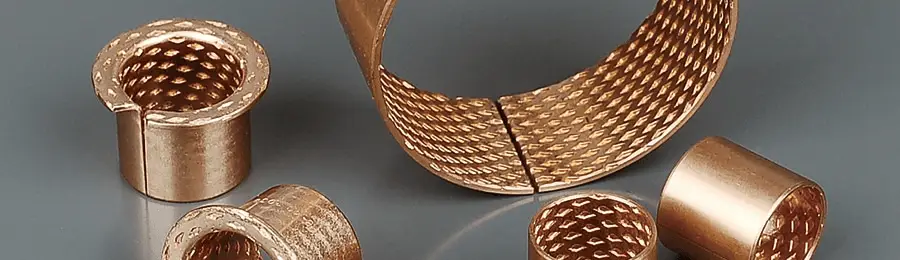
Bronze sleeve bearings, classified as plain bearings or journal bearings, constitute a foundational component within mechanical engineering, providing a critical interface for rotating or linear motion between a shaft and a housing. Functioning as bushings, these components leverage the inherent tribological advantages of copper-based alloys to reduce friction, manage heat dissipation, and absorb operational loads. The extensive utility of bronze sleeve bearings, from automotive powertrains and heavy construction equipment to precision machine tools and marine propulsion systems, is attributable to the versatile metallurgical properties of bronze. Unlike rolling element bearings that rely on point contact, sleeve bearings employ a larger surface contact area, enabling them to support significant radial loads, accommodate shock loading, and offer resistance to mechanical wear

Spherical Plain Bearing: Essential Component for Heavy-Duty Industrial Linkages
Interpretation of Bushing Knowledge

Spherical Plain Bearing: Essential Component for Heavy-Duty Industrial Linkages

Spherical plain bearings, also known as spherical bushings or plain shaft bearings, serve as critical components in heavy machinery and industrial equipment where angular misalignment, oscillating movements, and substantial load capacities converge. These bearings facilitate smooth rotational motion between two components through a sliding contact interface between an inner ring and an outer ring with a spherical geometry. Unlike rolling-element bearings, spherical plain bearings rely on sliding surfaces to accommodate both radial loads and thrust loads in multiple directions, making them indispensable for demanding applications in construction machinery, agricultural equipment, hydraulic systems, and metallurgical plants

Self-Lubricating Bushings: The Maintenance-Free Solution for Demanding Industrial Applications
Interpretation of Bushing Knowledge

Sleeve Bearing Metallurgy: Material Architectures, Performance Optimization, and Application Engineering

Sleeve bearings, also known as plain bearings, journal bearings, bushings, or sliding bearings, represent one of the most fundamental and widely applied mechanical components in engineering history. Unlike rolling element bearings that utilize balls or rollers to separate moving parts, sleeve bearings employ a sliding action between two conforming surfaces to facilitate linear or rotational movement while reducing friction, absorbing vibration, and supporting loads. The metallurgical composition, material architecture, and manufacturing processes of sleeve bearings directly determine their performance characteristics, service life, and application suitability.

MYWAY Metal Bushing: High-Performance Wear Solutions for Heavy-Duty Machinery
Interpretation of Bushing Knowledge

Thermal Metallurgy in Motion: The Critical Role of Alloy Melting Behavior in Bushing Performance and Reliability

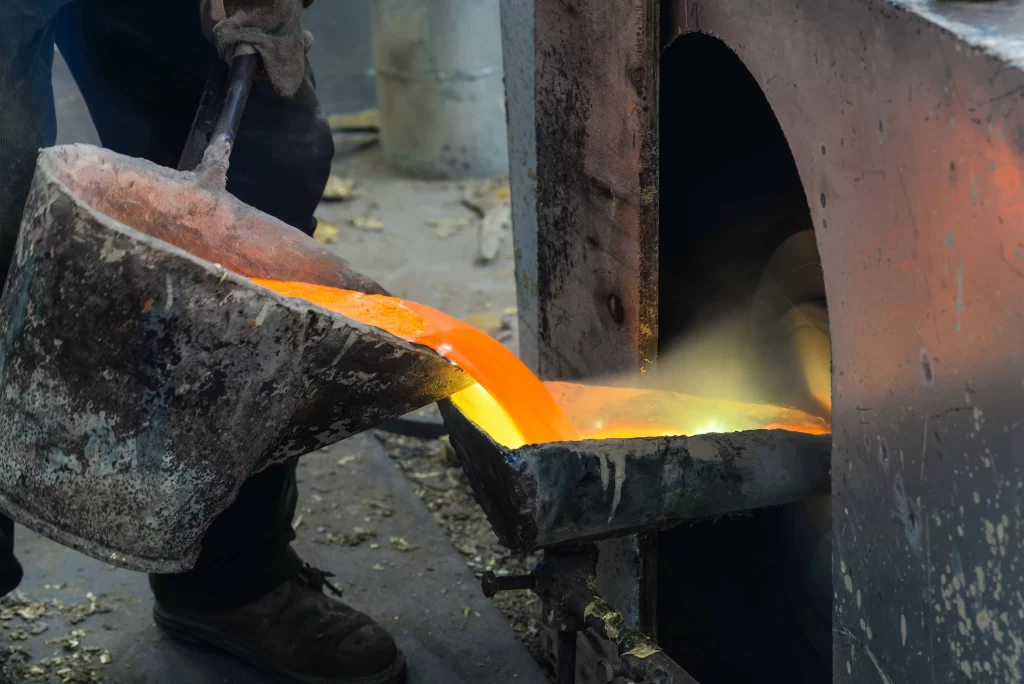
In the demanding environments of heavy industry, the melting characteristics of metallic alloys serve as the fundamental determinant of component longevity. While operational temperatures never intentionally approach the melting threshold, the margin between standard operating conditions and the solidus point of an alloy defines the safety buffer against thermal degradation, friction-induced heat spikes, and catastrophic failure. This principle carries particular significance in the metallurgy sector, where rolling mills, casting equipment, and extrusion presses subject bearings and bushings to extreme loads, elevated temperatures, and continuous operation.

Tungsten Steel in Modern Metallurgy: Engineering High-Performance Alloys for Demanding Industrial Applications
Interpretation of Bushing Knowledge

Tungsten Steel in Modern Metallurgy: Engineering High-Performance Alloys for Demanding Industrial Applications

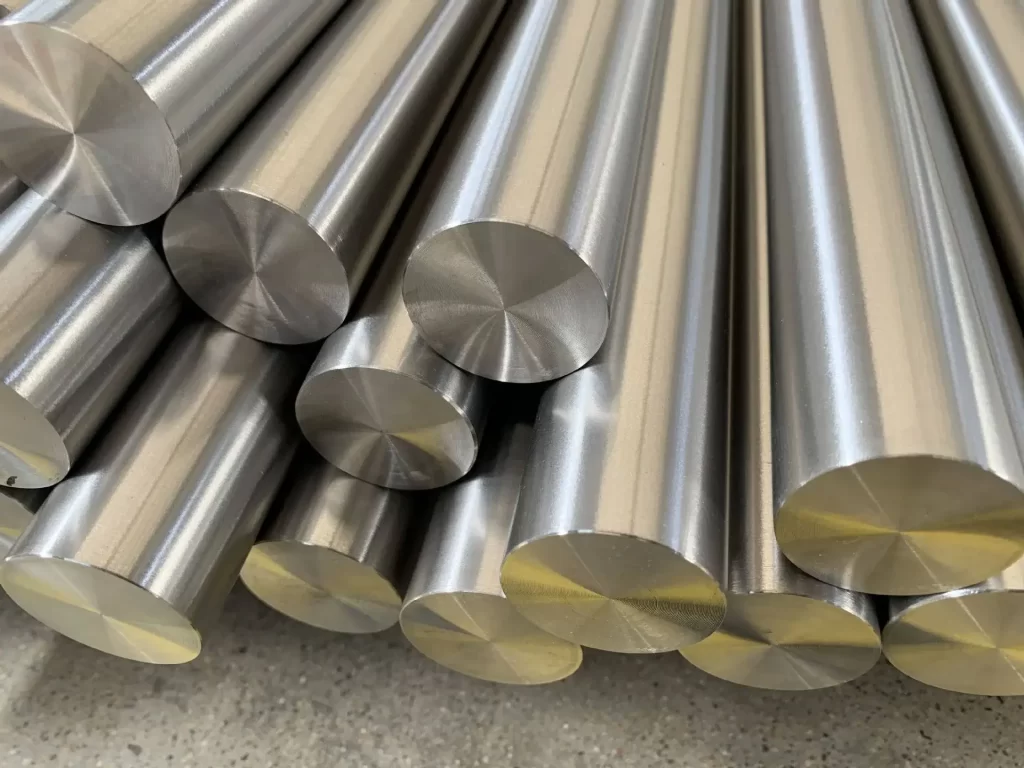
Tungsten steel represents one of the most significant advancements in metallurgical engineering, combining the elemental strength of tungsten with the structural versatility of steel to produce alloys capable of performing under extreme conditions that would render conventional materials ineffective. The distinctive properties of tungsten steel—exceptional hardness retention at elevated temperatures, superior wear resistance, and remarkable dimensional stability—have established it as an indispensable material across numerous industrial sectors, from precision tooling and mold manufacturing to high-speed machining and heavy-duty equipment applications.

Marine Propeller Bronze Bushings: Engineering Reliability for Propulsion Systems
Interpretation of Bushing Knowledge

Marine Propeller Bronze Bushings: Engineering Reliability for Propulsion Systems

The marine propulsion system represents one of the most demanding mechanical environments in engineering. At the heart of this system lies a critical component that often goes unnoticed—the propeller shaft bushing. This unassuming component bears the brunt of heavy loads, corrosive seawater, and continuous rotational stress. Understanding the nuances of marine propeller bronze bushings is essential for naval architects, fleet operators, and maintenance engineers seeking to optimize vessel performance and reduce operational downtime. This comprehensive exploration delves into the material science, design principles, installation methodologies, and maintenance strategies that underpin reliable propeller shaft bearing performance in modern maritime operations.

Bronze and Copper in Industrial Applications: A Comprehensive Guide to Alloy Selection and High-Performance Bushings
Interpretation of Bushing Knowledge

Bronze and Copper in Industrial Applications: A Comprehensive Guide to Alloy Selection and High-Performance Bushings

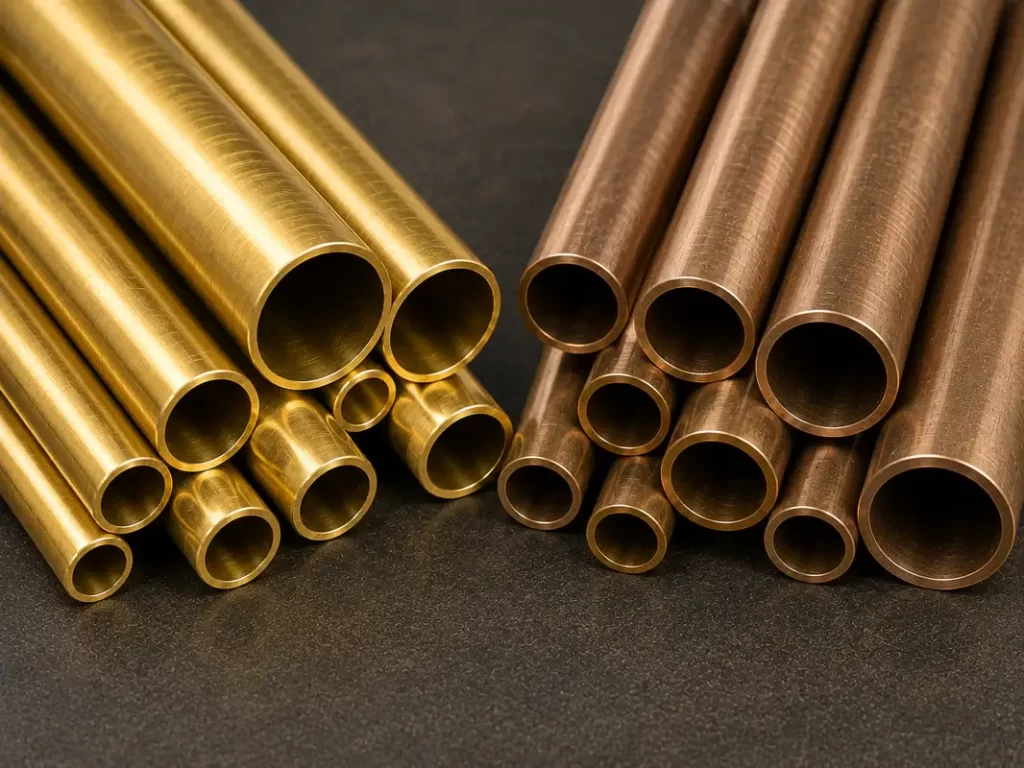
Bronze and copper represent two of the most foundational materials in industrial engineering. As “red metals,” they have served manufacturing, construction, marine, and mechanical sectors for millennia. While copper exists in its pure elemental form with exceptional thermal and electrical conductivity, bronze emerges as a copper-tin alloy engineered for superior strength, hardness, and corrosion resistance. Understanding the functional distinctions between these materials is essential for engineers, procurement specialists, and maintenance professionals seeking optimal component performance.

Scroll to Top