self-lubricating bushing

How Excavator Bushings Reduce Downtime, Prevent Costly Repairs, and Protect Your Fleet‘s Uptime
Interpretation of Bushing Knowledge

How Excavator Bushings Reduce Downtime, Prevent Costly Repairs, and Protect Your Fleet‘s Uptime

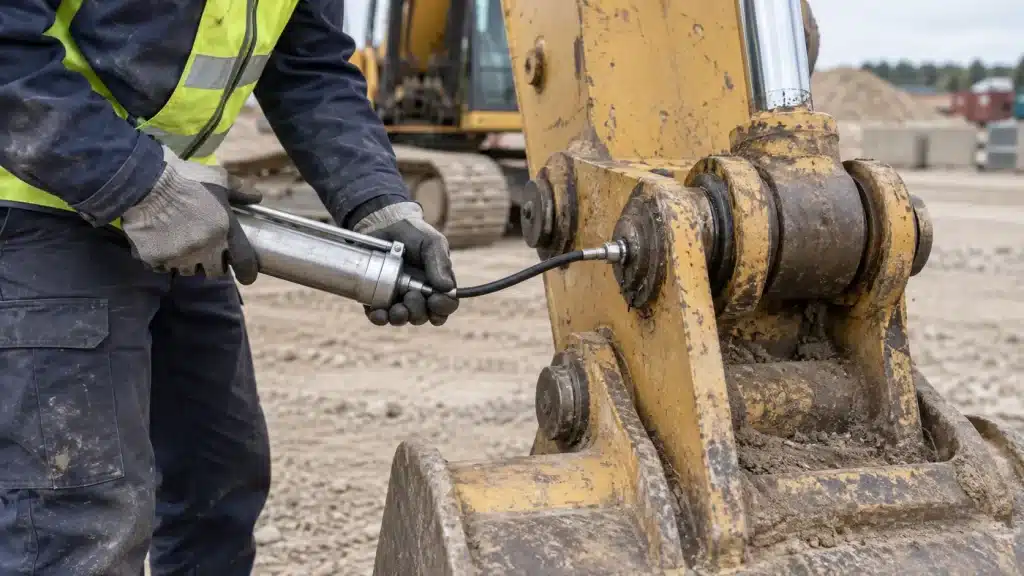
Excavator bushings sit at the heart of every pivot point on your machine. They absorb shock, reduce friction, and protect expensive structural components from damage. When bushings fail prematurely, the consequences cascade through the entire undercarriage and attachment system—turning a few-hundred-dollar part into a five-figure repair bill. This article examines how quality bushings directly impact excavator uptime, what causes premature bushing failure, and how choosing the right components can dramatically reduce total cost of ownership.
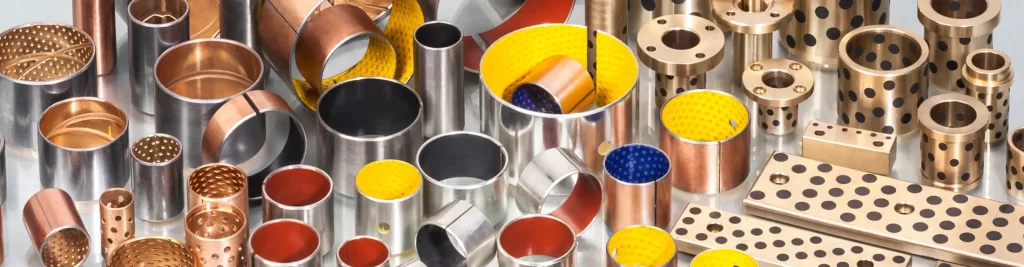
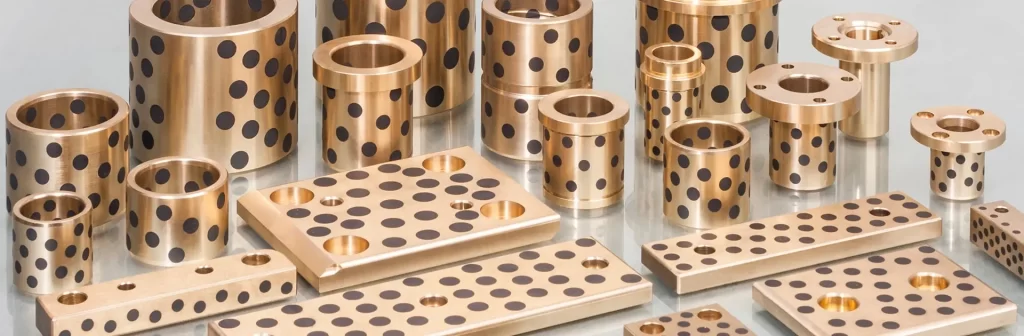
Self-Lubricating Bushings: The Maintenance-Free Solution for Demanding Industrial Applications
Interpretation of Bushing Knowledge

Metallurgical Engineering Essentials: The Definitive Technical Resource on Heavy-Duty Machinery Bushings

In the demanding environment of modern heavy industries—including mining, construction, material handling, and steel metallurgy—mechanical pivot joints are subjected to relentless combined stresses. High static and dynamic loads, continuous abrasive friction, severe and harsh environmental contaminants create an extraordinarily challenging operating matrix for critical wear components. Within this context, the heavy-duty machinery bushing (commonly referred to as track bushings, excavator bucket bushings, suspension bushings, or sleeve in metallurgical equipment) plays an indispensable role as the primary load-bearing and motion-guiding interface.

Wear Plates: Material Performance, Metallurgical Working Conditions & Matched Wear Protection Solutions
Interpretation of Bushing Knowledge

Metallurgical Equipment Reliability: The Critical Role of Shear Machine Bushings in High-Impact Steel Processing

Shear machines constitute essential capital equipment in metallurgical processing lines, performing precision cutting operations on hot-rolled blooms, slabs, and billets under extreme operational conditions. The bushing—a cylindrical bearing component—serves as the critical interface between moving shear components, directly influencing equipment reliability, production uptime, and maintenance costs. These components function in environments characterized by high impact loads, elevated temperatures reaching 300°C, abrasive particulate contamination, and frequent start-stop cycling. The selection, application, and maintenance of shear machine bushings represent key determinants of operational efficiency in steel mills and metal processing facilities worldwide.

Self-Lubricating Bushings: The Maintenance-Free Solution for Demanding Industrial Applications
Interpretation of Bushing Knowledge

Self-Lubricating Bushing: Bearing Metallurgy, Solid Lubricants, PV Control, and Reliable Industrial Selection

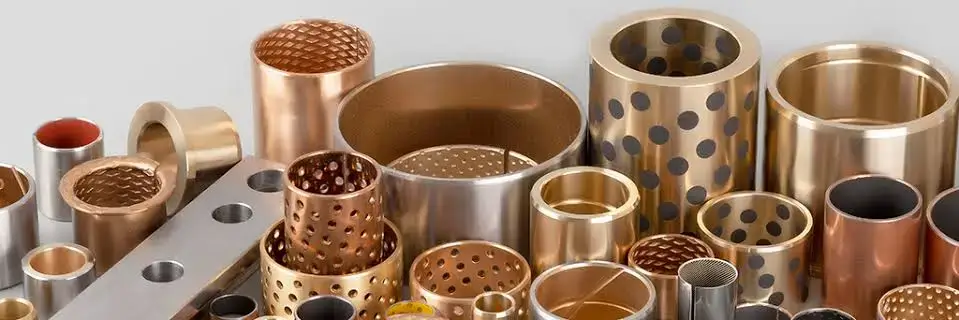
A self-lubricating bushing is a plain bearing designed to reduce friction and wear without continuous external grease or oil supply. The term covers several different material systems: oil-impregnated sintered bronze, steel-backed metal-polymer composites, cast bronze with graphite inserts, solid-lubricant-dispersed metal, engineered polymer, and fiber-reinforced composite bearings. These products do not have identical operating limits. The correct choice requires load, sliding speed, PV factor, temperature, oscillation, counterface, contamination, water or chemical exposure, fit, clearance and expected maintenance interval.

Self-Lubricating Bushings: Material Systems, Tribology, and Reliable Design for Dry-Running Motion
Interpretation of Bushing Knowledge

Self-Lubricating Bushings: Material Systems, Tribology, and Reliable Design for Dry-Running Motion

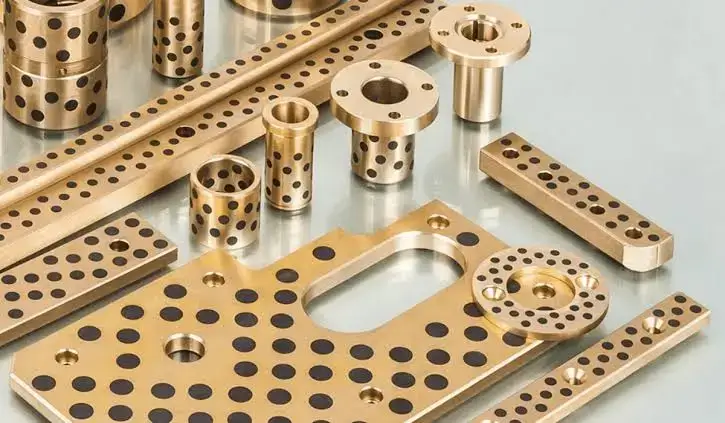
A self-lubricating bushing is a plain bearing designed to reduce friction and wear without a conventional external grease or oil line during normal service. It does not mean that every design is chemically identical, maintenance-free in every environment, or suitable for every load and speed. The term includes oil-impregnated sintered bronze bushings, steel-backed PTFE composite bearings, POM-lined bushes, graphite-plugged bronze bushes, solid-lubricant-dispersed bearings, engineered polymer bushes, and some fabric-lined spherical plain bearings. Each system stores, transfers, or presents lubricant differently.
Good selection starts with the motion and environment: radial or axial load, oscillation or rotation, speed, PV duty, temperature, shock, contamination, mating shaft hardness and finish, housing stiffness, clearance, corrosion, installation method, and service-life target.

Oilless Bushing Metallurgy: Solid Lubricants, Bronze, and Composite Layers Under Load
Interpretation of Bushing Knowledge

Oilless Bushing Metallurgy: Solid Lubricants, Bronze, and Composite Layers Under Load

The phrase “oilless bushing” is useful in search and procurement, but it can conceal important engineering differences. Some self-lubricating bushings rely on graphite plugs embedded in cast bronze. Others use a steel-backed, porous bronze interlayer with a PTFE-based sliding surface. A third category is a sintered bronze bearing whose connected porosity stores oil released during service. Each system reduces or eliminates routine external oiling in a defined operating window; none removes the need to control pressure, speed, heat, shaft finish, alignment, and contamination. The metallurgy determines how the bearing carries load, transfers lubricant, and survives wear.

Wear Plates: Material Performance, Metallurgical Working Conditions & Matched Wear Protection Solutions
Interpretation of Bushing Knowledge

Wear Plates: Material Performance, Metallurgical Working Conditions & Matched Wear Protection Solutions

Severe abrasion, continuous impact, high-temperature erosion and material friction are persistent bottlenecks restricting stable production in metallurgy, mineral processing and heavy industrial manufacturing. Wear plates, also known as abrasion-resistant liners or slide plates, serve as sacrificial protective components installed on equipment contact surfaces to bear abrasive load, buffer impact force and avoid premature failure of expensive main equipment structures. Improper material selection of wear plates will trigger frequent shutdown maintenance, soaring spare parts consumption and increased overall operating costs.

Tungsten and Steel: A Comprehensive Analysis of Metallurgical Synergy for High-Performance Applications
Interpretation of Bushing Knowledge

Tungsten and Steel: A Comprehensive Analysis of Metallurgical Synergy for High-Performance Applications

The intersection of tungsten and steel represents one of the most significant material engineering achievements in modern industry. This metallurgical combination creates solutions that address the most demanding operational challenges across manufacturing sectors. From the historical origins of tungsten steel to contemporary applications in heavy machinery, the evolution of these materials reflects ongoing innovation in pursuit of enhanced durability, temperature resistance, and operational longevity. This analysis examines the properties, applications, and engineering considerations of tungsten-steel integration while highlighting critical component requirements for optimal system performance.

Interpretation of Bushing Knowledge

Low Friction Sliding Material Bushings: Engineering Principles for Operational Excellence

The relationship between mating mechanical surfaces fundamentally determines the efficiency, reliability, and longevity of industrial equipment. Among the various solutions developed to manage this interface, low friction sliding material bushings have emerged as a sophisticated response to the persistent challenges of energy loss, thermal generation, and progressive wear. These components serve as the critical interface between rotating or oscillating shafts and their housings, providing a controlled sliding surface that minimizes resistance while maintaining precise alignment.

Interpretation of Bushing Knowledge

Flanged Bushing Solutions: Engineering Performance for Radial and Axial Load Management

Flanged bushings integrate radial load support, axial thrust management, and precise axial positioning into a single component, delivering engineering efficiency across automotive, industrial, agricultural, and aerospace applications. Available in bronze, composite, and wrapped steel constructions, these bushings offer self-lubricating or maintenance-free options tailored to diverse operating conditions. This article examines their structural functions, material selection, application scenarios, and installation considerations, culminating in MYWAY’s advanced manufacturing capabilities for high-performance flanged bushing solutions.

Scroll to Top