Thrust Washer

Metallurgical Characteristics & Industrial Application Analysis of Bronze Bushings for Sliding Bearing Systems
Interpretation of Bushing Knowledge

Metallurgical Advancements in Low Friction Washers: Material Science, Coating Technologies, and Performance Optimization

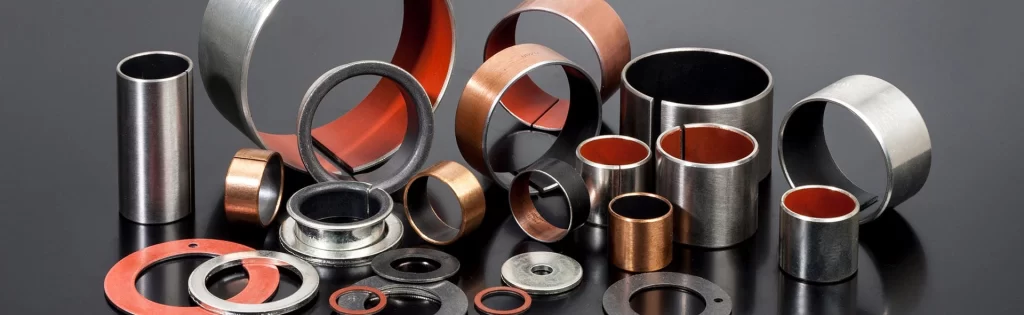
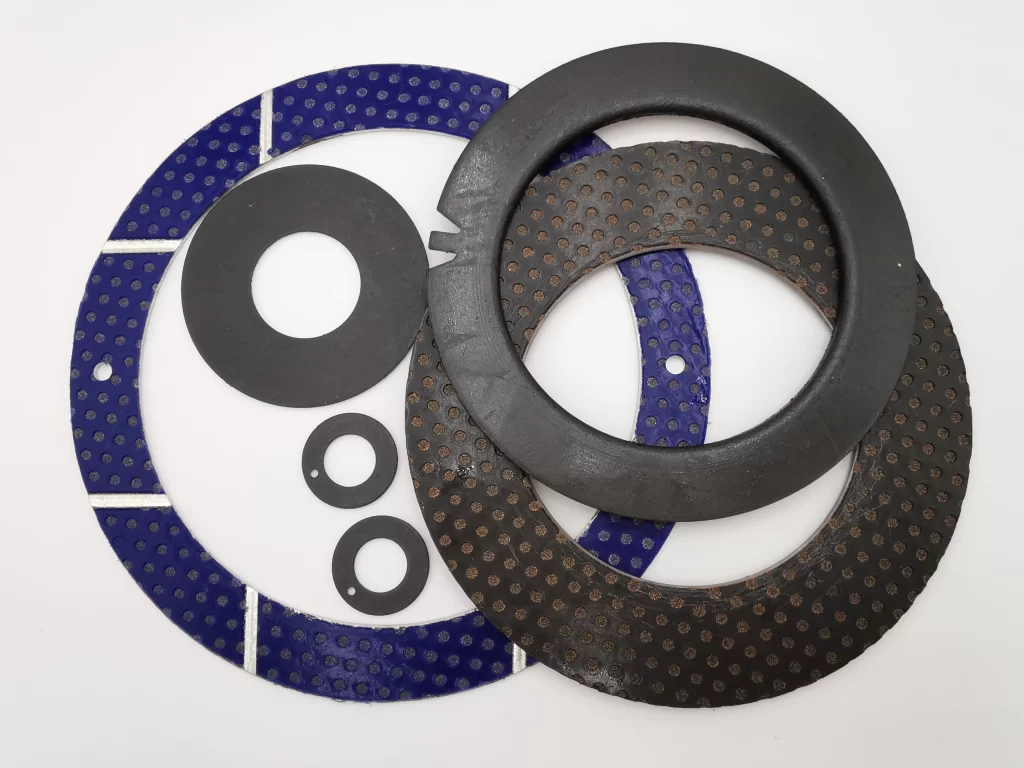
The evolution of low friction washers represents a critical intersection of tribology, materials engineering, and fastener technology. These specialized components serve as essential solutions for managing friction, thermal expansion, and wear in bolted joints across automotive, aerospace, industrial machinery, and precision equipment applications. This article examines the metallurgical principles, coating technologies, and performance characteristics that define contemporary low friction washer design and manufacturing.
Steel-Backed Bushings: Bimetal Bearing Metallurgy, Load Support, Sliding Layers, and Global Procurement
Interpretation of Bushing Knowledge

Steel-Backed Bushings: Bimetal Bearing Metallurgy, Load Support, Sliding Layers, and Global Procurement

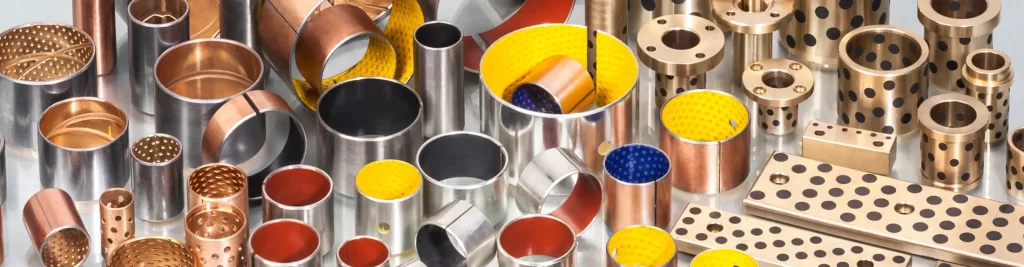
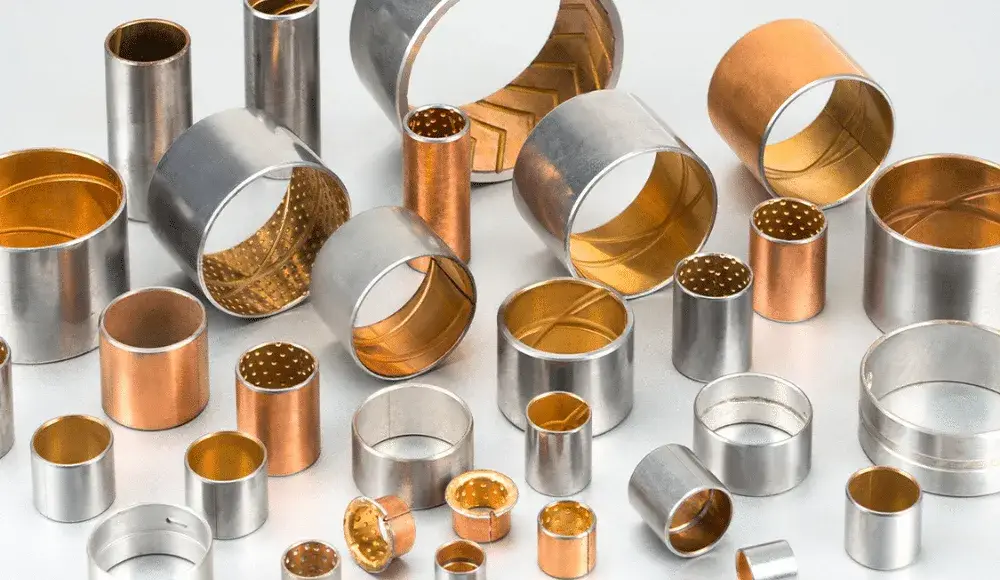
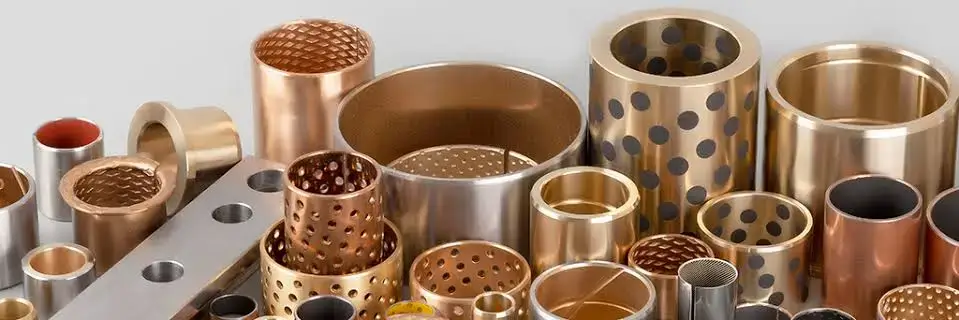
A steel-backed bushing is a composite plain bearing in which a steel shell supplies stiffness, press-fit strength and dimensional stability while a bronze, leaded-bronze, aluminum-tin, sintered, PTFE, POM, polymer or solid-lubricant layer provides the sliding surface. The architecture allows a thin wall, high housing interference, controlled bearing surface, and efficient use of specialized bearing material. Steel-backed bearings are used in automotive components, hydraulic equipment, construction machinery, compressors, agricultural equipment, machine tools, industrial handling, rolling-mill auxiliaries, pumps and general machinery. The correct grade depends on material stack, layer thickness, load, speed, lubrication, temperature, shaft finish, fit, corrosion and environment.

Self-Lubricating Bushings: Material Systems, Tribology, and Reliable Design for Dry-Running Motion
Interpretation of Bushing Knowledge

Self-Lubricating Bushings: Material Systems, Tribology, and Reliable Design for Dry-Running Motion

A self-lubricating bushing is a plain bearing designed to reduce friction and wear without a conventional external grease or oil line during normal service. It does not mean that every design is chemically identical, maintenance-free in every environment, or suitable for every load and speed. The term includes oil-impregnated sintered bronze bushings, steel-backed PTFE composite bearings, POM-lined bushes, graphite-plugged bronze bushes, solid-lubricant-dispersed bearings, engineered polymer bushes, and some fabric-lined spherical plain bearings. Each system stores, transfers, or presents lubricant differently.
Good selection starts with the motion and environment: radial or axial load, oscillation or rotation, speed, PV duty, temperature, shock, contamination, mating shaft hardness and finish, housing stiffness, clearance, corrosion, installation method, and service-life target.

Oilless Bushing Metallurgy: Solid Lubricants, Bronze, and Composite Layers Under Load
Interpretation of Bushing Knowledge

Oilless Bushing Metallurgy: Solid Lubricants, Bronze, and Composite Layers Under Load

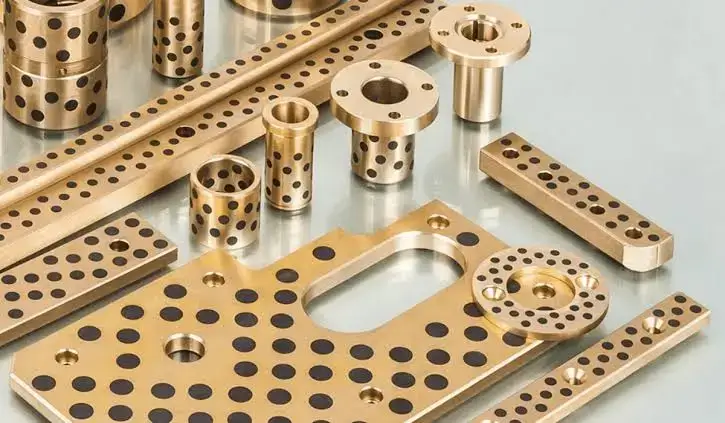
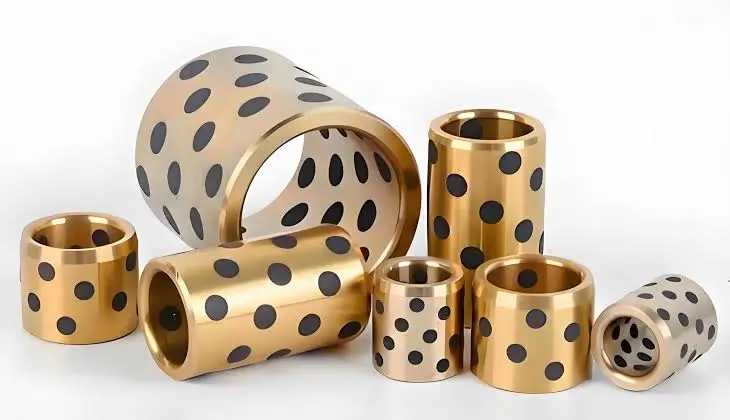
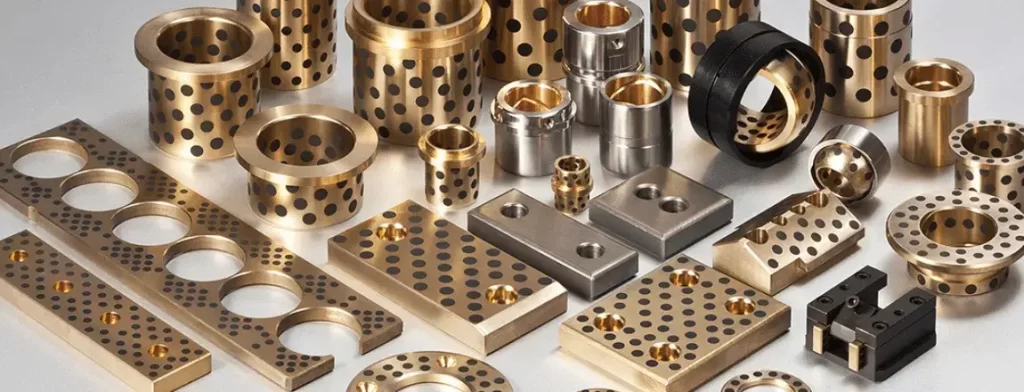
The phrase “oilless bushing” is useful in search and procurement, but it can conceal important engineering differences. Some self-lubricating bushings rely on graphite plugs embedded in cast bronze. Others use a steel-backed, porous bronze interlayer with a PTFE-based sliding surface. A third category is a sintered bronze bearing whose connected porosity stores oil released during service. Each system reduces or eliminates routine external oiling in a defined operating window; none removes the need to control pressure, speed, heat, shaft finish, alignment, and contamination. The metallurgy determines how the bearing carries load, transfers lubricant, and survives wear.

Self-Lubricating Bushings: The Maintenance-Free Solution for Demanding Industrial Applications
Interpretation of Bushing Knowledge

Sleeve Bearing Metallurgy: Material Architectures, Performance Optimization, and Application Engineering

Sleeve bearings, also known as plain bearings, journal bearings, bushings, or sliding bearings, represent one of the most fundamental and widely applied mechanical components in engineering history. Unlike rolling element bearings that utilize balls or rollers to separate moving parts, sleeve bearings employ a sliding action between two conforming surfaces to facilitate linear or rotational movement while reducing friction, absorbing vibration, and supporting loads. The metallurgical composition, material architecture, and manufacturing processes of sleeve bearings directly determine their performance characteristics, service life, and application suitability.

Lead in Bronze: The Self-Lubricating Metallurgical Solution for High-Performance Bearings and Bushings
Interpretation of Bushing Knowledge

Lead in Bronze: The Self-Lubricating Metallurgical Solution for High-Performance Bearings and Bushings

In the domain of plain bearing engineering, few material innovations have demonstrated the enduring practicality of leaded bronze alloys. The incorporation of lead into bronze matrices represents a deliberate metallurgical strategy—one that transforms a copper-tin base into a self-lubricating, anti-seizing, and highly embeddable engineering material. Leaded bronze bushings and bearings have become foundational components across heavy machinery, automotive systems, marine equipment, and industrial transmissions, precisely because the lead phase within the alloy delivers functional advantages that no single alternative material can fully replicate

MYWAY Bronze Washer: A Heavy-Duty Flat Washer Solution for Industrial Applications
Interpretation of Bushing Knowledge

MYWAY Bronze Washer: A Heavy-Duty Flat Washer Solution for Industrial Applications

Although washers are small components, they play a critical role in mechanical assemblies. In applications involving high axial loads, continuous vibration, or harsh environments such as marine engineering and heavy construction, the selection of washer material and dimensions directly affects equipment reliability and maintenance costs. Many equipment failure analyses show that a failed thrust washer or flat washer often leads to serious damage in the transmission system or bolted joint.

MYWAY Bushings is a manufacturer specializing in high-performance bronze bushings, flat washers, and thrust washers. With over 20 years of experience, the company serves customers in more than 40 countries and holds IATF/ISO quality certifications. Its bronze washers offer good wear resistance, corrosion resistance, and self-lubricating properties, outperforming standard carbon steel or stainless steel washers under demanding conditions.

Engineered for Reliability – A Technical Deep Dive into MYWAY’s High-Performance Bushings and Self-Lubricating Bearings
Interpretation of Bushing Knowledge

Engineered for Reliability – A Technical Deep Dive into MYWAY’s High-Performance Bushings and Self-Lubricating Bearings

In mechanical design, plain bearings (commonly referred to as bushings or sleeve bearings) are often underestimated. Yet they directly determine equipment uptime, maintenance intervals, and total operating costs. A bushing failure doesn’t just stop one machine – it halts an entire production line, triggers unplanned downtime, and drives up your cost per part.

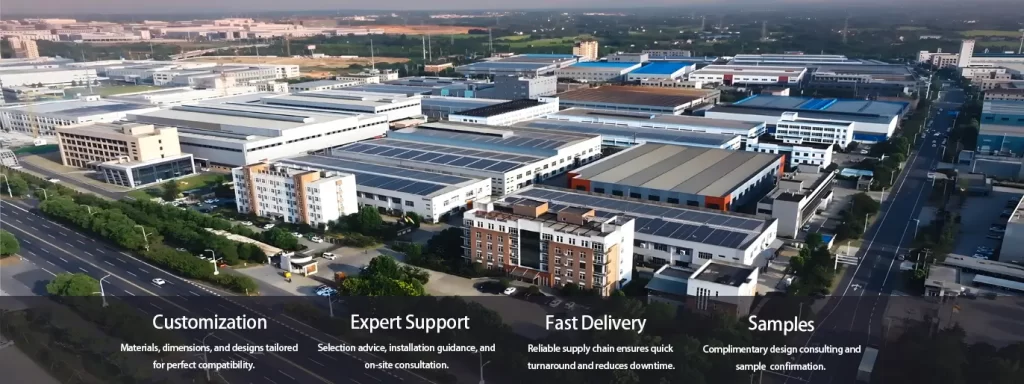
At MYWAY, we approach bushing manufacturing not as a commodity business, but as an engineering discipline. With over 20 years of experience, three vertically integrated production bases in Zhejiang province (totaling 35,000 m²), IATF 16949 and ISO 9001 certifications, and in-house material casting, sintering, and CNC finishing, we deliver precision plain bearings that outperform industry benchmarks.

MYWAY DU Bushing: The Maintenance‑Free Self‑Lubricating Solution for High‑Load & Extreme‑Temperature Applications
Interpretation of Bushing Knowledge

MYWAY DU Bushing: The Maintenance‑Free Self‑Lubricating Solution for High‑Load & Extreme‑Temperature Applications

Unexpected bearing failures and frequent lubrication of hard-to-reach components lead to costly downtime and reduced productivity. A DU bushing—also known as a dry, self-lubricating, or oil‑free bushing—eliminates these issues. Engineered for maintenance‑free operation, it resists contamination and prevents unexpected failures.

When combined with the manufacturing precision of Zhejiang MYWAY Co., Ltd., DU bushings deliver reliable performance at a competitive cost.

This guide explains what a DU bushing is, how it works, its key applications, and why MYWAY DU Bushings are the preferred choice for demanding industrial and automotive environments.

Scroll to Top